
🦌 Deer Grass
What it looks like
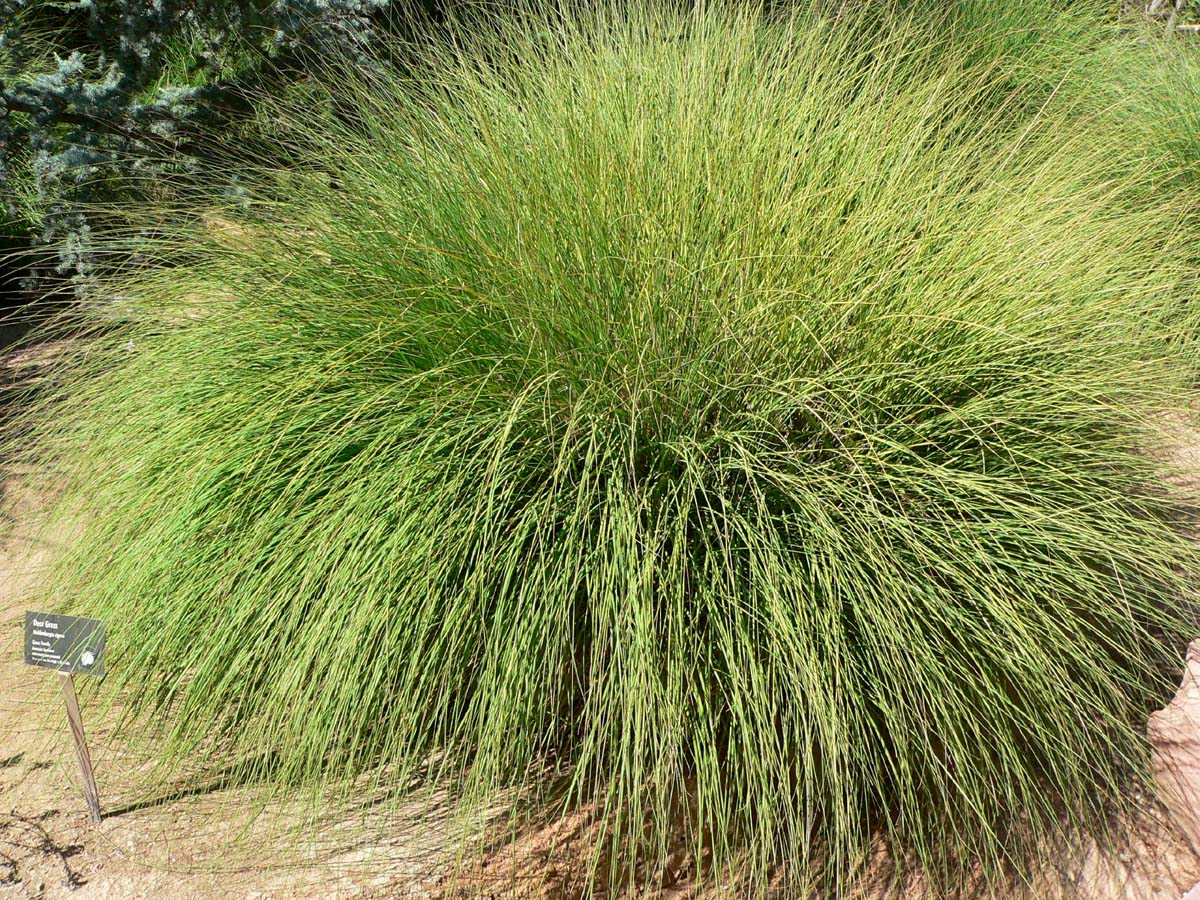
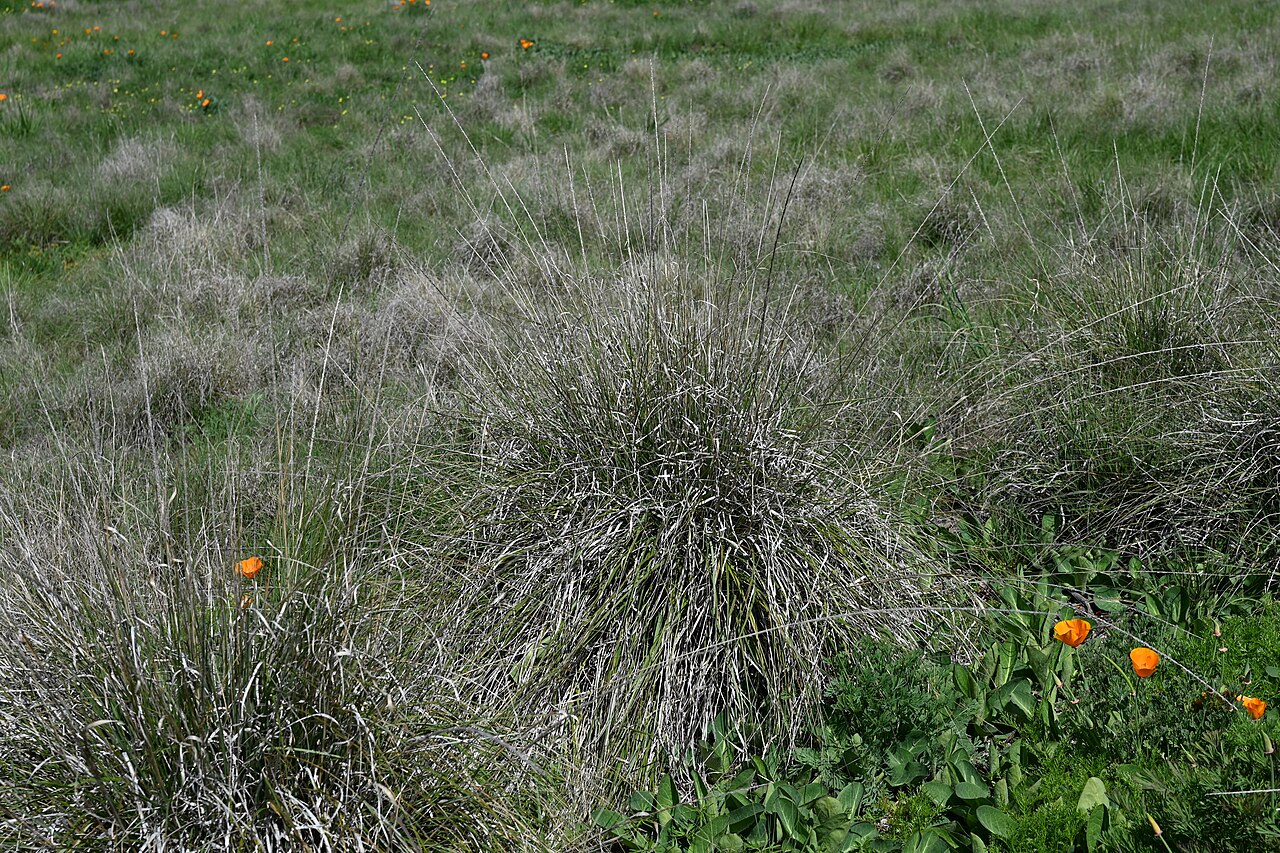
Deer grass is the muhly that does not look like a muhly at first glance, and that is its charm. Instead of a diffuse pink cloud, it throws long, slender, pencil-narrow panicles, 15 to 60 centimeters long but barely a centimeter wide, on stiff stems above dense tufts of narrow leaves. The foliage is gray-green to bright green, about an eighth of an inch wide, and can reach 3 to 4 feet long, forming a large perennial bunchgrass that reaches about 5 feet in bloom. The overall effect is architectural and upright, more like a fountain of green wire than a cloud.
It is a warm-season, C4 grass, which is the botanical way of saying it photosynthesizes efficiently in heat and drought, and it shows: deer grass thrives in sandy or gravelly, well-drained soils below 7,000 feet across the southwestern United States and northern Mexico, in grasslands, river valleys, and canyon bottoms. In the garden it is a specimen, a screen, or a restoration plant, and it has a human history most grasses lack: its long flower stalks were the principal material for coiled baskets among California Native peoples, who managed deer grass stands with fire to keep the stalks long and straight.
Why this variety
Choose deer grass when you want a native grass with structure, drought tolerance, and a story. It is not a pink cloud, and gardeners who buy it expecting one will be disappointed; gardeners who buy it for its upright form, its narrow plumes, and its ability to thrive on almost no water will be delighted. It is also a wildlife plant in the honest sense: dense patches provide cover for mule deer during fawning in its native range, and in the garden its clumps shelter ground-nesting insects and small wildlife.
The name is literal: deer grass, for the deer that shelter in it. The Latin name rigens means stiff or rigid, which describes both the leaves and the plumes. If you like grasses that stand up straight and stay that way, this is your muhly.
How to grow
Plant in spring in full sun and sandy or gravelly, well-drained soil, spacing 3 to 4 feet apart. Deer grass wants drainage above all else: a slope, a raised bed, or a gravelly border suits it, while heavy clay that stays wet will rot it. Water to establish, then water sparingly; it is built for dry summers and will sulk if overwatered. Cut back in late winter, and leave the flower stalks standing through fall and winter if you want the architectural silhouette and the seed for birds.
Florida note: deer grass is a southwestern native, not a Florida native, and Florida gardeners should plant it as a trial in the driest, sunniest, best-drained spot they have, ideally a raised bed with sandy or gravelly soil. It will not love Florida’s humid, soggy summers the way pink muhly does, so do not plant it in a low, irrigated bed and expect southwestern performance. North Florida gardens with sharp drainage are the best bet; if it struggles, pink muhly is the Florida-native alternative that gives a similar grass presence with none of the fuss.
Water & feeding
Water to establish, then very sparingly. Deer grass is one of the most drought-tolerant muhlys, and its C4 metabolism means it keeps growing in heat that stops cool-season grasses cold. Do not fertilize: lean soil keeps it stiff and upright, rich soil makes it soft and floppy, which defeats the whole point.
Common problems
Rot in wet, heavy soil: the most common failure, and the fix is drainage, not more care. Plant high, in gravelly soil, and water less.
Flopping in rich soil or shade: give it full sun and lean soil.
Slow establishment: bunchgrasses build roots first. Year two is when it looks like the pictures.
Old clumps: divide in spring every few years if the center thins, and cut back hard in late winter to renew.
Harvest
The harvest is stems and silhouette. Historically, the long flower stalks were harvested for basketry, cut while still green in late spring or in summer and early fall; in the garden, the modern harvest is the plume season and the winter form. Cut stems for tall, minimalist arrangements, or leave them standing for birds and for the sight of a grass that holds its shape through winter. No food harvest, and none needed.
Saving seeds
Deer grass seed is gloriously low-drama, which suits a grass whose whole personality is standing tall, saying nothing, and surviving droughts that flatten fussier plants. There is no hard coat to crack, no fire to imitate, no months of chilling in the refrigerator. You cut the plumes, shake out the tiny seeds, dry them, and sow them, and the main skills involved are patience and not losing something the size of a grain of sand in a gust of wind.
Collect in late summer into autumn, when the tall, narrow seed heads have turned tan and dry and the seeds strip easily from the stem. Cut whole stalks on a calm day, because a breezy afternoon will happily redistribute your harvest across the neighbourhood, and carry them in a paper bag rather than a plastic one so any lingering moisture can escape. Back indoors, hang the bundles upside down over a tray or a clean sheet for a week or two until they are thoroughly dry, then rub or beat the heads gently over the tray to release the seed. The seed is very small, so winnow lightly: tip the tray in a gentle breeze or in front of a fan on its lowest setting and let the chaff float away while the heavier seed stays behind. A kitchen sieve can help separate the last of the debris, but do not obsess over purity. A little chaff in the packet does no harm, and over-cleaning a dust-sized seed lot is how you lose half of it to the air.
Sow in spring in a well-drained, sandy or gritty mix, scattering the seed on the surface and pressing it in lightly, barely covered, because tiny grass seed germinates best with light and warmth close at hand. Keep the mix evenly moist, not soggy, until seedlings appear, which usually takes a couple of weeks, though some lots take up to a couple of months, so do not declare failure early. Prick seedlings out into individual pots when they are big enough to handle, grow them on through their first season, and plant out in summer or the following spring once they have a solid root system. Deer grass is slow to mature from seed, often taking a year or two to become the bold clump you pictured, which is why nurseries also sell it as container plants and why division is the shortcut: in spring, dig a mature clump, split it into sections each with roots and several shoots, and replant, potting up the smaller pieces to grow on in light shade until established.
Seedlings from a species plant like this will be deer grass, not a named cultivar that needs cloning, though individual seedlings will vary a little in height and plume colour, as wild plants do. That variation is normal and, in a drift of grasses, rather lovely. For storage, dry the seed thoroughly, keep it cool, dry, and dark in a labelled paper envelope inside an airtight jar, and sow it within a year or two for best results, since small grass seed does not improve with age. In Florida, the drying step deserves extra care: this is a dry-country grass, and humid air is the enemy of a stored seed lot, so dry indoors, add a desiccant packet to the jar, and store it somewhere cool and dark rather than in a hot shed. In the garden, give seedlings the drainage this species insists on, because wet, heavy soil is the one thing that reliably kills deer grass, in Florida or anywhere else.