
💙 Dixie Iris
What it looks like
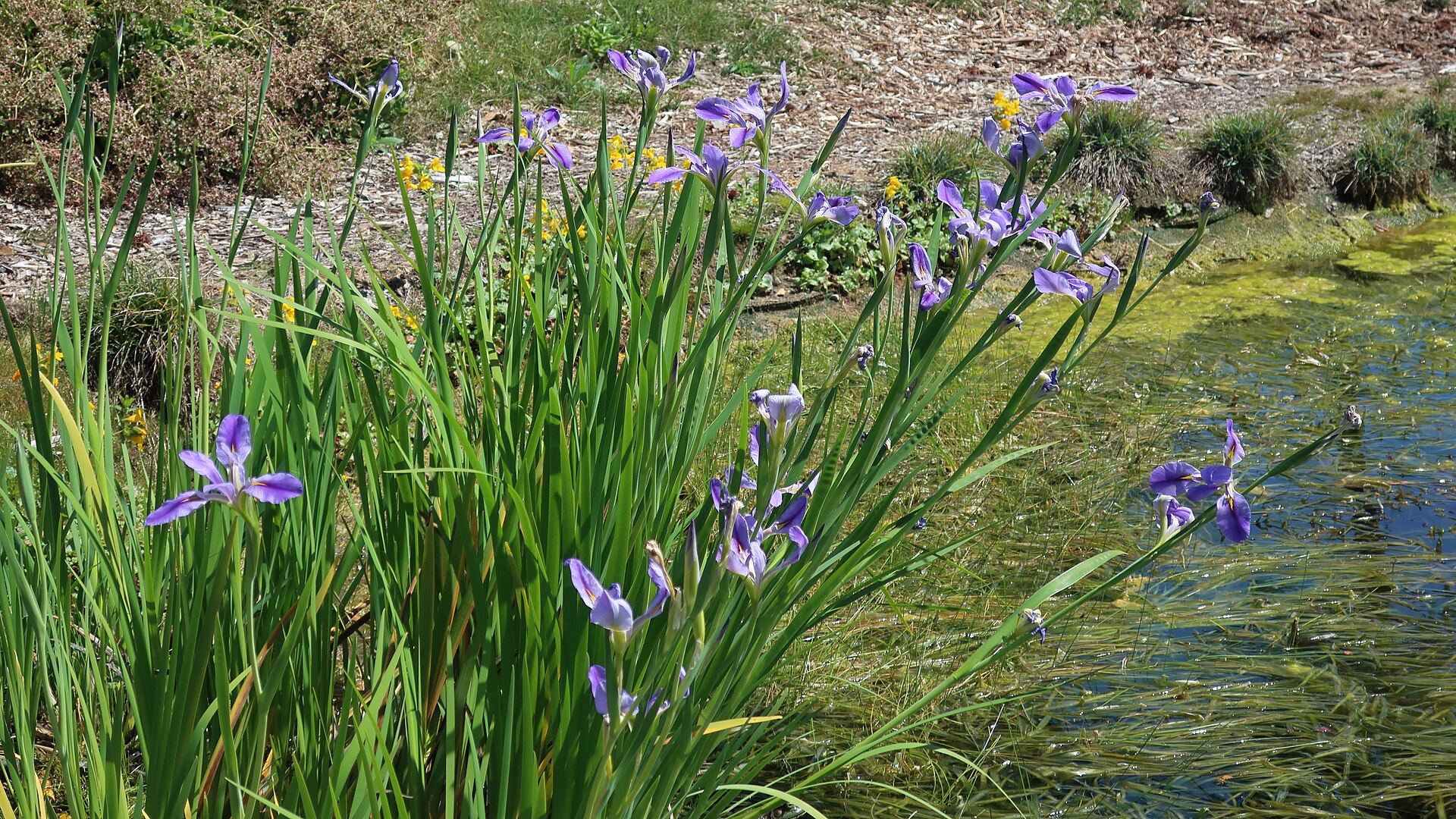
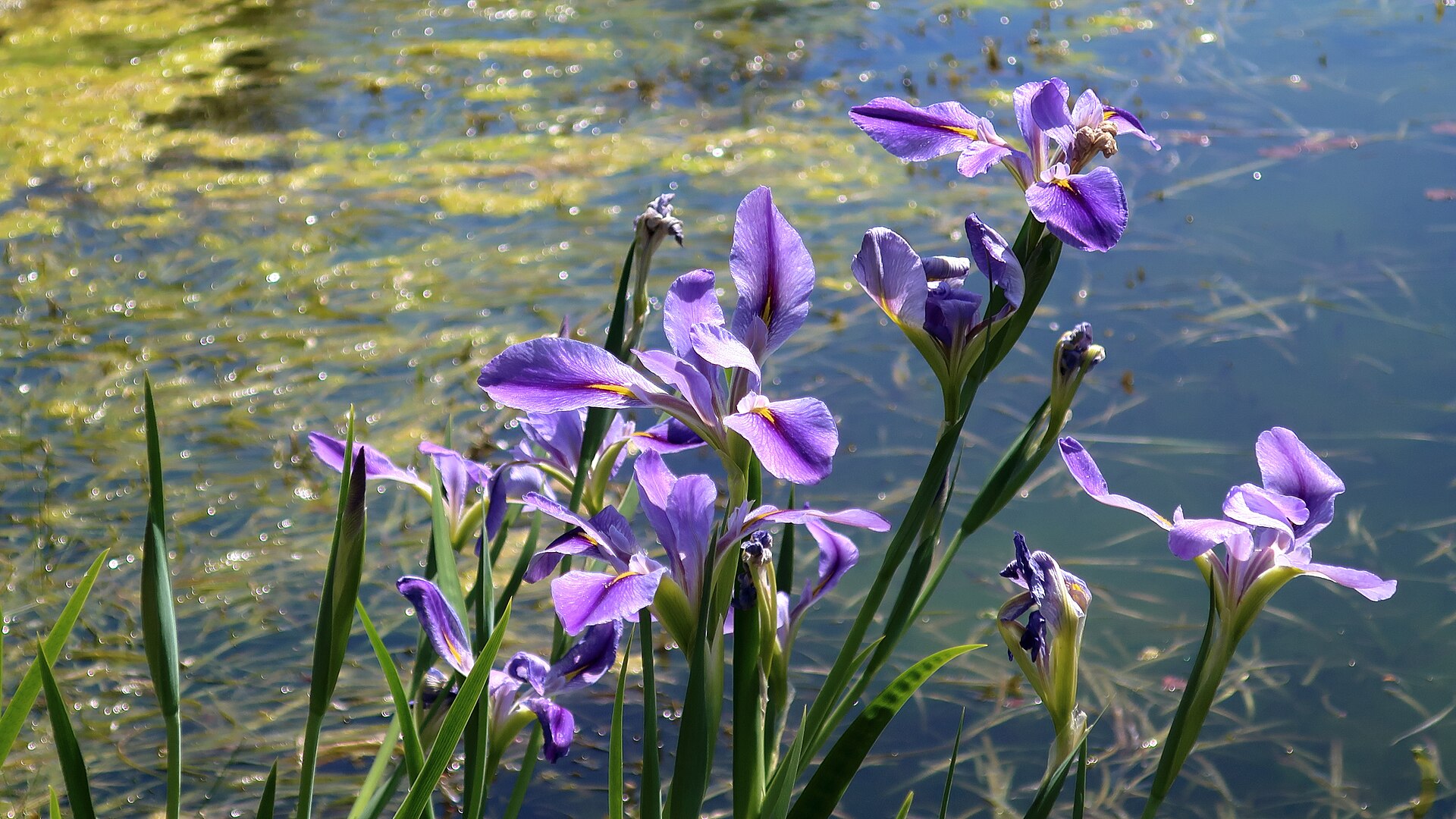
Dixie iris is a native iris of wet prairies and pond edges, with sword-like leaves and blue-violet flowers marked with yellow and white signals that guide pollinators to the nectar. It grows 2 to 4 feet tall, with a clumping habit that suits a moist border, a rain garden, or a pond margin.
Its flowers are the classic iris form, with upright standards and drooping falls, but in softer, wilder colors than bearded irises, and they bloom in spring when the garden is waking up. Its leaves stay green through the warm months and die back in winter, regrowing in spring.
Why this variety
Choose Dixie iris for a moist spot where bearded irises would rot. It wants wet feet, or at least moist soil, and it flowers beautifully there, giving you iris flowers without the drainage demands of bearded types.
It is also a native iris that fits a Florida garden: it tolerates heat and humidity, it handles wet soil, and it naturalizes at a pond edge. A pond margin with Dixie iris in spring is a pond margin that looks intentional.
How to grow
Plant in sun to part shade in moist to wet soil, in fall or spring. Dig a hole twice the pot width, water deeply, mulch, and give it 2 to 3 feet of room. It can be planted at a pond edge in shallow water or in a moist bed, but not in deep water.
Cut back dead foliage in late winter before new growth starts. Divide the clump every few years in fall if it outgrows its space, and replant the divisions at the pond edge or in a moist bed.
Water & feeding
Water deeply once or twice a week while it establishes, and water in dry spells. Dixie iris likes moisture and will grow lushest with even water, though it tolerates short dry spells once rooted.
Feed with compost in spring. In rich, moist soil it grows vigorously, and in poor, dry sand it will be smaller and flower less, so compost and moisture matter.
Common problems
Dry soil: Dixie iris will not thrive in dry sand. Give it the moistest spot you have, or water it in dry spells.
Winter dieback: it dies back in winter in the north of its range. This is normal. Wait until spring growth shows before cutting.
Iris borer and leaf spot: in wet, crowded clumps, borers and leaf spot can occur. Divide crowded clumps, remove affected leaves, and improve air flow.
Confusion with bearded iris: Dixie iris is a beardless, wet-soil iris, not a bearded iris. Do not plant it in dry, well-drained soil expecting bearded iris performance.
Harvest
There is no edible harvest. The harvest is blue-violet iris flowers in spring at a pond edge, and sword-like leaves that look good through summer.
Cut flower stems for a vase in spring if you like, but leave most of them on the plant. A Dixie iris clump in full flower, with its blue-violet blooms over green swords, is the water garden at its most elegant.
Propagation
Dixie iris is not a seed plant in any practical sense for the home gardener. Yes, irises make seed pods, and yes, those seeds can grow, but seed-grown Louisiana irises are a lottery: the group hybridises freely, seedlings take years to flower, and the plant you get will very likely not be the Dixie iris you fell in love with. The way to get more Dixie iris, reliably and exactly, is the way Louisiana iris growers have always done it: divide the rhizomes. Division gives you clones, not cousins, and it rejuvenates a clump that has grown crowded and shy about blooming, all in the same afternoon’s work.
Time it for late summer into early fall, roughly August through early October in the South, when the plants are coming out of their summer rest and gearing up for autumn growth. Water the clump the day before so the soil lifts easily, then dig around it with a fork and lift the whole clump, mud and all. Wash or shake the soil off so you can actually see what you are doing, because Louisiana iris rhizomes in wet soil all look like one tangled octopus until they are clean. What you are looking for is the young rhizomes, the ones with a fan of green leaves at their tip. Those are next year’s flowers. Break or cut them away from the old, spent rhizome behind them, and discard the old pieces without guilt: they have done their work and are unlikely to bloom well again.
Replant immediately, and do not let the divisions dry out in the sun while you decide where they go. Lay each rhizome horizontally, fan pointing in the direction you want it to grow, and cover it with only about half an inch to an inch of soil: Louisiana iris rhizomes sit at or just below the surface, and planting them deep is the classic way to get leaves and no flowers. Space divisions roughly 8 to 10 inches apart, which feels generous on planting day and looks exactly right by the second spring, and mulch with a couple of inches of organic mulch to hold moisture and protect the shallow rhizomes from sunscald. Water them in well, keep them moist while they establish, and feed in autumn when new growth begins and again in late winter, following the rhythm Louisiana iris growers use. Divide again every few years, or whenever a clump’s centre goes quiet and its flowering fades, and you will never need to buy Dixie iris twice: you will be giving it away to neighbours, which is the proper fate of a good Louisiana iris.