
🔥 Dropmore Scarlet Honeysuckle
What it looks like
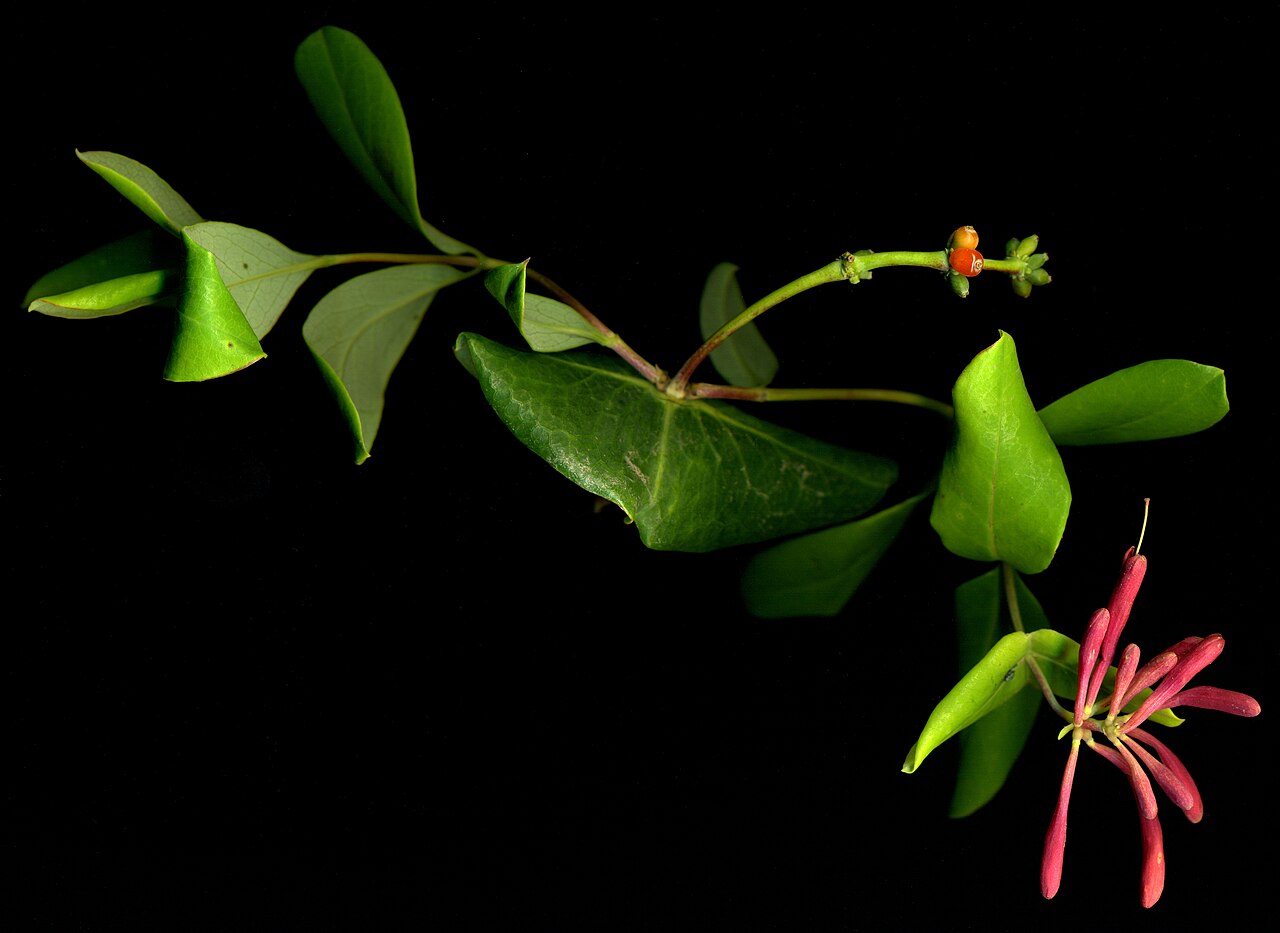
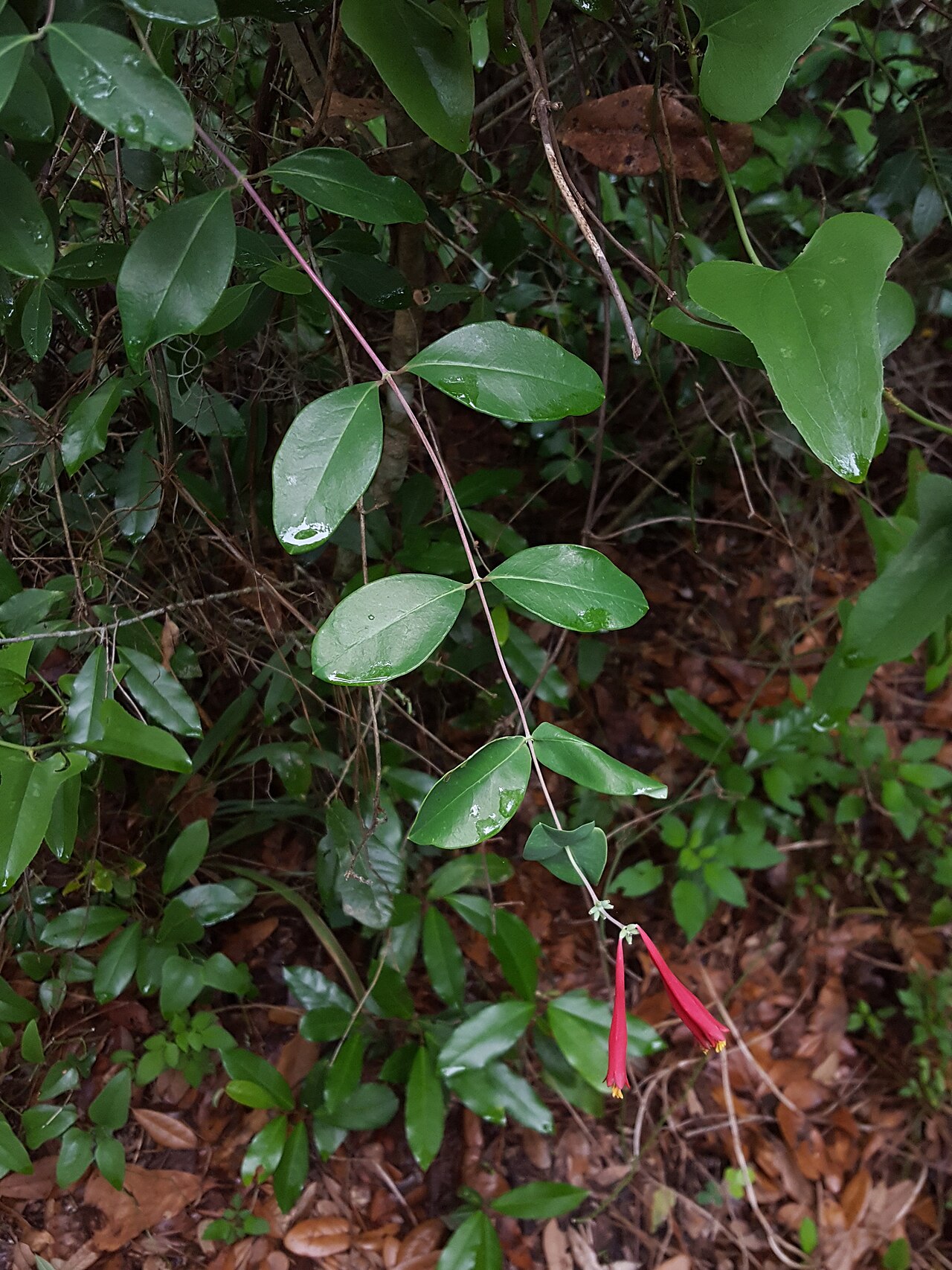
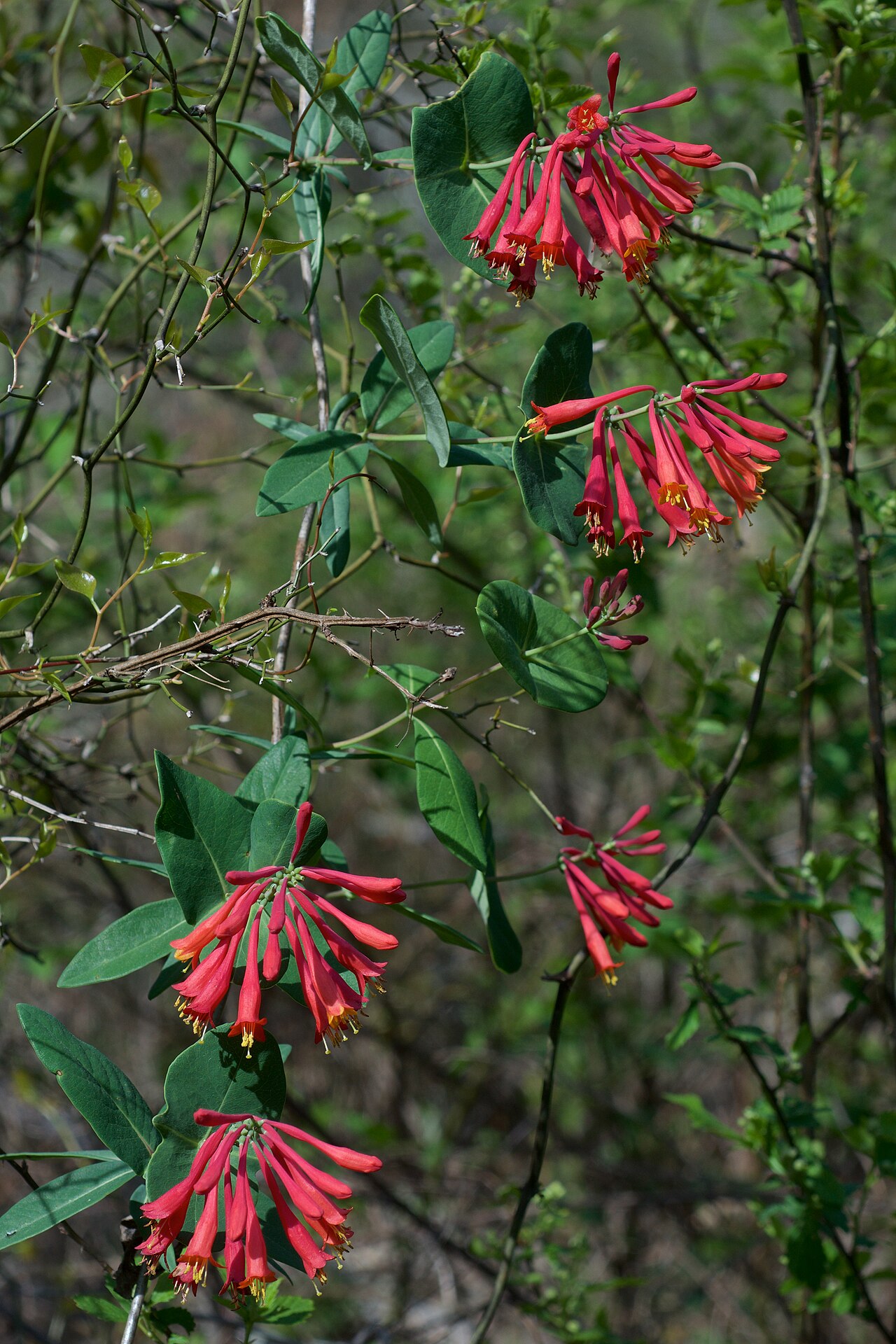
Photos show the species, Honeysuckle, since no cultivar-specific photo has been verified for this variety — the species photos above are already hosted on this site and attributed as on the species guide.
Why this variety
Dropmore Scarlet is a hybrid honeysuckle (Lonicera x brownii) bred for exactly what gardeners want from a trumpet vine: masses of flaming scarlet, tubular flowers with orange throats, opening late spring and repeating into fall, on a vigorous semi-evergreen climber. It was introduced by Dropmore Nurseries in Canada, which tells you its hardiness credentials — this is a vine built to survive real winters, not just mild ones.
It is not a native coral honeysuckle, and this guide does not pretend otherwise: it is a hybrid with coral honeysuckle in its parentage, and it is non-invasive, which is the point that matters most. Its flowers are not fragrant — a trade for that scarlet colour — but hummingbirds do not care about perfume, and neither, once they see the fence, will you. In Florida, treat it as a North and Central Florida plant; South Florida’s relentless heat and humidity are harder on it than a Canadian winter is.
How to grow
Plant in sun to part shade in well-drained soil, against a trellis, fence, or arbor, and give it room: 15-20 feet of growth is normal on a good support. It climbs by twining, so wires or lattice are essential. In Florida, give it afternoon shade in the hottest gardens and mulch heavily to keep roots cool — the ‘head in the sun, feet in the shade’ rule that clematis made famous applies to honeysuckle too.
Prune after the main flush to shape and encourage rebloom, and thin crowded stems for airflow — humidity is this vine’s Florida enemy, not cold. Work worm castings into the planting hole and top-dress with compost in spring; in sandy soils, organic matter is the difference between a vine that merely survives and one that flowers its head off.
For the general picture, start with the Honeysuckle growing guide, then use this guide for the details that make Dropmore Scarlet different. And a plain-language note on the hero stats above, because vines and shrubs are not vegetables: “Spacing” here means mature planting distance, and “Days to harvest” means time to first bloom — the moment the plant starts paying you back in flowers, not a picking date.
And a plain-language note on the hero stats above, because vines and shrubs are not vegetables: “Spacing” here means mature planting distance, and “Days to harvest” means time to first bloom — the moment the plant starts paying you back in flowers, not a picking date.
Water & feeding
Water to establish, then deeply during dry spells; consistent moisture extends bloom, while drought stress shortens it. Water at soil level, mulch thickly, and feed in spring with a balanced organic fertilizer. Avoid wetting foliage late in the day, which invites mildew in humid weather.
Common problems
- Aphids on tender shoot tips in spring — a strong jet of water usually ends the party; ladybugs finish it.
- Powdery mildew in humid, still air — give it sun and airflow, and avoid overhead watering late in the day.
- Japanese honeysuckle confusion — if a volunteer honeysuckle shows fragrant cream-to-yellow flowers and black berries, that is the invasive Lonicera japonica, not this plant. Remove it rather than trellising it.
- Leaf damage from honeysuckle leaf miners or caterpillars — cosmetic on a vigorous vine; prune out badly hit stems rather than spraying the hummingbirds’ dinner.
Harvest
The harvest is a scarlet fence and a hummingbird highway from late spring to fall. Cut stems in the morning for vases — the trumpets hold their colour well — and prune lightly through the season to keep new flowers coming. As with all honeysuckles, the berries are ornamental, not edible, and this guide’s harvest stops at flowers and wildlife.
Browse all plant & pest guides
Saving seeds
Dropmore Scarlet is a hybrid honeysuckle, Lonicera × brownii, so seedlings won’t hold its scarlet flowers — propagate it by cuttings or layering instead. The Saving seeds section of the Honeysuckle guide covers seed for the species generally.