
🍐 Duku Langsat
What it looks like
Why this variety
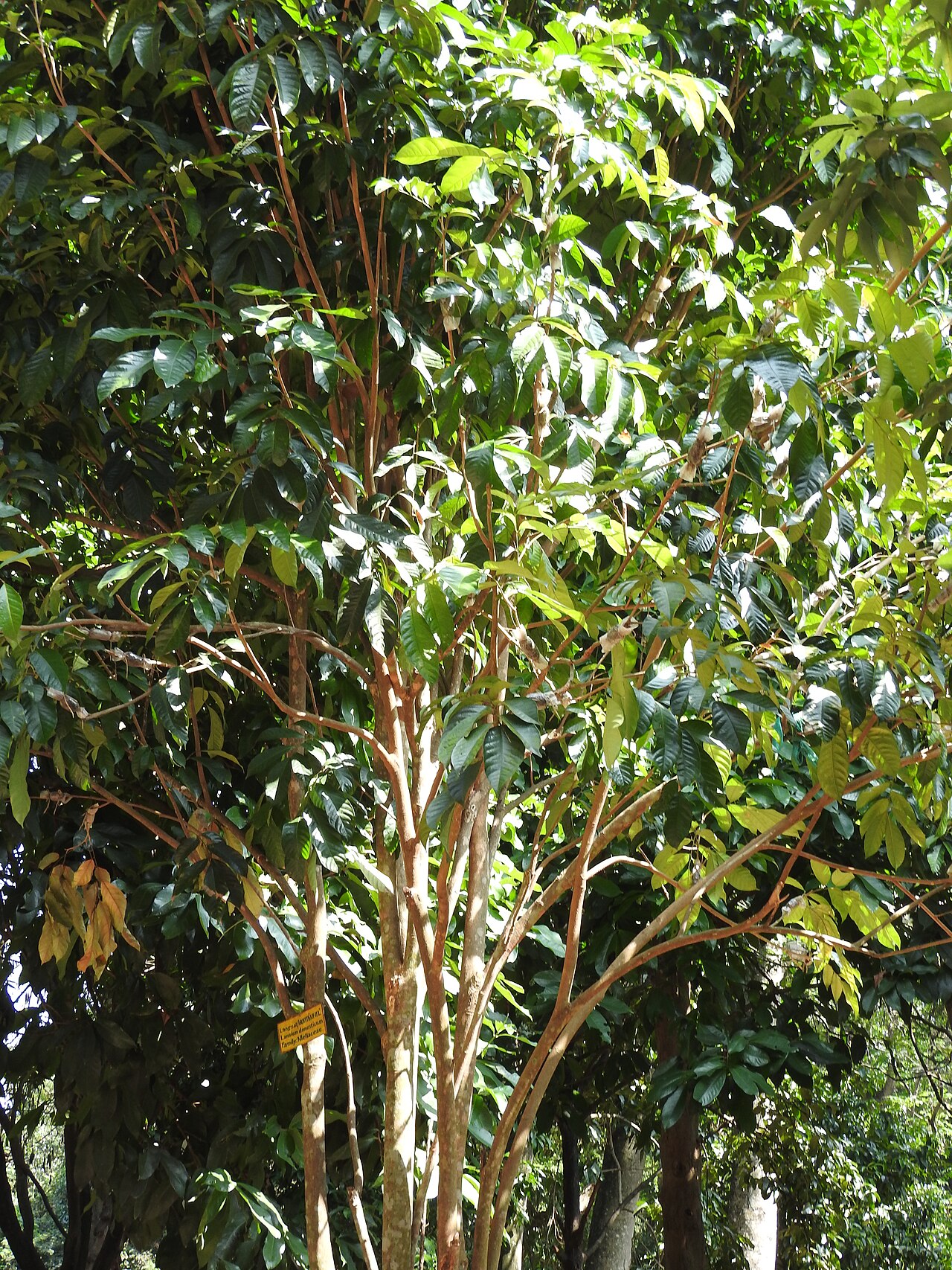
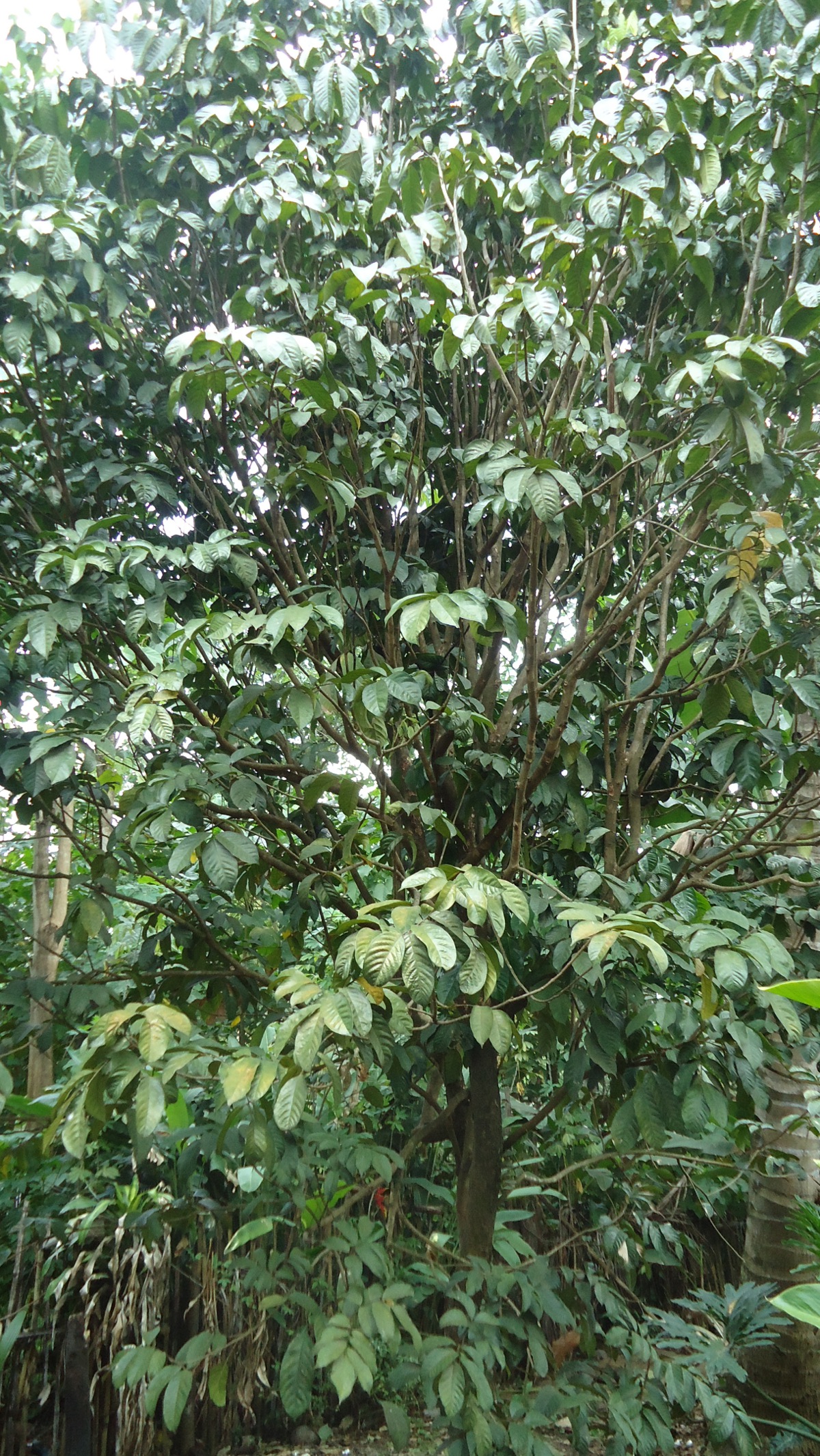
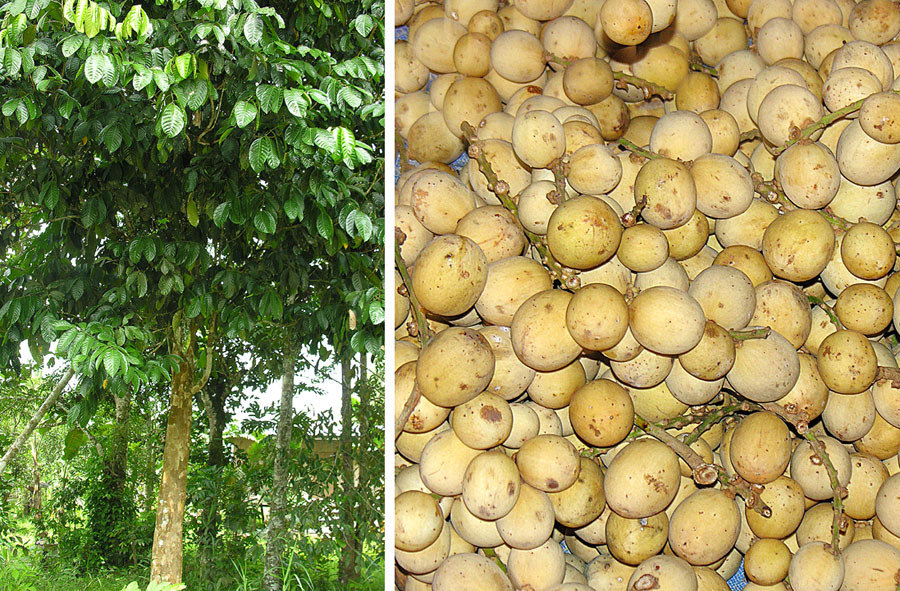
Duku is the langsat for fresh eating: the more robust of the two most commonly grown langsat cultivars, with dense, spreading crowns of bright green leaves and short bunches of large, round fruit with thick skins that have little or no latex when ripe — which matters, because langsat latex is bitter and sticky, and a latex-free peel is the difference between a pleasant fruit and a messy one. Inside, Duku fruit has thick, sweet-scented flesh, one or two small seeds, and a sweet-to-sour flavor that eats like a grape crossed with a lychee, in translucent segments that peel apart like a tiny citrus. In Southeast Asia, Duku is the langsat of markets and home gardens, prized for size and sweetness.
The trade-off is time and tropicality in their most extreme form. Duku trees grown from seed take ten to fifteen years to fruit, and even grafted trees need years; this is a tree for patient gardeners, not for next summer’s harvest. It also needs a frost-free, humid, tropical climate — South Florida at the very edge of its range, and even there a cold snap can damage it — plus rich, moist soil and room, because a mature langsat is a twenty-five-to-thirty-foot tree. Buy a grafted tree, water faithfully, and do not plant Duku expecting fruit in a few years: plant it as a legacy, and let the wait be part of the story.
If you are new to choosing between cultivars, the Varieties Matter guide explains why the name after the plant matters as much as the plant itself. Duku is a perfect example: it is not just a langsat in the abstract, it is a langsat with a specific job, a specific history, and specific strengths.
Florida honesty: langsat is a South Florida trial, not a statewide fruit — it needs frost-free warmth and humidity that only the warmest parts of the state approach, and even there it is marginal. Grow Duku in the most sheltered, humid, frost-free microclimate you own, in rich, moist soil with part shade while young, or in a large container while small. In Central and North Florida, langsat is a greenhouse plant, not a garden plant, and this guide does not pretend otherwise. The trial is the romance: a Southeast Asian fruit tree growing, carefully, in Florida.
How to grow
Plant a grafted nursery tree in spring in part shade while young, moving to full sun to part shade as it grows, in rich, moist soil — langsat wants warmth, humidity, and faithful water, not frost, drought, or wind. Work worm castings and compost into the planting hole, water deeply to establish and then regularly, and mulch deeply to hold moisture. Give it twenty-five to thirty feet of room, prune lightly to keep the tree pickable, and be patient on a scale most fruit trees do not demand: langsat takes years, often a decade from seed, before its first fruit, and grafted trees still need years. In Central and North Florida, grow langsat in a greenhouse, not the garden.
Set plants 25-30 feet apart in soil with a pH around 5.5-6.5. Work worm castings into the bed at planting and mulch to hold moisture. A well-fed langsat plant rewards that care directly: steadier growth, better bloom, and a show that actually shows up.
Water & feeding
Keep soil evenly moist but not waterlogged — langsat wants tropical moisture year-round, and a tree that dries out drops leaves and stalls for a season. Water at the soil line, mulch deeply to hold moisture, and feed regularly: castings at planting plus a balanced organic feed through the growing season keeps growth steady. In a drought, water deeply and regularly; in a wet season, drainage matters, and a langsat that stands in water will show root problems before it shows gratitude. Young trees need part shade and shelter from wind as well as water.
Common problems
- Decade-plus wait for fruit from seed — langsat takes ten to fifteen years from seed; buy grafted trees and still expect years.
- Freeze damage outside South Florida — langsat dies back in cold; it is a South Florida trial or a greenhouse plant, full stop.
- Drought stalling and leaf drop — langsat wants tropical moisture year-round; a tree that dries out stalls for a season.
- Birds and bats on ripe clusters — net or pick promptly when fruit colors, especially Longkong’s long clusters.
- Latex bitterness in underripe fruit — pick only fully ripe fruit; unripe langsat latex is bitter and sticky, and ripe fruit is the whole point.
Harvest
Pick fruit in summer, when clusters are fully pale yellow and fruit gives slightly under the thumb — langsat does not ripen much further off the tree, so taste one before picking a cluster. Peel by pinching the skin and popping out the translucent segments, eating fresh or in fruit salads the same day, because langsat keeps only a few days fresh. A mature tree fruits in flushes, so pick every few days during a flush, and net clusters if birds find them first. The first fruit of a langsat tree — years in the making — deserves a ceremony, or at least a photograph.
Browse all plant & pest guides
Saving seeds
Duku is a named langsat cultivar, and seed-grown langsat takes ten to fifteen years to fruit — buy a grafted tree from a reputable nursery instead. The Propagation section of the Langsat guide covers the route.