
🎯 Early Blight
Signs and symptoms
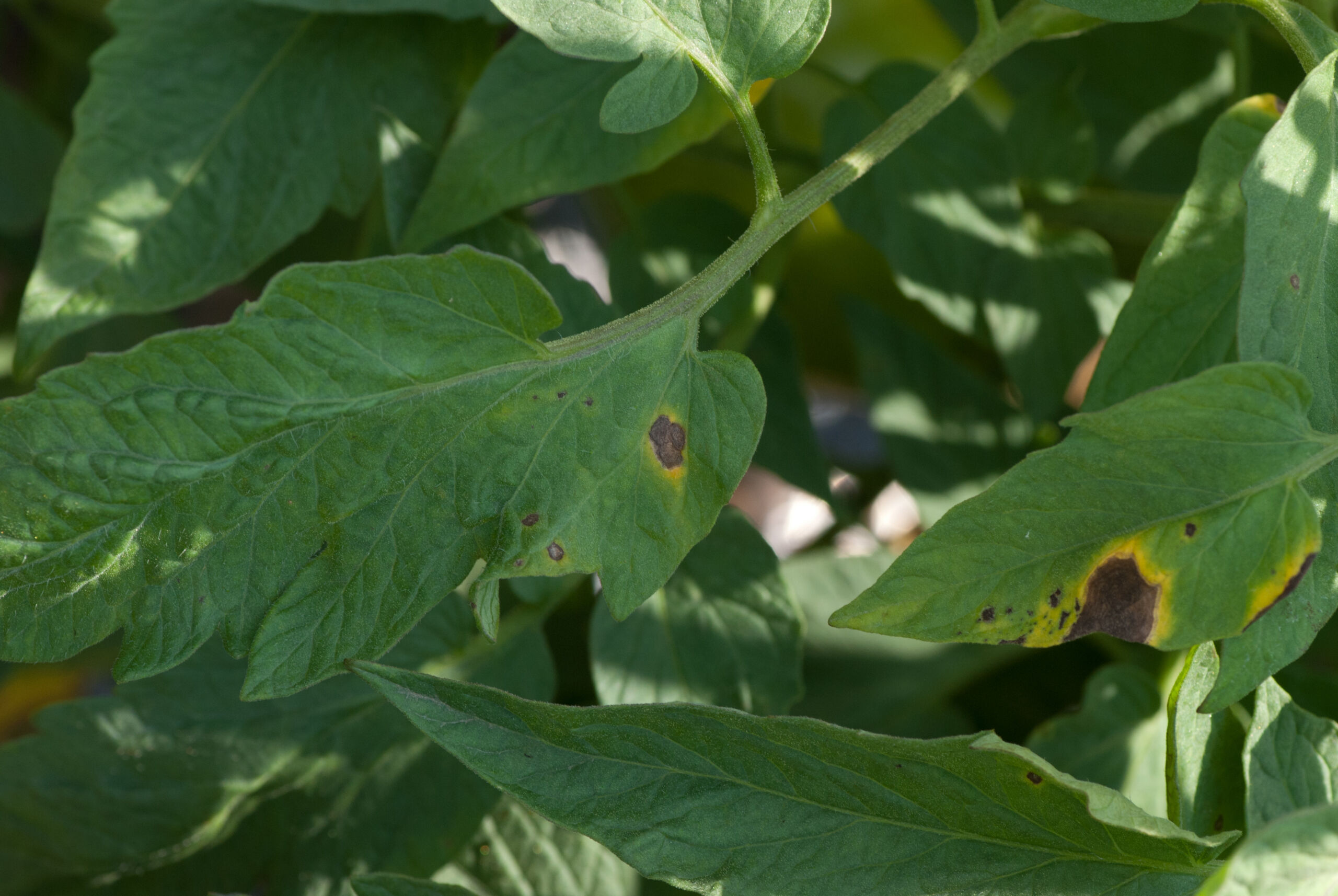
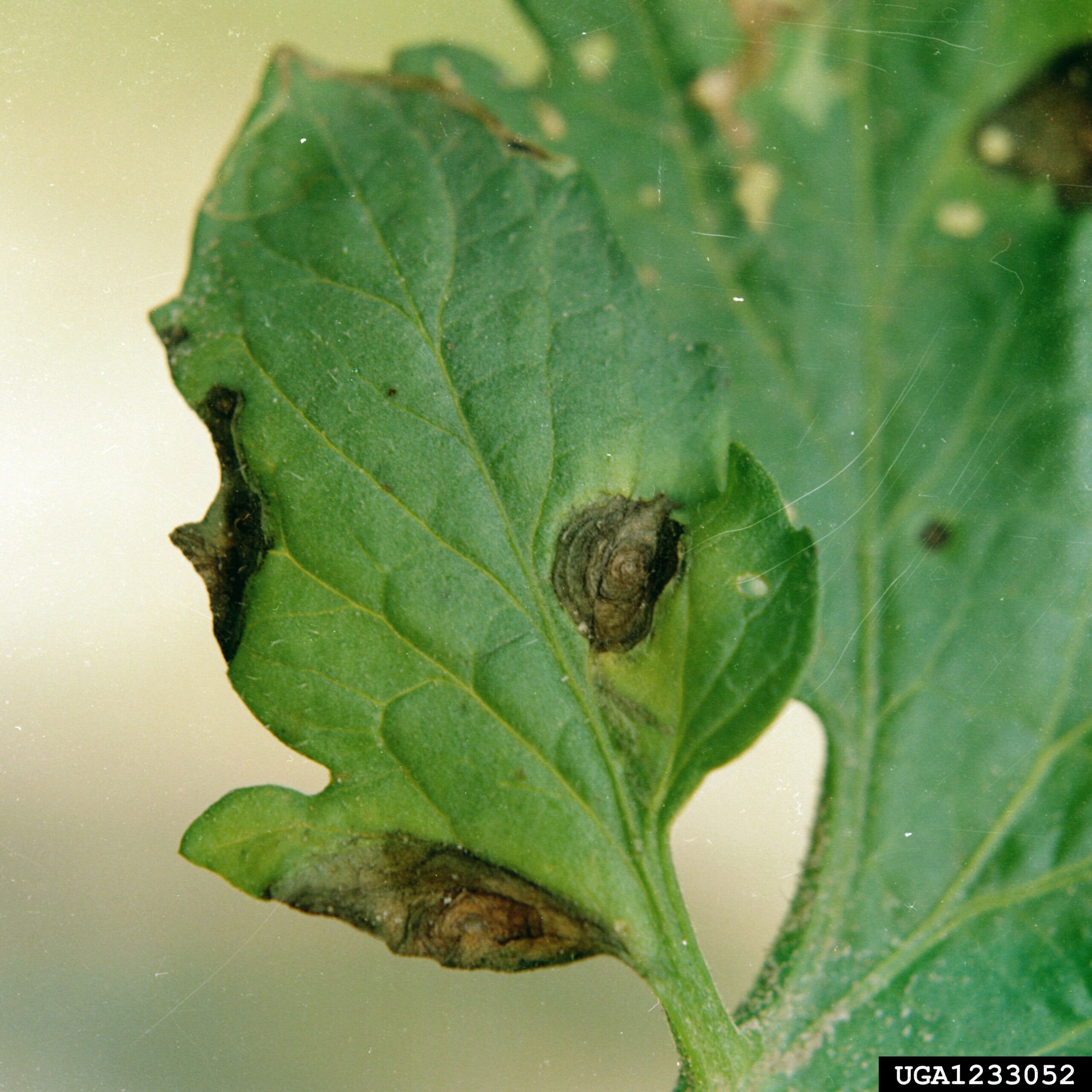
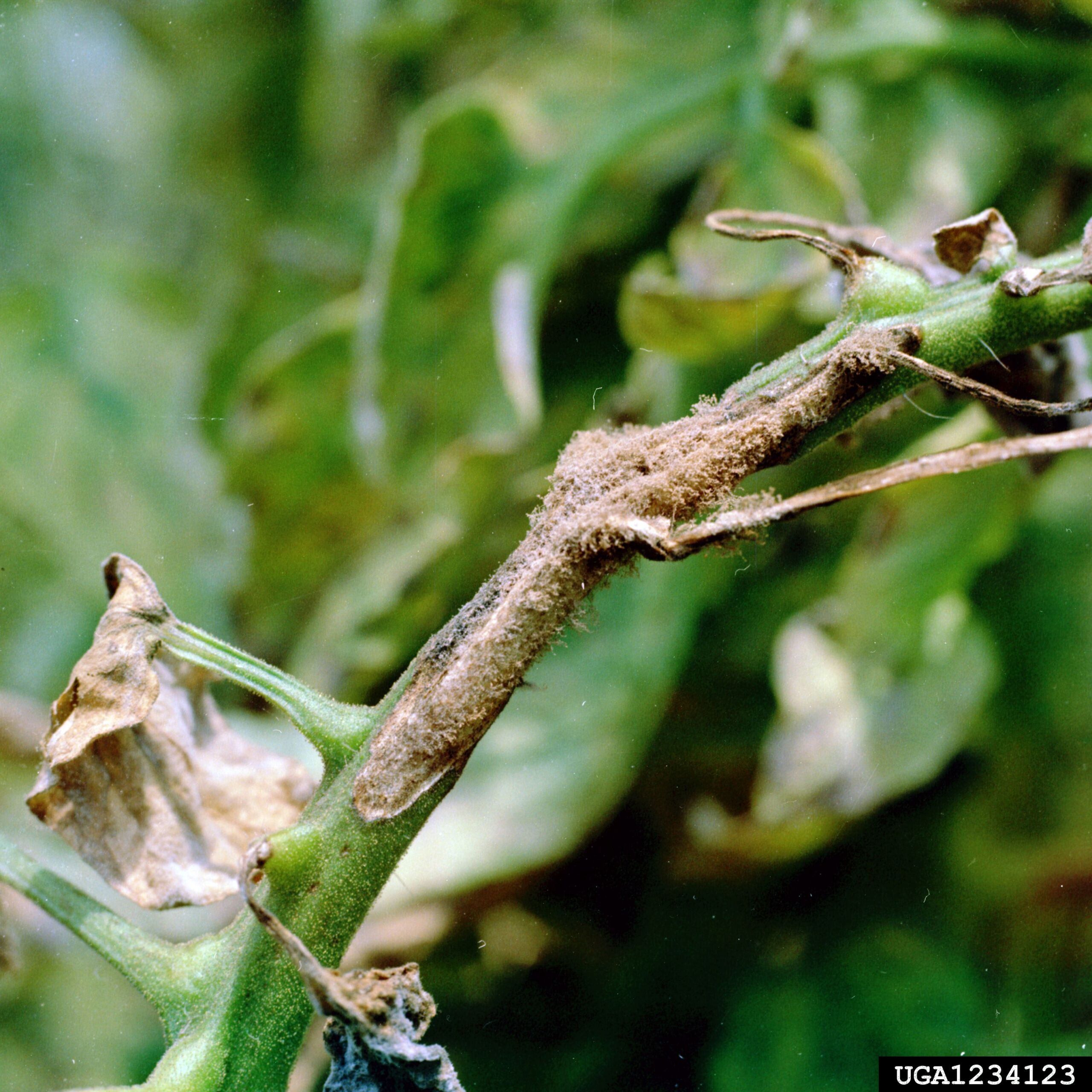
Dark brown spots with concentric “target” or bullseye rings start on the older, lower leaves and march upward. Leaves yellow around the spots and drop, stems develop lesions, and fruit gets leathery, sunken lesions near the stem end. Taxonomy note: newer classifications place the tomato early blight fungus in Alternaria linariae, and naming in this group is still in flux across sources — A. solani is the name most gardeners will meet in extension literature.
Plants it attacks
Tomato, potato, and eggplant — the solanaceous crew, with tomato taking the hardest hit.
What to do
- Remove the lower affected leaves first, and keep them out of the compost.
- Mulch to cut soil splash onto the lower leaves.
- Stake and prune for air flow so leaves dry faster.
- Rotate out of solanaceous crops and choose resistant or tolerant varieties where available.
- A labelled fungicide is a later option only, per its label.
Prevention
Mulch, water at the base, space plants well, rotate 2–3 years out of tomatoes, potatoes, and eggplant where practical, and clean up all debris at season’s end. Early blight overwinters in debris, so a tidy bed is a healthier bed.