
🎻 Fiddleneck
What it looks like
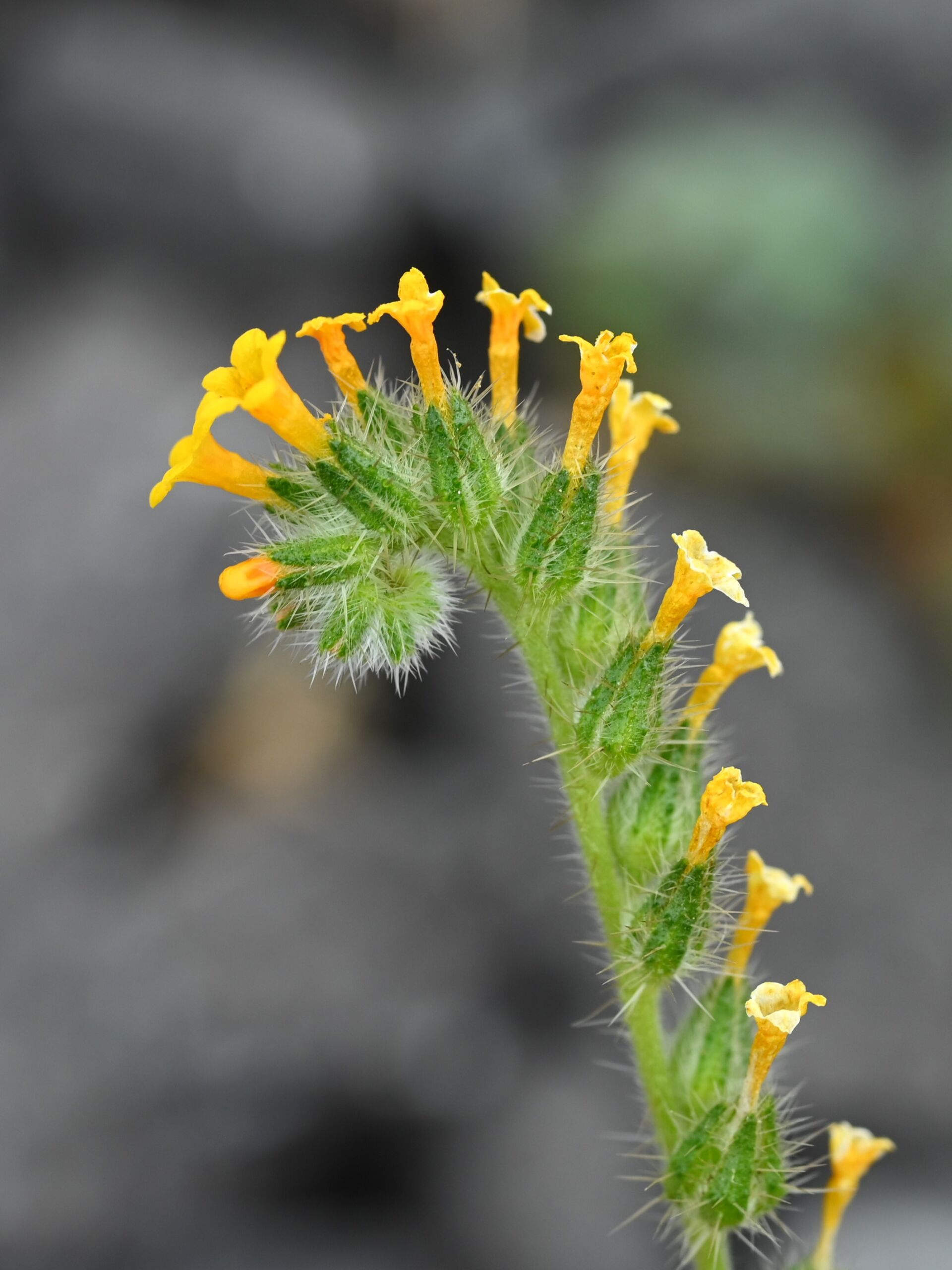
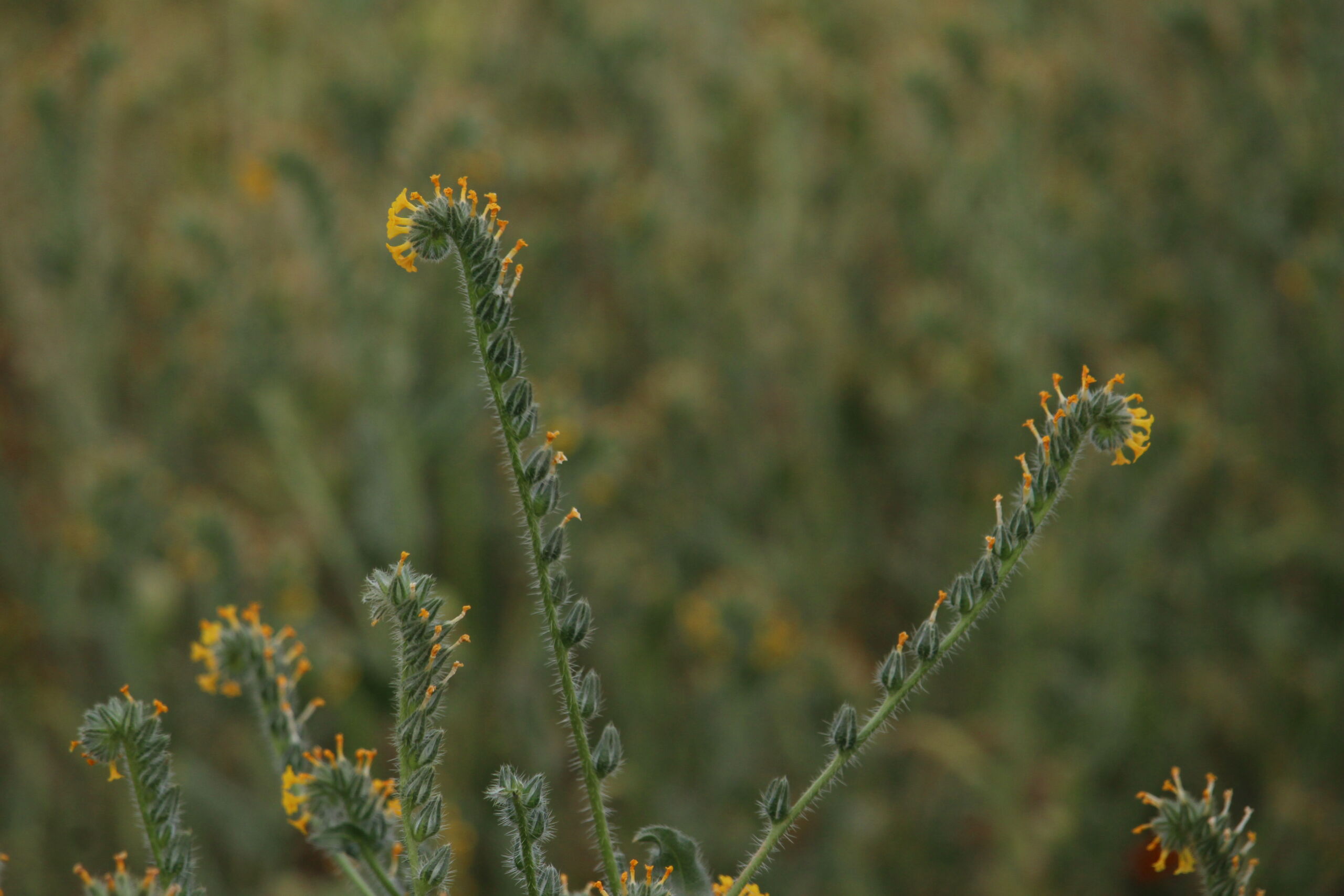
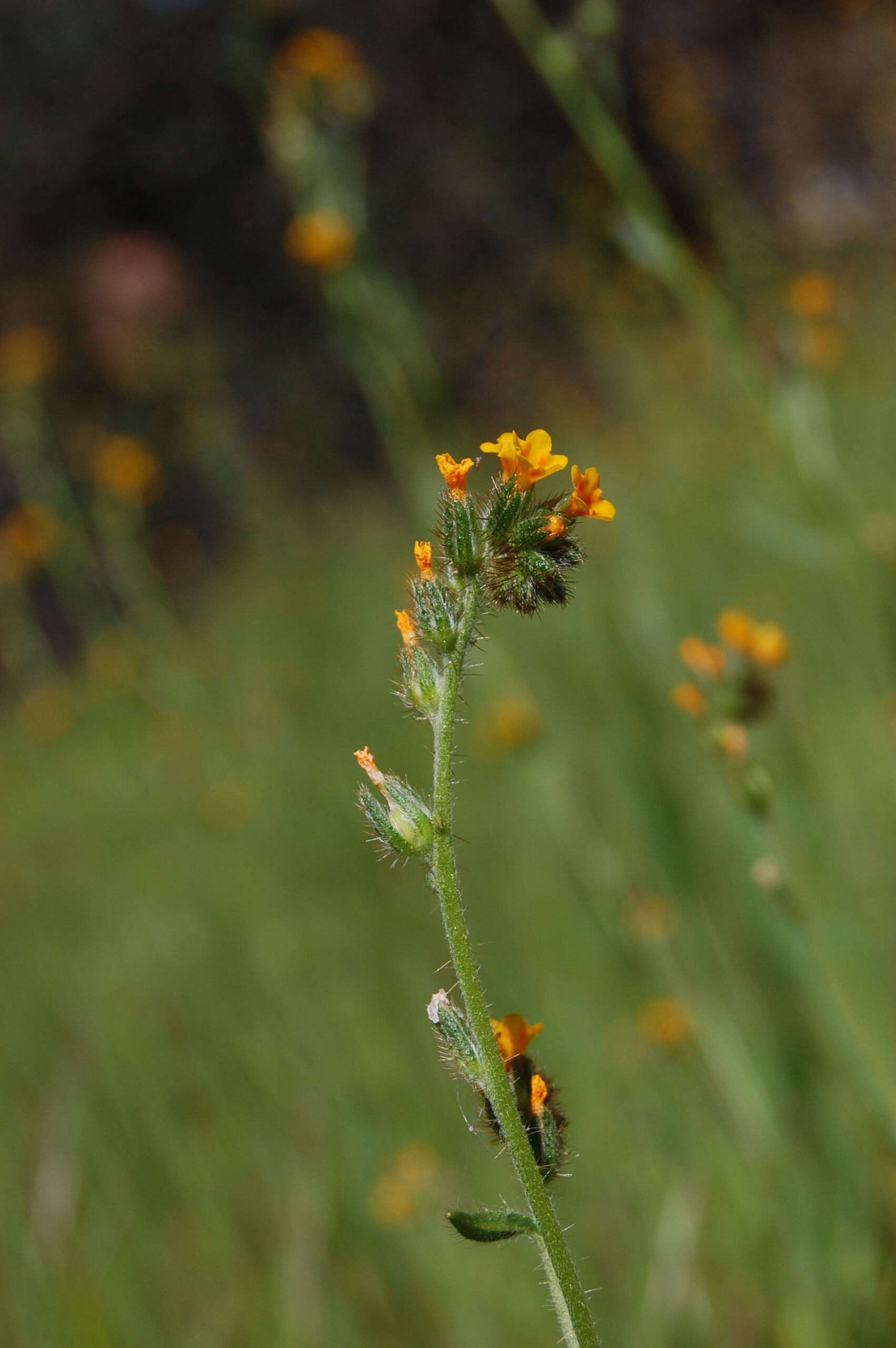
Amsinckia is a genus of about 15 annual flowering plants in the borage family (Boraginaceae), native to western North America and southwestern South America, and its common name is the best field mark in the whole genus. The flower stems curl at the top like the neck of a fiddle — botanists call this a scorpioid cyme, a coil that unrolls as it blooms, opening a few small flowers at a time from the bottom of the curl upward. Stand in a western spring meadow when the fiddlenecks are out and you will see the joke the name is making: hundreds of little golden scrolls, each one slowly unrolling into bloom. The genus is named for Wilhelm Amsinck, a Hamburg head of state and patron of botany, which is a grand namesake for a plant most people walk past without noticing.
What fiddlenecks look like depends on the species, but the family resemblance is unmistakable. Plants are erect, bristly-hairy annuals, usually 8 inches to 2 feet tall, with narrow, lance-shaped leaves that feel rough to the touch — those stiff hairs are the plant’s armor against hungry mouths and drying wind. The flowers are small, tubular, and yellow to yellow-orange, packed along the coiled spike, and they open in succession through spring, so a single plant can feed pollinators for weeks. Common fiddleneck (A. intermedia, often treated as A. menziesii var. intermedia) grows 1 to 3 feet tall; Menzies’ fiddleneck (A. menziesii) reaches about 2 feet 7 inches; bristly fiddleneck (A. tessellata) reaches about 2 feet. None of them is a garden showpiece in the petunia sense. All of them are exactly what a dry western landscape wants: fast, tough, golden, and gone by summer.
The habitat tells you everything about the plant. Fiddlenecks grow in deserts, sandy flats, grasslands, foothills, roadsides, and disturbed soils — the open, sunny, dry places where fussier plants give up. They are winter annuals in much of their range: seeds germinate with the winter rains, plants grow through the cool months, and they flower prolifically in spring, carpeting whole landscapes in yellow before the summer heat shuts the show down. After a wet winter, desert fiddleneck displays can be spectacular, whole hillsides going gold at once. That boom-and-bust life cycle is the whole strategy: live fast, flower hard, set seed, and wait out the dry season as seed in the soil.
For butterflies, fiddleneck is a nectar plant, not a host plant — and in the western guides that mention it, that distinction matters. In butterfly guides, fiddleneck appears as a nectar source for the silvery blue butterfly, the propertius duskywing, and the sara orangetip, all western butterflies whose adults visit small, accessible spring flowers. The silvery blue visits it alongside wild mustard and dandelion; the propertius duskywing visits it alongside vetches, blue dicks, phacelia, and yerba santa; the sara orangetip visits it among early spring flowers including mustard flowers, California buckeye, yerba santa, and blue dicks. Fiddleneck does not feed their caterpillars — those eat legumes and mustards — but it feeds the adults, and in a dry spring landscape, a patch of fiddleneck in bloom is a fuel stop. Plant it for the butterflies and you are planting a nectar bar, not a nursery.
How to grow
Fiddleneck is a wildflower, not a bedding plant, and the way to grow it is to copy its home ground. Sow seed in fall or very early spring, in full sun — it cannot grow in shade — in ordinary garden soil that drains well. It accepts sandy, loamy, and even clay soils, and it grows in nutritionally poor soil, so do not enrich the bed the way you would for vegetables. Rich soil and regular feeding produce lush plants that flop and finish early; lean, sunny, well-drained ground produces the dense, golden stands the plant is famous for. Scatter the seed where you want the plants, press it lightly into the soil, and water just enough to get germination going. Then step back. This is a plant that thrives on neglect in the right climate and resents fussing everywhere else.
Timing is the whole trick. In mild-winter western climates, fall sowing lets seeds germinate with the winter rains and grow as cool-season annuals, flowering in spring. In colder areas, early spring sowing after the soil can be worked gives a shorter but still real display. Either way, expect a short life: fiddlenecks complete their cycle quickly in spring and die back as heat arrives. That is not failure, it is the plan. Let the plants set seed before you clear them, and they will sow themselves for next year — in the right spot, a fiddleneck patch becomes self-renewing, coming back thicker after wet winters and thinner after dry ones, the way wildflower patches do.
Choose your spot the way the plant would. Open ground, no tree canopy, no irrigation-dependent neighbors that will shade it out or swamp it. Roadsides, meadow edges, dry banks, the sunny strip along a fence — fiddleneck is a naturalized-area plant, not a formal-bed plant, and it looks best in drifts with other western spring wildflowers: phacelia, poppies, lupines, and blue dicks are the neighbors it keeps in the wild. Do not plant it in a perennial border and expect it to behave like a perennial. It is an annual with one job — spring gold — and it does that job brilliantly, then hands the bed back to summer plants.
Florida note: Be honest about this one: fiddleneck is a western plant, and Florida is not its home. The butterfly guides that mention it are western guides, and the plant’s whole life cycle is built around western winter rains and dry summers, not Florida humidity and summer downpours. Florida gardeners should not expect fiddleneck to perform here, and should not plant it hoping to feed Florida butterflies — the nectar plants that matter in Florida are a different cast entirely. This guide exists because the butterfly guides mention the plant, and because a gardener who finds the name in a western butterfly guide deserves to know what it is, not because it belongs in a Florida bed.
Water & feeding
Water needs are low, which is the point of the plant. Fiddlenecks prefer dry or moist soil and tolerate drought, and in their home range they live on winter rain and then flower on stored moisture. Water to establish seedlings after sowing, then water sparingly — a deep drink now and then in a dry spring is plenty, and constant irrigation is actively unhelpful, encouraging soft growth and fungal problems in a plant built for dry air. Do not keep the soil soggy. Well-drained is the rule, and fiddleneck would rather be a little dry than waterlogged.
Feeding: do not bother. Fiddleneck grows in nutritionally poor soil and needs no supplemental fertilizer. A light compost amendment at sowing, if your soil is truly skeletal, is the most it ever wants — and even that is optional. This is a plant that evolved to turn disturbed, sun-baked ground into flowers, and it resents being treated like a prima donna. The soil science note is worth repeating: in dry soils, the bristly hairs and fast life cycle are the plant’s drought strategy, not a defect — hairs cut water loss and deter grazers, and finishing before summer means never having to survive the hardest months at all.
Common problems
- It dies in summer — that is normal. Fiddleneck is a cool-season annual. Yellowing and dying back as heat arrives is the life cycle completing, not a disease. Let it set seed and it will return.
- Shade kills it. Fiddleneck cannot grow in shade. If your patch is leggy, pale, or fails to flower, the likeliest cause is too little sun, not too little water or food.
- Too much water and food. Rich, constantly wet soil produces floppy plants and invites rot. Lean soil and restraint produce sturdier plants and better bloom.
- It self-seeds enthusiastically. In the right climate, a fiddleneck patch sows itself. If you do not want it spreading, pull plants before the seed ripens — or embrace the volunteers as free spring color.
- Livestock toxicity. Fiddlenecks are on livestock-poisonous plant lists — they contain pyrrolizidine alkaloids that can harm grazing animals, especially when eaten in quantity over time. Do not plant fiddleneck in or beside pasture, and do not feed it to livestock. This is a pollinator plant for wildflower areas, not forage.
- It is not a Florida plant. Humidity, summer rain, and warm winters work against a western winter annual. Poor performance in Florida is a climate mismatch, not a gardening failure.
Harvest
There is no kitchen harvest here, and that is worth saying plainly: fiddleneck is not a food or herb crop, and its livestock toxicity means it should not be treated as one. The harvest is the flower display itself, and the seed for next year. If you want a bouquet, cut the coiled spikes at their peak — they hold their curl and color well for a few days in water, and they look wonderful in a wildflower arrangement precisely because nothing else in the vase curls like that. For seed, wait until the spikes dry and the small nutlets loosen, then shake the stems over paper and store the seed dry and cool for fall sowing. And the simplest harvest: leave a few spikes standing for the seed-eating birds and the next generation of plants. That is the crop, and it feeds everyone it is meant to feed.
Browse all plant & pest guides
Saving seeds
Stop and read this first, because it changes everything about how you handle this seed: fiddleneck, Amsinckia species, contains pyrrolizidine alkaloids, cumulative liver toxins that are not destroyed by drying, cooking, or fermenting. The seeds, the small hard nutlets, are among the most toxic parts, and livestock poisoning, especially in horses, cattle, and pigs, has repeatedly traced back to feed or hay contaminated with fiddleneck seed, while sheep are notably more resistant. This is not a food plant, not a feed plant, and not a plant whose seed should ever be stored in a kitchen jar, shared as an edible, or allowed anywhere near hay, grain, or animal feed. Save its seed only as an ornamental and pollinator plant, in a clearly labelled packet that says, in plain words, toxic, not food, and keep it far from pasture and from any place where hay is cut. If you keep livestock, the honest question is whether to grow fiddleneck at all, and if the answer is yes, it belongs in a contained flower patch well away from grazing and hay ground, never in or beside a pasture.
With that warning in place, the method itself is straightforward, and it is given here at the genus level, because this guide covers fiddlenecks as a group and the Amsinckia species share the same annual habit and coiled flower spikes. Fiddleneck germinates after winter rains, flowers profusely in spring, and sets nutlets along those curling spikes as they straighten and dry. Collect when the spikes have turned brown and dry and the nutlets come away easily, cutting whole spikes into a paper bag on a dry day. Wear gloves: the plants are densely hairy, and handling them bare-handed is an itchy regret. Dry the spikes in the bag for a week or more, rub and shake to free the nutlets, and winnow away the chaff. Dry the cleaned nutlets thoroughly before storage, which matters in Florida humidity even for a western dry-country plant, then store in an airtight container with a desiccant packet, in a cool, dark place, labelled with the genus, the year, and the toxicity warning. No special pretreatment is needed: fall sowing, ahead of your cool season, is the natural rhythm, and germination is usually quick once conditions suit.
Will seedlings grow true? As a group of wild annual species, fiddleneck seed generally produces plants recognizably like its parents, but the genus holds many similar-looking species that can be hard to tell apart, so if exact identity matters to you, save seed from a patch of a single species, grown away from other fiddlenecks in flower, and do not assume a volunteer that appears in a new corner is the same species you planted. And the stewardship note, because fiddleneck is a prolific reseeder that spreads aggressively in disturbed ground: if you do not want it everywhere, cut or pull plants before seed sets, and do not compost seeding material where it can escape into open ground. Letting a few spikes ripen in a chosen patch gives you next year’s flowers and a packet for the shelf; letting every spike ripen gives you a plant that will happily colonize every bare patch it can reach. In Florida, treat it as a contained, cool-season wildflower experiment rather than a self-sustaining meadow plant, sowing in fall and drying seed thoroughly, and remember that its real garden value is early nectar for pollinators and quick cover on disturbed soil, not food, not forage, and never feed.
Species in this group
Common fiddleneck (Amsinckia intermedia, often treated as Amsinckia menziesii var. intermedia) — the widespread, fast-growing annual of arid western North America, with coiled yellow-orange flower heads carpeting roadsides, rangelands, and desert washes in spring.
Menzies’ fiddleneck, small-flowered fiddleneck (Amsinckia menziesii) — a widespread annual of deserts and grasslands in western North America, growing to about 2 feet 7 inches, with small yellow-orange flowers on coiled spikes.
Bristly fiddleneck, cobblestone fiddleneck, western fiddleneck (Amsinckia tessellata) — a widespread desert annual growing to about 2 feet, with bristly stems and yellow blooms that cover dry landscapes in spring.
Narrowleaf fiddleneck (Amsinckia angustifolia) — a western annual with thin, narrow leaves, growing to about 3 feet, found in dry, open, disturbed habitats in California and the wider west.
Tarweed fiddleneck, scarce fiddleneck (Amsinckia lycopsoides) — an annual of dry, open slopes and level ground in western Canada and the western United States, growing to about 2 feet.