
🍓 Fragaria
What it looks like

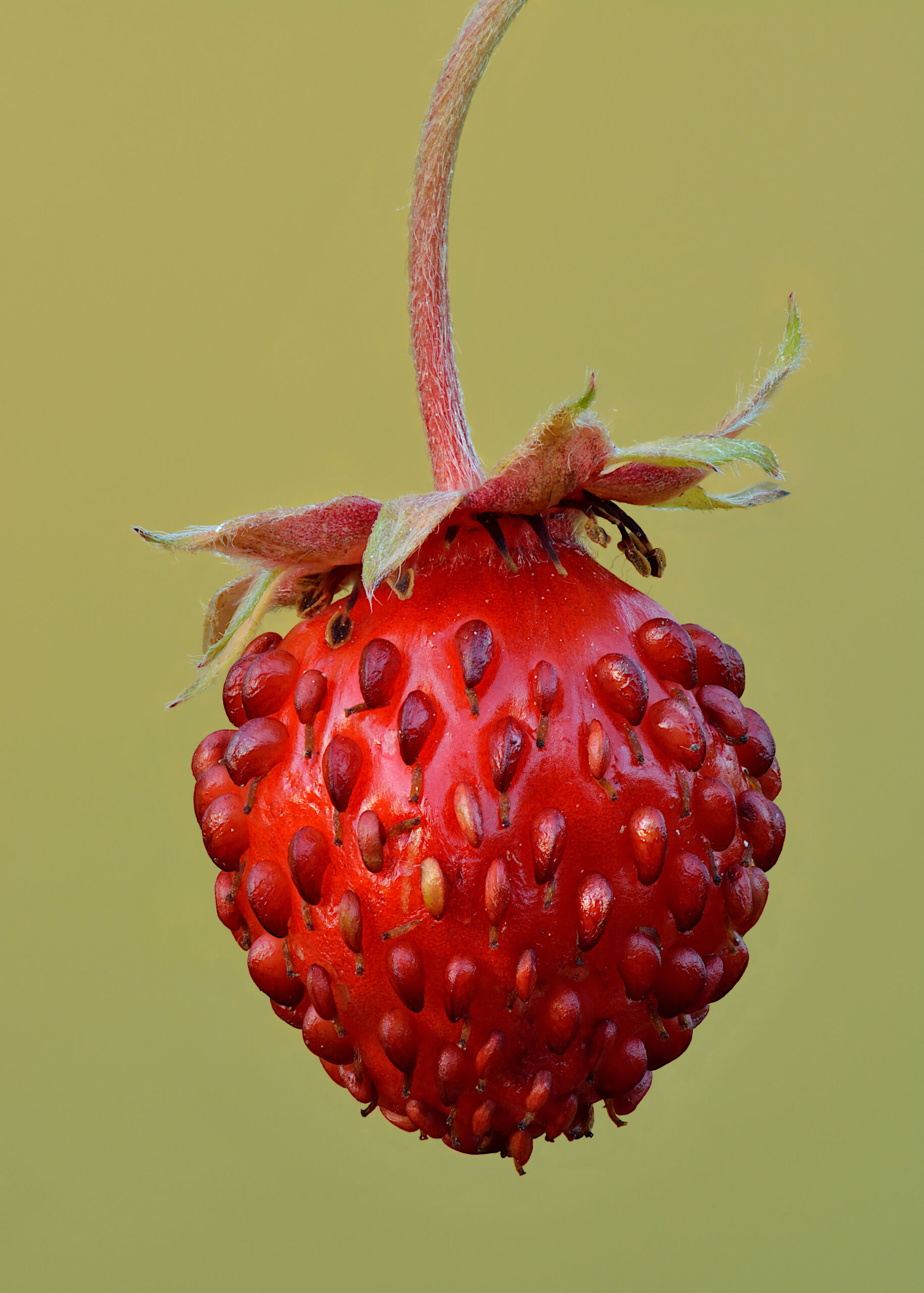
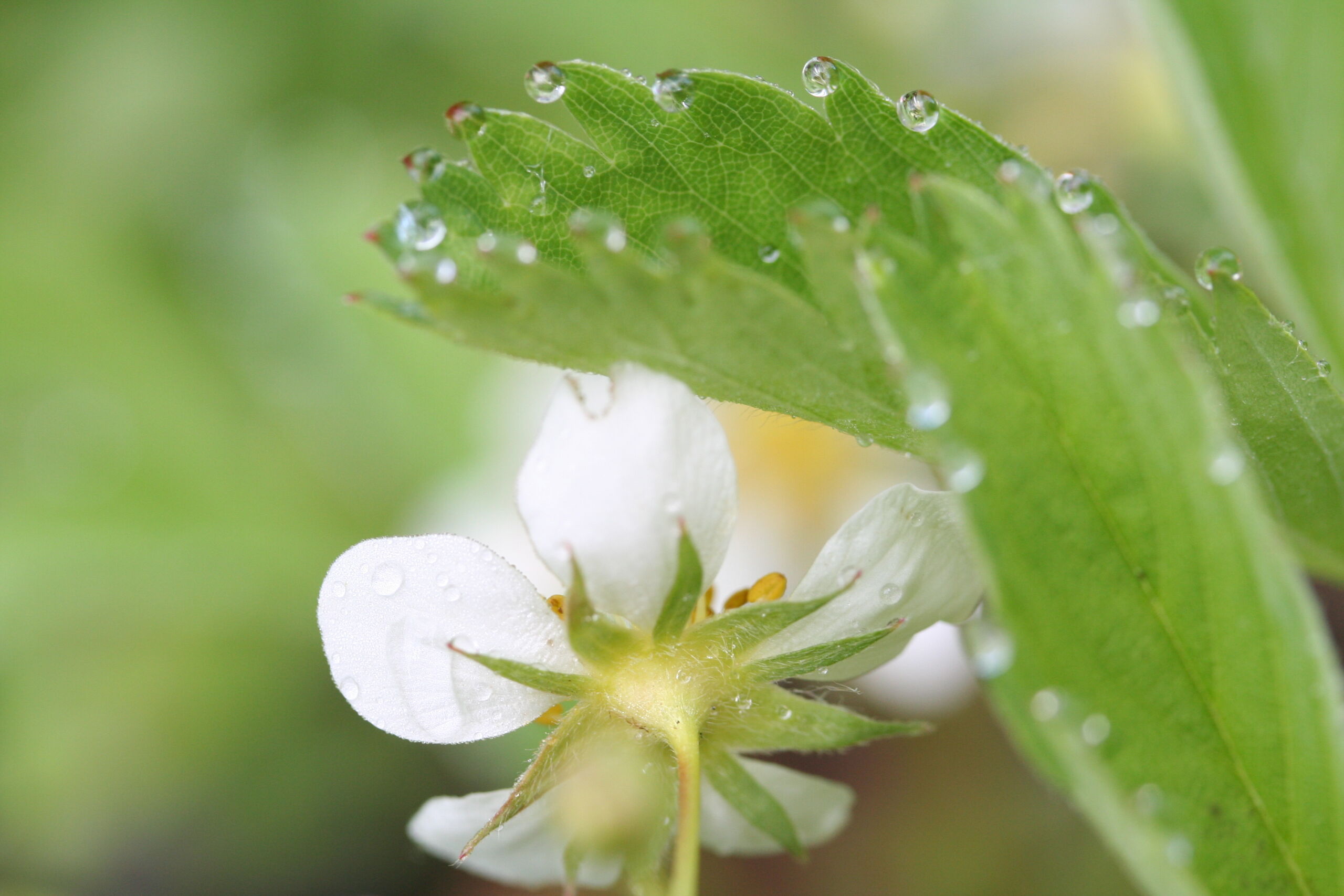
Fragaria is the genus of the strawberries, a group of low, runnering perennials in the rose family (Rosaceae), and it is one of those genera where the wild plant explains the garden plant completely. Wild strawberries rarely grow above 6 to 8 inches high, but they can spread indefinitely, because they send out runners — botanists call them stolons — that root where they touch the ground and form handsome, ground-covering, semi-evergreen colonies. The leaves are the classic strawberry trifoliate: three toothed leaflets on a stalk, dark green and slightly glossy. In spring come clusters of five-petaled white flowers, and after them the fruit — small, red, and intensely sweet, the size of a thumbnail and the flavor of a whole summer. The name Fragaria comes from the Latin fraga, referring to the fragrance of the fruit, and anyone who has ever bent down to a wild strawberry in a meadow knows the name is accurate: you smell them before you see them.
The genus is circumpolar and temperate in its habits: wild strawberries grow in open woods, meadows, prairies, old fields, woodland edges, savannas, limestone glades, and along roadsides and railroads, from Canada deep into the United States and around the temperate Northern Hemisphere. Virginia strawberry (F. virginiana) is the North American wild strawberry, found across much of the United States and southern Canada, common in every county of Virginia, and growing in full sun to part shade in well-drained moist or dry soils. Wood strawberry (F. vesca) is its Eurasian and North American cousin, with flowers held slightly higher than the leaves and cone-shaped fruits, and the two hybridize where they meet, which is why some wild plants are hard to pin to one species. Beach strawberry (F. chiloensis), the coastal species of the Pacific Americas, is the tough one of the family — a dune plant, salt- and wind-tolerant, evergreen where winters are mild.
And then there is the garden strawberry, which is the reason this genus matters to everyone who has ever eaten a strawberry. The modern garden strawberry, Fragaria × ananassa, was developed in France from a cross between the North American wild strawberry (F. virginiana) and the South American beach strawberry (F. chiloensis): virginiana contributed its exceptionally sweet taste, chiloensis contributed larger size. Every strawberry in every supermarket is, botanically, a hybrid of two wild species that never would have met without a gardener’s help. The site’s garden strawberry guide covers that hybrid and its cultivars; this guide covers the wild genus those cultivars came from, and the plants the butterfly guides actually name.
For butterflies, wild strawberries are host plants, and the guides that name them are refreshingly specific. In butterfly guides, wild strawberries (Fragaria species) appear as host plants for the grizzled skipper and the two-banded checkered-skipper — skippers whose caterpillars feed on low plants of the rose family, especially cinquefoils and wild strawberries, in bogs, tundra, cool meadows, and western mountain meadows. These are ground-hugging plants of cool, open ground, not garden plants in the usual sense, and the guides are honest about that: nobody plants a bog strawberry patch hoping for grizzled skippers. But if you already have wild strawberries as a groundcover, you are already growing skipper food, whether you knew it or not. Note the distinction the guides themselves keep: the grizzled skipper’s nectar list includes garden strawberry, which already links to the garden strawberry guide — that is the hybrid fruit, not the wild host plant, and the two should never be conflated.
How to grow
Wild strawberries are among the easiest groundcovers to grow, provided you give them what they actually want: sun to part shade, well-drained soil, and room to run. Plant in spring or fall, in full sun for the heaviest flowering and fruiting, or part shade where summers are hot — flowering is reduced in shade, but the plants still make a rich green, weed-smothering carpet. They prefer organically rich, sandy loams but tolerate poor soils, and they grow in moist to dry soils once established, which is a wider tolerance than garden strawberries allow. Set crowns at soil level, never buried, about 12 inches apart, and let the runners do the rest: rooted runners root as they trail along the ground, and a few plants become a colony in a season or two.
Choose your species for your site, because the wild species differ in temperament. Virginia strawberry (F. virginiana) is the generalist: adaptable, vigorous, trouble-free, resistant to drought, erosion, and even deer, and happy in open woods, meadows, and old fields. Wood strawberry (F. vesca) is the woodland-edge choice, a little more shade-tolerant, with the classic alpine-strawberry flavor in miniature. Beach strawberry (F. chiloensis) is the coastal specialist: full sun to half shade, unusually salt- and wind-tolerant, and the right plant for a seaside bank where other strawberries would sulk. All three spread by runners, and all three are propagated the same way: divide plants or peg down rooted runners and move them where you want the next patch.
Wild strawberries are at their best as a living groundcover layer, not as a row crop. Plant them beneath taller perennials and shrubs, along woodland edges, on banks where you need erosion control, and in meadow plantings where a low, dense carpet keeps weeds down and feeds wildlife. They are excellent for erosion control and as a native alternative to turfgrass in sunny to partially shaded areas, and they are a genuine wildlife plant: the flowers feed bees and pollinators, the fruit feeds birds and small mammals, and the foliage feeds skipper caterpillars. Growth is strongest in the cool months of spring and fall; in the hottest part of summer, growth may slow and plants may go quiet, then revive as cooler temperatures set in. That summer pause is normal, not a crisis — wild strawberries are cool-season plants wearing a summer disguise.
Florida note: Honesty again: wild strawberries are cool-climate plants, and most of Florida is warmer than they prefer. Virginia strawberry is generally listed for zones down to 9 at the warmest, and Florida’s heat and humidity stress plants that evolved for cool meadows — fruit production drops as temperatures rise, and summer dormancy can look like death. North Florida gardeners in zone 8 can try virginiana in part shade with steady moisture and mulch, treating it as a cool-season groundcover that rests through summer, but it will never be the carefree carpet it is in Virginia or Wisconsin. For actual strawberry eating in Florida, the garden strawberry guide is the right target. This guide exists for the wild genus and its butterfly connection, not as a promise that wild strawberries will thrive in a Florida summer.
Water & feeding
Water needs are moderate, with one rule that matters more than the amount: drainage. Water well to establish, then water regularly while letting the soil dry out between waterings — wild strawberries want moist soil, not wet feet, and crown rot is the price of soggy ground. Once established, virginiana tolerates dry spells and even drought, though fruiting is best with steady moisture in spring. Mulch with straw or leaf litter to hold moisture, keep fruit clean, and suppress weeds, and water at the base rather than overhead where you can, since wet foliage invites the leaf-spotting fungi that are the genus’s main weakness.
Feeding: light, or barely at all. Wild strawberries are not heavy feeders, and excess nitrogen produces lush leaves at the expense of flowers and fruit — the classic strawberry mistake. A compost amendment before planting, to supply organic matter and help the soil hold moisture, is enough for most sites, with a light compost top-dressing in early spring if growth looks pale. The soil science note is worth repeating: strawberries are rose-family plants, and like their rose cousins they want a soil that is alive — organic matter, good drainage, and a slightly acidic to neutral pH — more than they want fertilizer from a bag. Feed the soil, and the runners will do the rest.
Common problems
- Summer dormancy looks like death. Growth slows or stops in hot weather and revives when it cools. Do not dig up a dormant patch in August; wait for fall and watch it wake up.
- Slugs and fruit rot. Low fruit on damp ground invites slugs and gray mold, especially in wet weather. Mulch, spacing for airflow, and picking fruit promptly keep losses down.
- Leaf spot and other fungi. Wild strawberries are susceptible to leaf spotting, and garden types add fruit rot and mites to the list. Good drainage, airflow, and not overhead-watering late in the day are the main defenses.
- Indian strawberry confusion. Indian strawberry (Potentilla indica), a non-native weed, looks like a wild strawberry but has yellow flowers and small, flavorless red berries, where true wild strawberries have white flowers and sweet fruit. Yellow flowers mean it is not a Fragaria — pull it.
- It takes over. Runners are the point and the problem. A wild strawberry colony spreads indefinitely, which is wonderful on a bank and a nuisance in a path. Edge the patch or mow the runners where you do not want them.
- Heat stress in warm climates. In zones at the warm edge of the range, plants struggle through summer heat and humidity. Afternoon shade, mulch, and realistic expectations are the remedies; no amount of watering turns a cool-climate plant into a tropical one.
Harvest
Harvest is the reward the whole genus exists for, and wild strawberries repay a small patch with an outsized flavor. Pick the berries when they are fully red and fragrant — wild strawberries do not ripen off the plant, so patience pays, and the difference between a nearly-ripe and a fully-ripe wild strawberry is the difference between tart and transcendent. They are small, so picking is slow work, and they are soft, so eat them the day you pick them or turn them straight into jam, a sauce, or a topping. For the plants themselves, the other harvest is runners: peg down rooted runners in summer, cut them from the parent once established, and you have free plants for the next bank, border, or meadow edge. And the simplest harvest: leave some berries for the birds and chipmunks, who planted the first wild strawberries long before gardeners did. That is the crop, and it feeds everyone.
Browse all plant & pest guides
Saving seeds
This is a genus-level method, and it needs that label up front, because Fragaria covers everything from tiny wild woodland strawberries to the big garden strawberry, and the details shift a little between them. The shared anatomy, though, is the same, and it is gloriously weird: the red, juicy part you eat is not the fruit at all, botanically speaking. It is a swollen flower receptacle, and the true fruits are the tiny, dry achenes studded across its surface, each one holding a single seed. Saving strawberry seed therefore means harvesting those little surface dots, not scooping anything out of the middle, and the first lesson of strawberry seed is that the pulp is the enemy. Pulp left on the seed ferments, moulds, and can inhibit germination, so clean seed is not fussiness, it is the whole game.
Start with fully ripe berries, the soft, fragrant, fully coloured ones, because under-ripe berries give under-ripe seed. For a small batch, peel thin strips of skin with the achenes attached and lay them to dry, or scrape the achenes off with a knife. For a larger batch, mash ripe berries in a fine sieve under running water and rub the pulp through, keeping the heavier seed behind, then rinse until the water runs clear. Spread the cleaned seed thinly on paper in a cool, airy spot out of direct sun for a day or two until it no longer feels sticky. In Florida humidity, give drying an extra day and be honest about whether the seed truly feels dry before it goes into a container, because seed sealed damp in a humid house will mould before spring.
Next comes the cold trick. Many strawberry seeds carry a dormancy that a period of cold, moist chilling breaks, mimicking winter, and sources generally agree on roughly two to four weeks in the refrigerator in a damp paper towel or a little moist vermiculite in a sealed bag, checked now and then so the medium stays damp but not soggy. Some species and fresh lots germinate without chilling, so this step is best described as strongly helpful rather than absolutely mandatory, but skipping it is the commonest reason a first attempt sulks. After chilling, sow on the surface of moist seed mix or barely covered, because strawberry seed is small and germinates best with light and warmth, roughly room temperature, kept evenly moist under a cover or humidity dome. Germination is unhurried, typically over two to six weeks depending on species, seed age, and conditions,, and seedlings are slow at first.
Now the honest comparison every strawberry grower needs: seed versus runners. A runner is a clone. Peg a runner down, let it root, cut it from the parent, and you have the exact same plant, same fruit, same flavour, which is why commercial growers and anyone preserving a favourite variety use runners. Seed shuffles the genes. Seed from a hybrid garden strawberry will not come true to the parent, and its children may be smaller, tarter, or just different, which is disappointing if you wanted an exact copy and delightful if you like surprises. Open-pollinated species types, especially the alpine strawberries, come much truer from seed, though even they vary a little. Use the freshest seed you can, store any surplus cool, dry, and airtight with a desiccant, labelled by species or variety and year, and sow it within a couple of years for the best vigour. In Florida, where strawberries are usually grown as a cool-season crop planted in autumn, start seed indoors in late summer so transplants are ready for the autumn bed, and keep seedlings out of the worst summer humidity and fungal pressure while they are small.
Species in this group
Wild strawberry, Virginia strawberry, scarlet strawberry (Fragaria virginiana) — the North American wild strawberry: a low, mat-forming perennial, 4 to 8 inches high, spreading by runners into dense colonies, with five-petaled white flowers in spring and small, intensely sweet, fragrant red fruit; one of the two wild parents of the garden strawberry.
Wood strawberry, alpine strawberry (Fragaria vesca) — the Eurasian and North American woodland strawberry, with flowers held slightly higher than the leaves and cone-shaped fruit; the classic alpine types grown for flavor are selections of this species.
Beach strawberry, coastal strawberry (Fragaria chiloensis) — the tough coastal species of the Pacific Americas: an evergreen, runner-forming groundcover, unusually salt- and wind-tolerant, and the other wild parent of the garden strawberry.
Garden strawberry (Fragaria × ananassa) — the hybrid of virginiana and chiloensis, covered by the site’s garden strawberry guide and its cultivar guides; listed here only to keep the hybrid distinct from the wild species above, not as a wild species itself.