
🎄 Fraser Fir
Abies fraseri
If balsam fir is the classic Christmas tree of the Northeast, Fraser fir is the classic Christmas tree of the Southeast — and the most popular Christmas tree species in the country, full stop. It is a southern Appalachian mountain tree with soft, fragrant, dark green needles, a perfect conical shape, and a habit of holding its needles long after cutting, which is why millions of them end up in living rooms every December. It is also a tree with a very specific address, and it does not take kindly to moving.
Quick facts
- Sun: Full sun to part shade
- Soil: Rich, moist, slightly acidic, well-drained soil; poor in heavy clay
- Size: Roughly 30–50 feet tall and 10–25 feet wide in cultivation; taller in the wild
- Life cycle: Evergreen conifer
- Zones: USDA zones 4–7
- Native range: High mountains of the southern Appalachians
What it is
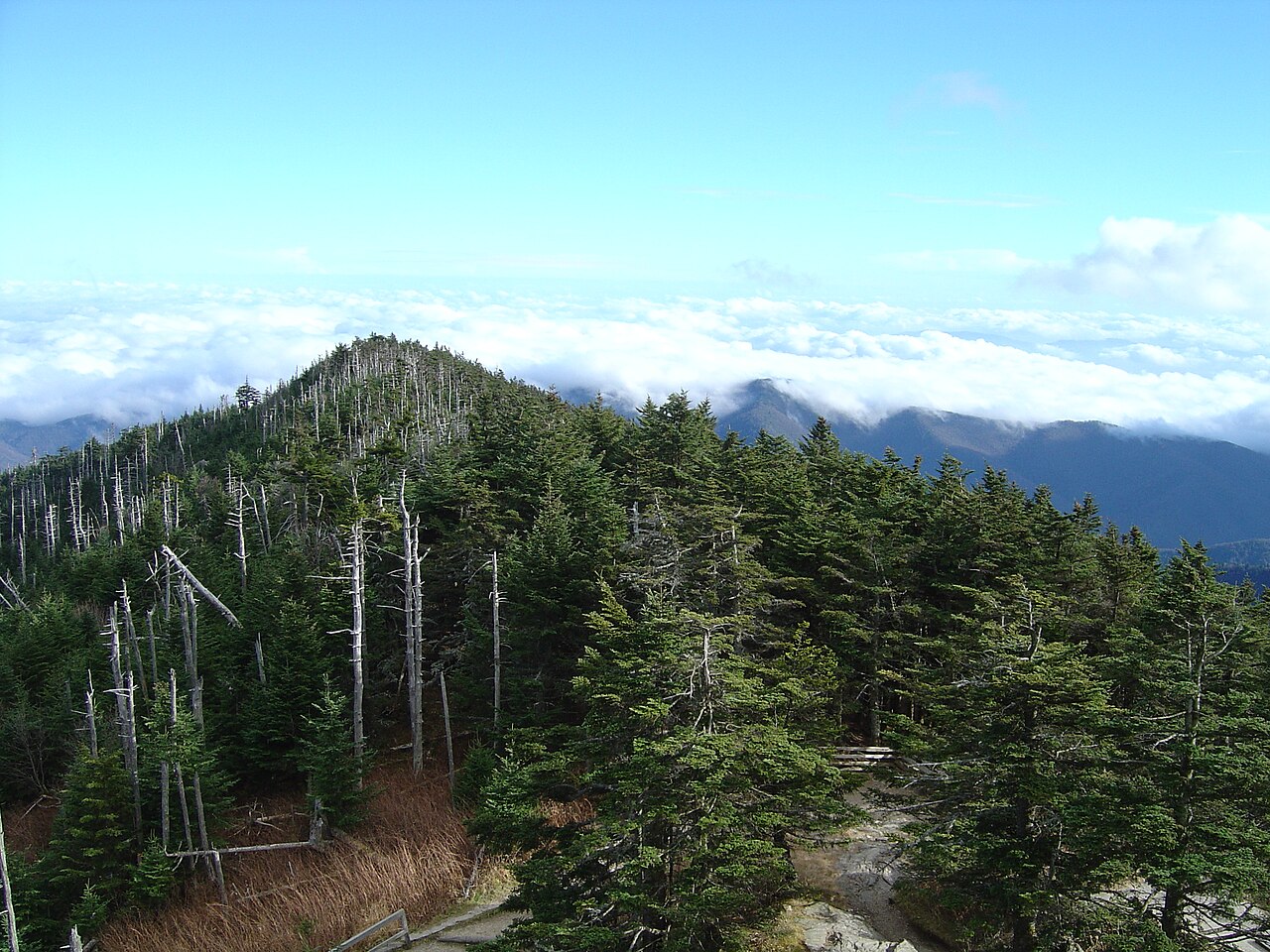
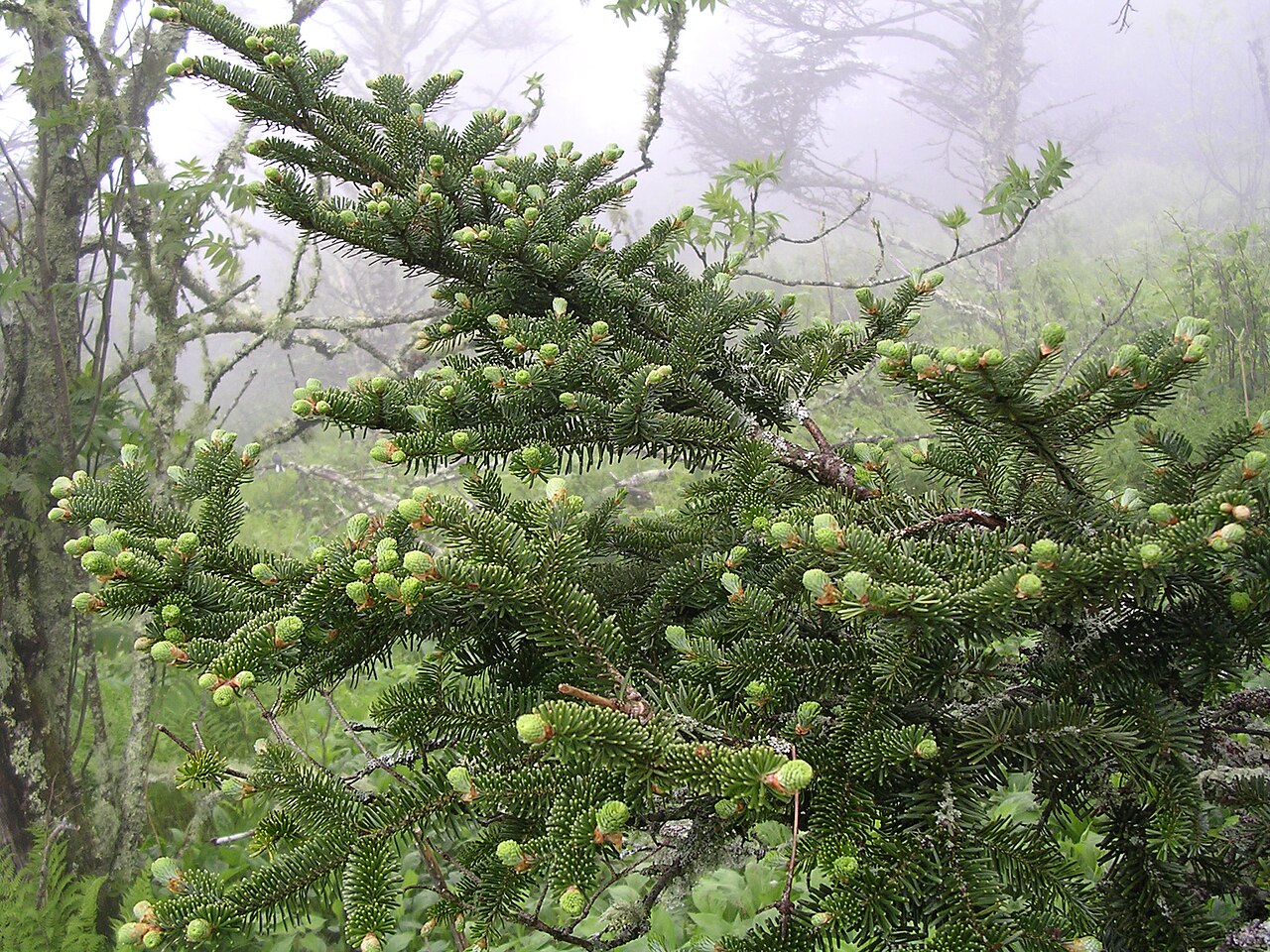
Fraser fir (Abies fraseri) is an evergreen conifer in the pine family, native to the cool, often foggy high mountains of the southern Appalachians. It is very similar to balsam fir — its close relative — and the main difference is in the cones: Fraser fir’s cone scales have long, protruding bracts that stick out like tiny tongues, while balsam fir’s do not. The needles are flattened, shiny dark green above with white bands beneath, soft to the touch, and fragrant when crushed. The form is a neat, dense, conical pyramid, which is exactly what a Christmas tree is supposed to look like, because this tree is the reason we think that.
In the wild, Fraser fir grows at high elevations where summers are cool and fog is frequent — a climate that sounds nothing like a lowland summer, and that is the point. It is a mountain tree that happens to be famous in the lowlands because we cut it down and bring it inside, where it smells wonderful and drops very few needles.
The honest climate note
Zones 4–7 with a mountain climate attached. Fraser fir is explicitly not recommended for planting in hot, humid summer conditions, and it does poorly in heavy clay, drought, and urban pollution. That rules it out as a landscape tree for warm, humid, lowland gardens, full stop. This guide is a reference and a trial note, not a planting recommendation for warm climates: if you are in the mountains or in a cool zone-7 pocket with good soil and steady moisture, it is a conversation; anywhere hotter or more humid, enjoy it as a cut tree and plant something that wants your weather. The balsam woolly adelgid, an introduced insect, has devastated wild Fraser fir stands, which is another reason to appreciate this tree without demanding it grow where it cannot.
How to grow it (where the climate fits)
Site. Full sun to part shade, in a cool location with good air movement but shelter from harsh drying wind.
Soil. Rich, moist, slightly acidic, well-drained soil. Heavy clay is a deal-breaker, and drought is a slow killer. Mulch to conserve moisture and keep roots cool.
Care. Water through dry spells without fail, keep the root zone mulched, and avoid compacting the soil around it. Prune only to remove damaged wood or maintain a single leader.
Trouble spots
Balsam woolly adelgid is the great threat, killing trees in the wild and requiring vigilance in cultivation. Drought, heat, clay soil, and air pollution are the landscape threats, and they are all versions of the same mistake: planting a cool-mountain tree in a warm lowland. Get the climate right and Fraser fir is a superb, fragrant, long-lived evergreen. Get it wrong and it will decline politely and then completely.
For the rest of the fir family, see the Fir guide.
What it looks like
Saving seeds
Fraser fir (Abies fraseri) does not hand you its seed the way a pine does. True fir cones stand upright on the upper branches like little candles, and at maturity they do not fall intact. They disintegrate on the tree, scale by scale, and the winged seeds ride the mountain wind away. That single fact explains most of the practical advice: you collect cones just before they fall apart, in late summer into early autumn, when the scales are loosening and the seed inside is mature, and you do it from a tree you have permission to collect from, never from a wild tree in a park or preserve, and never by climbing into the crown of a tall tree for a handful of seed. Garden and plantation trees, or seed from a reputable supplier, are the sane sources, and given how high the cones sit, bought seed is a perfectly respectable choice for most gardeners.
Timing matters more here than with most garden seed, and old forestry trials make the point bluntly: seed collected too early, while the seed coat was still pale, germinated far worse than seed collected a few weeks later, just as the cones were beginning to disintegrate. Wait for that loosening stage. Once collected, air-dry the cones for several weeks in a ventilated spot until they break apart, then shake and screen out the seed, rubbing off the papery wings if you like, though the wings do no harm if left on. Dry the cleaned seed gently to a crisp, dry state, and store it cool and dry in an airtight container, ideally in the refrigerator with a desiccant packet, labelled with species and year. Fir seed is not recalcitrant like pawpaw seed, so cool, dry storage is the right approach, and in Florida humidity the airtight container and the desiccant are not optional extras.
Stratification is where sources genuinely disagree, and the disagreement is worth stating plainly. Many propagation guides recommend a cold, moist stratification of roughly one to three months, mixed with damp peat or vermiculite in a sealed bag in the refrigerator, before sowing. Old seed-testing work, however, found that stratification mainly speeded germination rather than increasing the total number of seeds that germinated, with unstratified seed germinating nearly as well. The practical reading is reassuring either way: give the seed a month or two of cold, moist chilling if you are sowing indoors, and do not panic if you sow outdoors in autumn and let winter do the chilling for you. Sow shallowly on moist, acidic, well-drained mix, keep it shaded and consistently moist, and be patient, because germination is spread over weeks and seedlings are slow, small, and easily killed by drying out.
Two closing honesties. First, seed grows the species, not the cultivar. A seedling of Fraser fir will be a Fraser fir, but the named dwarf and coloured forms in the varieties list will not come true from seed; those are kept true by cuttings or grafting, so save seed for species trees and buy a named form as a plant. Second, the Florida honesty note, which this guide already makes elsewhere: Fraser fir is a cool mountain tree, and Florida’s heat and humidity are not its climate. Saving its seed only makes sense if you, or the person you are giving it to, garden where the climate fits, with cool summers and real winter cold. In Florida, the kindest thing you can do with Fraser fir seed is admire the tree on a mountain holiday and leave the growing to gardeners in its home range.
Varieties
Every named variety of Fraser Fir with its own growing guide:
- Blue Bonnet Fraser Fir — The glaucous Fraser: a dwarf conical tree with strongly blue-grey needles, found as a seedling in a Christmas tree plantation.
- Kline's Nest Fraser Fir — The nest-shaped Fraser: a dwarf plant wider than tall, compact, with shorter needles and a habit of coning once established.
- Raul's Dwarf Fraser Fir — The pocket Fraser: an upright, broad little shrub, about 60 by 45 cm, for the smallest conifer collection.