
🌺 Fuchsia
What it looks like
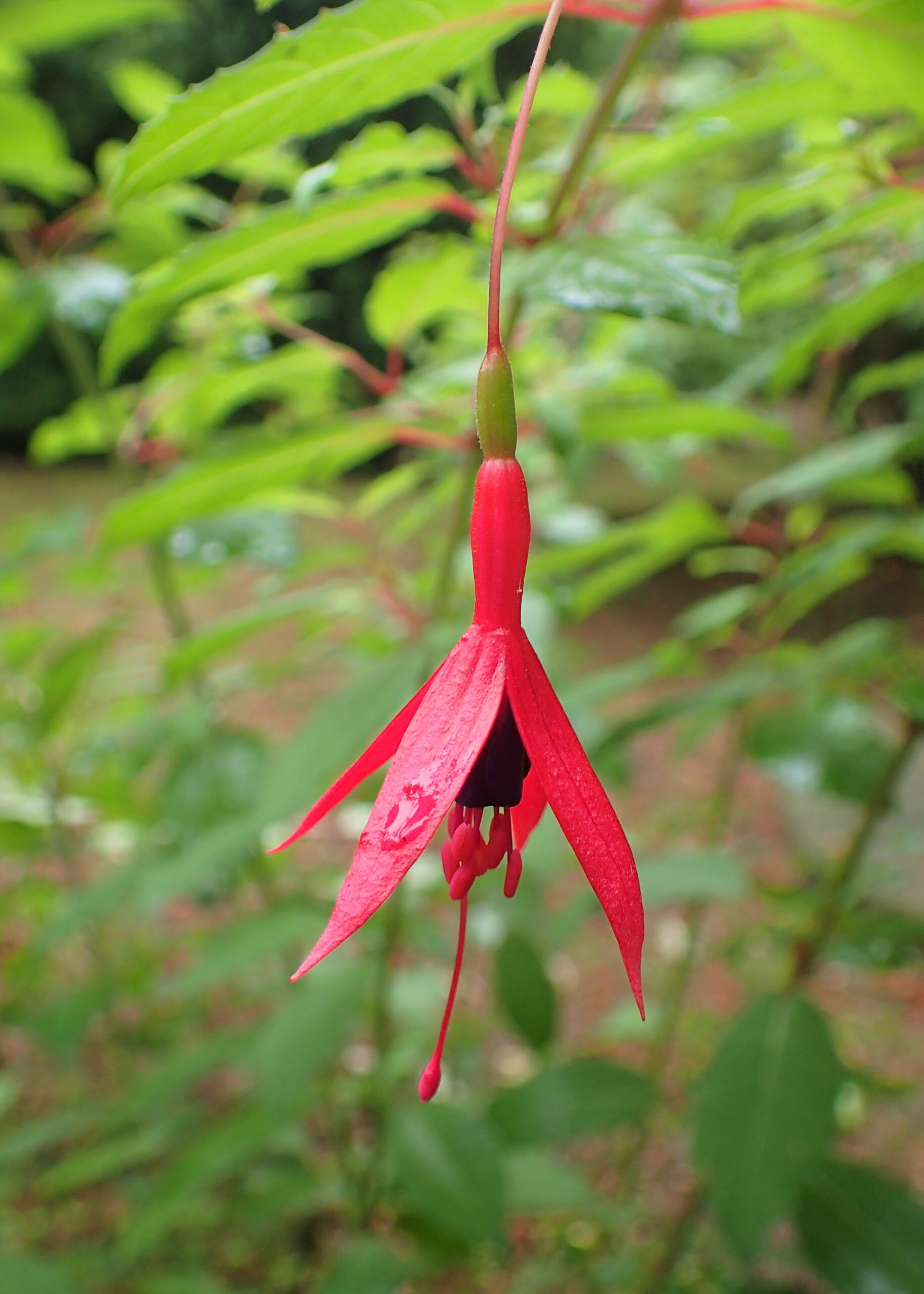
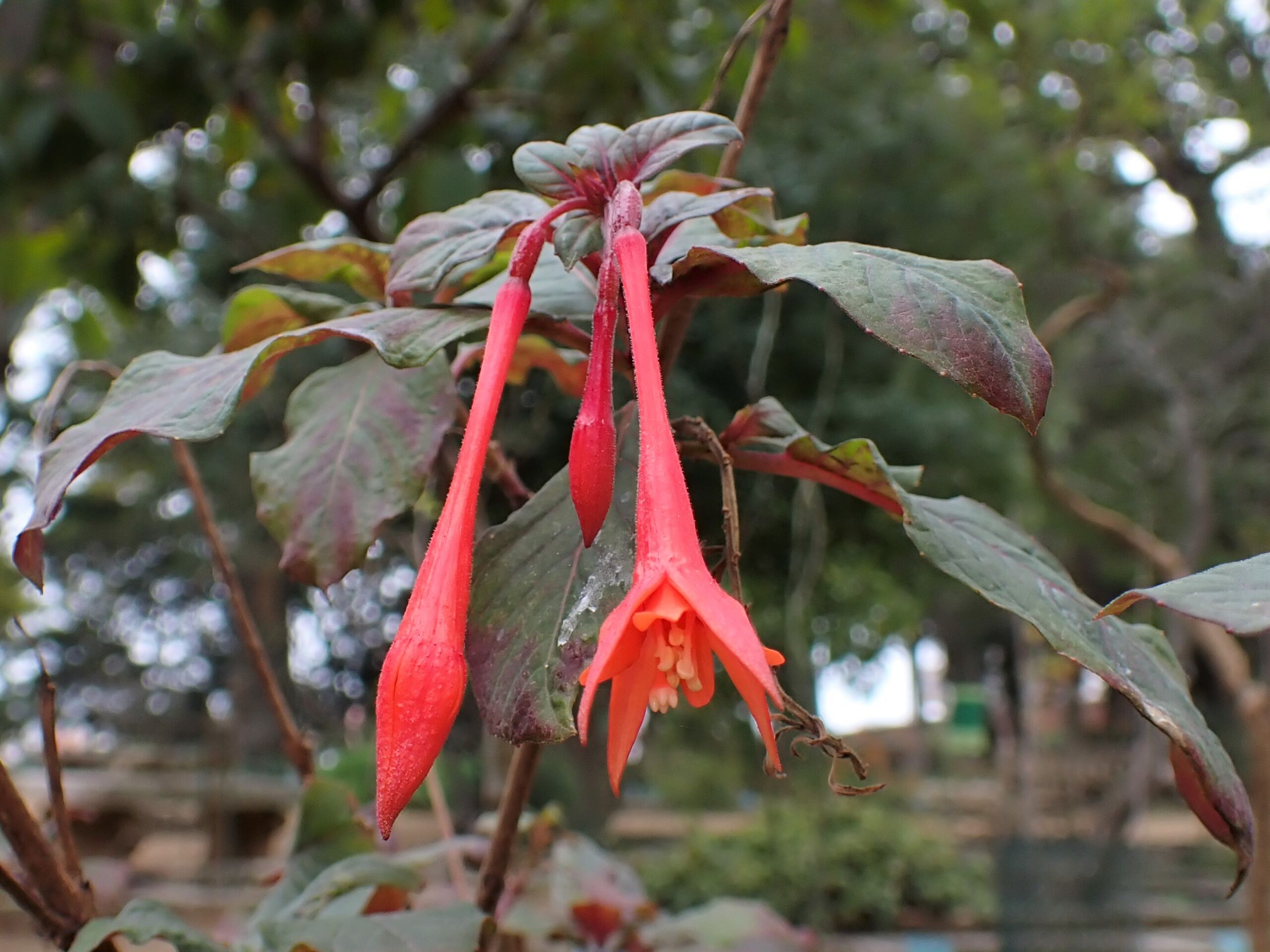
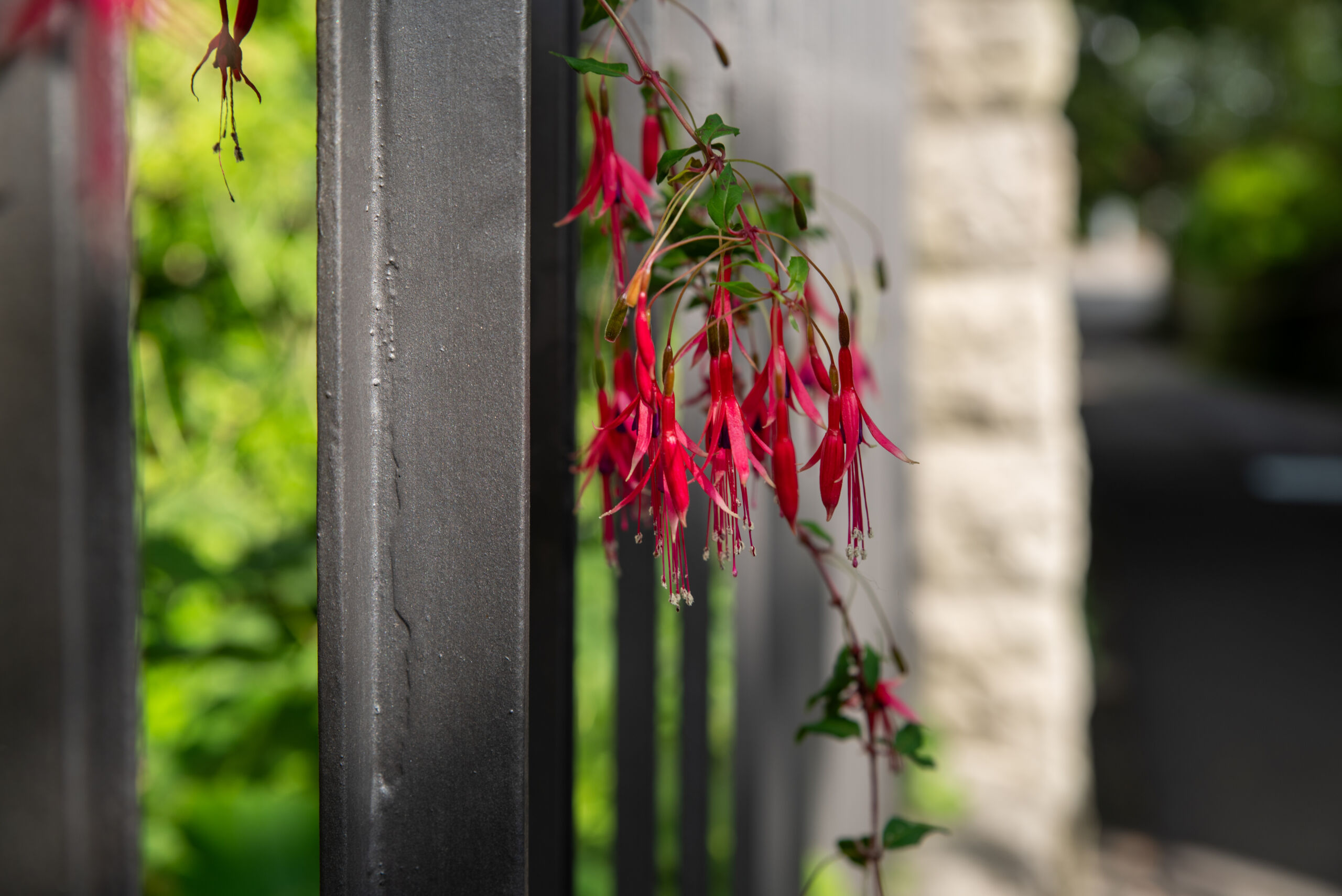
Fuchsia is a genus of more than a hundred woody shrubs and small trees in the evening primrose family (Onagraceae), native mainly to Central and South America, with outliers in New Zealand and Tahiti. The flower is the whole point, and it is unmistakable: a pendant, teardrop-shaped bloom with four flared sepals in one jewel color and four petals in another — red and purple is the classic pairing, but white, pink, orange, and bicolor combinations all exist — hanging from a slender stem so the bloom dangles and sways. Hummingbirds love them, which tells you most of what you need to know about the flower’s design: long, tubular, nectar-rich, and built for a hovering visitor with a long bill. The leaves are simple, usually opposite, soft green and slightly toothed, and the plant’s habit ranges from a compact bush to a trailing cascade to, in the hardy species, a woody shrub 5 to 10 feet tall.
Most of the fuchsias sold in garden centers are not species at all but hybrids — Fuchsia × hybrida in the broad sense — bred for hanging baskets and containers, and they are usually grown as annuals and discarded when the weather turns cold, or brought indoors and nursed through winter in bright light. The species behind them fall into two temperamental camps that matter more than any cultivar name: the hardy camp, which dies back in frost and regrows from the roots in spring, and the tender camp, which cannot survive freezing at all. Buying a fuchsia without knowing which camp it belongs to is the most common way to lose one, and the tag does not always say. If the tag says magellanica or names a hardy cultivar, you have a perennial in mild climates. If it says nothing, assume tender and plan to overwinter it indoors.
The butterfly connection here is a tropical postcard, not a garden promise. The Mexican dartwhite — a stray-edge butterfly in the United States, a resident of Mexico and Central America — has been recorded taking nectar from Fuchsia flowers in Costa Rica, alongside lantana and Senecio. That record is genuine, and it is the reason this genus appears in a butterfly project at all. But planting a fuchsia basket in Florida will not summon a Mexican dartwhite, any more than planting a rose summons a rose chafer from another continent. The nectar record is real; the geography is not on your side. Grow fuchsia because you love the flowers and the hummingbirds will come — they will, in droves — not because a stray butterfly might.
How to grow
Site fuchsia in part shade or dappled sun, with afternoon shade wherever summers are hot. In cool coastal climates it tolerates more sun; in Florida and the Gulf South, morning sun and afternoon shade is the rule, and a hanging basket under a porch roof or a bright north-facing spot is often the best real estate in the garden. Fuchsias thrive in cooler, humid conditions with mild daytime highs and cooler nights, and they are sensitive to extreme heat above about 85 degrees and to drought — in hot, dry weather they stop blooming and struggle, which is not a disease but a complaint you can answer with shade and water.
Plant in spring after all danger of frost has passed and nighttime temperatures stay above about 50 degrees. Dig a hole wider than the root ball, set the plant at the same depth it grew in its pot, and water it in well. In beds, space plants 18 to 24 inches apart; in containers, one plant per basket is plenty for trailing types, which will fill the basket on their own. The soil must be moist but well-drained and rich in organic matter — think potting mix with compost worked in, not heavy garden clay and not pure sand. Good drainage is non-negotiable: fuchsia roots sitting in soggy soil rot, and a rotted fuchsia does not recover the way a drought-stressed one does.
Pinch the growing tips in early spring to encourage branching — a pinched fuchsia is a bushy fuchsia, and a bushy fuchsia carries ten times the flowers of a leggy one. Prune hardy fuchsias heavily after the danger of frost has passed in late spring, cutting back the dead top growth to where new shoots emerge from the base. For tender types in cold climates, dig them up before frost, pot them, and move them indoors to a cool, bright location for winter, watering sparingly; they will look miserable by February and forgive you completely by May. In Florida, treat most fuchsias as cool-season container plants: glorious from fall through spring in shade, and a plant to replace rather than mourn when summer heat finishes it.
Water & feeding
Fuchsias are heavy feeders and heavy drinkers, and the two facts are related: a plant pumping out pendant flowers from spring through fall is spending energy at a furious rate. Water regularly, keeping the soil evenly moist through the growing season, and never let a container fuchsia dry out completely — a wilted fuchsia recovers from one dry day, but repeated drying kills flower buds first and roots second. In dry air, humidity helps as much as watering does; a basket on a humid porch outperforms the same basket in a dry, windy spot, which is why fuchsias are famously easier in coastal and northern gardens than in arid ones.
Feed weekly or every two weeks through bloom season with a balanced, water-soluble fertilizer, or use a combination of fish emulsion and seaweed if you prefer organic feeding. Start with an all-purpose food in spring, then switch to a bloom-boosting blend in summer when flower production peaks. Cut back fertilizing in fall as growth naturally slows, and do not feed a dormant or overwintering plant indoors — it is resting, and fertilizer in winter is an insult, not a kindness. Work compost or organic matter into the soil at planting time, and top-dress containers with fresh mix in spring; fuchsias exhaust their pots the way teenagers exhaust a refrigerator, quickly and without apology.
Common problems
Heat and dry air are the first problem, and they masquerade as everything else: buds drop, leaves crisp at the edges, flowering stops. The fix is shade, water, and humidity, in that order, not pesticide. Root rot from soggy soil is the second problem, and it is the one that actually kills: if the plant wilts despite wet soil, the roots are gone, and no amount of watering will bring them back. Prevention is drainage and a pot with holes, every time.
Fuchsia gall mite is the pest to know about — it distorts shoot tips and flowers into reddish, swollen growth, and it has spread through fuchsia-growing regions in recent decades. There is no easy spray cure; the practical response is to prune out affected growth, dispose of it in the trash rather than the compost, and keep the plant vigorous. Whiteflies and aphids visit container fuchsias, especially overwintered ones indoors, and both are handled with a strong jet of water or insecticidal soap before they build up. Botrytis gray mold follows wet, still air around crowded plants; space baskets so air moves, and do not let fallen flowers rot in the pot.
Harvest
The harvest of a fuchsia is its flower show, which runs from spring through fall on a healthy plant, and the small, berry-like fruits that follow the flowers on many species. Deadhead spent blooms regularly — not because the plant demands it, but because a deadheaded fuchsia puts its energy into new flowers instead of seed, and the show lasts longer. The berries are ornamental on most garden hybrids; some species’ berries are edible, but edibility varies by species and this guide does not recommend eating berries from an unidentified hybrid. If you grow a species known for edible berries, that is a different conversation, and it starts with a positive identification, not a guess. The real harvest, for most growers, is cuttings: fuchsia roots readily from softwood cuttings in spring and summer, which is how one good basket becomes next year’s five baskets, and how a tender favorite survives winter as a windowsill cutting even if the mother plant does not.
Browse all plant & pest guides
Saving seeds
Here is the deal with fuchsia seed, stated before any romance about it: seed is the fun route, and cuttings are the faithful route, and you need to know which one you are on. Almost every fuchsia in a nursery or a hanging basket is a hybrid, and hybrid seed does not come true. Sow seed from your favourite named cultivar and the seedlings will shuffle the parental genes into a mixed family, some like the parent, some plainly not, some genuinely new and lovely. But if what you want is another plant exactly like the one you have, with the same double flower, the same colour break, the same habit, do not save its seed. Take cuttings. The seed section below is honest about both paths, because a guide that only told you how to save seed, without telling you that seed will not reproduce your cultivar, would be selling you a surprise and calling it a copy.
Seed, then, for the adventurous. After a flower falls, the swelling left behind is the berry, technically the ovary, and it ripens over several weeks into a soft, dark purple-black fruit. Some fuchsias are sterile and never make berries at all, or make berries with no viable seed, so a plant that refuses to set fruit is not necessarily doing anything wrong. If you want controlled parentage rather than whatever the bees arranged, hand-pollinate with a small brush, label the berry with both parents, and wait for it to soften and darken. To clean the seed, squeeze or mash the ripe berry in water, rinse away the pulp, and spread the small, dark seeds on paper until they are no longer sticky, which takes roughly a week of air-drying. Pulp left on the seed invites mould, so clean seed is worth the fiddling. Dry the seed thoroughly, in Florida humidity give it the extra day it needs, and store it cool, dark, and airtight with a desiccant packet, labelled with the parent plant and the year. Fresh seed is best, and viability drops with age, so sow within a year or two rather than hoarding envelopes.
Sowing is straightforward but unhurried. Sow on the surface of moist, free-draining seed mix, barely covered if at all, kept warm and evenly moist, out of harsh direct sun. Germination varies widely by type and seed age, from a couple of weeks for fresh seed of vigorous types to several months for older or slower lots, so do not throw a tray out at week three. Letting a plant go to seed also has a cost worth knowing: once a fuchsia starts putting energy into fruit, it often flowers less, so if you are saving seed from one plant, let that one plant do the fruiting and keep deadheading the rest for display.
Cuttings, for the faithful. Take soft tip cuttings in spring or semi-ripe cuttings in summer, a few inches long, cut just below a node, strip the lower leaves, and set them in moist, free-draining mix under humidity, a propagator lid or a plastic bag, in bright indirect light, not direct sun. Roots typically form within a few weeks, after which plants can be hardened off and grown on. Tender fuchsias root fastest in spring and summer, and autumn cuttings are the classic way to carry tender plants through winter. In Florida, grow fuchsias in shade with good air movement, and treat autumn cuttings as insurance through the worst weather. Save seed for surprises, take cuttings for copies, and label both, because a tray of mystery fuchsias is only charming if you meant it.
Species in this group
Hardy fuchsia (Fuchsia magellanica) — the only species reliably hardy in northern zones, with small red and purple flowers, dying back in frost and regrowing from the roots in spring. Sources place its hardiness around Zones 6 to 10, with some accounts reaching Zone 5 for established plants; this guide reports the range rather than pinning a single zone.
Honeysuckle fuchsia (Fuchsia triphylla) — narrow, tubular flowers in red and orange, more heat-tolerant than most fuchsias, and a parent of many heat-tolerant hybrids. A better bet than most where summers are warm.
Trailing fuchsia (Fuchsia procumbens) — a low, spreading New Zealand species ideal for hanging baskets, with small flowers and unusually large, colorful berries.
Garden hybrids (Fuchsia × hybrida) — the bulk of nursery fuchsias: bred for basket and container performance, usually tender, usually grown as annuals outside mild climates. No single species guide covers them, because they are not a single species — and no species in this list should be wired to a hybrid’s name.