
🌻 Gaillardia
What it looks like
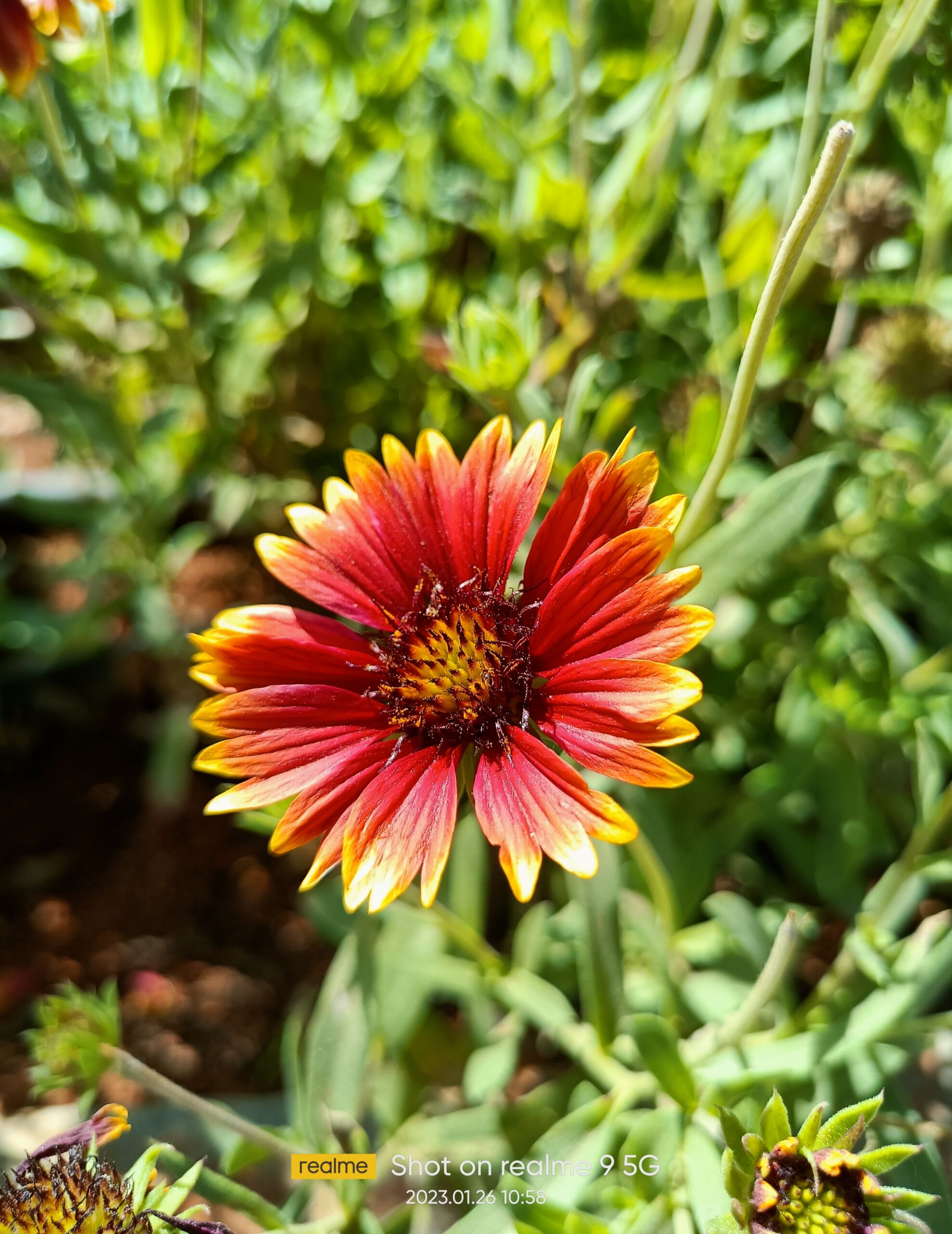
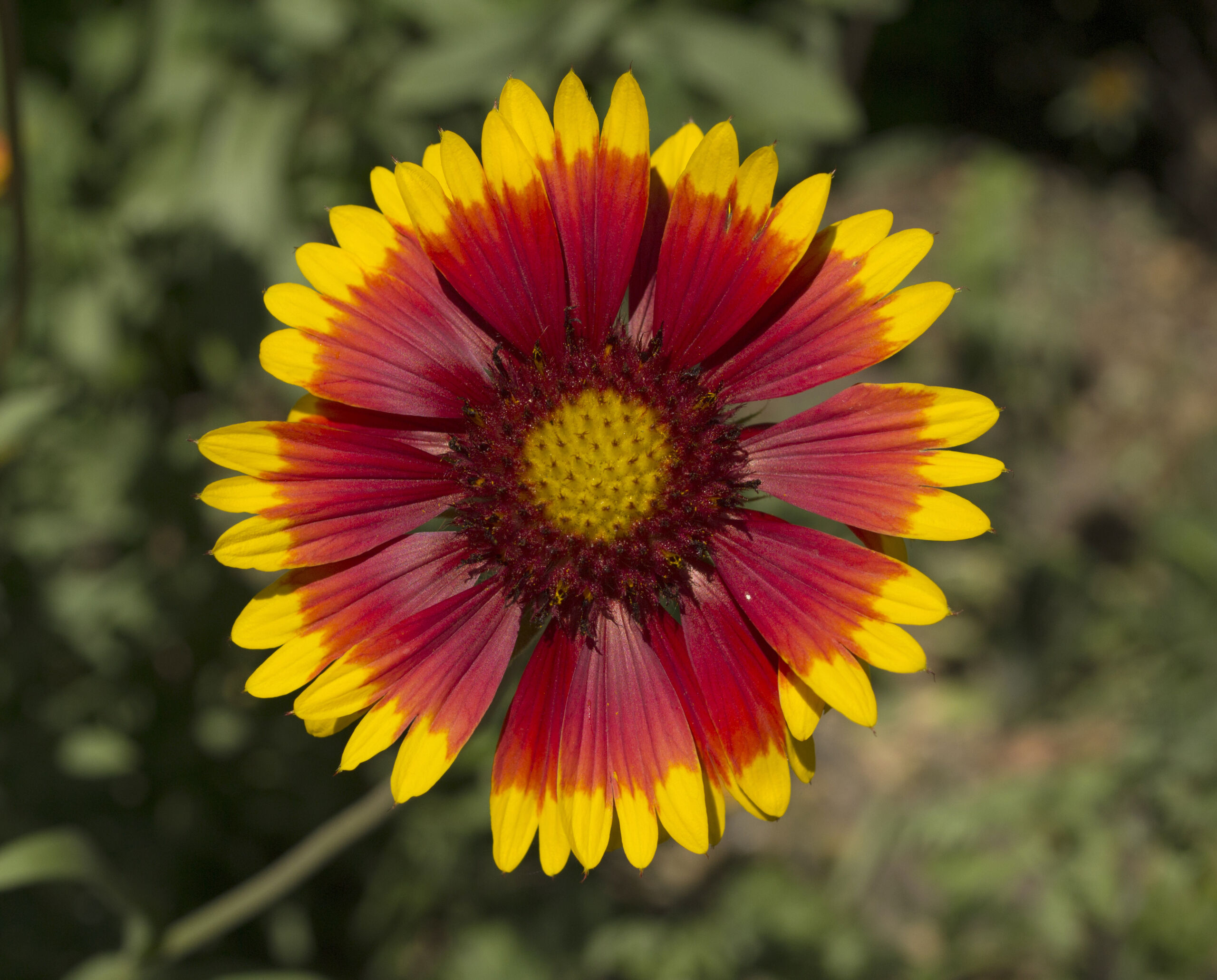
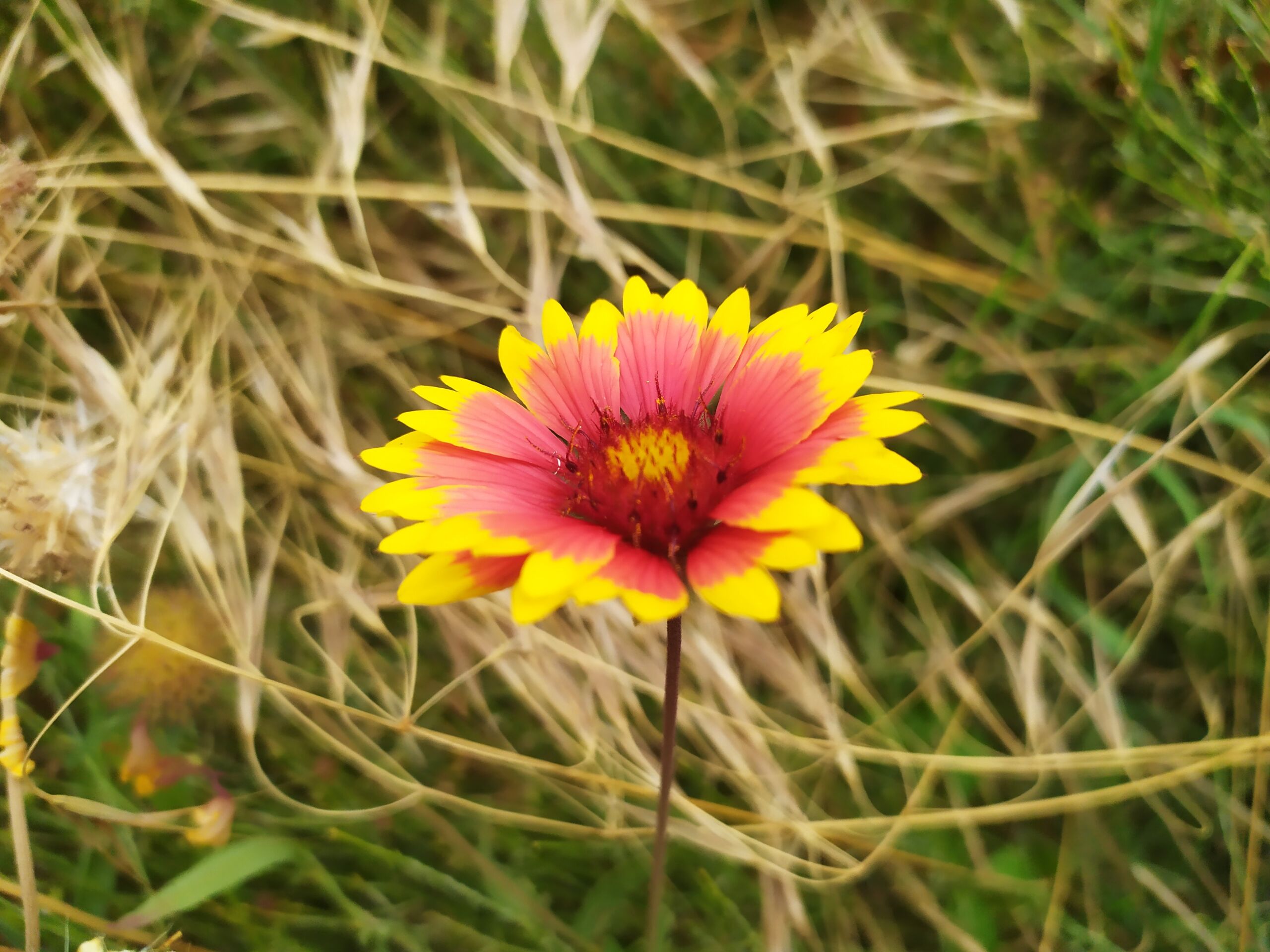
Gaillardia is a genus of about 25 to 30 species of annuals, biennials, and perennials in the sunflower family (Asteraceae), all native to the Americas, and every one of them is trying to be the brightest thing in the field. The flower is a daisy with attitude: ray petals in red, orange, and yellow — often red at the base shading to yellow at the tips, like a blanket held up to a fire — around a central disc that is usually red-orange or dark purple. The genus was named for the French naturalist Antoine René Gaillard de Charentoneau, and the first species described, in 1788, was the annual Gaillardia pulchella, native from the southeastern United States to Colorado and south into Mexico, with two-inch flowers of red with yellow tips. The much larger-flowered perennial Gaillardia aristata was collected by Lewis and Clark in Montana in 1806, and the two crossed in a Belgian garden in the 1850s to give us the common garden blanket flower. That is a genus with a proper origin story: a French namesake, an American expedition, and a Belgian wedding.
The foliage is gray-green, hairy, and lance-shaped, sometimes lobed, on branching stems that form loose, mounding clumps. Perennial types are famously short-lived — often just two to three years, especially in humid climates or poorly draining soil — and they know it, which is why they bloom so hard: a gaillardia in flower from late spring until frost is not showing off, it is racing. The annual pulchella begins flowering about three months after sowing and self-sows reliably, so a patch left to itself renews itself, and the perennial aristata returns year after year in suitable climates with big, fringed flowers up to four inches across. Bees, butterflies, and other pollinators work the blooms all season, and the seed heads feed birds into fall if you leave them standing, which you should.
The butterfly connection is a prairie one. The Dakota skipper — a butterfly of high-quality bluestem prairie, and a species that needs intact, diverse, native prairie the way a fish needs a river — takes nectar from prairie flowers including blanketflower, listed as Gaillardia species, alongside purple coneflowers, wood lily, and harebell. That genus-level listing is exactly what this guide covers: Gaillardia species generally, not one cultivar. And the honest corollary: planting a gaillardia in a garden bed will not summon a Dakota skipper, because the Dakota skipper does not come for one flower — it comes for a prairie. Plant gaillardia for the pollinators that will actually visit, for the color, and for the way it laughs at drought, and let the prairie specialists keep their prairie.
How to grow
Plant gaillardia in full sun and fast-draining soil, and then mostly leave it alone. That sentence is the whole method, and the plant punishes every deviation from it: shade makes it leggy and flowerless, heavy soil rots it over winter, and rich soil produces more leaves than blooms. If your soil is heavy clay, grow it on a berm or in a container, or amend with grit until water moves through — gaillardia rarely survives winter in heavy soil, and a wet winter kills more gaillardias than any cold snap. Sandy, loamy, gravelly, even poor soils suit it; it flourishes in normal to loamy soils and surprisingly well in poor, sandy ones, and it is a reliable xeriscape plant once established.
Sow seed directly or start transplants in spring after frost danger has passed, spacing plants 12 to 24 inches apart. Annual pulchella can be direct-sown where it will grow; perennial aristata is usually transplanted. Deadhead spent flowers regularly to keep the bloom coming — a deadheaded gaillardia reflowers with embarrassing enthusiasm — but leave the last flush of seed heads in fall for the birds and for self-sowing. Perennial plants are short-lived, so plan on replacing them every few years, or let seedlings do the replacing for you; a gaillardia patch that reseeds is a patch that never really dies, it just changes its address by a few inches each year.
In Florida, the annual Indian blanket (Gaillardia pulchella) is the natural choice: it is native to the southeastern United States, it loves the sun and sand, and it behaves like the wildflower it is. The western perennial aristata is a prairie and mountain plant and is less at home in Florida humidity, though it will perform as a cool-season annual in the northern part of the state. Either way, the rule holds: sun, drainage, and neglect, in that order. Gaillardia is the plant you give to the gardener who over-waters everything else, because it is the one plant that will finally teach them restraint.
Water & feeding
Water to establish, then back off. Gaillardia is drought-tolerant once established and rarely needs fertilizer — in fact, fertilizer is usually counterproductive, since rich soil produces floppy, leafy plants with fewer flowers. A lean soil is not a hardship for this genus; it is the condition the flowers evolved for. Water deeply but infrequently during the first season, let the soil dry between waterings, and in subsequent years water only in genuine drought. Overwatering, especially in winter, is the fastest way to lose a perennial gaillardia: wet feet in cold soil rot the crown, and a rotted crown does not resprout.
Feed, if you must, with a light hand: a thin top-dressing of compost in spring is plenty, and a balanced fertilizer at half strength once in spring is more than enough. Do not feed in fall, when the plant should be hardening off, and do not mulch heavily around the crown, which traps the moisture gaillardia hates. The feeding philosophy for this genus could be printed on a card and taped to the watering can: less is more, and none is often exactly right.
Common problems
Root and crown rot in wet soil is the number one killer, and it is a site problem, not a spray problem — fix the drainage or move the plant. Aster yellows, a phytoplasma disease spread by leafhoppers, can distort flowers into green, leafy oddities; there is no cure, and affected plants should be pulled and discarded so leafhoppers do not spread it to neighbors. Powdery mildew visits in humid weather and crowded plantings; spacing for airflow and morning sun keep it minor, and it rarely kills a vigorous plant.
The blanket flower moth and the painted schinia are the specialist insects to know: the blanket flower moth is reported only on Gaillardia aristata, and the painted schinia only on Gaillardia pulchella, which is the kind of specificity that makes a gardener feel like a host of something rare rather than a victim of something common. They chew flowers, they do not destroy established plants, and in a pollinator garden they count as guests, not pests. Aphids cluster on buds in spring and are handled with a jet of water. The real “problem” with gaillardia, if you can call it one, is its short perennial life: a plant that dies after two or three glorious years is not failing, it is following its nature, and the seedlings at its feet are the plan, not the consolation prize.
Harvest
Harvest gaillardia as cut flowers all summer — the blooms last well in a vase, and cutting them is deadheading with a reward. For seed, let a few heads mature and dry on the plant, then shake them into a paper bag; pulchella seed sown the following spring flowers in about three months, which is one of the fastest payoffs in the flower garden. Leave the last seed heads standing into winter for the birds, and cut the whole patch back in early spring before new growth starts. There is no edible harvest worth chasing here — gaillardia is not a food plant, and its value is flowers, pollinators, and the particular shade of sunset it puts in a border from June until frost.
Browse all plant & pest guides
Saving seeds
This is a genus-level method: it applies across the gaillardias grown as blanket flowers, since the seed heads behave the same way whether you are growing a perennial species or a bedding annual.
Gaillardia makes seed saving almost embarrassingly easy, which is fitting for a flower whose whole personality is cheerful overabundance. The trick is simply to stop deadheading. Through most of the season, snip spent blooms to keep new flowers coming, then in late summer let the final flush stay on the plant. Once the petals fall, the centre of each flower swells into a fuzzy ball that turns from greenish-gold to grey-brown as it ripens. That soft, bristly pom-pom is your seed head, and it is ready when it crumbles easily between your fingers and the little seeds detach cleanly from the central dome.
Cut the heads on a dry day, before they shatter and sow themselves everywhere, and drop them straight into a paper bag. Spread them out in a single layer somewhere ventilated and out of direct sun for two to three weeks to finish drying; Florida gardeners, take note, because a head that looks dry on the outside can still be damp at the core, and damp seed in a sealed jar is a short road to mould. Once truly dry, rub or crush the heads over a tray. What you get are achenes, small dry single-seeded fruits, each with a tuft of feathery hairs that once caught the wind. Shake off the chaff and keep the plump, dark seeds.
Sow saved seed on the surface of a free-draining mix and press it in gently without burying it: gaillardia seed wants light to germinate. Some growers give it a few weeks of cold, moist chilling in the fridge first to even out germination, while others find that seed dry-stored for a few months germinates fine without it. Either way, expect sprouts within a couple of weeks in warm conditions. Stored cool, dark, and dry, ideally airtight with a desiccant packet in Florida, the seed commonly stays viable for two to three years, with refrigerated seed reported to last up to around five.
Two cautions. First, only save from healthy plants: if a plant shows the twisted, yellowed growth of aster yellows, pull it and do not save its seed. Second, be honest about what will come up. Seed from a named hybrid cultivar will not reliably repeat its parent’s exact colours and patterns; you will get blanket flowers, but the mix may surprise you. Seed from a straight species type comes much truer. And since gaillardia self-sows freely and is a short-lived perennial, saving a jar each autumn is also your succession plan: it is how a planting that lasts two or three years becomes a planting that lasts indefinitely.
Species in this group
Indian blanket, firewheel (Gaillardia pulchella) — the annual species, first described in 1788, native from the southeastern United States through Colorado and into Mexico. To 3 feet tall, with small red, yellow, or red-and-yellow daisies with dark purple centers, flowering about three months after sowing and self-sowing reliably.
Great blanket flower, common gaillardia (Gaillardia aristata) — the perennial species, collected by Lewis and Clark in Montana in 1806, native to the prairies and Rocky Mountain regions. Robust, large-flowered, to about 30 inches tall, with yellow rays often red-orange at the base and a red-orange disc; short-lived as a perennial, typically 2 to 3 years.
Lanceleaf blanket flower (Gaillardia aestivalis) — a tender perennial of the southern United States, with narrower leaves and the same sunset coloring, for gardeners who want a southern-native gaillardia beyond pulchella.
Garden blanket flower (Gaillardia × grandiflora) — the hybrid of pulchella and aristata, and the dominant cultivated blanket flower. It has its own growing guide, the Blanket Flower guide, and it is NOT covered by this genus guide: a hybrid cultivar group is not the genus, and the genus is not the hybrid. Species mentions of pulchella, aristata, and aestivalis belong here; grandiflora cultivar names belong there.