
🌸 Galactia
What it looks like
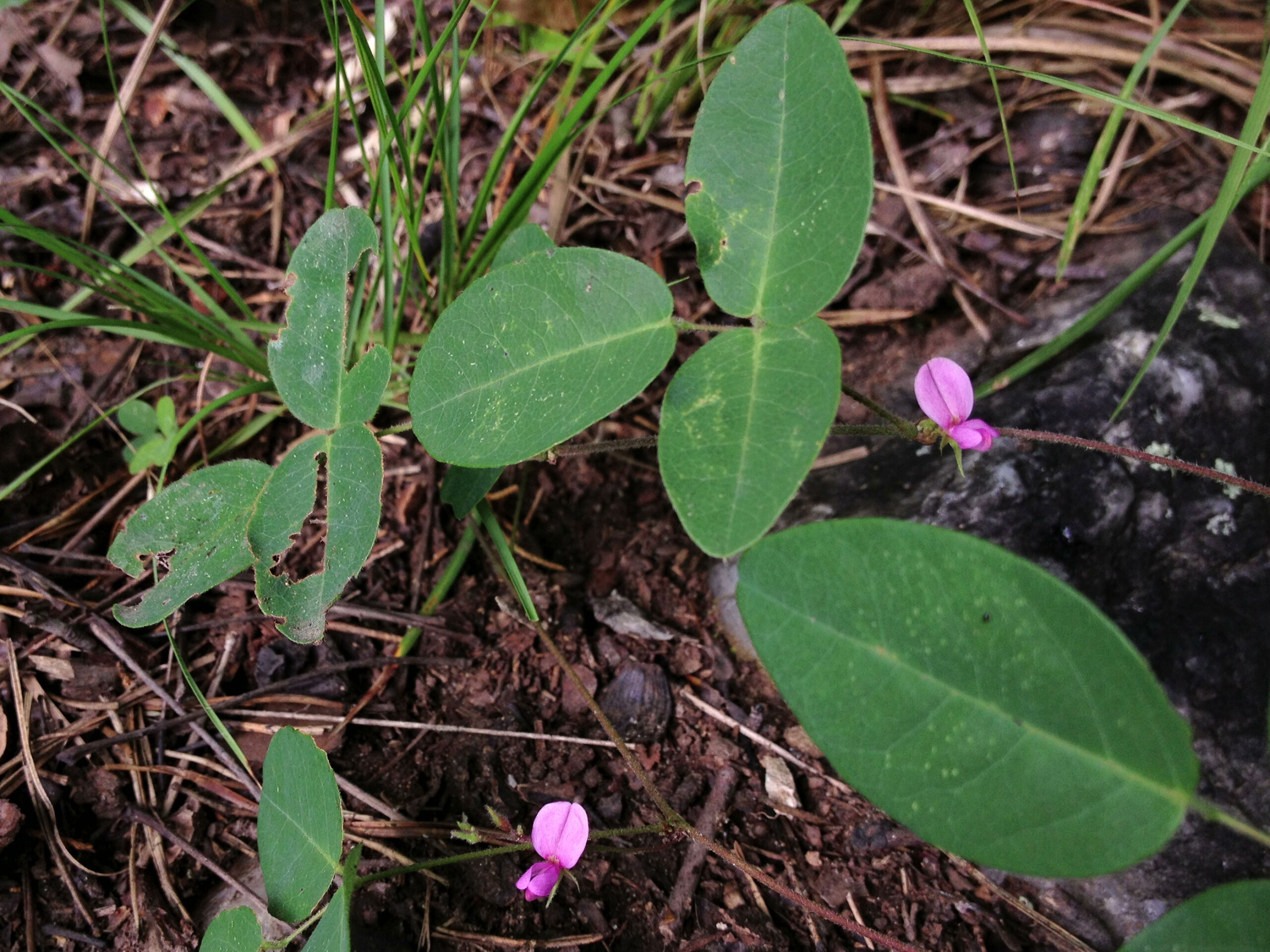
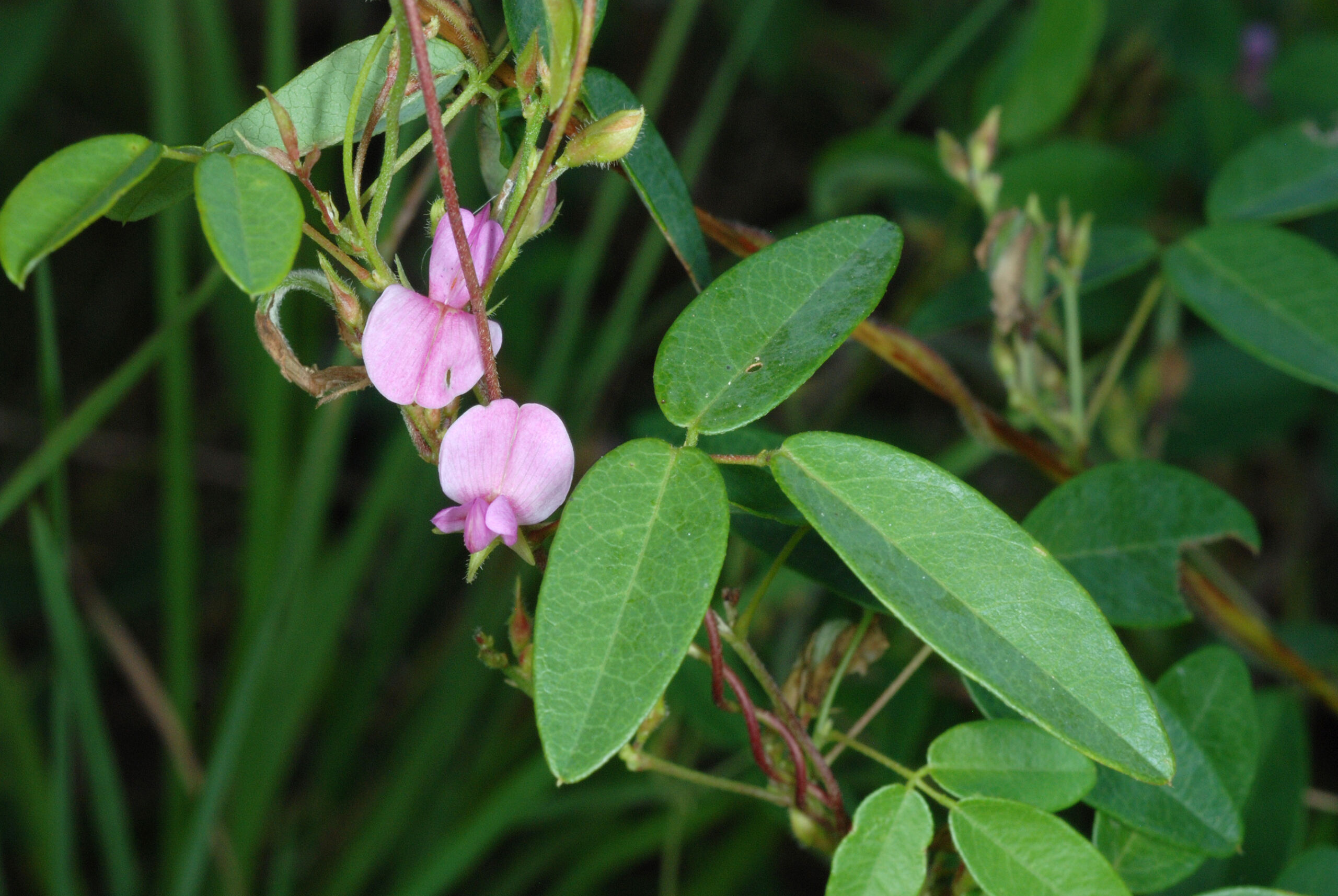
Galactia is a genus of twining, trailing legume vines in the pea family (Fabaceae), and its common name — milkpea — is a small etymology lesson. Galactia comes from the Greek for milky, for the plant’s milky sap, and the pea part is the flower: small, papilionaceous pea flowers, the classic banner-and-wings-and-keel shape, in pink, rose, purple, red, or white, carried in short clusters from the leaf axils. The plants themselves are slender and unassuming: very slender herbaceous vines, typically twining and growing onto other vegetation, with stems that can reach 3 to 4 feet long in eastern milkpea and 4 to 8 feet in the Florida plants, and leaves divided into three leaflets — trifoliate, the way clover leaves are, but narrower, thicker in texture, and carried on a vine that would rather climb than stand up. In bloom, a milkpea patch is easy to miss until you are close, and then it is unmistakable: small pea flowers scattered through grass and scrub like someone dropped beads.
The genus is a warm-climate, eastern and southern group. Eastern milkpea (G. regularis) ranges from Pennsylvania west to Missouri and south to southern Florida and eastern Texas, growing in dry to somewhat moist edges, openings, thickets, and upland woods, blooming July to September and fruiting August to October. Downy milkpea (G. volubilis in the site’s native profiles) is the southeastern vine of sandhills, open hammocks, and dry pinelands, a small twining, low-climbing vine with stems to 3 feet or more, recommended for natural landscapes and habitat restorations. Elliott’s milkpea (G. elliottii) is the sprawling, low-climbing perennial vine of dry pinewoods, sandy scrubs, and dry hammocks across most of Florida’s peninsula, and it is the only pea native to Florida with white blooms — when you see white pea flowers in Florida scrub, you have almost certainly found Elliott’s. The Florida Keys and Miami-Dade pine rocklands hold a close relative with narrow leaflets, G. parvifolia. Across the genus, the pattern holds: dry, sunny, sandy, open ground, and a vine that fills the gaps other plants leave.
One honest tangle has to be named before anyone plants from a label: the names volubilis and regularis have been swapped in the literature. Most of what used to be called volubilis in older references is now regularis, and the rest of old volubilis keeps the name volubilis for a narrower set of plants — which means a nursery tag or an older field guide that says one name may mean the other plant, and the common names downy milkpea and eastern milkpea have been caught in the same swap. This guide follows the site’s own native profiles, which call G. volubilis the downy milkpea and G. regularis the eastern milkpea, and it flags the swap here so that nobody is confused when another authority says it the other way around. For the butterflies, the distinction barely matters — the caterpillars eat Galactia species across the swap — but for a gardener buying a labeled plant, it matters a great deal, so buy from the Latin name and check it against a current flora, not just the common name.
For butterflies, milkpeas are host plants, and the two guides that name them are both southern blues. In butterfly guides, milkpeas (Galactia species) appear as host plants for the cassius blue — whose caterpillars feed on milkpeas including downy milkpea and Florida hammock milkpea, alongside blackbeads, false tamarind, and Jamaican dogwood — and for the ceraunus blue, whose caterpillars feed on milkpeas alongside partridge pea, mesquite, and a long list of other legumes. Both are butterflies of vacant lots, pastures, road edges, dunes, and scrub — the open, legume-rich ground where milkpeas twine through grass and low shrubs. The caterpillars feed on flower buds, flowers, and developing seeds, and they are often associated with ants, the way many blue caterpillars are. Plant milkpeas and you are planting a nursery for blues, not a nectar bar for adults — though the flowers feed bees and small pollinators too, including leaf-cutter bees recorded visiting them in northern Florida.
How to grow
Milkpeas are wild vines, not garden-center vines, and the way to grow them is to give them the ground they evolved for and then leave them alone. Plant in full sun to part shade, in moist, well-drained sandy or limestone soils, with or without a humusy top layer — they grow in nutrient-poor soils and need no rich bed. They are recommended primarily for natural landscapes and habitat restorations, and for wildflower and butterfly gardens, rather than formal beds, and that is the right framing: a milkpea belongs in a sunny meadow edge, a pine rockland planting, a scrub restoration, or a butterfly garden’s wild corner, twining through grasses and low shrubs the way it does in the wild. Give it something low to climb — grass stems, a small shrub, a low fence — or let it sprawl as a groundcover vine. It will not smother a tree or take over a bed the way a morning glory can; it is a slender vine with modest ambitions.
Start from seed, which is the straightforward route: milkpeas can be grown from seed, and they germinate readily, with fire and heat-shock recorded as germination encouragement in the wild — a hint that a hot-water soak or light scarification helps hard legume seed coats in cultivation, the way it does for other pea-family seed. Sow in spring after the soil warms, in the spot where the plant will live, since vines resent transplanting once they start twining. For any Galactia species, use plants or seed originally collected from near your project location where you can: local provenance matters for wild vines, and a Florida milkpea and a Pennsylvania milkpea are not interchangeable, even when they share a Latin name.
Expect a plant that looks after itself once established. As a legume, milkpea fixes nitrogen with the help of rhizobia bacteria in root nodules, which is why it thrives in nutrient-poor sand: it makes its own fertilizer from the air, and it leaves the soil richer than it found it. Growth rate is moderate, stems resprout after fire, and plants increase in abundance after burns in their native fire landscapes — a useful trait in a Florida garden where prescribed fire is part of the ecology, and a reminder that this vine evolved with disturbance, not despite it. Do not pamper it. A milkpea that gets regular irrigation and fertilizer grows soft and leggy; a milkpea that gets sun, sand, and benign neglect grows into the tough little vine the butterflies want.
Florida note: This one genuinely belongs in Florida, and Florida gardeners are the lucky ones here. Milkpeas grow naturally throughout most of Florida — sandhills, open hammocks, dry pinelands, pine rocklands, coastal uplands, and hammocks and thickets — and the eastern milkpeas are listed for zones 7 to 11, which covers the whole state. Use them in native plantings, butterfly gardens, and restoration edges, especially where you want a nitrogen-fixing vine that feeds blues without feeding the mowing bill. The cautions are Florida-specific: do not plant milkpeas where long-term flooding by salt or brackish water reaches them, since they do not tolerate it, and in the Keys and Miami-Dade rocklands, look for the narrow-leafleted relative rather than assuming every milkpea is the same species. Otherwise, this is one of the easiest native vines a Florida gardener can grow, and one of the few that pays rent in butterflies.
Water & feeding
Water needs are low to moderate, and the soil matters more than the watering can. Milkpeas grow in dry to somewhat moist soils and tolerate drought once established, as befits a sandhills and scrub vine. Water to establish transplants and seedlings, then back off — steady moisture in a well-drained sandy soil is ideal, and soggy ground is the enemy. They do not tolerate long-term flooding, salt or brackish, so do not plant them in a swale that holds water or a coastal spot that floods with salt. In a dry Florida spring, a deep drink now and then keeps growth going; in a wet summer, they mostly look after themselves.
Feeding: do not bother, and understand why. As a nitrogen-fixing legume, milkpea partners with rhizobia bacteria to pull nitrogen from the air — nearly 80 percent of the atmosphere — and fix it into the soil as nitrites and nitrates the plant can use. Fertilizing a nitrogen-fixer is redundant at best and counterproductive at worst, producing soft growth that flops and invites pests. The soil science note is the whole point of planting legumes: a milkpea patch is not just a butterfly plant, it is a soil-building plant, quietly enriching the sand around it for whatever grows next. Lean soil, sun, and drainage are the entire feeding program.
Common problems
- Wrong plant, right name. The volubilis and regularis name swap means labels and older guides disagree. Buy from the Latin name, check it against a current flora, and prefer local-provenance plants for restoration work.
- It looks weedy when young. A young milkpea is a slender vine in grass, and it looks like nothing much until it blooms. Do not weed it out by mistake — mark the spot at planting time.
- Too much water or fertilizer. Soggy soil rots a dry-land vine, and fertilizer makes soft, leggy growth. Lean, well-drained soil and restraint produce the tough plant the butterflies use.
- Salt flooding. Milkpeas do not tolerate long-term flooding by salt or brackish water. Keep them out of tidal swales and salt-flooded low ground.
- Confusion with other legumes. In its range, eastern milkpea can be confused with related genera such as Desmodium and Strophostyles. The three-leaflet leaves, small pea flowers, and twining habit together separate it, but check the flowers before you name it.
- Seed-coat dormancy. Like many pea-family seeds, milkpea seed can be slow to germinate without scarification or a hot-water soak. If a sowing sits quiet, the seed is probably waiting, not dead — try scarified seed next time.
Harvest
There is no kitchen harvest here, and that is worth saying plainly: milkpeas are wildlife and soil plants, not food crops, and their value is measured in caterpillars and nitrogen, not in pods for the table. The harvest is the seed for next year’s planting and the vine itself as habitat. Let the small brown pods ripen and split — they open with twisting valves at maturity, flinging seed the way pea pods do — then collect seed from plants you know, dry it, and sow it where you want the next patch. For cut flowers, a few blooming stems in a small vase are charming, but the plant’s real display is in the ground, twining through grass with its beads of pink and purple. And the simplest harvest: leave the pods for the wildlife that eats them — bobwhite quail are recorded eating milkpea, and the vine’s seeds and foliage feed more than butterflies. That is the crop, and it feeds everyone it is meant to feed.
Browse all plant & pest guides
Saving seeds
This is a genus-level method: it applies across the galactias, the milkpeas, since they share the same pea-family seed habits even where individual species differ in size and growth form.
Galactia seed comes in small pods, and those pods have a party trick: when fully ripe they split along their seams and fling their seeds outwards. Collect too late and you will be harvesting an empty pod and a patch of soil. The move is to watch the pods as they turn from green to brown, and to pick them just before they pop, dropping them straight into a container covered with mesh or cheesecloth so any early poppers are caught, not lost to the carpet or the mulch.
Once picked, let the pods finish drying in a paper bag or open tray for a week or two, then shell out the small, pea-shaped seeds. Like many legumes, galactia seed wears a hard coat that can be slow to let water in, which is why germination can be patchy if you sow straight from the pod. Nick each seed lightly with a nail file or rub it gently between two sheets of sandpaper, just enough to break the coat without damaging what is inside, then soak overnight in room-temperature water. Sow in a warm, free-draining mix, kept moist but never waterlogged, and expect seedlings over the following couple of weeks, though some seeds will take longer and a staggered emergence is normal for this genus.
Seed from wild-type galactias generally grows true, since these are not hybrid garden cultivars bred for a particular flower colour. That said, if you are growing a plant collected from the wild, leave most of its pods where they are: the seed you save should come from plants you are growing yourself, and the birds and small mammals that eat these seeds deserve their share. A good rule is to take a few pods for yourself and leave the rest to the garden’s other residents.
For storage, dry the seed thoroughly before jarring it. Florida’s humidity is the enemy here: seed that goes into an airtight container even slightly damp will mould, so dry it well, store it cool and dark with a desiccant packet, and label it with species and year. Galactia seed is orthodox, meaning it tolerates drying and cool storage, unlike the recalcitrant seeds of oaks and other trees that must never be dried out. Sow in spring to summer warmth, and remember the quiet superpower of the whole genus while you work: as legumes, these plants fix nitrogen with the help of root bacteria, so the seedlings you raise are not just new plants, they are tiny soil-improvement projects.
Species in this group
Eastern milkpea, downy milkpea (Galactia regularis) — the widespread eastern species, from Pennsylvania to Missouri and south to southern Florida and eastern Texas: a very slender twining vine reaching 3 to 4 feet, with three broad leaflets and small rose to pink flowers, blooming July to September. The site’s native profile calls this species the eastern milkpea.
Downy milkpea, McRee’s milkpea (Galactia volubilis) — the southeastern vine of sandhills, open hammocks, and dry pinelands: a small twining, low-climbing vine with stems to 3 feet or more, with reddish-purple flowers. The site’s native profile calls this species the downy milkpea; see the name-swap note in the guide text, since other authorities apply these two names the other way around.
Elliott’s milkpea (Galactia elliottii) — the sprawling, low-climbing perennial vine of dry pinewoods, sandy scrubs, and dry hammocks across most of Florida’s peninsula, with white flowers — the only pea native to Florida with white blooms — and leaves of up to nine oblong leaflets.
Florida hammock milkpea (Galactia species) — named in the cassius blue guide as a milkpea host alongside downy milkpea; listed here without a pinned Latin name, since the butterfly guide gives the genus but not the species, and guessing the species would invent an identification the source never made.
Narrow-leafleted rockland milkpea (Galactia parvifolia) — the close relative of the Florida Keys and Miami-Dade pine rocklands, with narrow leaflets, distinct from the broader-leafleted milkpeas of the mainland.