
🌳 Gambel Oak
What it looks like
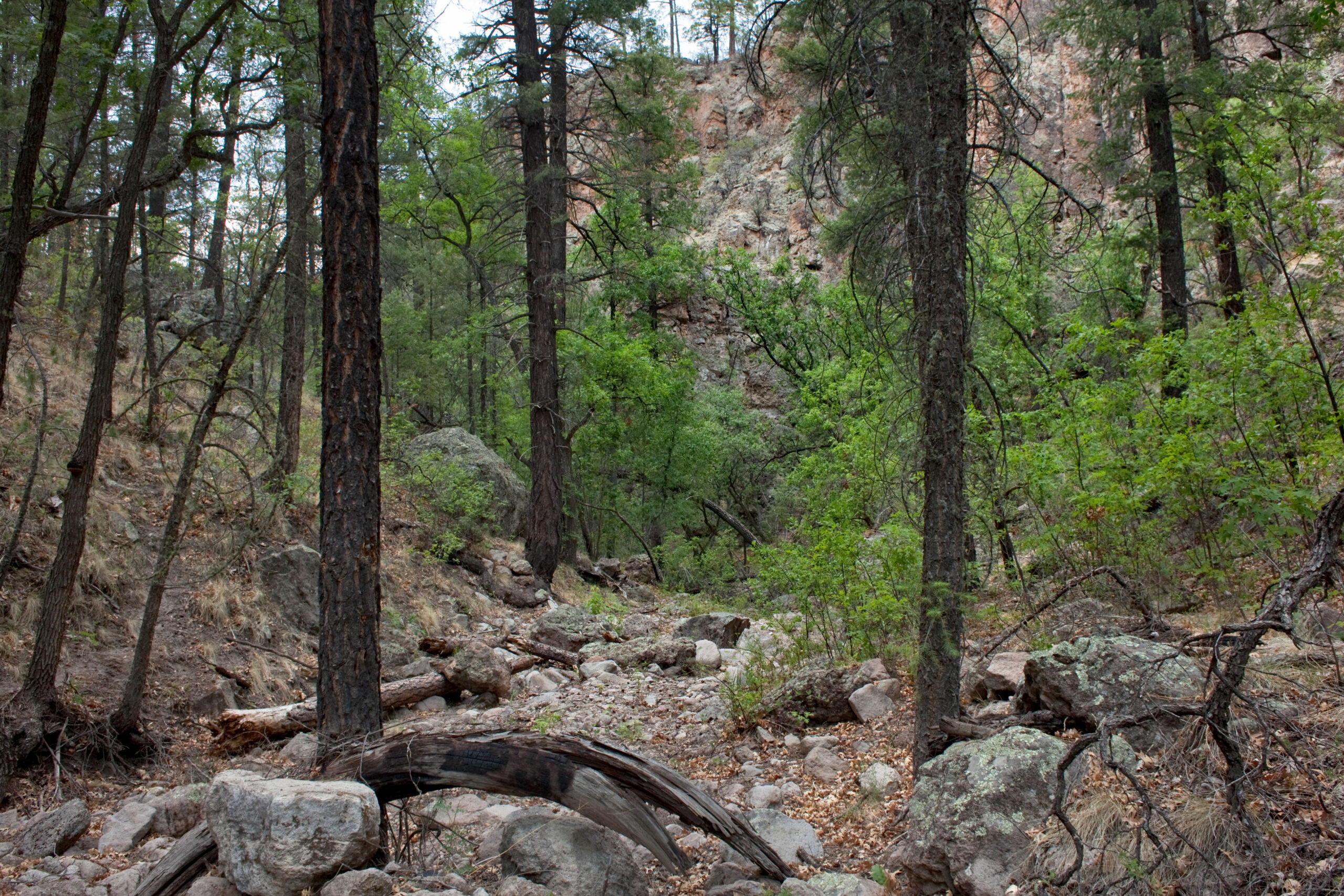
Gambel oak is the oak of the Rocky Mountain foothills, and the first thing to understand about it is that it refuses to pick a size. In the Flora of North America account it is described as shrubs or trees, deciduous, sometimes clumped and spreading, and that hedging is not botanical indecision, it is the plant telling the truth. On a dry, rocky slope it may be a shrubby thicket only a few feet tall. In a sheltered canyon bottom or along a stream, the same species grows into a small to medium tree, and the average mature height given by most references is 10 to 30 feet, with occasional trees reaching about 60 feet. The champion tree, in Arizona, is recorded at 114 feet, which is less a garden expectation than a reminder of what this oak can do when water, soil, and time all agree with it. If you plant one, plant for the tree it could become, not the shrub it looks like in the pot.
The leaves are the identification anchor, and they are handsome in a way that makes the common name scrub oak feel like an insult. They are alternate, simple, oblong to obovate, 2.5 to 7 inches long, deeply lobed on each side of the central vein with 7 to 9 rounded lobes, glossy dark green above and paler and velvety or hairy beneath. In fall they turn orange-yellow to brown, and a mountainside of Gambel oak in October is one of the great autumn shows of the interior West, whole slopes going gold at once. The bark is gray-brown, scaly, and on older trees ridged and furrowed, and the trunk is often short and twisting, which gives mature trees a rugged, wind-shaped character even when they are growing in a garden.
The acorns are small, half an inch to three-quarters of an inch long, oval, brown, and held in a shallow cup that covers about a quarter to a half of the nut, on a short stalk or almost no stalk at all. They ripen in September, turning from green to golden brown, and they are sweetish enough that squirrels gather and cache them for winter, while deer, wild turkeys, black bears, and even domestic hogs eat them where they fall. The flowers are the inconspicuous greenish-brown catkins of all oaks, appearing in spring, wind-pollinated, and easy to miss entirely, which is fine, because nobody plants a Gambel oak for its flowers. You plant it for the leaves, the fall color, the acorns, and the wildlife traffic that follows all three.
Gambel oak belongs to the beech family, Fagaceae, and to the white oak group, which is why it is also called Rocky Mountain white oak and Utah white oak. Its natural range is centered in the western United States and northwestern Mexico: Arizona, Colorado, New Mexico, Utah, Nevada, Wyoming, and into Idaho, Nebraska, the Oklahoma Panhandle, western Texas, and the Mexican states of Chihuahua, Coahuila, and Sonora. It grows at elevations of roughly 3,300 to 9,800 feet, where annual precipitation averages only 12 to 24 inches, on fairly dry lower mountain slopes, in oak-maple and montane conifer woodlands, and at the higher margins of pinyon-juniper country. It flourishes in full sun on hillsides with thin, rocky, alkaline soil where competition is limited, and it does well in richer soils too, though there it has to fight for growing room. It is, in short, a mountain oak built for sun, thin soil, and dry summers, and it sulks in shade, in wet feet, and in humid lowland summers.
How to grow
Grow Gambel oak the way its mountains grow it: full sun, well-drained soil, and room to become a thicket. It is shade-intolerant, so do not tuck it under larger trees and expect gratitude; it wants the open slope, the sunny edge, the south-facing bank. It accepts a wide range of soils, including poor, rocky, and clay soils, as long as drainage is good, and the pH range reported by plant databases runs from mildly acid through neutral to mildly alkaline. It is very drought-tolerant once established, which makes it a genuine water-conserving landscape tree in its native range, and it is slow-growing, so the first years will test your patience and reward it later.
Plant in fall or spring, and plant it where it will stay, because like most oaks it resents being moved once its roots are down. Give it 20 to 30 feet from buildings, paths, and power lines, and more if you are planting the tree form rather than the shrub form, because a thicket-forming oak does not respect a property line drawn on a map. It grows in clumps and spreads from root sprouts, which is a feature if you want a grove and a problem if you want a single specimen tree: expect suckers, and plan to thin them if you want one trunk, or to let them run if you want a thicket. Thinning around buildings is also a fire-safety matter on native sites, because Gambel oak is fire-prone when it grows dense and dry, and the same root sprouts that make it a survivor make it a fuel load if it is never thinned.
Hardiness needs a plain statement, because sources disagree at both edges. This guide’s hero stats use zones 4 to 8, which is the range given by Utah State University Extension and several nursery references. The University of Utah’s tree tour stretches it to zones 3 to 9, and a nursery account cites hardiness to zone 3. The safe reading is zones 4 to 8 for most gardeners, with zone 3 a cold-climate possibility for tough seed sources and zone 9 a warm-edge gamble. In Florida, it is not a Florida tree at all: it wants cool nights, dry summers, and mountain air, not humid subtropical summers, and Florida gardeners already have their own live oak, Quercus virginiana, which is the subject of a separate guide and a far better fit for Florida.
Pruning is light and mostly about choosing a form. If you want a tree, select a strong central leader while the plant is young and remove competing stems; if you want a thicket, thin out dead and crossing wood and let the rest run. Do not top it, do not shear it into a ball, and do not remove more than a quarter of the crown in any one year. Galls, the swollen growths on stems and leaves caused by tiny wasps, are common on Gambel oak and are almost always harmless, a cosmetic quirk rather than a crisis, and treating every gall is a good way to spend money while annoying the birds that eat the gall wasps.
Water & feeding
Water to establish, then let it be a mountain oak. Through the first two or three years, water deeply in dry weather, soaking the root zone so roots grow down instead of sideways, and then taper off. Established Gambel oak is very drought-tolerant and needs little supplemental water in a dry climate, though it will grow faster and taller with occasional deep water, especially along a stream or in a spot that catches runoff, which is exactly why the biggest trees are found along streams in the southern part of its range. The nuance is that this oak’s drought tolerance is a survival trait, not a preference for being baked: a garden plant on a hot, reflective patio will need more water than one in a sheltered, mulched corner, and both will need less than your lawn.
Do not fertilize it into softness. Gambel oak grows well in average to lean soil, and a yearly mulch of bark or leaf litter, kept off the trunk, is all the feeding most trees need. Heavy nitrogen pushes weak, leafy growth that wind and drought then punish, and it does nothing for acorn production, which comes from a mature, slightly stressed tree, not a pampered one. If your soil is genuinely poor and the tree is struggling, a single spring application of a balanced, slow-release fertilizer is plenty, and in most native soils it is unnecessary.
Common problems
- Size and spread misjudgment. The most common Gambel oak problem in gardens, and it is a human problem. A plant that can reach 30 feet tall and spread into a thicket by root sprouts does not belong 10 feet from a house, a driveway, or a power line, and it does not belong in a small bed you intend to keep tidy. Measure the mature thicket, not the nursery pot, and plant accordingly.
- Fire risk on dry sites. Dense, unthinned Gambel oak thickets are flammable, especially in late summer, and the species is a well-known fuel component in its native range. Thin thickets around buildings, remove dead wood, and keep the area under the canopy clear of dry litter if you garden in fire country.
- Shade and wet feet. Gambel oak is shade-intolerant and wants well-drained soil. Planted in deep shade or in soil that stays soggy, it grows weakly, stays shrubby, and never achieves its form. If your site is shady and wet, admire this oak on a mountainside and plant an oak suited to your site instead.
- Hybrid confusion. Gambel oak hybridizes freely with other scrub oaks, and the hybrid swarms are a famous taxonomic tangle, often lumped under the name Quercus × undulata. A plant sold as Gambel oak that has shallowly lobed or toothed leaves rather than deeply rounded lobes may be a hybrid, and nursery stock labeled Gambel oak sometimes includes Gambel and bur oak crosses. Buy from a reputable native nursery and check the leaves, not just the label.
- Acorn litter and wildlife traffic. A mature tree drops a heavy crop of small acorns, which roll underfoot and draw squirrels, deer, turkeys, and jays. Do not plant it over a patio or a path you must keep spotless, and enjoy the wildlife traffic the acorns bring instead.
- Wrong climate. In humid eastern and southeastern gardens it grows poorly and rarely achieves its western form. If your summers are humid and your winters are wet and cold rather than cool and dry, this is not your oak.
Harvest
There is no kitchen harvest most gardeners should attempt from Gambel oak without preparation, though the harvest it gives wildlife is enormous. Acorns are a staple food for deer, squirrels, chipmunks, wild turkeys, grouse, black bears, and jays, and a single mature tree can feed a neighborhood of animals through fall and winter. The acorns are edible to people only after leaching to remove bitter tannins, a traditional process that Indigenous peoples of the Southwest practiced with deep knowledge, and it is not a weekend project for a gardener with a bucket and a guess. The honest garden harvest is shade, fall color, wildlife, and longevity: a thicket that holds a slope with its roots, feeds birds in every season, and comes back from its own roots after fire.
Butterfly guides list Gambel oak as a host plant in two guides, both in their Host plants sections, both giving the Latin name Quercus gambelii: the Colorado hairstreak butterfly and the Rocky Mountain duskywing. The Colorado hairstreak is the famous one, a butterfly that spends its entire life cycle within Gambel oak thickets, its caterpillars eating only Gambel oak leaves, which makes this oak not just a host but a whole world for that butterfly. That host relationship is the reason this guide exists in the butterfly project, and it is worth stating plainly rather than padding it into a longer list. Oak foliage feeds a great many caterpillars beyond any single butterfly guide, and a Gambel oak in a garden is a caterpillar cafeteria whether or not a guide lists every guest.
Propagation is slow and honest. Fresh acorns germinate readily if sown in fall in deep pots, because the first root dives down fast and a shallow pot will not contain it, and seedlings grow slowly for their first years, putting energy into roots before they put it into height. The plant also reproduces vigorously from root sprouts after fire or other disturbance, growing from vast underground structures called lignotubers, which is why a burned thicket comes back as a thicket, fast. That slow start above ground and fast comeback below it is the tree’s strategy, not a failure: an oak that spends its youth building a root system is an oak that survives its first drought and its first fire. Buy a nursery tree if you want a head start, and then leave it alone to become the thicket it already plans to be.
Saving seeds
First, the rule that overrides everything else in this section: Gambel oak acorns are recalcitrant, and they must never be dry-stored. Unlike a bean or a sunflower seed, an acorn is a living, wet package. Let its moisture drop too far and it dies, quietly and completely. Do not put acorns in a paper envelope in the pantry, do not leave them on a sunny windowsill to “dry out,” and never freeze them. If you remember one sentence from this section, make it this one: keep them moist, keep them cool, and plant them promptly.
Gambel oak sits in the white oak group, which shapes the whole method. White oak acorns mature in a single season, ripening in late summer to early autumn, and they carry little or no dormancy: they are built to germinate soon after falling, often sending a root down while autumn is still mild. That is why fall planting is the reliable route, not a folk preference. Collect acorns as they drop, or shake a branch gently over a sheet, and be picky. Discard any with holes, cracks, or mould, and float-test the rest in a bucket of water: sinkers are usually sound, while floaters are often empty or weevil-damaged and should be composted. Expect heavy losses to wildlife and weevils even so; collect several times more than you think you need, because a good share of any acorn crop is already spoken for.
Plant about an inch deep in moist, well-drained soil, in a pot or a prepared bed, and protect the planting with wire mesh. Squirrels, jays, and mice regard a freshly planted acorn as a pantry they did not have to build, and an unprotected sowing is often an empty sowing. Given moisture and mild temperatures, germination follows within weeks, though the shoot may wait until spring while the root establishes underground first. Do not mistake that quiet winter for failure.
If you cannot plant immediately, the holdover is moist cold storage, not dry storage: acorns in a bag with barely damp peat, potting mix, or sawdust, in a refrigerator just above freezing, checked regularly for mould. Even so, white oak acorns keep for months at best, not years, and they may sprout in the bag. Sources disagree on whether a cold period is needed before spring sowing: some references recommend weeks of cold stratification, while most white-oak references say little or no chilling is required. Fall planting sidesteps the argument entirely, which is one more reason to prefer it.
Finally, two honesty notes. Gambel oak hybridises readily with other white oaks, so seedlings from a tree growing near other oak species may not be pure Gambel oak. And in the wild, this tree spreads largely by root suckers, so a whole grove may be one clone rather than a crowd of individuals; a seedling you raise is a new genetic individual, which is valuable, but it is not a copy of the parent tree. One Florida caveat, too: Gambel oak is a Rocky Mountain tree, not a Florida native, so check this guide’s climate fit before investing a season in acorns. And if you do try it here, remember that Florida heat dries an acorn out fast, which makes the moist-and-prompt rule even more urgent.
Varieties
Gambel oak is sold as the straight species, and no named garden varieties were verified for this guide. Utah State University Extension states it plainly: no cultivars are available, though some nurseries have hybrids of Gambel and bur oaks. That is stated plainly, not padded: this is not an oak with a catalog of cultivars, and any seller offering a named Gambel oak variety should be asked to show that the name is real and distinct.
- Quercus gambelii, the straight species: The shrub or small tree described in this guide, deciduous, deeply lobed leaves glossy above and velvety beneath, small acorns, 10 to 30 feet tall on average and occasionally to 60 feet, forming thickets by root sprouts. This is what nurseries sell, and it is what butterfly guides mean when they list Gambel oak as a host plant.
Related oaks are not varieties of this tree and are not listed here as if they were: canyon live oak (Quercus chrysolepis) is a different western oak with evergreen leaves and golden-scaled undersides, scrub oak (Quercus ilicifolia) is a different eastern shrub oak, and the eastern live oak (Quercus virginiana) is a different species with its own guide. The name scrub oak, used for Gambel oak in much of the West, is a common-name trap: it is shared with several other oaks, so check the Latin name, not just the common name, before you buy. If you want a scrub oak outside Gambel oak’s range, buy the species that belongs to your region, not a Gambel oak with a hopeful label.