
🌐 Giant Allium
What it looks like
How to grow
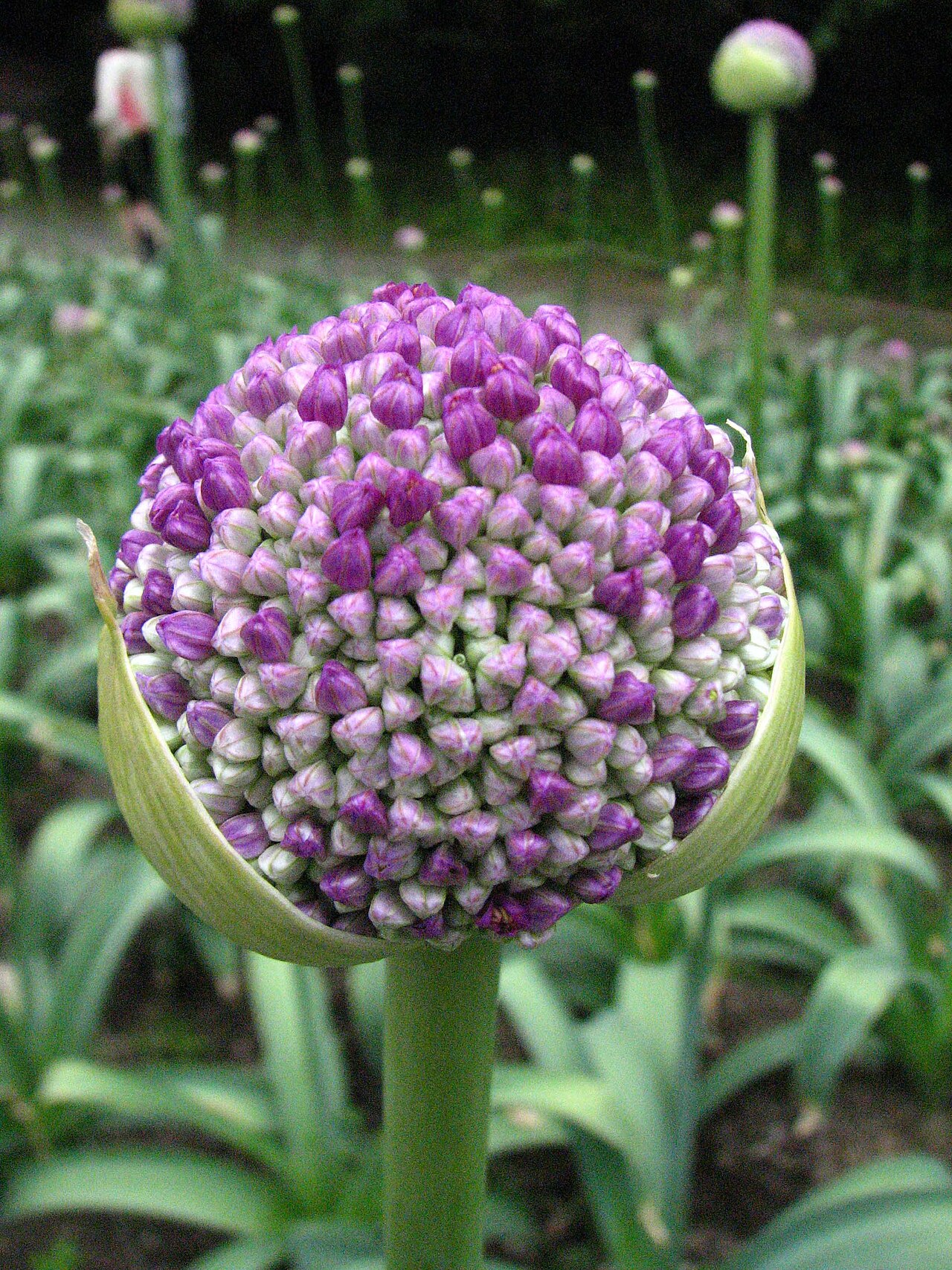
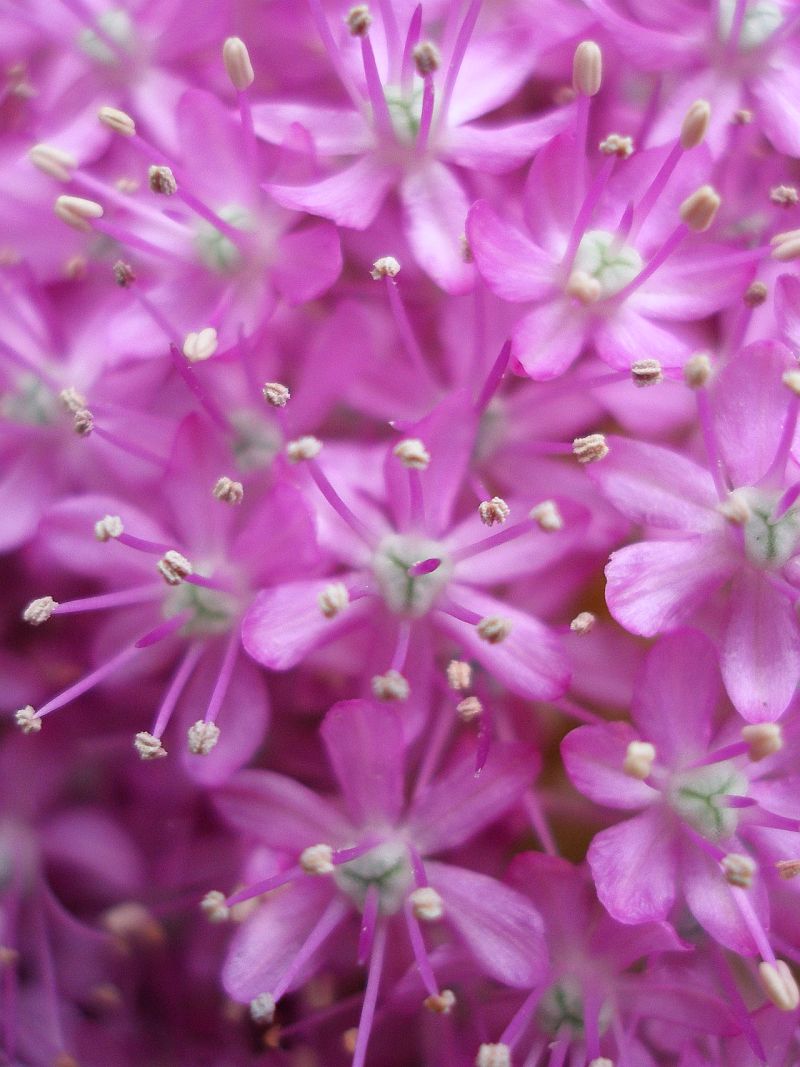
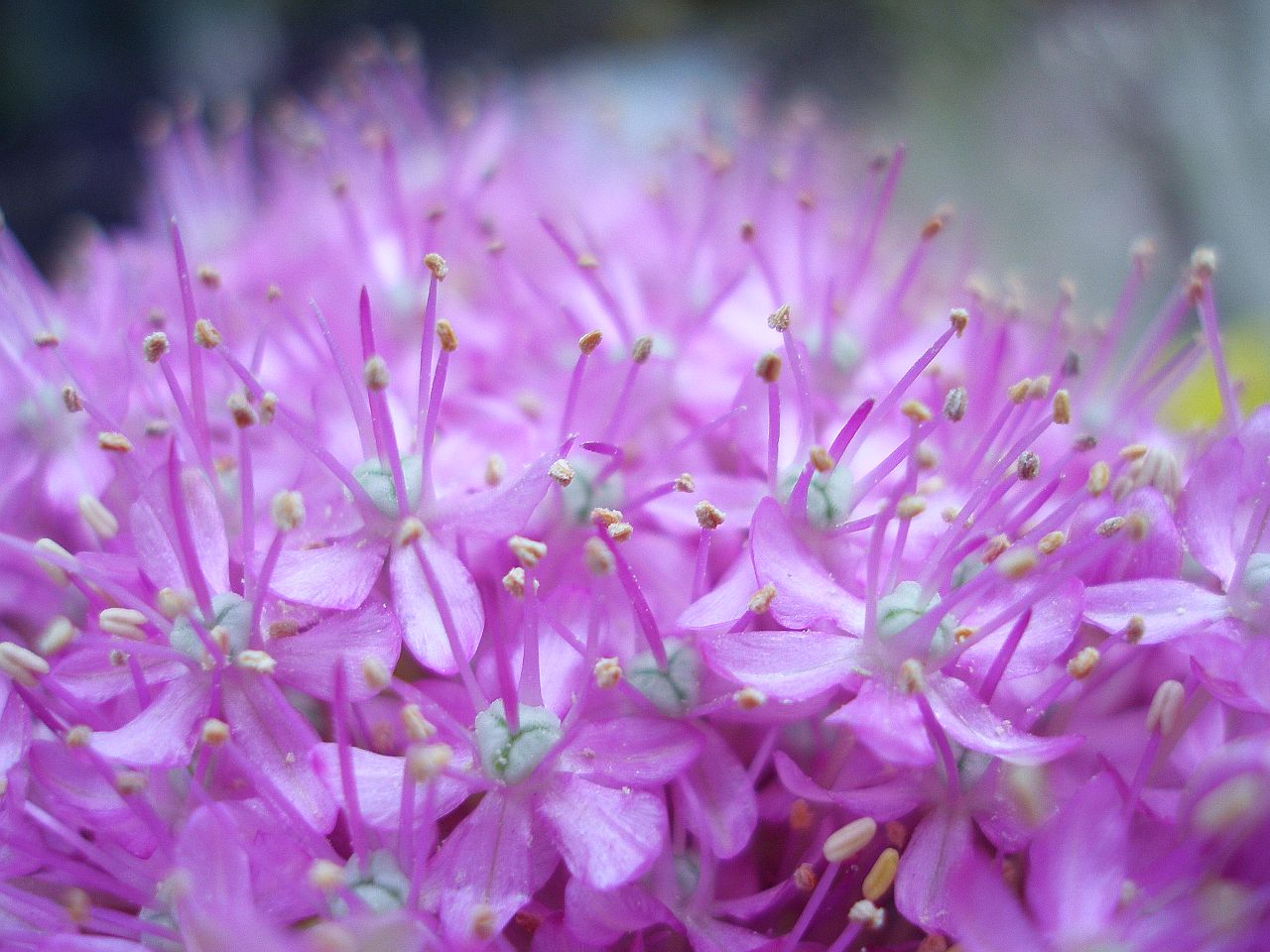
Giant allium is the big one: 3–5 feet tall, with a dense spherical head 6–8 inches across made of hundreds of starry violet-purple florets, opening in late spring just as tulips fade. Plant bulbs in fall, 6–8 inches deep and 8–12 inches apart, in full sun and very well-drained soil — wet feet rot allium bulbs faster than anything else, so gritty soil and a spot that does not puddle are essential. Site it at the back or middle of the border among perennials that will hide its foliage as it yellows, because allium leaves start to look tired just as the flowers peak; that is normal, not a disease. One bulb makes a fine accent, but groups of three or five make the statement. This is a purely ornamental allium — do not eat it — and its oniony scent is exactly why deer and rabbits leave it alone. Related ornamental alliums such as Schubert’s allium (A. schubertii), with its explosive firework head, and Star of Persia (A. christophii), with its huge silvery-lilac globe, share this same fall-planting, sharp-drainage culture and can be grown by this guide’s rules.
Water & feeding
Water in after planting and water during dry springs; reduce watering sharply once foliage dies back, through summer dormancy. Feed once a year with compost or a light bulb fertilizer in early spring; heavy nitrogen gives leaves at the expense of flowers. Mulch lightly (about 2 inches) in cold zones.
Common problems
- Bulb rot — wet soil; plant high, add grit, never water through summer dormancy.
- Flopping stems — planted too shallow or in shade; plant 6–8 inches deep in full sun.
- No flowers — foliage cut too early, or bulbs too young; leave leaves until fully yellow.
- Yellowing foliage during bloom — normal for alliums; hide it with neighboring perennials.
Harvest
Cut stems for bouquets when several florets are open, or leave heads standing to dry in place — the seed heads hold their shape for months and look striking through winter. Let foliage die back naturally, and divide offsets only when flowering declines or clumps get congested, in fall.
Browse all plant & pest guides
Saving seeds
Giant allium hands you its seed on a platter, literally — the same dried globe this guide tells you to leave standing for winter structure is also a seed head, packed with small black seeds. Let a few heads ripen fully on the plant rather than cutting every stem for bouquets: the florets fade, the head dries and rattles, and by late summer the seed is ready. Cut the whole head into a paper bag, let it dry a few more days indoors, then shake and rub it until the seeds rain out. Pick out the papery debris, spread the seed on paper until it is thoroughly dry, and store it in a labeled envelope or jar somewhere cool, dark, and dry — in Florida, airtight with a desiccant packet once the seed is truly dry, because a half-dried seed in a sealed jar is a mold farm, not a seed bank.
Sowing is where the romance meets the calendar. Allium seed wants a cold period to break dormancy, so the simplest method is also the most natural: sow fresh seed outdoors in fall, in gritty, very well-drained soil, and let winter do the work. Pots left outside in a sheltered spot over winter work the same way. Germination is irregular — some seedlings appear in spring, some take their time, and some sulk for months — so sow more than you think you need and do not declare failure in April. Then comes the patience test: sources vary, but most put first bloom at roughly two to four years from seed, with some plants taking longer to reach full globe size. A bulb, by contrast, blooms the next spring. Seed is the cheap way to raise a drift; bulbs are the fast way to make a statement.
Seed-grown plants also vary. A seedling may bloom a little smaller, a little paler, or a little earlier than its parent, because bees have been mixing pollen across your border all spring. If you want an exact copy of a particular globe, divide the offsets in fall — that is the clone route. And one repeat of this guide’s warning, because it matters in a seed context too: this is a purely ornamental allium. Its seeds are for planting, not for eating, however oniony the plant smells. Save them, sow them, and in a few years you will have a small constellation of purple globes that cost you nothing but waiting.
Varieties
Every named variety of Giant Allium with its own growing guide:
- Globemaster Giant Allium — The softball globe: violet-purple spheres up to 10 inches across on 3- to 4-foot stems, the biggest allium globe in the trade.
- Purple Sensation Giant Allium — The purple classic: deep violet-purple globes on 3-foot stems, the allium that made purple globes famous and multiplies freely.