
🌿 Giant Dutchman’s Pipe
What it looks like
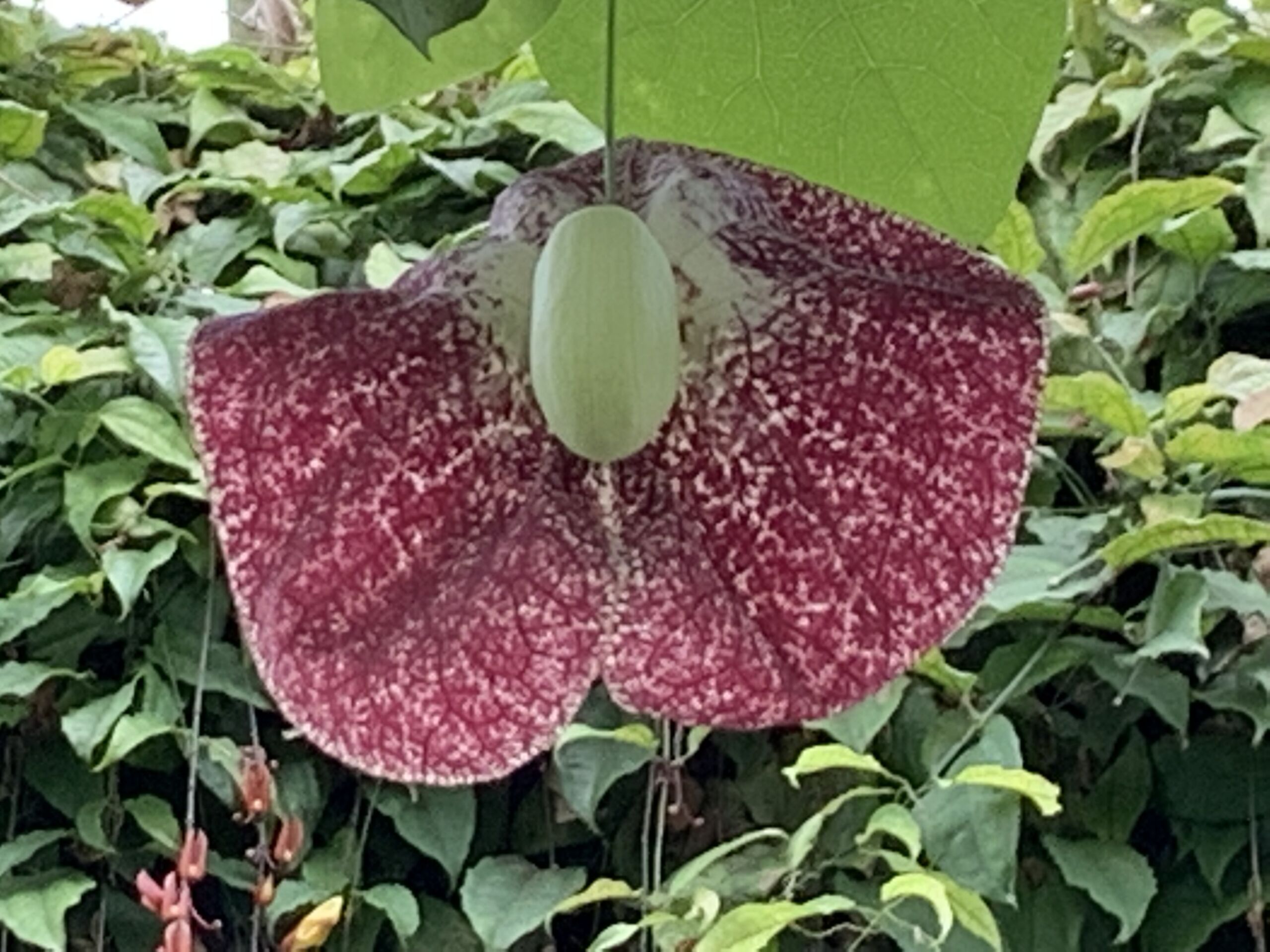
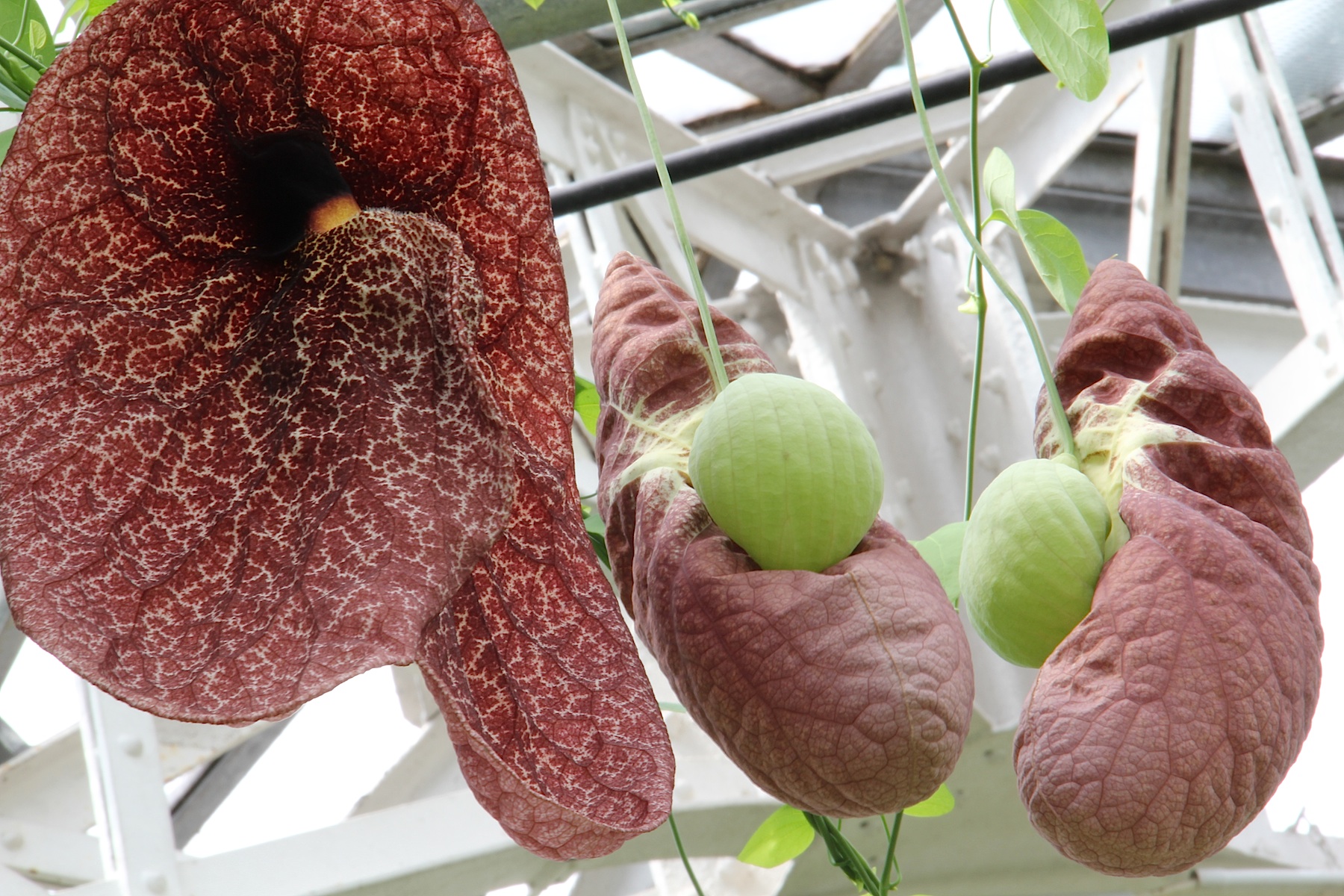
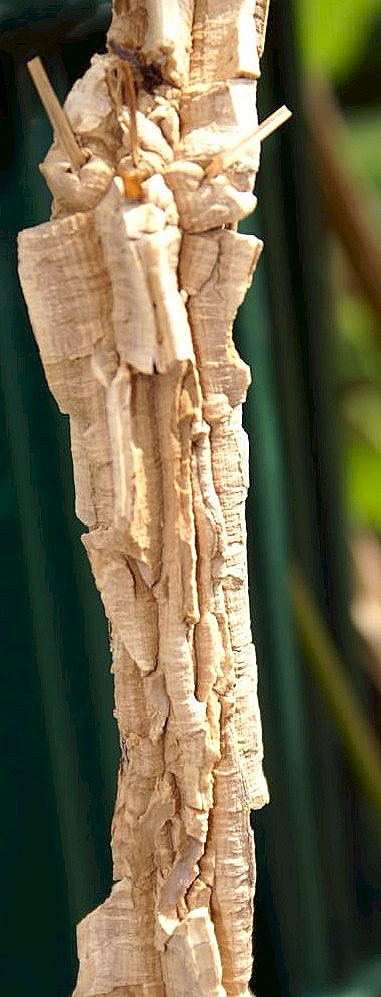
Giant Dutchman’s pipe is the show-off of the pipevine family, and it earns the name honestly. It is a vigorous, woody, evergreen tropical vine from the humid forests of Central America and Brazil, climbing 15 to 20 feet in a garden and far more in the wild, with glossy heart-shaped leaves and flowers that stop people mid-sentence. The species name gigantea means giant, and it refers to the flower: North Carolina Extension describes blooms up to 2 feet long and 1 foot wide, deep burgundy velvet with ivory-white veining, hanging like a pouch with a flared mouth. That colored part is not petals at all but a fused calyx, shaped like a smoker’s pipe — a swollen sac at the base narrowing into a tube and opening into a trumpet — and the plant uses it as a fly trap of the polite kind: flies wander in, get dusted with pollen, and wander out, lured by a scent that humans variously call strong, odd, or frankly unpleasant. One person’s stink is a fly’s dinner bell.
The butterfly context for this species is the Polydamas Swallowtail guide, whose Host plants section says exotic ornamental pipevines are also used, and names elegant Dutchman’s pipe (calico flower, Aristolochia elegans) and giant Dutchman’s pipe (Aristolochia gigantea) as commonly used by Polydamas larvae in Florida gardens. This guide claims only the giant Dutchman’s pipe half of that sentence. The contrast the Polydamas guide draws is the whole story in miniature: the Pipevine Swallowtail’s caterpillars die on calico flower, but the Polydamas thrives on these exotic pipevines. Same plant family, same genus of butterfly, opposite outcome — which is why “host plant” is always a species-by-species claim, never a genus-wide promise. And the warning runs the other way too: North Carolina Extension reports that this vine’s leaves are toxic to pipevine swallowtail larvae, killing them within about three days. Plant giant Dutchman’s pipe for the Polydamas, never as a substitute nursery for the Pipevine Swallowtail.
One plain-text disambiguation, because the pipevine names are a tangle and this species guide must not swallow its relatives. This guide covers Aristolochia gigantea only, also called Brazilian Dutchman’s pipe, giant pipevine, and giant pelican flower. Dutchman’s pipe (Aristolochia macrophylla) is a different, hardy species with its own growing guide, and it is not covered here. Woolly pipevine (Aristolochia tomentosa) is a different species with its own growing guide, and it is not covered here. Calico flower (Aristolochia elegans, also listed as Aristolochia littoralis in some treatments) is a different species with its own growing guide, and it is not covered here. The site’s Aristolochia genus guide covers the genus as a whole and does not replace this species guide. Buy and plant by Latin name, and let this guide be the giant one, not a substitute for the genus.
How to grow
Grow giant Dutchman’s pipe like the tropical vine it is: warm, moist, and climbing. Give it a sturdy arbor, pergola, trellis, or fence — this is a woody vine that puts on real weight and will pull down a flimsy support the way a teenager pulls down a bookshelf. Plant in spring after all danger of frost, in rich, moist, well-drained soil with plenty of humus, in full sun to part shade; in the hottest climates a little afternoon shade keeps the leaves from scorching. Water generously through the growing season and mulch to hold moisture, because a tropical vine in dry soil is a vine that sulks, drops leaves, and flowers poorly. Feed lightly with a balanced fertilizer through spring and summer if growth is slow, and prune after flowering to keep it inside its allotted structure — left alone, it will cover the arbor, then the fence, then start eyeing the roof.
The zone question is one of the few in this series where the sources openly disagree, and this guide says so rather than picking a winner. North Carolina Extension lists zones 10 to 12 and warns the vine will not survive temperatures below 30 degrees Fahrenheit; other sellers list zones 7 to 10. The honest reading is that this is a tropical plant that is reliably perennial only where winters stay warm, and everywhere colder it is a container plant that comes indoors before frost, or an annual treated as a summer spectacle. In central and south Florida it grows outdoors year-round, which is exactly why the Polydamas connection matters there — and exactly why the Florida caution below matters too. Do not plant it outdoors in a cold climate expecting it to return; it will not, and the empty trellis in spring will be your receipt.
Florida note, stated plainly rather than hopefully. Giant Dutchman’s pipe is a vigorous exotic vine, and at least one horticultural source flags it as invasive in Florida because of its rapid growth and ability to outcompete native plants. In Florida, grow it contained — on an arbor you prune, not loose over a fence line into a natural area — and never let it seed into wild ground. The Polydamas Swallowtail connection is real and delightful, but it does not make an exotic vine a native plant, and a gardener who confuses the two has stopped gardening and started hosting a takeover. Also note the toxicity warning in the next section before you plant it anywhere children or pets might nibble: no part of this plant is food.
Water & feeding
Water, for giant Dutchman’s pipe, is a question of steady moisture. This vine comes from humid forests, and it wants soil that stays evenly moist but never waterlogged — deep watering when the top inch or two of soil dries, mulch over the roots, and extra water in hot, dry spells. A vine that dries out repeatedly will drop leaves and abort buds, which is the plant telling you it is from the tropics and you are not watering like it. In a container, the rule tightens: pots dry faster than ground, so check container vines often in summer and never let the root ball go bone-dry.
Feeding: light and regular through the growing season. A balanced fertilizer every few weeks in spring and summer supports the fast growth and the enormous flowers; stop feeding in fall as growth slows, and do not feed a vine you have brought indoors for winter beyond a very light touch, if at all. The soil science here is the defense-chemistry story: Aristolochia species make aristolochic acids, bitter defensive compounds that deter most herbivores — and that butterflies like the Polydamas have learned to sequester and use, turning the plant’s poison into their own protection. The vine’s chemistry is the reason it is both a butterfly host and a plant no human should ever eat, and that contradiction is the whole genus in one sentence.
Common problems
- Cold. The most predictable problem in this species. Below about 30 degrees Fahrenheit this tropical vine dies back or dies outright. Container-grow it and bring it indoors before frost anywhere winters are cold.
- Poison, not food. Every part of Aristolochia contains aristolochic acids, which are harmful to the kidneys and described as carcinogenic. No part of this plant is edible, medicinal, or a home remedy. Keep it away from children and pets, and wash your hands after pruning.
- Wrong swallowtail. This vine feeds Polydamas caterpillars but kills pipevine swallowtail caterpillars. Do not plant it as a pipevine swallowtail host; the native pipevines are the right nursery for that butterfly.
- Vigor. A woody vine that covers an arbor fast and keeps going. Prune after flowering, keep it off roofs and trees you care about, and never let it escape into natural areas in Florida.
- Wrong pipevine, wrong tag. Dutchman’s pipe is Aristolochia macrophylla, woolly pipevine is Aristolochia tomentosa, calico flower is Aristolochia elegans. Check the Latin name, and buy by Latin name, not by common name alone.
- Fly-pollinated scent. The flowers smell the way flies like, which is not always the way people like. Site the vine where its bloom can be admired from a step back rather than over a dining table.
Harvest
Giant Dutchman’s pipe has no harvest in the food sense, and this guide says so on purpose: there is nothing to pick, eat, brew, or tincture here, and anyone selling you a use for it is selling you a poison. The harvest is visual and ecological — enormous burgundy flowers through the warm months, a vine that turns an arbor into a conversation piece, and, in Florida and the warm Gulf South, Polydamas caterpillars working the leaves the way the butterfly guide describes. Leave most of the vine to do its work, prune what outgrows its structure, and let the flowers do what they have always done: lure flies, feed a swallowtail that can handle them, and remind everyone walking past that a flower can be two feet long and still be a trap.
The simplest harvest is a warm evening with no agenda at all: a vine-covered arbor, a pouch flower hanging at eye level, velvet burgundy with ivory veins, a fly or two doing the pollination work, and the knowledge that the same plant that feeds one swallowtail poisons another. That is the crop, and it arrives without a single spray, because spraying it would kill the very caterpillars this guide exists to feed.
Browse all plant & pest guides
Saving seeds
Toxicity warning first, before anything else. Every part of this vine contains aristolochic acid, a potent kidney toxin and a Group 1 carcinogen — the same compound that has caused kidney failure in people who took Aristolochia preparations as medicine. Never eat any part of giant Dutchman’s pipe, never brew it, never use it as a home remedy, and wash your hands after handling seed or plant material. This section is about growing an ornamental vine, nothing else, and it should be sited where children and curious pets are not nibbling the garden.
With that said, the vine is generous with seed. After those dinner-plate flowers are fly-pollinated, the plant produces an elongated capsule, roughly 8 cm long, packed with numerous flat, winged seeds. Let the capsule ripen on the vine until it browns and begins to split — and bag it before it fully opens, because a dehiscent capsule does not ask permission before scattering. Snip the capsule into a paper bag, pick the seeds out, and let them dry briefly in the open air. Unlike some tropical seed that must never dry out, Dutchman’s pipe seed tolerates a short drying period before sowing, but do not leave it rattling around in a drawer for a year and expect miracles; fresher is better.
To sow, soak the seeds for about two days, then press them shallowly into a moist, free-draining mix and keep them warm — roughly 75 to 85°F suits them — covered to hold humidity, in bright light but out of harsh direct sun. Germination is a slow, staggered affair: expect the first sprouts in about a month, with more straggling in over the following couple of months, so do not tip out a “failed” pot in week three. Seedlings grow into vigorous vines given warmth and a sturdy support, but remember this is a tropical plant — this guide rates it for zones 10 to 12 — so outside the tropics, start seed indoors and grow it in a pot you can move under cover when cold threatens. Seed-grown plants vary in flower size and vigor, so if you have a particular vine whose blooms you love, take stem cuttings instead; a cutting is that vine, repeated. And one ecological footnote from this guide’s own story: this vine feeds one swallowtail and poisons another, so do not sow it as butterfly forage. Grow it for the flower, on an arbor, where its strangeness can be admired at a safe, non-edible distance.
Species
Giant Dutchman’s pipe (Aristolochia gigantea, also called Brazilian Dutchman’s pipe, giant pipevine, and giant pelican flower) is the species this guide covers, and it is listed here for completeness alongside its relatives, in plain text, with the naming warning repeated because it matters. Dutchman’s pipe (Aristolochia macrophylla), woolly pipevine (Aristolochia tomentosa), and calico flower (Aristolochia elegans) are different species with their own growing guides, and none is covered here. The site’s Aristolochia genus guide covers the genus as a whole and does not replace this species guide. No named garden varieties of the wild species were verified, and none is claimed here. This guide covers Aristolochia gigantea only.