
💛 Golden Canna
What it looks like
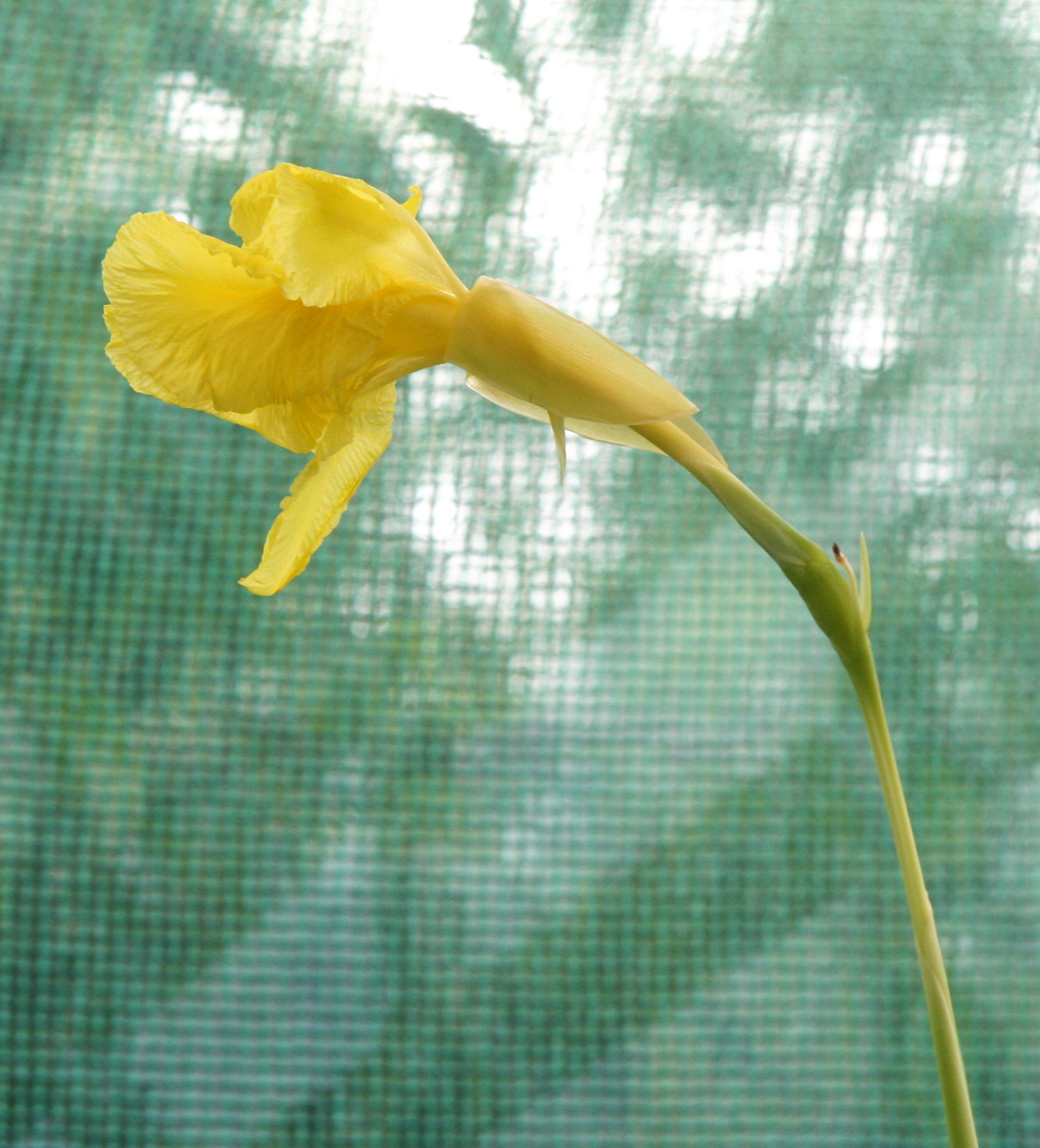
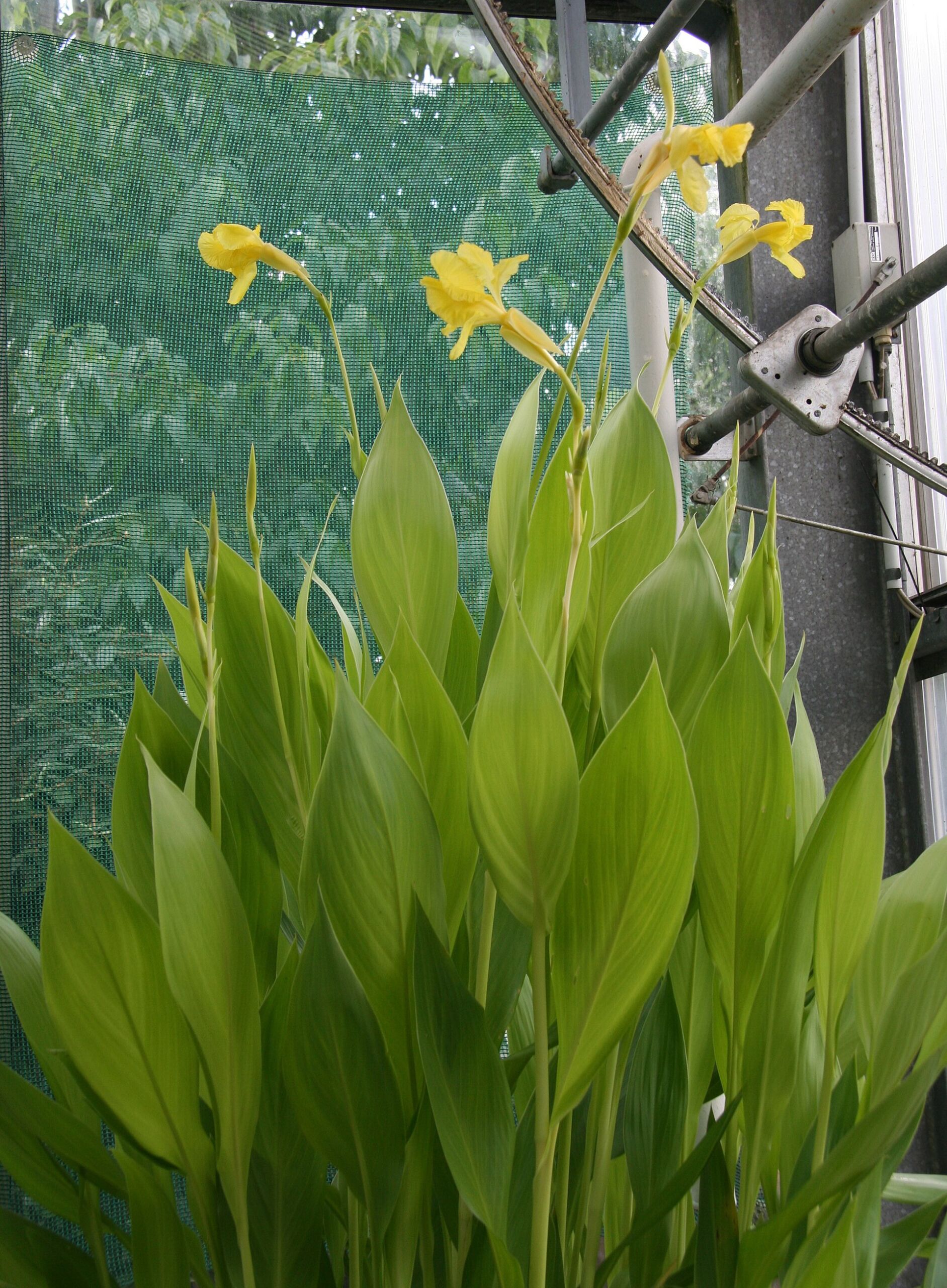
Golden canna is a native canna with soft, blue-green leaves and large, delicate yellow flowers that look like crumpled silk, quite different from the bold, stiff flowers of hybrid cannas. It grows 3 to 5 feet tall, with a clumping habit that suits a pond edge, a rain garden, or a moist border.
Its flowers are pale yellow and iris-like, opening a few at a time through summer and fall, and its leaves stay green through the warm months before dying back in winter in the north of its range. In a garden it reads as a wildflower, not as a tropical bedding plant, which is its charm.
Why this variety
Choose golden canna for a wet spot where hybrid cannas would rot or where you want a native flower, not a hybrid. It thrives in moist soil, at a pond edge, or in a rain garden, and it flowers for months with almost no care.
It is also a plant that bridges the gap between a water garden and a flower garden: it likes wet feet, but it does not need to stand in water, so it works in a moist border as well as at a pond margin. A canna that is both a wetland plant and a garden plant is a useful thing.
How to grow
Plant in sun to part shade in moist, rich soil, in fall or spring. Dig a hole twice the pot width, water deeply, mulch, and give it 2 to 3 feet of room. It can be planted at a pond edge in shallow water or in a moist bed, but not in deep water.
Cut back dead foliage in late winter before new growth starts. Divide the clump every few years in spring if it outgrows its space, and replant the divisions at the pond edge or in a moist bed.
Water & feeding
Water deeply once or twice a week while it establishes, and water in dry spells. Golden canna likes moisture and will grow lushest with even water, though it tolerates short dry spells once rooted.
Feed with compost in spring. In rich, moist soil it grows vigorously, and in poor, dry sand it will be smaller and less floriferous, so compost and moisture are the difference.
Common problems
Dry soil: golden canna will not thrive in dry sand. Give it the moistest spot you have, or water it in dry spells.
Winter dieback: in the north of its range, it dies back in winter. This is normal. Wait until spring growth shows before cutting.
Canna leaf rollers: caterpillars can roll the leaves. Pick them off by hand, or accept some damage in a naturalized planting; the plant regrows.
Spreading in wet soil: in very wet soil, golden canna can spread. Divide it if it outgrows its space, or let it naturalize at a pond edge where spreading is welcome.
Harvest
There is no edible harvest. The harvest is soft yellow flowers through summer and fall at a pond edge, and blue-green leaves that look good even when the plant is not in flower.
Cut flower stems for a vase in summer if you like, but they are short-lived indoors. The plant in flower, with its delicate yellow blooms over blue-green leaves, is the better display.
Saving seeds and dividing rhizomes
Here is the honest hierarchy for golden canna, stated before any seed packet is opened: if you want an exact copy of the plant you already have, divide the rhizome. If you want an adventure, save the seed. Both are real propagation, but they are not interchangeable.
Start with the reliable route. Golden canna grows from thick underground rhizomes, and in spring, as new growth appears, you can lift a clump, cut the rhizome into sections each carrying two or three growing eyes, and replant the sections at the same depth they were growing, in moist, rich soil. Every section is a genetic clone of the parent, so the soft yellow flowers and blue-green leaves you loved are exactly what you get back. In zones 8 to 11 the rhizomes stay in the ground over winter with no lifting ritual, and an established clump steadily bulks up into more divisions for sharing.
Seed is the slower, stranger, more wonderful route. To get any, you must resist deadheading everything: leave a few flower stalks standing after the blooms fade so the plant can set its spiky pods. Not every canna sets seed — some modern hybrids are sterile and form pods that look full but hold nothing but shrivelled bits — so check before you invest hope. A ripe seed is a hard, round, black bead, nicknamed Indian shot; pale or soft seeds are immature and will not grow. Let the pods finish on the plant, collect the hard black beads, and dry them fully before storage.
The seed coat is the obstacle, and it is a formidable one: virtually waterproof, built to survive years in soil or a riverbed before it wears thin enough to let water in. If you sow a dry canna seed and wait, you may wait a very long time. Nick or file one side of each bead — a nail file or sharp knife works — just until the pale inner layer shows, then soak the nicked seed in warm water for a day or two, changing the water daily. Then sow in warm soil, roughly 70 degrees Fahrenheit, covered by about the seed’s own depth, and keep it moist and bright. Seedlings started early indoors can bloom in their first year, usually a little smaller than rhizome-grown plants at first.
Now the genetics, because golden canna sits in an interesting middle place. It is a true wild species, Canna flaccida, not a hybrid cultivar, so its seedlings resemble their parents far more closely than the seedlings of a hybrid bedding canna, which can throw flower colours and leaf tints from anywhere in their ancestry. But a seedling is still not a clone: open pollination means variation, and if hybrid cannas are flowering nearby, a seedling could carry some of that mixed heritage too. So: seed for fun, for numbers, and for a pond edge you want to fill cheaply; division for the exact plant. Never label a seed-grown plant as a named cultivar.
For storage, keep fully dry seed in a labelled envelope or jar in a cool, dark place; hard canna seed keeps for years when dry, which makes it a good seed to bank. In Florida’s humidity, dry the beads until they are hard and rattly before they go into anything airtight, and add a desiccant packet to the jar — humid air trapped in a sealed jar is how good seed goes moldy. Sow in spring once the soil is warm, and give seedlings sun, moisture, and rich soil at a pond edge or in a rain garden.