
🌿 Gromwell
What it looks like
Gromwell is a genus name wearing a common name’s clothes. Lithospermum is a genus of the borage family, Boraginaceae, distributed nearly worldwide but centered in the Americas, and its species are known generally as gromwells or stoneseeds. The stoneseed half is the field mark: after small, tube-shaped flowers in yellow, orange, or yellowish-white, the plant sets hard, smooth nutlets that look and feel like tiny white stones — seeds so stone-like that the genus name Lithospermum literally means stone-seed in Greek. The plants themselves are perennial herbs, typically 1 to 3 feet tall depending on the species, with hairy stems and leaves and five-lobed flowers held in the coiled clusters the borage family favors. Some are quiet green herbs with pale flowers; the puccoons — the American species gardeners actually notice — are suns on stems, bright yellow and orange bloom over prairie and open woodland.
The butterfly context for this genus is the Mottled Duskywing guide, whose Nectar plants section says adults nectar on bush houstonia, gromwell, hoary vervain, and other flowers, with dogbane and New Jersey tea itself preferred in summer in parts of the range. This guide claims only the gromwell half of that list, and it claims it at genus level on purpose: the butterfly guide gives no Latin name for its gromwell, no species, no qualifier, and the honest scope for a bare common name is the genus, not a guessed species. The Mottled Duskywing is a generalist at the flower, taking nectar from whatever small, open flowers are blooming nearby, and a genus guide is the right shape for that kind of mention — it says “a gromwell,” not “this exact gromwell,” and it refuses to pretend otherwise.
One plain-text disambiguation, because the gromwell names are a tangle and this genus guide must not swallow plants that are not Lithospermum. This guide covers Lithospermum species only. The puccoons inside it — hoary puccoon (Lithospermum canescens), golden or hairy puccoon (Lithospermum caroliniense), fringed puccoon (Lithospermum incisum), American gromwell (Lithospermum latifolium), and common gromwell (Lithospermum officinale) — are listed in the species section below in plain text, and none is given its own species guide here, because the butterfly mention that prompted this guide names no species. Field gromwell (Lithospermum arvense, often placed in Buglossoides as Buglossoides arvensis) and purple gromwell (Lithospermum erythrorhizon, the Asian dye and medicine plant) are different species in the genus, named here and not separately guided. Plants called gromwell in other genera, and the unrelated stone-seed names in other families, are not covered here. Buy and plant by Latin name, and let this guide be the genus, not a substitute for a species.
How to grow
Grow gromwells the way their habitats suggest: sunny, open, and well-drained, with the exact recipe varying by species. The American puccoons are prairie and open-woodland plants: give them full sun to light shade and well-drained, ordinary to lean soil, plant in spring or fall from nursery stock, water until established, and then step back — prairie herbs do not want rich soil or heavy water, and a puccoon pampered like a border perennial will grow soft and flop. Common gromwell (Lithospermum officinale), the Eurasian type species, is a tougher, weedier herb of open and disturbed ground, and it follows the same rule with less fuss: sun, drainage, and neglect after establishment. Space plants a foot or two apart in a drift, let them flower through late spring and summer, and do not shear them — a borage-family herb cut back in bloom loses the flowers that are its whole point.
The zone question is one this guide leaves unpinned at genus level, and it says so openly. Lithospermum holds roughly 50 to 84 species depending on the treatment, spread from Eurasia to the Americas, and no single zone rating covers a genus that wide. The honest statement is species by species: the American puccoons are plants of the central and eastern United States in prairie, glade, and open woodland, common gromwell is a Eurasian herb naturalized in open ground, and gardeners should check the zone for the exact species they buy rather than trusting a genus label. Florida note, stated plainly: no Lithospermum species is presented here as a Florida garden plant, and the Mottled Duskywing’s nectar list is a description of an eastern skipper’s flower visits across its range, not a planting list for a subtropical garden. A Florida gardener who wants small, open nectar flowers should grow Florida natives instead, and leave the puccoons to the prairies they belong to.
For the nectar gardener, the honest translation is a sunny, unsprayed drift — not a specimen bed, not a row crop, and not a plant to tidy. A patch of puccoon in sun, allowed to flower through the season, is a nectar stop for skippers and other small butterflies that need small, open flowers they can reach with a short proboscis — and the spraying rule is absolute: a nectar patch sprayed during flowering is a nectar patch emptied of visitors. Do not spray it, do not mow it in bloom, and do not expect a manicured look from a prairie herb whose whole strategy is blooming where it stands.
Water & feeding
Water, for gromwells, is a question of ordinary moisture and then nothing. Water new plants until they root in, then let rainfall do most of the work; the American puccoons are dry-tolerant once established and rot in soil that stays wet, and common gromwell is a tough open-ground herb that asks for little. In a garden that usually means no supplemental watering except in a true drought, and in a container it means a pot that drains freely and a gardener who resists the urge to keep it soggy.
Feeding: none, across the board. Gromwells grow in ordinary to lean, well-drained soil and need no fertilizer program, and anything more mostly grows soft stems that flop. The soil science here is the stoneseed story: those hard, smooth nutlets are the plant’s investment in the future — seeds built like pebbles, slow to rot, waiting for the right season — and a plant that puts its energy into stone seeds does not need a gardener’s fertilizer to survive a prairie summer. Ordinary soil, full sun, and neglect after establishment are the whole program.
Common problems
- Wrong species, wrong tag. A tag that says only gromwell, with no Latin name, is a guess wearing a label. Hoary puccoon is Lithospermum canescens, golden puccoon is Lithospermum caroliniense, fringed puccoon is Lithospermum incisum, American gromwell is Lithospermum latifolium, common gromwell is Lithospermum officinale. Check the Latin name, and buy by Latin name plus species.
- Bare-mention scope. The Mottled Duskywing guide names no gromwell species, so this guide claims no species for that mention. Do not wire a species-specific claim to a bare common name.
- Wet feet. Prairie gromwells rot in soil that stays wet. Drainage matters more than fertility, and a rich, soggy bed is the wrong address.
- Spraying the nectar patch. The small, open flowers that feed skippers are the point of the patch. Spraying during flowering empties it of the visitors this guide exists to feed.
- Mowing in bloom. A prairie herb mowed in its flowering season loses its flowers and its point. Mow, if you must, after seed set, not during bloom.
- Genus size. Lithospermum holds roughly 50 to 84 species depending on the treatment, and treatments disagree. No single zone, size, or cultural recipe covers the whole genus, and this guide pins none.
Harvest
Gromwell’s harvest is a seed harvest and a nectar harvest, not a food or medicine harvest, and this guide says so on purpose: purple gromwell’s dye and medicine history belongs to an Asian species with its own literature, and no remedy is claimed here for any species in this guide. The harvest is bright puccoon bloom through the warm months, hard white stoneseeds after it, and, in the eastern United States, Mottled Duskywing adults nectaring the small open flowers the way the butterfly guide describes. Leave most plants to flower and set their stone seeds, let the patch reseed itself in its sunny spot, and let the gromwell do what it has always done — bloom, set stones, and wait for the right season. That is the crop, and it arrives without a single spray, because spraying it would kill the very thing that makes the patch worth standing in.
The simplest harvest is a prairie afternoon with no agenda at all: a sunny opening in bloom, yellow puccoon suns over hairy stems, a small skipper working the flowers because its proboscis is short and the flowers are open, and the knowledge that the seeds forming under those flowers are hard as pebbles and named for it. That is enough, and it is honest.
Browse all plant & pest guides
Saving seeds
A genus-level note first, because this guide is a genus guide and its seed advice has to be honest about that: what follows is the Lithospermum method, drawn from the best-documented species in the genus, and it matches the group as a whole — hard stoneseeds, a cold period, and moderate germination — but individual species will vary in timing and vigour. Do not read a single species’ numbers as a promise for every gromwell and puccoon in the list. The common thread is the seed itself, and it is a delight: after the small puccoon flowers fade, the plant makes hard, smooth, white nutlets that look and feel like tiny pebbles, which is exactly why these plants are called stoneseeds. Collect in mid to late summer, when the nutlets have hardened and come away readily from the flower cluster, and wear gloves — the flower stems are bristly, and your hands will remember a careless harvest.
Cleaning is a matter of crushing, not picking. Strip the dried fruiting stems into a container, crush the material gently on a rubbing board or between your hands, and screen or winnow out the debris until you have the hard nutlets. For home seed the essentials are simpler: dry the nutlets thoroughly, label them with the genus and the year, and store them in a cool, dark, dry place. One propagation protocol kept seed in a dark glass jar at room temperature for a year and a half before sowing, so gromwell seed is not a use-it-this-week emergency — but in Florida humidity, dry thoroughly first and add a desiccant to the container, because a stoneseed that looks indestructible can still mould in a damp jar.
Germination is where the stone coat earns its keep, and where patience becomes a gardening virtue. The hard coat and the seed’s dormancy mean that sowing dry seed in spring and expecting instant results is a recipe for disappointment. The reliable home method is fall sowing outdoors, where winter provides the cold, moist period naturally, or a cold, moist stratification indoors: seed in barely damp sand or on damp paper in the refrigerator for roughly a month or more, checking for mould. In one documented trial, germination began after about five weeks of cold, moist stratification and continued for about two months, with most seed coming up in the first few weeks after it started, and overall germination was moderate — roughly four seeds in ten. Treat those figures as one trial’s honest result, not a guarantee, and sow generously. Sow about a centimetre deep in a free-draining mix, keep it moist but never waterlogged, and do not throw the tray away in spring if it looks empty; stoneseeds keep their own calendar.
Seedlings grown this way will be gromwell, but not clones of a particular plant: seed carries the normal variation of a wild genus, and if you want an exact copy of one beloved puccoon, divide an established plant in spring or autumn, or root a cutting, instead. Seed is for making a patch, and a patch that reseeds itself lightly is the goal — leave some plants to set their stone seeds each year and the colony will quietly renew itself. One last caution fits the whole genus: this guide claims no food or medicine use for these species, and seed saving here is for growing the plant, not for experimenting on yourself. Collect the pebbles, chill them, sow them, and enjoy the small miracle of a seed that looks like gravel and grows into a flower.
Species in this group
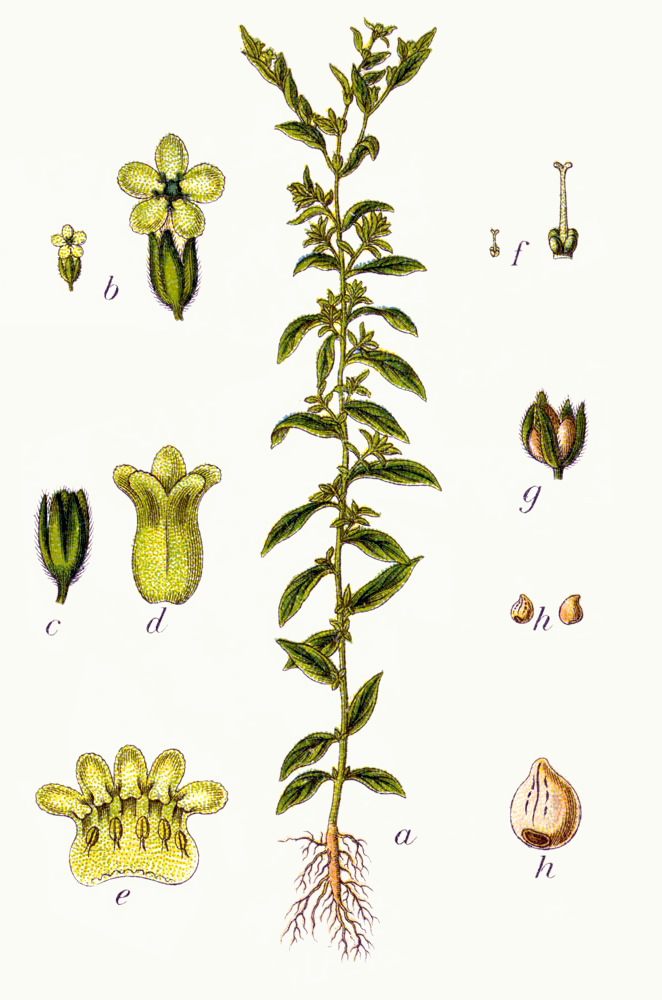
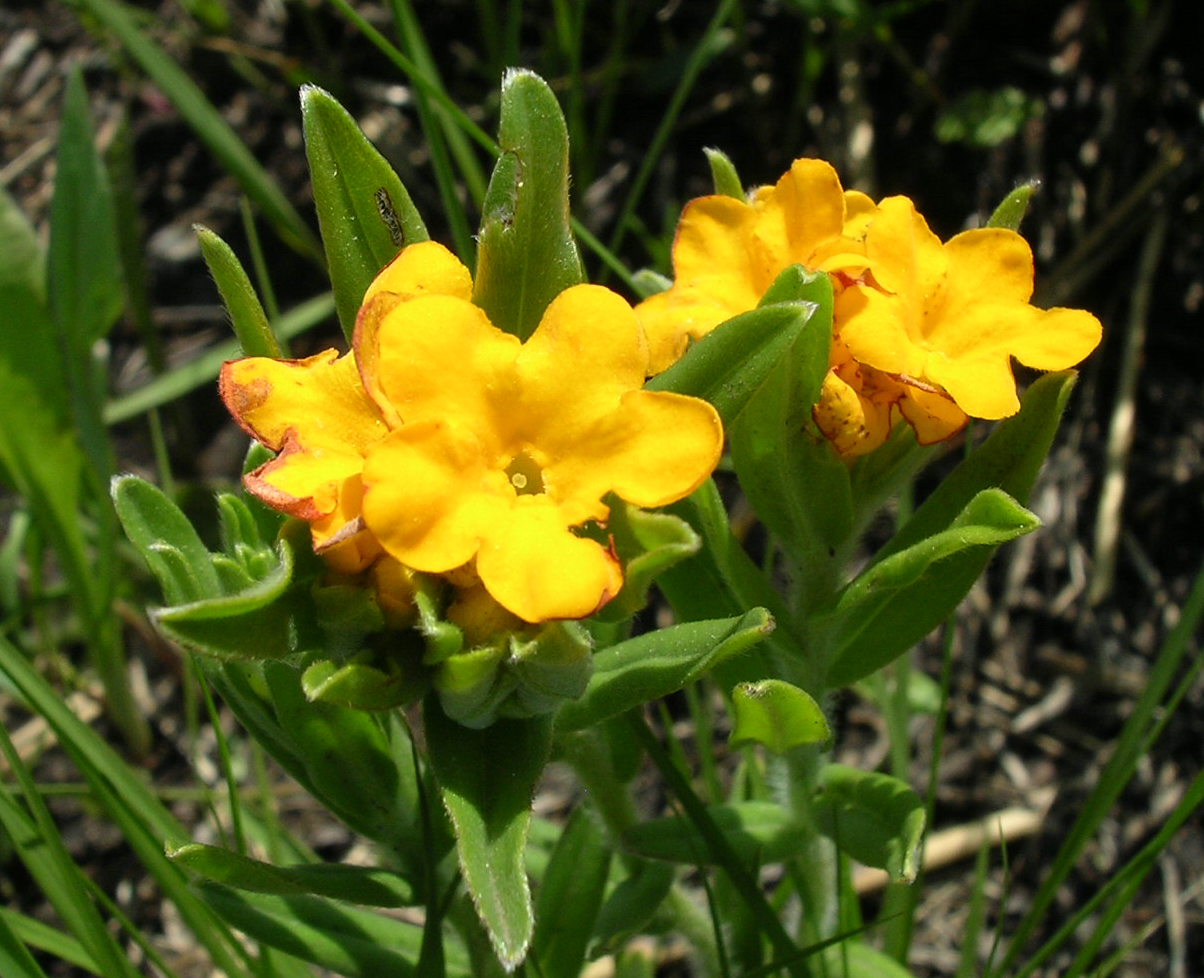
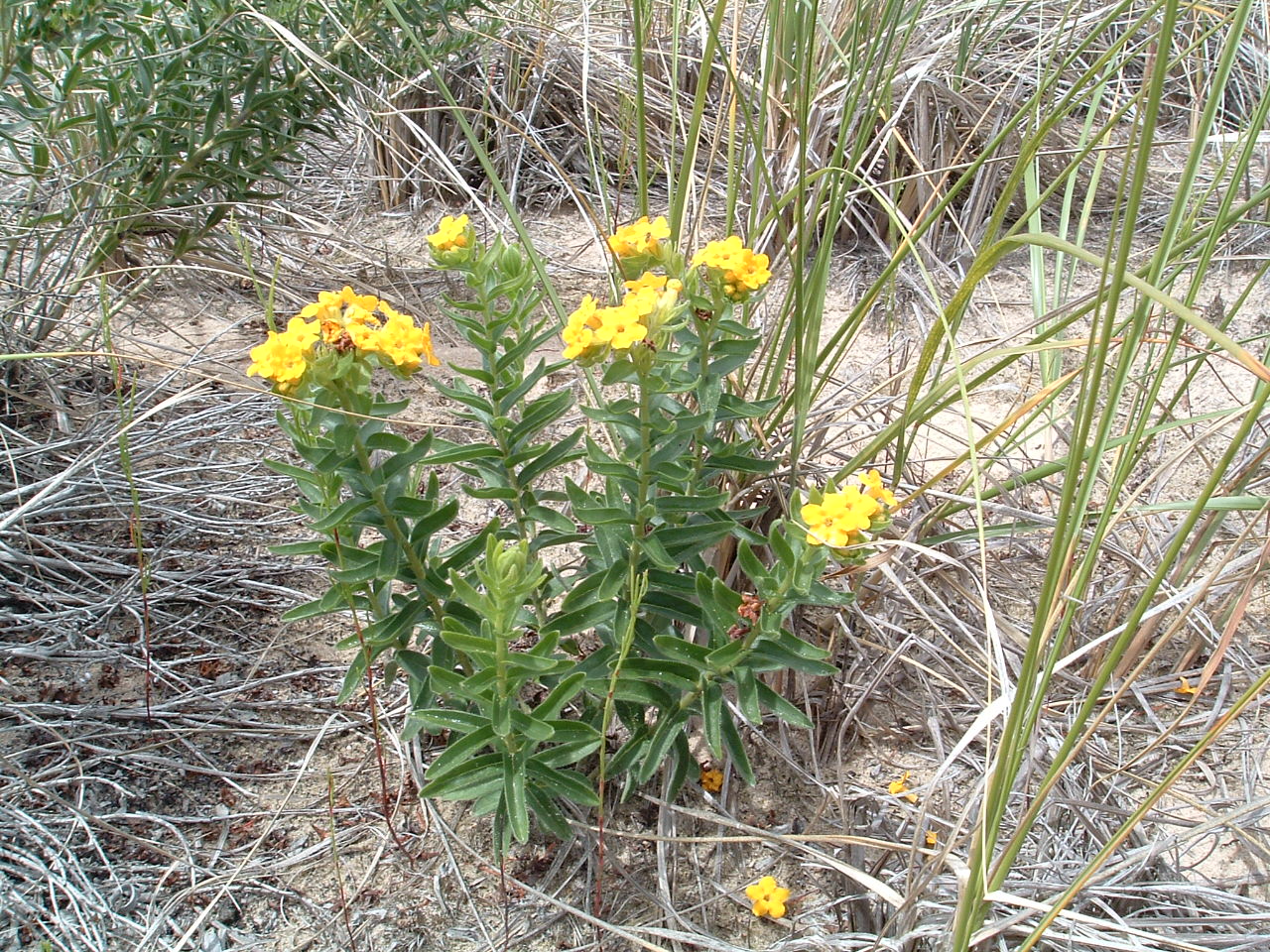
The species in this genus guide are listed here in plain text, and none is given its own species guide here, because the butterfly mention that prompted this guide — the Mottled Duskywing’s bare “gromwell” nectar entry, with no Latin name — claims no species. Common gromwell (Lithospermum officinale, also called European stoneseed) is the type species of the genus, a Eurasian herb 60 to 80 centimeters tall, pictured in the historic illustration above. Hoary puccoon (Lithospermum canescens) is an eastern and central American species with bright yellow flowers, pictured above. Golden puccoon (Lithospermum caroliniense, also called hairy puccoon) is an American species with yellow to orange flowers, pictured above. Fringed puccoon (Lithospermum incisum) and American gromwell (Lithospermum latifolium) are American species in the same group. Field gromwell (Lithospermum arvense, often placed in Buglossoides as Buglossoides arvensis) and purple gromwell (Lithospermum erythrorhizon) are further species in the genus, named here and not separately guided. This guide covers Lithospermum species as a genus; the Mottled Duskywing’s bare gromwell mention maps here, and no single species is claimed for it.