
🍒 Grumichama
What it looks like
How to grow
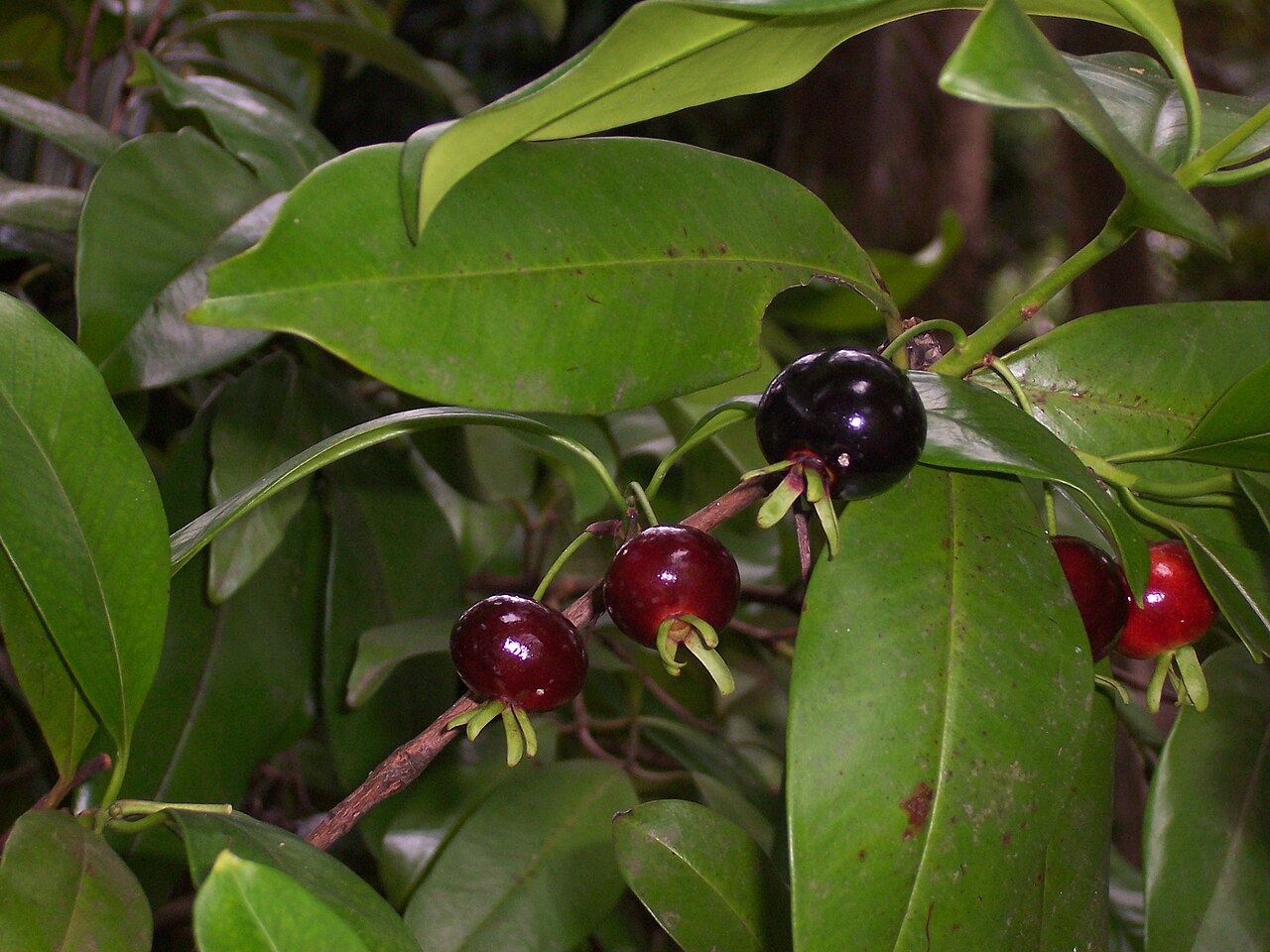
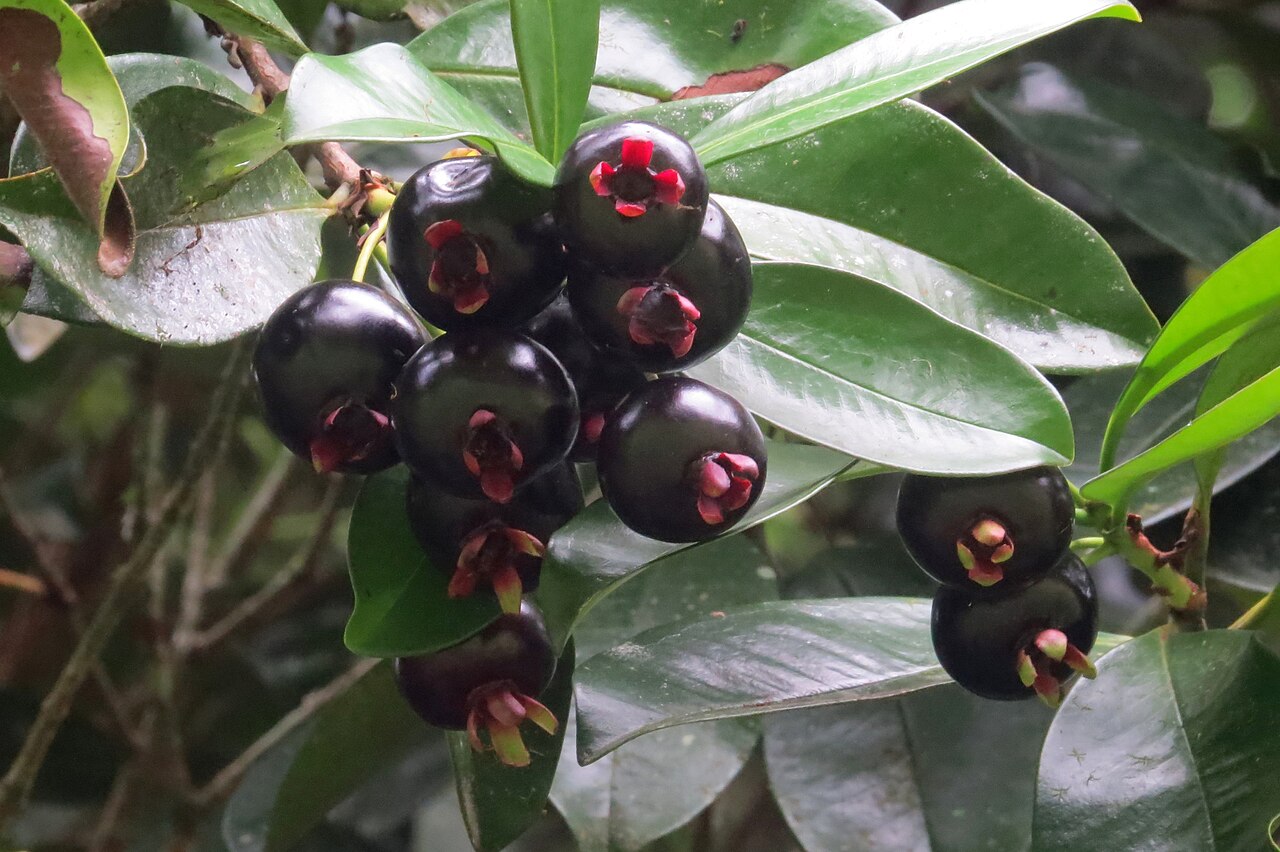
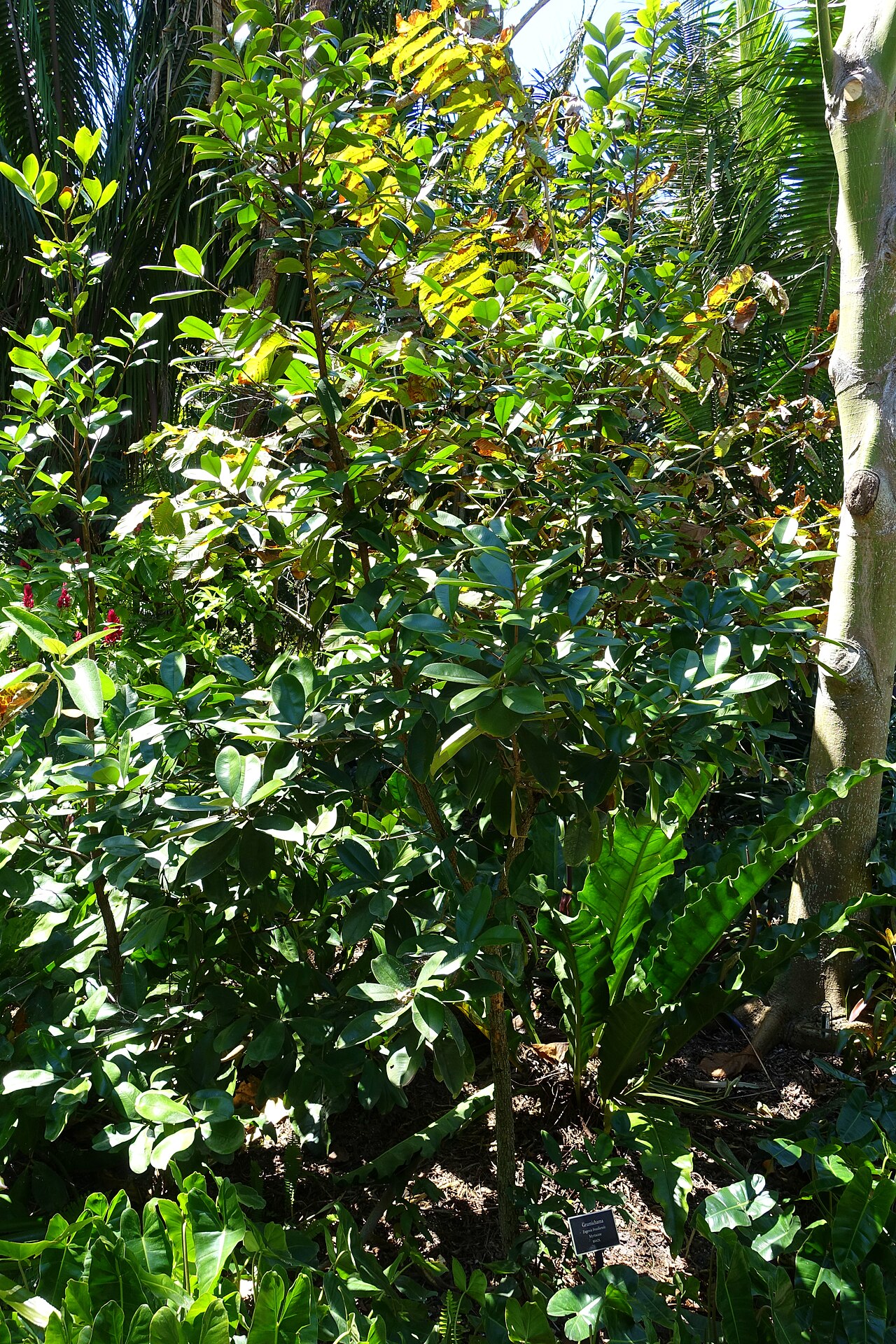
Grumichama, also called Brazil cherry, is an evergreen myrtle-family tree with glossy leaves and small, dark purple fruit that tastes like a sweet-tart cherry with a resinous whisper. It is the warm-climate answer for gardeners who cannot chill a real cherry: it fruits in south Florida and Hawaii with little or no chill, though it tolerates only light frost. Plant in fertile, well-drained, slightly acidic soil in full sun to light shade, and prune to keep it at picking height — untended trees reach 25 feet or more, but a 9-10 foot pruned tree is far easier to harvest and net. Seedlings vary and take years; a grafted or cutting-grown tree fruits sooner and truer. Keep young trees watered and acclimate nursery stock to sun gradually to avoid leaf scorch.
Water & feeding
Water regularly, especially while young and while fruit is ripening — drought causes fruit drop. Mulch to hold moisture. Feed a few times a year with a balanced fertilizer or compost; grumichama is not a heavy feeder, but hungry trees fruit lightly.
Common problems
- Birds — they love grumichama as much as you do; net the tree as fruit colors up.
- Light frost — protect young trees and accept that marginal-zone fruiting is unreliable.
- Fruit flies in warm climates — pick promptly and clean up fallen fruit.
- Rapid ripening — fruit ripens fast and softens fast, so check the tree daily in season.
Harvest
Pick when fruit turns dark purple to nearly black and softens slightly; red fruit is usually still tart. Eat fresh, or cook into jelly, jam, and pies. Use quickly — grumichama does not hold long off the tree.
Saving seeds
First, the headline rule for grumichama seed, and it is not negotiable: there is no seed packet in this story. Grumichama (Eugenia brasiliensis) seed is recalcitrant, which is the botanical way of saying it never learned how to be dry. Dry it out and it dies. Leave it on the counter for a month and it dies. The seed is not a pantry item; it is a fresh-fruit countdown. If you want grumichama seedlings, you sow fresh seed from ripe fruit, and you do it promptly, or you do not get seedlings at all.
Collect from fruit that is fully ripe: dark purple to nearly black, softening slightly, the stage where it tastes best and falls apart in your hand. Each fruit holds only one or a few seeds, so save fruit from several pickings if you want a decent batch. Scoop the seeds out, rinse every trace of pulp off under running water, and do not let them sit fermenting in a bowl while you finish lunch. Pulp left on the seed invites mold, and in Florida humidity mold is not a possibility, it is a schedule.
Sow the same day if you can. Published guidance puts viability at roughly six weeks from harvest, and even that is a best case for seed kept cool and moist, not a promise. Treat a few days of cool, barely moist holding as the outer limit of your patience, never weeks, and never dried out in an envelope. This is the opposite of tomato seed. There is no drying, no paper packet, no desiccant jar. Moist and moving is the whole storage plan.
Sow in individual pots or a nursery bed in a warm, lightly shaded spot, in a free-draining mix that stays moist without staying soggy. Cover the seed with roughly its own depth of mix. Germination is slow and uneven: expect sprouting somewhere in the range of a month to two months, and expect germination rates to be low, so sow more seed than the number of trees you actually want. Seedlings grow away very slowly, and a seed-grown tree generally takes around four years to start flowering and fruiting, so this is a project for a gardener who enjoys watching paint dry and calls it horticulture.
Will seedlings grow true? Grumichama is reported to be self-fertile, so a lone tree still sets seed, and seedlings will be grumichama, but with normal seedling variation in fruit size, color, and sweetness. If you have a particular tree whose fruit you love and you want an exact copy, seed is the wrong tool. Cuttings and air layering are both reported to be easy for this species, and grafting onto seedling rootstock is the classic route to a named-quality tree. Use seed for new trees and experiments; use cuttings for copies.
One nerdy footnote, because this genus is gloriously weird: researchers have found that Eugenia seeds can sometimes regrow roots or even whole seedlings from fragments after much of the seed is damaged or eaten. That is a survival strategy in the wild, not a propagation method for your backyard, so please do not go slicing seeds in half on purpose. Just appreciate that a seed this fragile about drying is also, paradoxically, very hard to kill by nibbling. Florida note: sow in pots you can shelter from drenching rain, keep air moving around the pots, and check daily. A warm, wet, still pot is a mold farm with grumichama ambitions.