
🌿 Texas Lignum-Vitae
What it looks like

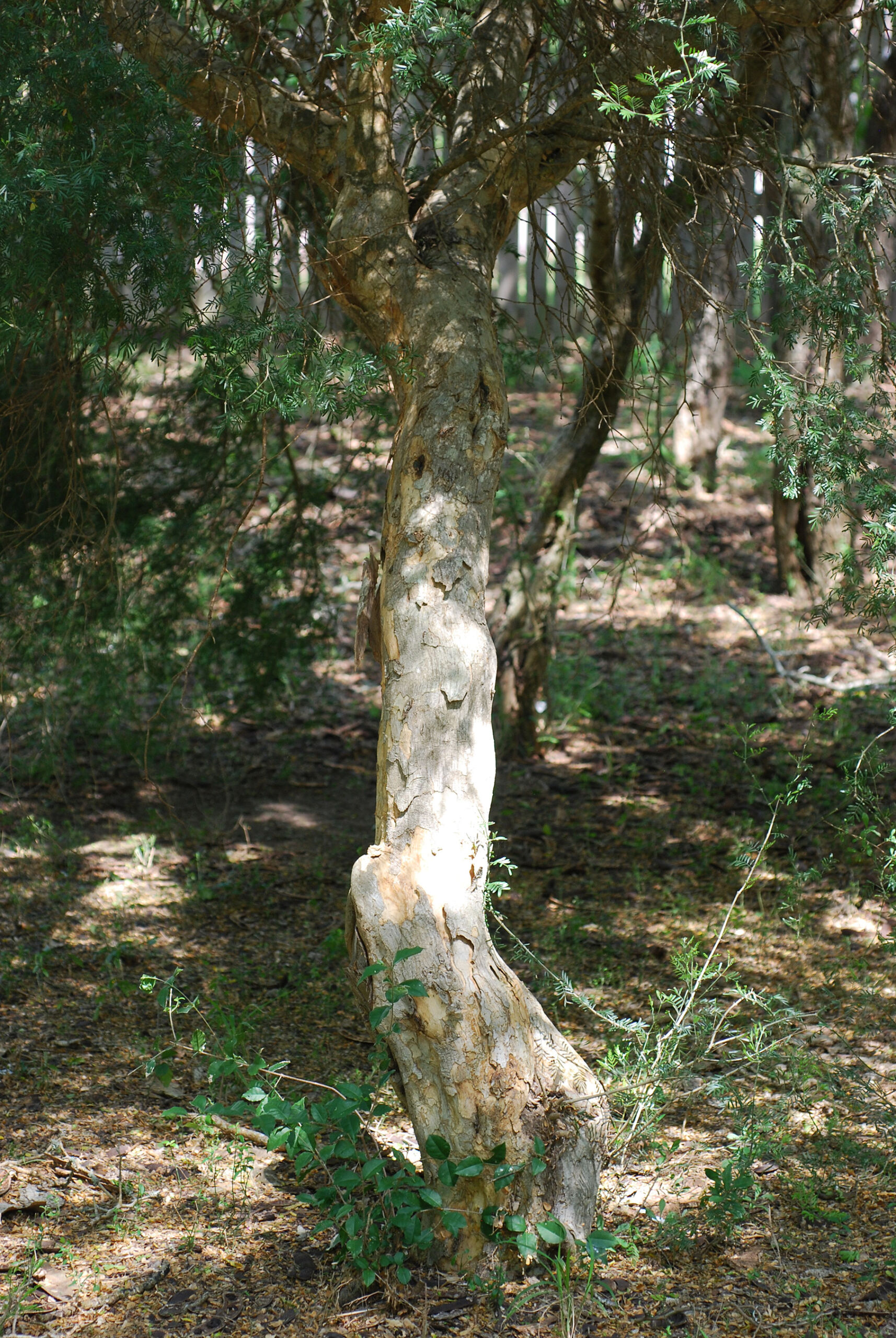
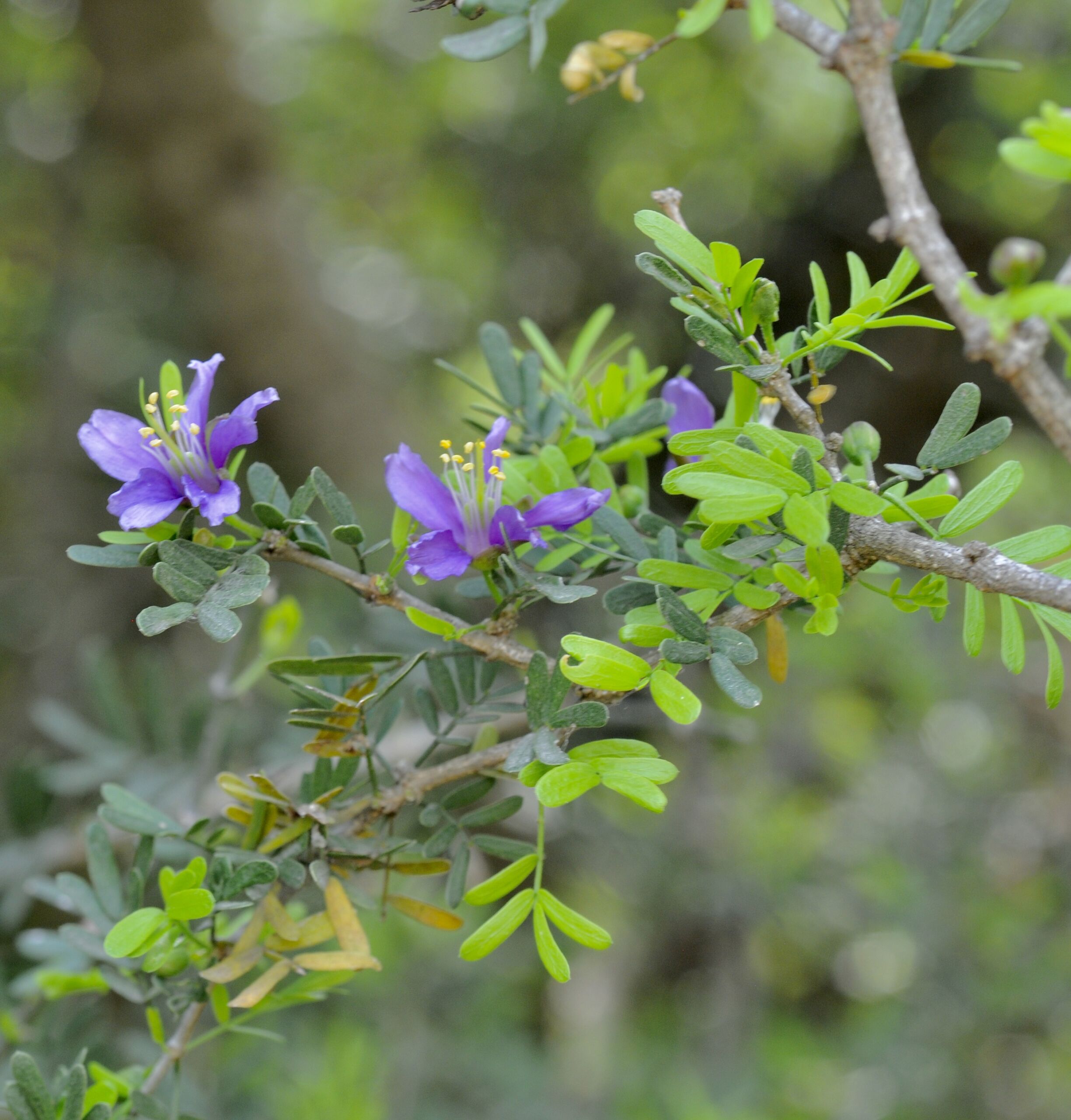
Texas lignum-vitae is the northern outpost of a famously hard-wooded tropical family. It belongs to Guaiacum, in the caltrop family Zygophyllaceae, and it is native to southern, central, and western Texas and to northern Mexico, in the states of Chihuahua, Coahuila, Nuevo León, San Luis Potosí, and Tamaulipas. Other common names pile up fast: Texas guaiacum, guayacán, soapbush, and huayacán. The name to watch out for is lignum-vitae itself, which is Latin for tree of life and is shared by several Guaiacum species. This guide is about angustifolium only, the Texas one, and it does not cover its Caribbean and Florida cousins, which have their own guides.
In the wild it is a many-branched evergreen shrub or small tree, reaching about 7 metres (23 feet) at its largest, with a dense canopy and short lateral branches that give older plants a gnarled, compact look. The leaves are evergreen and compound, the flowers are small and blue to violet, and flowering runs from March to September in its native range. It grows in shrubby vegetation on limestone soils, from sea level up to about 1,200 metres. That limestone habit is a useful field clue and a planting clue at once: this is a plant of dry, bright, stony country, not of rich, damp garden beds.
One disambiguation, in plain text: the butterfly that made this guide necessary is the lyside sulphur, whose caterpillars feed on lignum-vitae species, with Guaiacum angustifolium as the Texas host, Guaiacum sanctum as the southern Florida host, and Guaiacum officinale as the South American and Caribbean host. If you are planting for that butterfly in Texas, this is the species. If you are in southern Florida, the native host is sanctum, not this one.
How to grow
Plant Texas lignum-vitae in full sun, with at least six hours of direct sun a day, in soil that drains sharply. Sandy or loamy soil over limestone suits it; waterlogged ground does not, and heavy, wet clay is the fastest way to lose one. It is built for hot, dry conditions and for poor, dry upland soils in the South Texas brush country, so resist the urge to enrich the planting hole into a sponge. A lean, sunny, well-drained spot, and then mostly leaving it alone, is the whole strategy.
Do not promise it a frost. Sources agree it cannot take hard freezing, so treat it as a warm-climate plant for frost-free or nearly frost-free country, and as a container plant brought under cover anywhere colder. It is slow-growing, and that slowness is a feature, not a defect: the dense wood and compact habit that make it ornamental are the same traits that make it take its time. Buy nursery-grown stock, plant in spring after the last frost in marginal areas, and give it the room a small tree will eventually want rather than the size of the pot it arrived in.
Water & feeding
Water deeply at planting and through the first season to establish roots, then back off. Once established, Texas lignum-vitae is drought-tolerant, and the usual garden sins, daily sprinkling and soggy mulch piled against the trunk, hurt it more than a dry spell does. Water when the soil has dried out, soak thoroughly, and let it dry again. Do not fertilize aggressively. A plant adapted to nutrient-poor limestone soils does not need rich feeding, and pushing soft growth with fertilizer produces exactly the weak, leggy plant that then needs more water and more attention.
Pruning is light and occasional. Remove dead or crossing wood, shape gently to keep a single-trunk tree form if that is what you want, or let it stay a many-branched shrub if you prefer the wilder shape. There is no annual shearing regime here, and hard cutting back into old wood is not a routine maintenance move for a slow grower like this.
Common problems
- Wet feet. Poor drainage and waterlogged soil are the main killers. Plant high, on a slope or berm if your soil is heavy, and never in a low spot that holds water.
- Frost damage. Freezing temperatures damage or kill it. In marginal country, plant against a warm wall, mulch the root zone, and accept that a hard winter is a real risk, not a minor setback.
- Impatience. It grows slowly. A plant that looks unchanged for a season is usually establishing roots, not failing. Judge it over years, not weeks.
- Wrong lignum-vitae. Nursery stock is sometimes sold under the family name alone. Check the Latin on the tag: angustifolium is the Texas species, and its cousins have different ranges and habits.
Harvest
There is no fruit or vegetable harvest from Texas lignum-vitae, and the harvest here is the plant itself: dense evergreen foliage, fragrant flowers through the warm months, and a tough, compact shrub for hedges, rock gardens, and xeriscaping, which is exactly how it is used as an ornamental. Its traditional uses are worth knowing about and not worth imitating casually: the root bark has been used as a source of soap, and root extracts appear in folk medicine, while the stems have served for fence posts, tool handles, and firewood. Those are historical reports, not recommendations, and the soapbush name comes from that root-bark use. For butterfly gardeners, the real yield is ecological: in Texas, this is a lyside sulphur host plant, and a mature plant in flower feeds pollinators through a long season.
Propagation is by seed, and it is not instant. Seed of a slow, hard-wooded desert shrub germinates on its own schedule, and most gardeners will do better buying a nursery plant than starting from scratch. If you do raise seedlings, give them sun, sharp drainage, and patience in equal measure.
Saving seeds: stewardship first
Before any how-to, the ground rule for Texas lignum-vitae: this is a slow-growing desert shrub in a genus whose international trade is controlled under CITES Appendix II, which covers the whole Guaiacum genus. That listing exists because lignum-vitae wood was loved nearly to death, and it means you do not collect seed from wild plants, you do not buy seed of uncertain wild origin, and you do not ship seed across borders casually. Start with a nursery-grown plant, and save seed only from your own garden shrub or from a reputable nursery source. The stewardship is the point; the seedlings are the bonus.
Collect in fall, when the capsules ripen and split. Take seed only from a healthy plant you own, and clean off any fleshy coating, which molds readily if left on. Texas lignum-vitae is a shrub of limestone country and desert scrub, and its seed behaves like it: it germinates on its own schedule, not yours, and sources disagree about the best wake-up call. One line of guidance says fall-collected seed benefits from a cool period of a couple of months before spring sowing; genus-level practice leans simpler, soak and sow warm. If you have enough seed, try both: soak one batch in water for a day and sow it warm, and give another batch a cool, moist rest before spring sowing. Honest disagreement between sources beats a confident invented protocol, and your own side-by-side test is worth more than either.
Sow in a sharply draining mix, sand and potting mix rather than anything that holds water, keep it moist but never waterlogged, and give it warmth and sun. Germination is variable, anywhere from a few weeks to a few months, and some seed simply will not cooperate. Do not throw the pot out in frustration at week six; desert seed has a different sense of urgency than you do. When seedlings appear, pot them on carefully. This species builds a deep taproot and resents root disturbance, so move seedlings young, keep the root ball intact, and never try to divide an established plant.
Seedlings from a species shrub grow true to the species, with normal variation between individuals, so there is no cultivar-truth problem here the way there is with a named fruit variety. If you want an exact genetic copy of a particular shrub, cuttings are reported to be the preferred route for identical plants. But for most gardeners the honest advice is the one already in this guide: buying a nursery plant beats starting from scratch. Seed is for the patient, the curious, and the gardener who already has a shrub and wants to see what its children look like. Expect years, not months, before a seedling amounts to a landscape shrub, and enjoy the wait. Slow wood is the whole reputation of this genus, and it starts slow.
Species in this group
This is a species guide, not a genus guide, and the varieties section here is really a disambiguation list, in plain text. No named garden varieties of Guaiacum angustifolium are verified or claimed.
- Texas lignum-vitae — Guaiacum angustifolium: This guide’s species. Southern, central, and western Texas and northern Mexico. Many-branched evergreen shrub or small tree to about 7 metres, limestone soils, flowers March to September, lyside sulphur host in Texas.
- Holywood lignum vitae — Guaiacum sanctum: A different species, with its own guide. Native to southern Florida, the Caribbean, Mexico, and Central America, and state-listed as endangered in Florida. Do not substitute it for the Texas species, or vice versa.
- Common lignum vitae — Guaiacum officinale: A different species, with its own guide. Caribbean and northern South America. The classic lignum vitae timber tree, and the lyside sulphur’s South American and Caribbean host.