
🌿 Common Lignum Vitae
What it looks like
Common lignum vitae is the tree that gave an entire family its legend. Guaiacum officinale, in the caltrop family Zygophyllaceae, is native to the Caribbean and to northern South America, including Colombia and Venezuela, and it is the national flower of Jamaica and the national tree of the Bahamas in the wider lignum vitae story. Lignum vitae is Latin for tree of life, a name it earned for its medicinal resin, guaiac, and for wood so dense and resinous that it sinks in water and once served for ship bearings and propeller shafts because it lubricates itself. This guide covers officinale only. Its cousins sanctum and angustifolium have their own guides, and the differences matter.
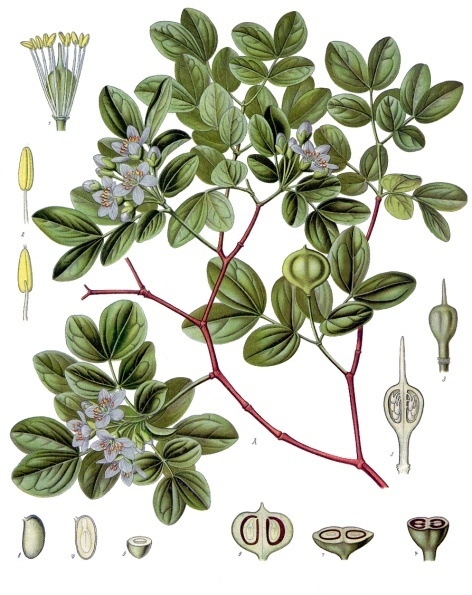
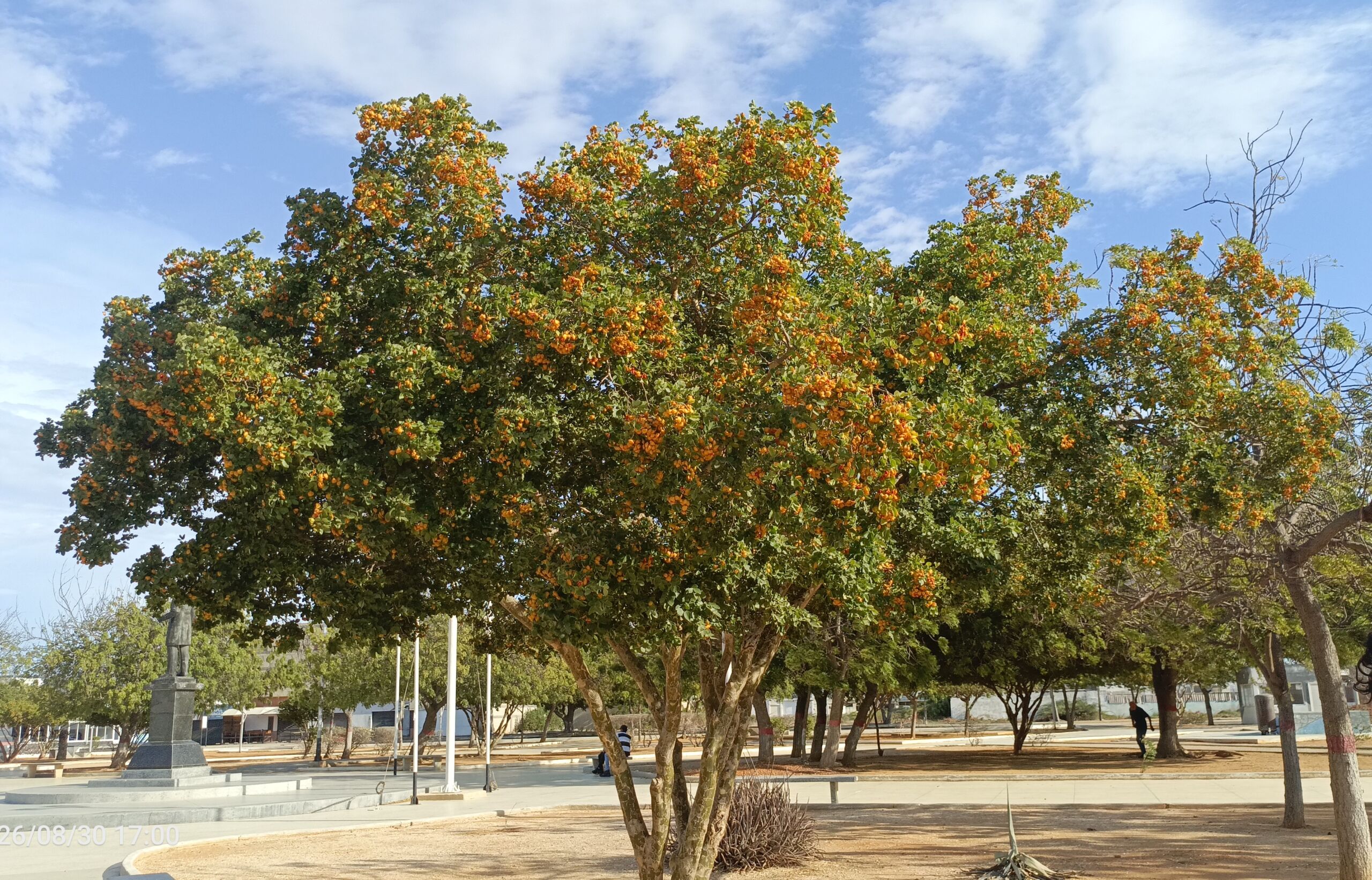
It is a small evergreen tree, growing 10 to 30 feet tall, with a rounded, closely knit crown of shiny compound leaves. The leaflets are relatively few and relatively long, which is one of the field marks that separates it from sanctum, whose leaflets are more numerous and shorter. The flowers are blue, sometimes white, about an inch across, in terminal clusters, and they are the reason this tree is planted as an ornamental at all: a slow tree that eventually erupts in blue is worth the wait. The fruit is a flatter capsule holding generally two seeds, against sanctum’s larger capsule with about four.
One disambiguation, in plain text: the lyside sulphur’s host list names Guaiacum officinale as the South American and Caribbean host, alongside angustifolium in Texas and sanctum in southern Florida. Planting officinale in Florida does not make it the native Florida host; that is sanctum’s role, and officinale in Florida is a cultivated plant, found wild only in Miami-Dade as an escaped ornamental. It is also, importantly, not reported as invasive there, which is more than can be said for many tropical ornamentals.
How to grow
Plant common lignum vitae in full sun, in soil that drains well. It tolerates a wide range of soils, clay, sand, and loam, acidic or alkaline, and it tolerates wind and salt, which is why it suits seaside plantings in warm climates. What it does not tolerate is frost. Commonly listed for zones 9 to 11 outdoors, with colder zones as patio or container plants brought under cover, it is a tropical tree first and a garden plant second. In Florida, that means it is a South Florida tree outdoors, and a greenhouse or large-container conversation anywhere north of that.
Expect slowness on a scale most gardeners are not used to. Lignum vitae is extremely slow-growing, and seedlings may take 18 to 24 months to reach 7 to 12 inches before they are ready to plant out. Buy the largest nursery plant you can afford, plant it once in its final spot, and then measure progress in years. It needs no rich soil and no coddling; a sunny, well-drained site, room to form its rounded crown, and protection from frost are the whole brief.
Water & feeding
Water deeply at planting and while establishing, then water moderately. Established trees tolerate wet or dry soil better than most tropical trees, but the happiest ones sit in well-drained ground that is allowed to dry between waterings rather than in constantly soggy soil. Do not fertilize heavily. A slow tree in lean soil grows dense and compact; a pushed tree grows soft and leggy and loses the very character you planted it for. Pruning is light: remove dead wood, shape the crown gently while young, and do not shear it into a hedge.
Pests and diseases are, by the usual accounts, few. The IFAS assessment reports no pests or diseases of concern for lignum vitae in Florida, which is a genuine selling point, though no plant is truly pest-proof and a stressed tree in the wrong soil will find trouble eventually.
Common problems
- Frost. The hard limit. A freeze that a live oak shrugs off can kill this tree. In marginal zones, container culture or a protected microclimate is not optional, it is the plan.
- Impatience. Growth is measured in inches per year, not feet. If you need shade this decade, plant something else alongside it and let the lignum vitae be the long game.
- Wrong species on the tag. Lignum vitae is sold under the family name, and sanctum and officinale are easily confused in nurseries. Check the Latin, and check the capsule and leaflets if the plant has fruited: flatter two-seed capsules and fewer, longer leaflets point to officinale.
- Wild-collected stock. This species is listed as endangered by the IUCN and in CITES Appendix II, because centuries of cutting for wood and resin have reduced wild populations severely. Buy nursery-grown plants only, never wild-collected material, and treat a suspiciously cheap large specimen as a red flag.
Harvest
There is no food harvest from common lignum vitae, and the harvest here is flowers, shade in time, and one of the great wood stories in botany, told without cutting anything down. The wood’s density, with a specific gravity above that of water, and its natural resin made it the bearing material of choice before modern synthetics, and the resin, guaiac, was once a major medicine, which is how a Caribbean tree became a European pharmacy staple. None of that is a reason to harvest a garden tree. The modern harvest is the blue flower show, the evergreen crown, and, in its range, service as a lyside sulphur host plant.
Propagation is by seed, and it is slow from the start, with the long seedling stage described above. For most gardeners, a nursery tree is the honest route. If you do raise seed, sow fresh, keep it warm and moist but not soggy, and settle in for a long nursery period before the plant ever sees open ground.
Saving seeds: stewardship first
Read this before you read the method, because for common lignum vitae the caution is the section. Guaiacum officinale is listed as Endangered by the IUCN and its international trade is restricted under CITES Appendix II, and the reason is depressingly simple: people overharvested it for its extraordinarily hard, valuable wood and its medicinal products for centuries. This is not a plant to forage, wild-collect, or mail-order from a seller who cannot say where the seed came from. Save seed only from a cultivated tree you own or from a reputable nursery, never from a wild tree, and do not carry seed across international borders without checking the permit rules first. Growing this tree from nursery stock is conservation. Taking it from the wild is the problem the listing exists to stop.
From your own cultivated tree, collect when the fruit ripens to bright yellow-orange and splits to show the black seeds in their red flesh. Clean every trace of that fleshy coating off, because flesh left on the seed molds fast, especially in Florida humidity. The seed coat is hard and woody, and it needs persuading: nick or file the coat lightly, or pour hot water over the seed and let it soak for about a day, then sow. Use a free-draining mix, coir or seed mix cut with sand or perlite, sow about a centimeter deep, and keep it bright, warm (around 25 degrees Celsius and up), and constantly moist without ever being wet. Germination reports disagree, with some sources giving roughly three to six weeks and others one to three months, so expect staggered sprouting over weeks to a few months and do not discard the pot early.
Storage is the awkward part. Lignum-vitae seed shows no persistent seed bank in the wild, which is the field evidence for seed that does not tolerate drying and banking the way a bean does. Sow fresh. Do not dry-store it in an envelope and do not expect a seed stash to carry over to next year; a brief cool hold is the most you should gamble on, and fresh-sown is the plan you can trust. In Florida, this is a far-south tree outdoors, so most Florida gardeners outside the warmest pockets should raise seedlings in containers they can shelter.
Seedlings grow true to the species, with normal variation between individuals, since this is a species tree rather than a named cultivar, but bring patience in bulk. This is one of the slowest-growing trees you can plant, and years pass before a seedling becomes anything resembling a tree, let alone a flowering one. Cuttings and grafting are also used for this species if you want a vegetative copy. The honest summary is that seed-saving here is less like stocking a pantry and more like keeping a promise: one cultivated tree, carefully raised from fresh seed, is a small act of repair for a species that humans spent centuries spending down.
Species in this group
This is a species guide, not a genus guide, and the varieties section here is really a disambiguation list, in plain text. No named garden varieties of Guaiacum officinale are verified or claimed.
- Common lignum vitae — Guaiacum officinale: This guide’s species. Caribbean and northern South America. Small evergreen tree 10 to 30 feet, blue or sometimes white flowers, flatter two-seed capsules, fewer and longer leaflets than sanctum. IUCN Endangered, CITES Appendix II.
- Holywood lignum vitae — Guaiacum sanctum: A different species, with its own guide. Native to southern Florida, the Caribbean, Mexico, and Central America. More, shorter leaflets; larger four-seed capsules. State-listed as endangered in Florida.
- Texas lignum-vitae — Guaiacum angustifolium: A different species, with its own guide. Southern, central, and western Texas and northern Mexico. Shrubby northern cousin, lyside sulphur host in Texas.