
🌿 Holywood Lignum Vitae
What it looks like
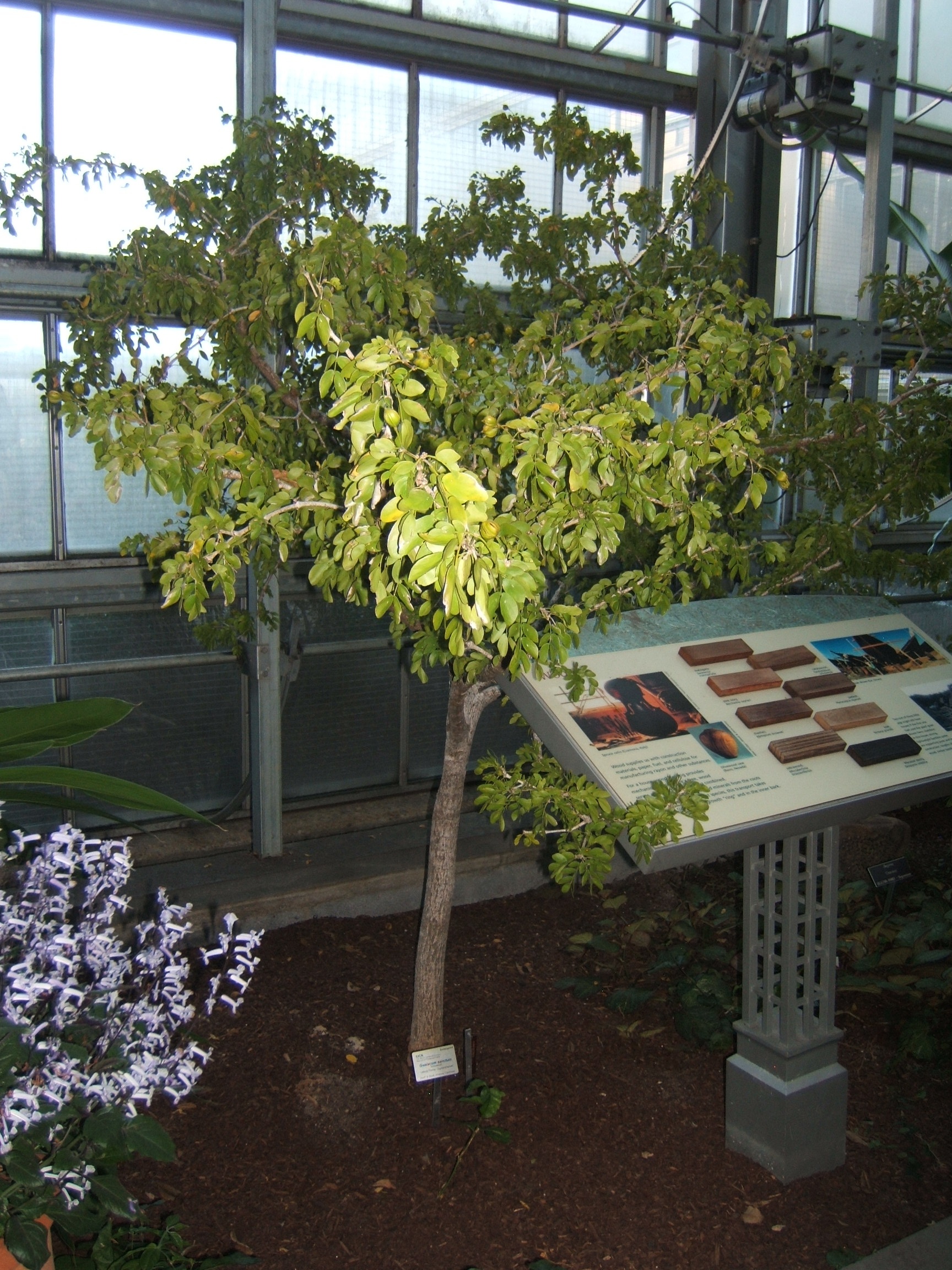
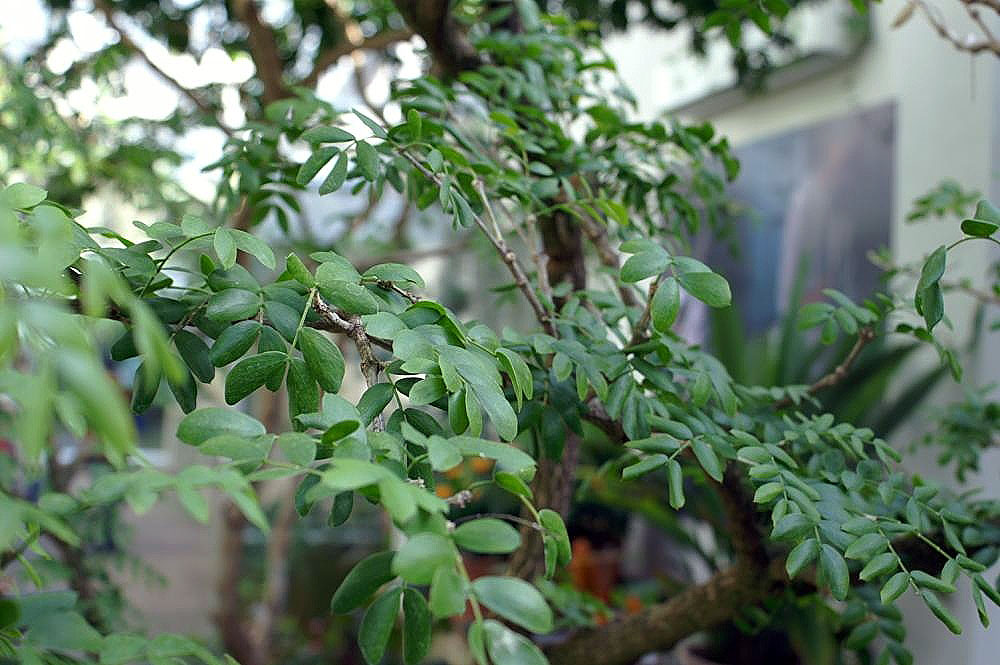
Holywood lignum vitae is the one lignum vitae that is actually native to Florida, and that fact changes everything about how to think about it. Guaiacum sanctum, in the caltrop family Zygophyllaceae, is native to southern Florida, specifically Miami-Dade County and the Florida Keys, and to the Caribbean, Mexico, and Central America. It is also called holywood, guayacum, and the tree of life, and it is the species you see at Lignumvitae Key Botanical State Park, the island named for it. This guide covers sanctum only; its cousins officinale and angustifolium have their own guides.
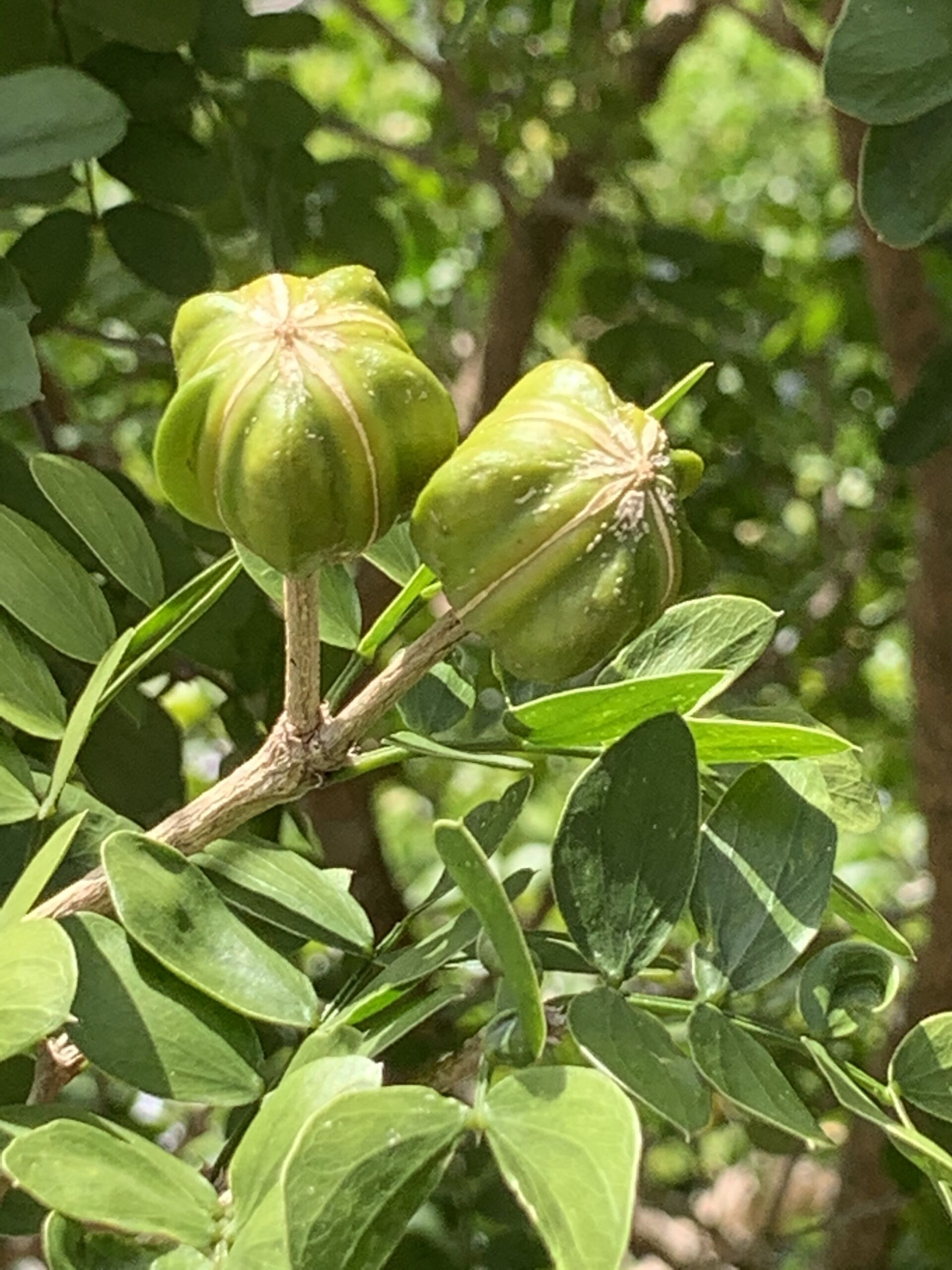
It is an extremely slow-growing broadleaf evergreen, a small tree or multi-trunked shrub that typically reaches 10 to 12 feet in gardens but can reach 30 to 40 feet in ideal conditions, with drooping branches that give it a softer, more organic outline than the rounded crown of officinale. The leaves are leathery, dark green, and compound, with more leaflets per leaf than officinale, and the leaflets tend to be shorter. The flowers are deep blue, five-petalled, about an inch across, most abundant in spring but appearing through the year in warm climates. The fruit is a larger, winged capsule holding about four seeds, turning orange at maturity, which is the surest field mark against officinale’s flatter two-seed capsule.
One disambiguation, in plain text: sanctum is the lyside sulphur’s southern Florida host. The butterfly is abundant in Texas, where angustifolium grows in quantity, and rare in Florida precisely because sanctum grows only in the far south. Planting sanctum in Keystone Heights will not summon lyside sulphurs, and planting it anywhere north of its zone will not keep it alive. Its value in most of Florida is as a container or conservatory plant, and in South Florida as a native tree worth planting for its own sake.
How to grow
Plant holywood lignum vitae in full sun or partial shade, in well-drained soil. It tolerates clay, sand, and loam, acidic or alkaline, and it tolerates wind and salt, making it a strong choice for seaside gardens and patios in its zone. The IFAS zone rating is 10B through 11, which in Florida means the far south, and that rating is not a suggestion to try it in zone 9 and hope. Outside 10B to 11, grow it in a container that can come under cover, or admire it in a botanical garden.
Buy nursery-grown stock, and be particular about it. Sanctum is state-listed as endangered in Florida and rated as endangered globally by the IUCN, because habitat loss and centuries of cutting for its dense wood have reduced wild populations. A nursery plant is a conservation act; a wild-collected plant is the opposite. Plant in spring, give it a tree lawn at least 3 to 6 feet wide or a generous patio container, and then practice the lignum vitae virtue: patience. This tree measures its life in decades, and a garden that plans for it is planning for the next generation as much as for this one.
Water & feeding
Water deeply at planting and through establishment, then water moderately and let the soil dry between waterings. Established trees tolerate wet or dry soil, but well-drained ground is the consistent recommendation, and soggy soil is never an improvement. Do not fertilize heavily; a slow tree in ordinary soil grows dense and strong, while pushed growth is soft and short-lived. Pruning is light and structural: train a multi-trunk shrub into tree form with careful early pruning if you want a single trunk, remove dead wood, and otherwise leave the drooping, organic shape alone.
Pests and diseases are reported as few, with the IFAS assessment listing no pests or diseases of concern. That is a real advantage in a South Florida garden, where many ornamentals come with a pest list attached, but it is not immunity, and a stressed, wet, or frost-damaged tree will still decline.
Common problems
- Wrong zone. The single biggest cause of failure. Zones 10B to 11 outdoors is a narrow band, and most of Florida is outside it. Container culture is the honest answer north of that band.
- Impatience. Extremely slow growth is the defining trait. A tree that gains inches a year is growing normally.
- Wild collection. Never buy a plant that may have been dug from the wild. Endangered status is not marketing copy; it is the reason nursery propagation matters.
- Confusion with officinale. The two are sold interchangeably under the name lignum vitae. More, shorter leaflets and larger four-seed capsules point to sanctum; fewer, longer leaflets and flatter two-seed capsules point to officinale.
Harvest
There is no food harvest from holywood lignum vitae, and the harvest here is flowers, form, and a conservation story you can tell from your own yard. The wood is greenish-brown, strikingly dense, heavier than water, and historically prized for bearings, pulleys, and tools, which is exactly why the wild tree is endangered today. The modern harvest is the deep blue flower show against dark evergreen leaves, the winged orange capsules, and, in southern Florida, service as a lyside sulphur host. The fruit is showy but is not reported as attracting wildlife in the IFAS assessment, so do not plant it expecting a bird feast.
Propagation is by seed, and it is slow, with the same long seedling stage as its cousins. For most gardeners, a nursery-grown plant is the only sensible route, and it is also the conservation-correct one.
Saving seeds: stewardship first
For holywood lignum vitae, the stewardship warning comes first and it is personal to Florida. Guaiacum sanctum is listed as state endangered in Florida, where its wild range is restricted to Miami-Dade and the Keys, and its international trade is controlled under CITES Appendix II. Assessments of its global status have shifted over the years between listings, but the Florida listing is the one that matters in your yard, and it means exactly what you think it means: never collect seed, cuttings, or plants from wild trees, never buy wild-collected material, and start only from nursery-grown stock. The largest intact wild population sits on Lignumvitae Key, a place to visit and admire by boat, not a seed source. Growing a nursery-raised holywood is conservation. Harvesting a wild one is the history this tree is still recovering from.
Of the three lignum-vitae species, this one has the best-documented seed method, and it rewards promptness. Collect from your own cultivated tree when the orange-yellow capsules open to reveal the dark seeds wrapped in a bright red aril. Remove that aril completely: it contains germination inhibitors, and seed left wearing it molds instead of sprouting. Give the cleaned seed a light scarification, a gentle nick or rub, then soak it in water for twelve to twenty-four hours. Sow about a centimeter deep in containers of sandy compost, keep it warm and moist, and fresh seed germinates fast by lignum-vitae standards, beginning in roughly six to eight days and finishing within about two to three weeks, with fresh-seed germination around forty to sixty percent. When seedlings reach about six centimeters tall, move them to nursery bags, and expect them to reach outplanting size, roughly thirty to forty centimeters, about a year after sowing.
Storage is barely storage at all. Published guidance allows about a month at cool temperatures around five to eight degrees Celsius, and seed held at ordinary room temperature and humidity loses viability in under a month. In practice that means sow as soon as ripe, full stop. There is no seed bank for this tree in your shed, and Florida humidity will end any seed left sitting on a bench. If you cannot sow immediately, a short cool hold is your only grace period, and it is measured in weeks, not seasons.
Seedlings grow true to the species, with normal variation between individuals, and young trees may start flowering at around six to eight years old, which is fast for this genus and still slow by any normal garden standard. After that, the tree settles into its famous pace: extremely slow growth, centuries of potential lifespan, and wood so dense it once sank in water and wore out saw blades. A seed you sow today is a gift to a gardener you will never meet, possibly in the next century. That is not a drawback. For this tree, that is the entire point.
Species in this group
This is a species guide, not a genus guide, and the varieties section here is really a disambiguation list, in plain text. No named garden varieties of Guaiacum sanctum are verified or claimed.
- Holywood lignum vitae — Guaiacum sanctum: This guide’s species. Southern Florida, Caribbean, Mexico, Central America. Extremely slow-growing, 10 to 30 feet, deep blue flowers, larger four-seed capsules, more and shorter leaflets. State-listed as endangered in Florida; IUCN Endangered.
- Common lignum vitae — Guaiacum officinale: A different species, with its own guide. Caribbean and northern South America. Rounded crown, fewer and longer leaflets, flatter two-seed capsules. Not native to Florida.
- Texas lignum-vitae — Guaiacum angustifolium: A different species, with its own guide. Southern, central, and western Texas and northern Mexico. Shrubby, limestone-country plant, lyside sulphur host in Texas.