
🌿 Gray Nickerbean
What it looks like
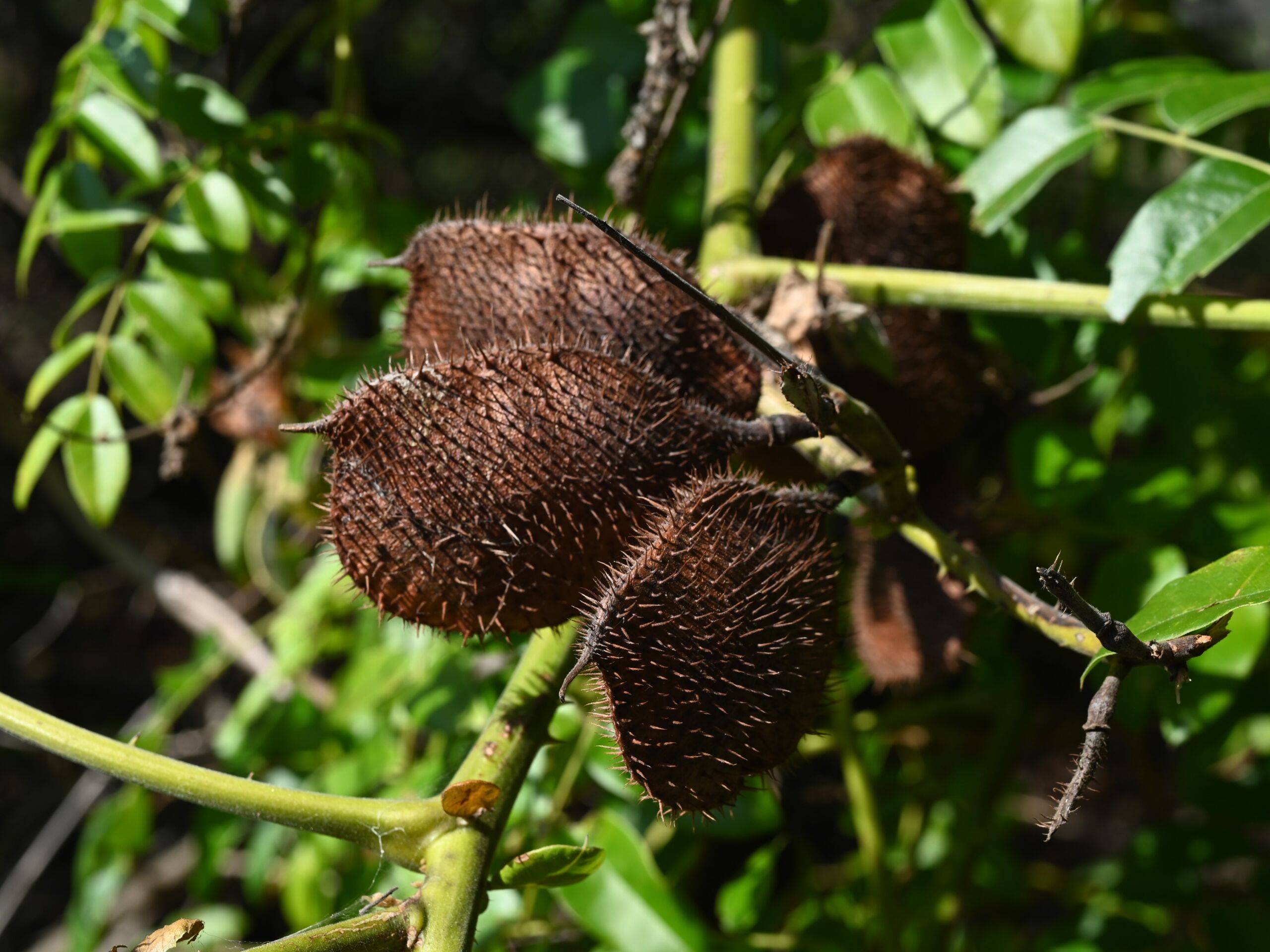
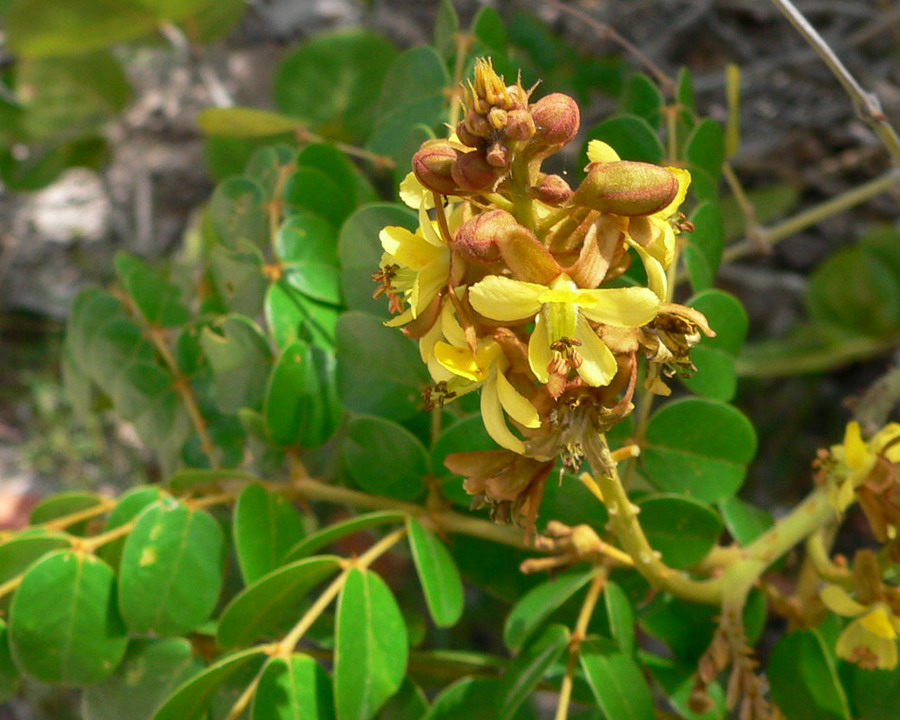
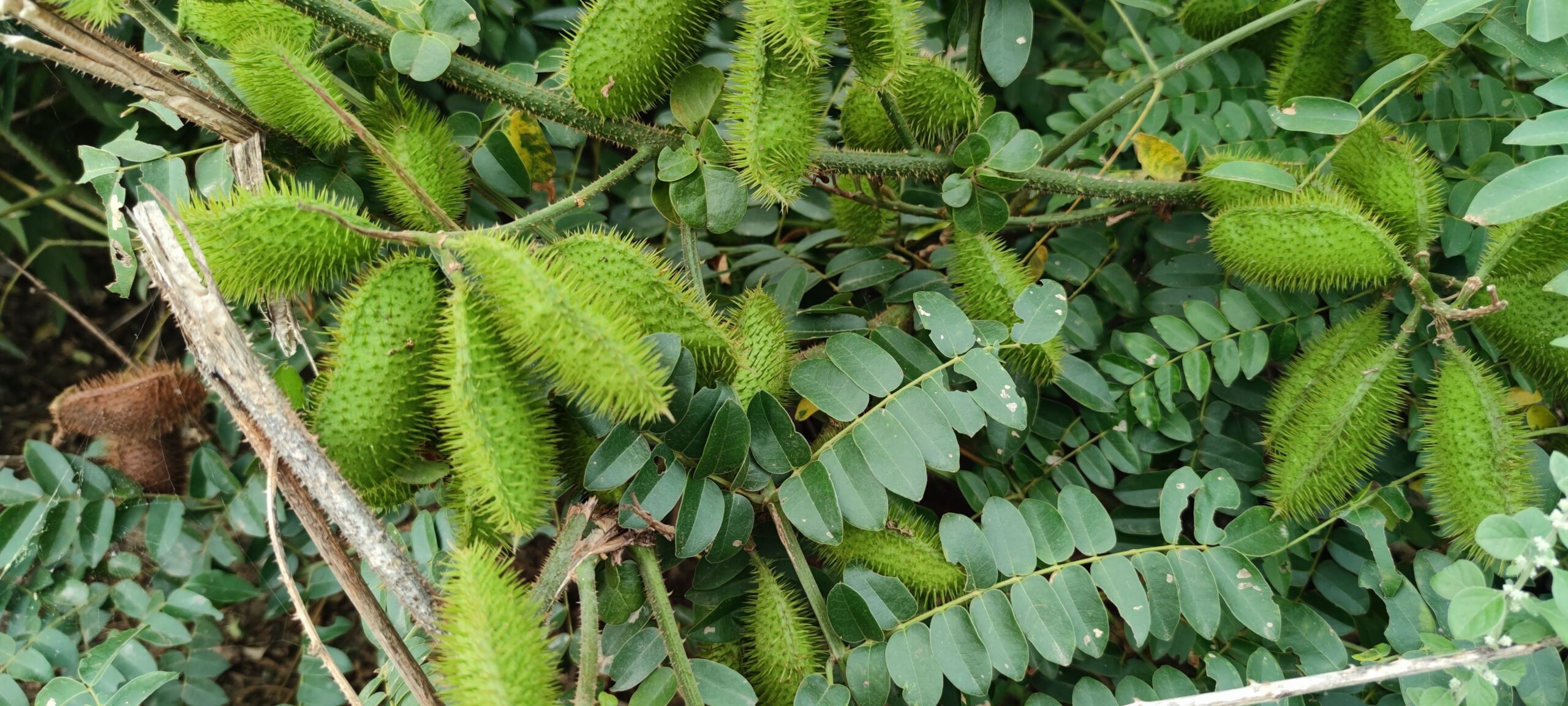
Gray nickerbean is a beach plant with a passport. Guilandina bonduc, in the pea family Fabaceae, subfamily Caesalpinioideae, is a scrambling, thorny shrub or vine with a pantropical distribution, found on coastlines across the tropics and subtropics, on sand dunes, on the upper shore, and in coastal scrub and thickets. In Florida it is native, recorded from coastal beaches and thickets, including the Keys and the Brevard County coast, and it flowers roughly August to January, with some records into July. Other common names include gray nicker, nicker nut, bonduc, and wait-a-while, and that last one is practical advice, not poetry: this plant is armed.
The plant is a sprawling, thorny shrub with large compound leaves and spiny pods, each pod holding generally two seeds. The seeds are the famous part: smooth, gray, marble-like nickernuts, sometimes called sea pearls, that float and wash ashore on beaches far from where they grew, carried by ocean currents, and that are strung into necklaces and used as game counters in the Caribbean and Africa. The flowers are yellow, in clusters, and the whole plant has the scrambling, wait-a-while habit of a coastal legume that climbs over everything in its path and defends itself while doing it.
One disambiguation, in plain text: the older name Caesalpinia bonduc, and its variant Caesalpinia bonducella, appear all over older books, nursery lists, and photo captions, including two of this guide’s photos. Modern taxonomy, following Gagnon and colleagues in 2016, places the plant back in its original Linnaean genus Guilandina, and that is the name this guide uses. If a nursery tag says Caesalpinia bonduc, it is the same plant, but the tag is out of date. Also, do not confuse gray nickerbean with yellow nickerbean, Guilandina major, whose seeds are yellow to brown rather than gray.
How to grow
Plant gray nickerbean only where a thorny tropical scrambler belongs: a sunny coastal site in the tropics or subtropics, in sandy, well-drained soil, with room to scramble and nothing precious nearby. It is a plant of beaches, dunes, and coastal thickets, and it wants full sun, salt air, and sharp drainage. It is frost-tender, so in Florida it is a South Florida and coastal plant outdoors, and a greenhouse curiosity anywhere colder. Give it a fence, a sturdy trellis, or a wild corner to climb over, and keep it well away from paths, play areas, and bare legs. The spines are not decorative.
It is also a plant to site with ecology in mind. In Florida it is native, and in coastal thickets it belongs, but a pantropical scrambler with floating seeds is not a plant to release casually outside its range or to plant where it can escape into a sensitive dune system. In its proper coastal place, it needs little: sun, sand, drainage, and occasional cutting back to keep it within its allotted scramble. In the wrong place, it is a thorny problem that outgrows its welcome.
Water & feeding
Water deeply at planting and through establishment, then water sparingly. A coastal dune plant tolerates drought and salt, and it does not want rich soil or constant irrigation. Sandy, nutrient-poor soil suits it, and fertilizer pushes soft, spiny growth that then needs more cutting back. Mulch lightly with coastal leaf litter if you like, kept off the stems, and otherwise let the plant’s dune habits run the show.
Pruning is the main maintenance, and it is not optional. Cut back wandering stems with thick gloves and long sleeves, remove dead wood, and keep the plant inside its fence or thicket boundary. A gray nickerbean that is never pruned becomes a thorny mound that swallows its neighbors, which is charming in a wild thicket and a nuisance in a garden.
Common problems
- Spines. Every part of the plant that can be spiny is spiny: stems, pods, and leaf stalks. Plant away from paths and prune with protection.
- Frost. Tropical and subtropical only. A freeze kills or badly damages it, and it does not resprout into a garden plant on demand in cold country.
- Over-vigor. In a warm, sunny site it scrambles fast. Without a boundary and a pruning schedule, it will claim the fence, the shrubs, and the path.
- Wrong nickerbean. Gray seeds mean bonduc; yellow to brown seeds mean the related yellow nickerbean, Guilandina major. Check the seeds, not just the tag.
- Outdated name. Caesalpinia bonduc on a tag is the same plant under an older name. Do not buy a second one thinking it is a different species.
Harvest
There is no food harvest from gray nickerbean, and the harvest here is seeds, stories, and butterflies. The gray nickernuts are collected from beaches and pods as sea pearls, polished by the waves, strung as beads, and used as game counters, and the seeds contain bonducin, a bitter glycoside historically called poor man’s quinine. That history is reported, not prescribed: folk-medicine uses of bonducin are not a reason to eat the seeds, and this guide makes no medicinal recommendation. For butterfly gardeners, the real harvest is the host relationship: the nickerbean blue butterfly’s caterpillars feed on gray nickerbean, which is why this guide exists, and the plant is also noted in Florida Keys research as host material of interest for the endangered Miami blue’s captive program, a separate butterfly with a separate story.
Propagation is by seed, and the seeds are famously hard and long-lived, which is how they survive ocean voyages. Scarification, nicking or hot-water treatment of the hard seed coat, is the usual route, followed by sowing in warm, sandy mix. Most gardeners in its range will do better buying a nursery plant, if one can be found, than starting from beachcombed seeds of uncertain identity.
Saving seeds
Toxicity first, because gray nickerbean seed looks like candy and is not. The hard, marble-smooth gray seeds contain bitter medicinal compounds, including bonducin, long used in traditional medicine as a fever remedy, and eating them in quantity causes severe gastrointestinal distress. These are not snacks, not coffee substitutes for the curious, and not something to leave within reach of children or pets who will absolutely try to play marbles with them. The pods are also spiny enough to earn their keep, so wear gloves when you handle them. Everything below assumes the seeds are going into soil, not into anyone.
Collect when the pods turn brown and dry on the vine, each flat, spiny pod usually holding one or two glossy gray seeds about two centimeters across. Open pods with gloves and a bit of respect for the spines, and pick out the smooth, hard seeds. Here is where nickerbean seed earns its reputation as a traveler: the coat is so hard and waterproof that seeds can float at sea for months and still sprout when they wash up on a beach, which is how this plant colonized tropical coastlines around the world. That same armor is your problem at sowing time. Untreated seed can sit in soil indefinitely, ignoring you completely, because water cannot get in.
The fix is scarification, and it needs to be real, not symbolic. Nick the coat with a file, rub it with sandpaper, or score it with a hacksaw blade until you have visibly broken through the hard shell, taking care not to gouge the inner seed, then soak the scarified seed in water for a day to several days until it swells. Seeds that swell have taken up water and are ready; seeds that stay hard and rattling after days of soaking need another round of scoring. Sow about a centimeter deep in a well-draining mix, keep it moist and warm, and expect germination in roughly two to four weeks after proper treatment, which feels miraculous after the months an unscarified seed can spend doing nothing.
Storage is the easy part, and a pleasant change from the recalcitrant tropical seeds elsewhere in this wave. Hard-coated nickerbean seed keeps well dry: dry it thoroughly, seal it in an airtight container with a desiccant packet, and keep it cool and dark. Florida humidity still applies to the drying step, so dry indoors with airflow and seal promptly, but once sealed, this is among the longest-keeping seeds you are likely to save, which makes sense for a seed built to survive an ocean voyage. Seedlings grow true to the species, with normal variation, since this is a species vine rather than a named cultivar, and as a legume it brings its own fertilizer factory: root nodules housing nitrogen-fixing bacteria feed the vine and enrich nearby soil, so do not smother seedlings with nitrogen fertilizer they do not need.
One stewardship note to close on. Gray nickerbean is a coastal native plant, and its ocean-going seed means an escaped plant can travel farther than you can walk to retrieve it. Collect seed only from your own garden plants, never strip pods from wild beach plants, and site it where a vigorous, spiny, scrambling coastal vine belongs, not somewhere it can wander into a dune it was not invited to. Grown in its place, from seed you scarified yourself, it is one of the great Florida coastal stories: a marble that floated across an ocean, waited out the voyage in armor, and sprouted in sand.
Species in this group
This is a species guide, not a genus guide, and the varieties section here is really a disambiguation list, in plain text. No named garden varieties of Guilandina bonduc are verified or claimed.
- Gray nickerbean — Guilandina bonduc: This guide’s species. Pantropical coasts, Florida native. Scrambling thorny shrub or vine, spiny pods with generally two gray seeds, yellow flowers, coastal beaches and thickets. Nickerbean blue host. Synonym Caesalpinia bonduc.
- Yellow nickerbean — Guilandina major: A different species, with yellow to brown seeds rather than gray. Not covered here, and not interchangeable as a host on the evidence in this guide.
- Other Guilandina species: The genus holds a handful of tropical species. None is covered here, and none should be bought as gray nickerbean on a genus name alone.