
🌿 Hawaiian Sandalwood
What it looks like
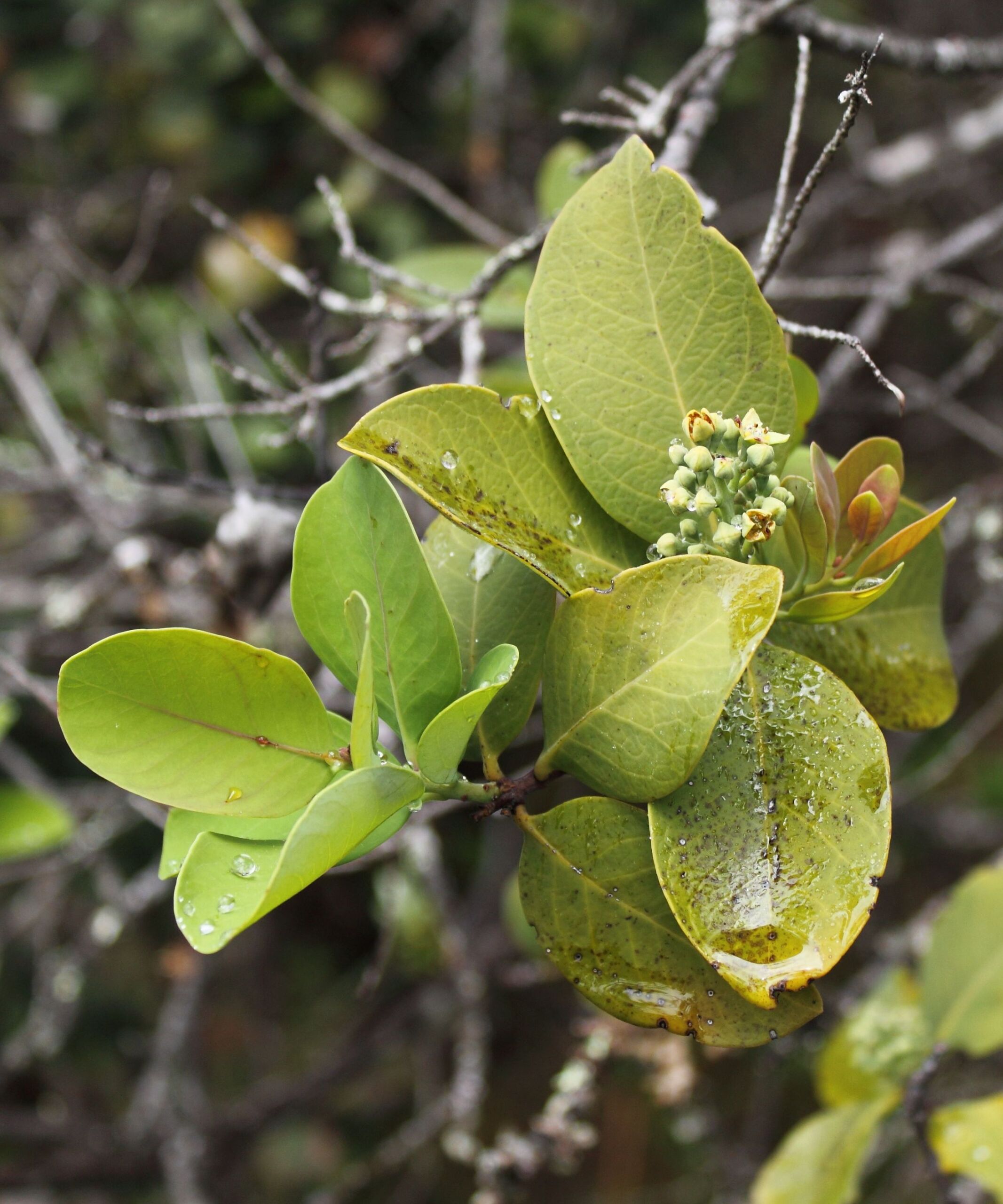
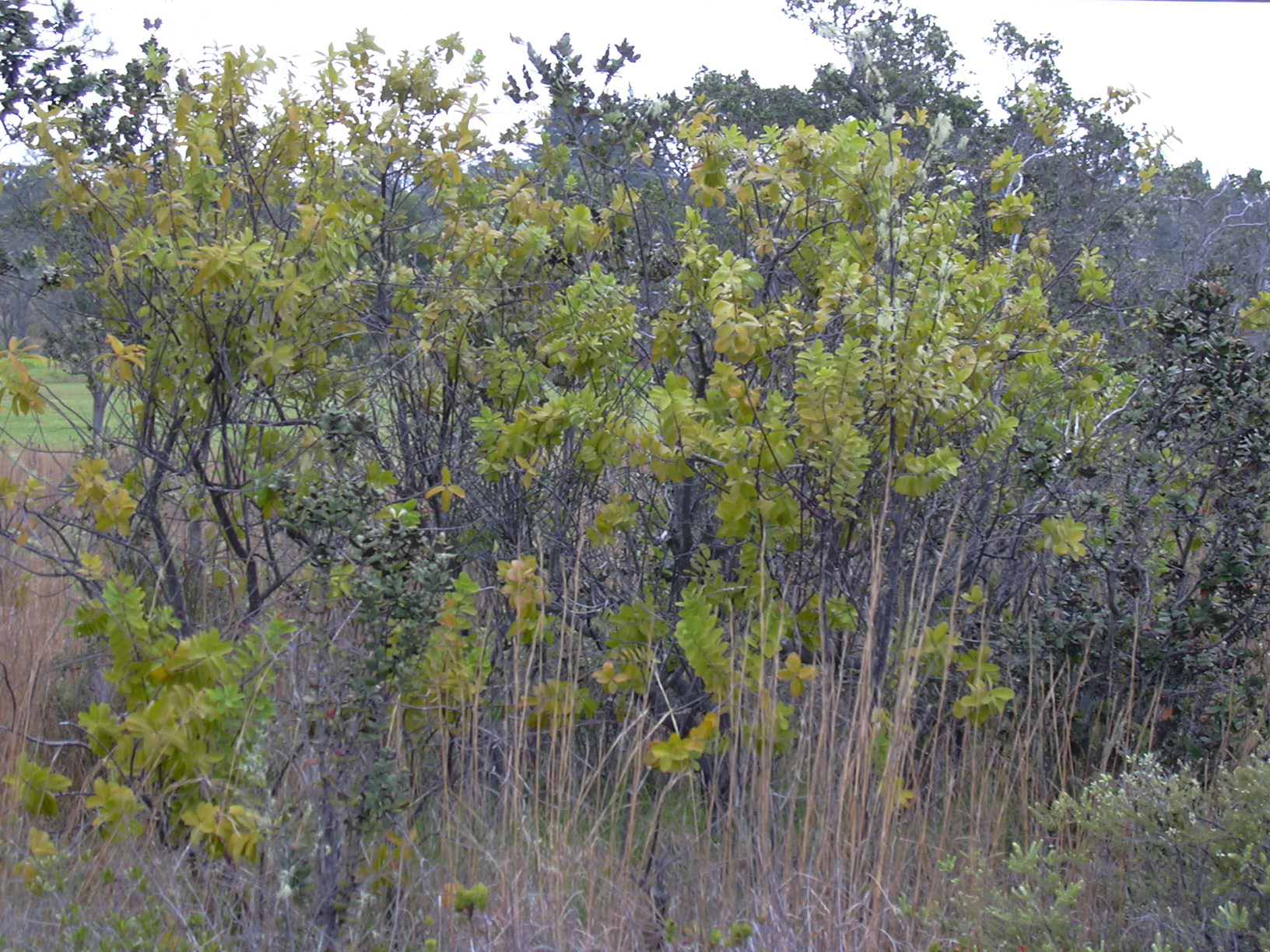
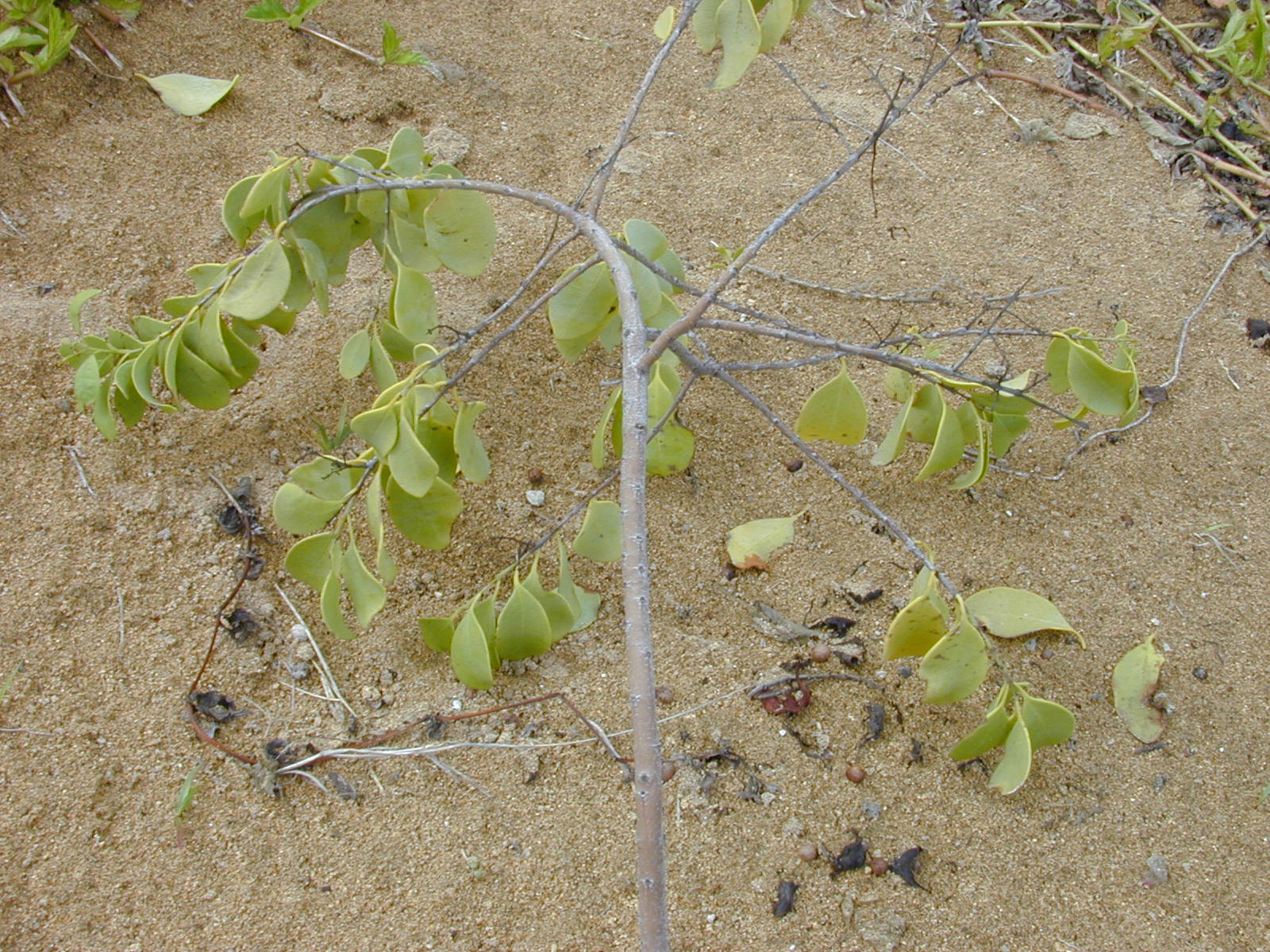
Hawaiian sandalwood is not one tree, and this guide does not pretend it is. Iliahi, in Hawaiian, and Hawaiian sandalwood, in English, are group names for the endemic sandalwoods of Hawaii, in the genus Santalum, family Santalaceae. The long-recognized core is four species, Santalum ellipticum, Santalum freycinetianum, Santalum haleakalae, and Santalum paniculatum, and recent counts list six endemic species in total, adding Santalum involutum and Santalum pyrularium to the family. Sources disagree on the exact total, because taxonomy in this group is still moving, so this guide gives the four-species core in full and notes the wider count honestly, rather than pinning a number that the next revision will break.
The trees are small, typically multi-stemmed and somewhat bushy, attaining 5 to 10 metres at maturity, spreading about as wide, in open, drier forest and woodland communities. Coastal sandalwood, ellipticum, is a sprawling shrub to small tree, usually 1 to 5 metres, with small elliptical leaves, on dry coastal ground below about 450 metres, while paniculatum, the mountain sandalwood, is the giant of the family, reaching 3 to 10 metres in dry to mesic forests from about 450 to 2,550 metres. The leaves are bluish-green, almost jade, the flowers are tiny, star-shaped, and clustered, and the fragrance that made the tree famous lives in the heartwood, not in the flowers. The flowers are small and accessible, which is exactly why butterflies visit them.
One disambiguation, in plain text, because this guide covers a double mention: the Hawaiian blue butterfly’s nectar list names both Iliahi and Hawaiian sandalwood, with no Latin and no species qualifier. Those are the same group, in Hawaiian and in English, not two plants, and this guide maps both forms here, at group level, rather than guessing paniculatum or ellipticum for a mention that names neither. Indian sandalwood, Santalum album, is a different species, introduced from India, and it is not covered here. If a future source pins the Hawaiian blue’s nectar plant to a single Santalum species, that species can get its own guide; until then, the group guide is the honest target.
How to grow
Plant Hawaiian sandalwood only in Hawaii, in frost-free country, and only with host plants. That last clause is not optional, and it is the whole growing guide in one sentence. Sandalwoods are hemiparasites: they photosynthesize, making their own sugars, but they derive water and some nutrients through root attachments, haustoria, to the roots of other species, and they do not grow well without hosts. Intercropping is not just possible, it is necessary. Suitable hosts include koa, koaia, naio, and a wide range of native and introduced plants, and sandalwood is flexible, normally using more than one host at a time, and joining whole plant communities through root grafts.
Plant seedlings close to potential hosts, within existing vegetation where host roots are already present, and plant container-grown seedlings out close to a host by the time they are about six months old, before the root system becomes pot-bound and hostless. Give tree forms 10 feet or more of space, low hedge forms about 6 feet, in light to medium, well-drained soil. Growth is slow to moderate, about 0.3 to 0.7 metres per year, and heartwood takes 30 years or more to develop, so this is a tree for restoration and for the next generation, not for a quick fragrant harvest. In Florida, do not plant it: it needs frost-free Hawaii, Hawaiian host communities, and Hawaiian soils, and a mainland garden, however warm, is not a substitute.
Water & feeding
Water seedlings at planting and through establishment, especially at the onset of the rainy season, and then water as the host community dictates. Established plants survive long dry seasons, up to five or six months, when attached parasitically to suitably drought-tolerant hosts, and coastal sandalwood in particular is an excellent xeric plant once established, watered about once a month in the driest months. Overwatering is a real fault: black sooty mold on the leaves is a sign of too much water, and soggy soil rots roots that evolved for light, well-drained volcanic ground. Do not fertilize heavily; a balanced slow-release fertilizer with minor elements every six months, and occasional iron chelate, are the reported regime for coastal sandalwood, which seems to require extra iron, but the host plants’ health matters more than any fertilizer schedule, because the sandalwood’s health is tied to the health of its neighbors.
Pruning is light and mostly about the hosts: trim back a secondary host that over-competes and shades out the sandalwood, and prune the sandalwood itself only lightly, if at all. Do not let a vigorous host smother the tree it is supposed to feed.
Common problems
- No host, no tree. A sandalwood planted alone, in bare soil, without host roots to tap, will fail. Hosts are not a bonus; they are the planting plan.
- Frost. Hawaiian sandalwoods grow in frost-free areas. A mainland freeze is fatal, and no mulch makes Hawaii out of Florida.
- Overwatering. Soggy soil and constant irrigation rot roots and invite sooty mold. Drainage first, water second, and let dry seasons happen.
- Wrong sandalwood. Indian sandalwood, Santalum album, is a different, introduced species. Do not buy it as Hawaiian sandalwood, and do not expect it to serve Hawaiian forest restoration.
- Impatience and overharvest. Heartwood takes decades, and the sandalwood trade once cut wild trees nearly to nothing. Plant nursery stock, protect wild forest, and do not cut a garden tree for wood.
Harvest
There is no quick harvest from Hawaiian sandalwood, and the harvest here is flowers, fragrance in time, and forest. The small, accessible flowers feed butterflies, including the Hawaiian blue, which is why this guide exists, and the heartwood, rich in santalols, is the famous fragrance, developed over 30 years or more. That history has a dark side: the 19th-century sandalwood trade overharvested wild trees across Hawaii, and several species are now rare or restricted, with coastal sandalwood extinct on Kahoolawe and Laysan and rare on Kauai. The modern harvest is conservation: nursery-grown trees planted with hosts in restoration, koa forest protected rather than cut, and flowers left for butterflies rather than picked for perfume.
Propagation is by seed, and seed and planting material are reported as a main drawback, scarce and slow. Seedlings need hosts from the start, and survival is high, over 80 percent, for large, healthy seedlings planted at the onset of the rainy season and kept weeded. For most people, the honest route is to support Hawaiian native-forest restoration rather than to grow a sandalwood at home, and for Hawaii residents, to buy nursery stock from a reputable native nursery and plant it with its hosts.
Saving seeds: a stewardship note
This is deliberately not a how-to-grow section, and that omission is the point. Hawaiian sandalwood, the Santalum species covered in this group guide, is a root hemiparasite: it photosynthesises its own sugars with its green leaves, but it taps into the roots of neighbouring plants for water and soil nutrients, usually more than one host at a time. A sandalwood without hosts is a plant with half a root system missing, which is why a lone seedling in a sterile pot is a slow tragedy rather than a houseplant project. Any serious propagation belongs with specialist native-plant nurseries and restoration growers in Hawaii who can pair seedlings with suitable hosts and the right island conditions, not with a windowsill experiment.
There is also history to respect. Hawaiian sandalwood was cut on an industrial scale for the fragrant heartwood trade, and several island species are rare, localised, or burdened by habitat loss and hybridisation with introduced sandalwoods. Seed is scarce and far more valuable left in the ecosystem, or in the hands of conservation growers, than eaten, posted in an envelope, or trialled far from home. Birds disperse the ripe fruit, which is part of the plant’s own plan, and human seed collection from wild trees should be left to permitted restoration work. If you love these trees, the most useful thing a mainland gardener can do is support Hawaiian native-plant conservation, visit them in botanical gardens and protected places rather than trying to own one, and never buy wild-collected seed of uncertain origin. A fragrant tree that needs a forest community around it is a good reminder that some plants are not products, and the soil science here is humbling: the chemistry we prize in sandalwood oil exists because of a whole web of roots, fungi, and host plants, not because of one seed in one pot.
Species in this group
This is a group guide, and the species below are the Hawaiian endemics worth knowing, in plain text. No named garden varieties are verified or claimed, and no single species is claimed as the Hawaiian blue’s nectar plant.
- Mountain sandalwood — Santalum paniculatum: The largest Hawaiian sandalwood, 3 to 10 metres, in dry forests on lava and cinder cones and in wet forest on Hawaii island, from about 450 to 2,550 metres. Highest-quality essential oil in the family, by some accounts. Photos 1 and 2.
- Coastal sandalwood — Santalum ellipticum (iliahialoe): Sprawling shrub to small tree, usually 1 to 5 metres, on dry coastal ground below about 450 metres, on all main islands except Kahoolawe, where it is extinct, and Laysan, where it is also extinct. Photo 3.
- Santalum freycinetianum (iliahi): A small shrub or tree of dry, mesic, and wet forests on Kauai, Oahu, Molokai, Lanai, and Maui, in several varieties, including the rare var. lanaiense.
- Santalum haleakalae (iliahi): A small tree of the alpine zone of Haleakala on Maui, and of small pockets on Molokai and Lanai.
- Other Hawaiian endemics: Santalum involutum and Santalum pyrularium, on Kauai and elsewhere, appear in recent six-species counts. They are noted here, not described in full, because sources disagree on the total and this guide does not pin a count it cannot defend.