
🌻 Woodland Sunflower
What it looks like
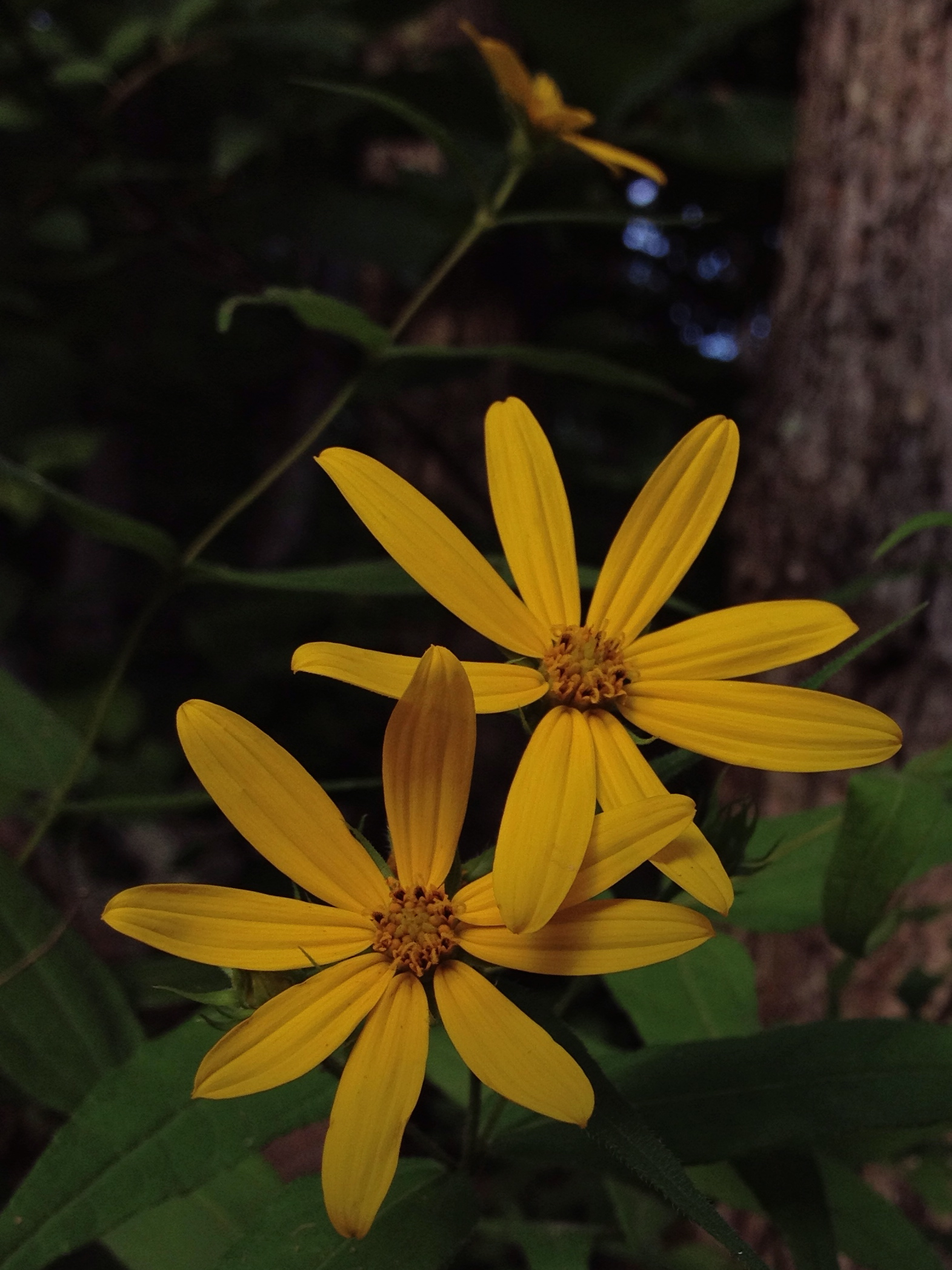
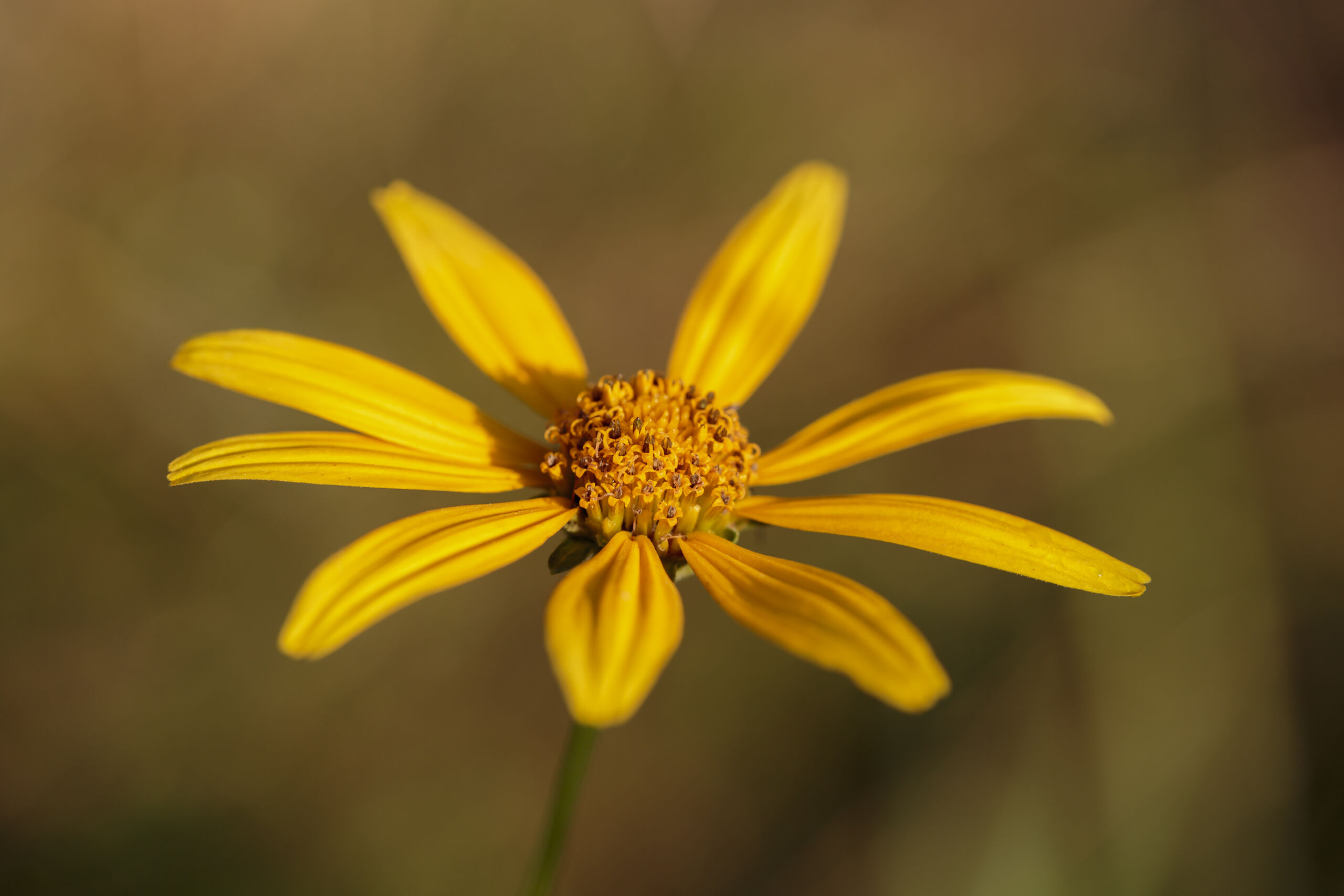
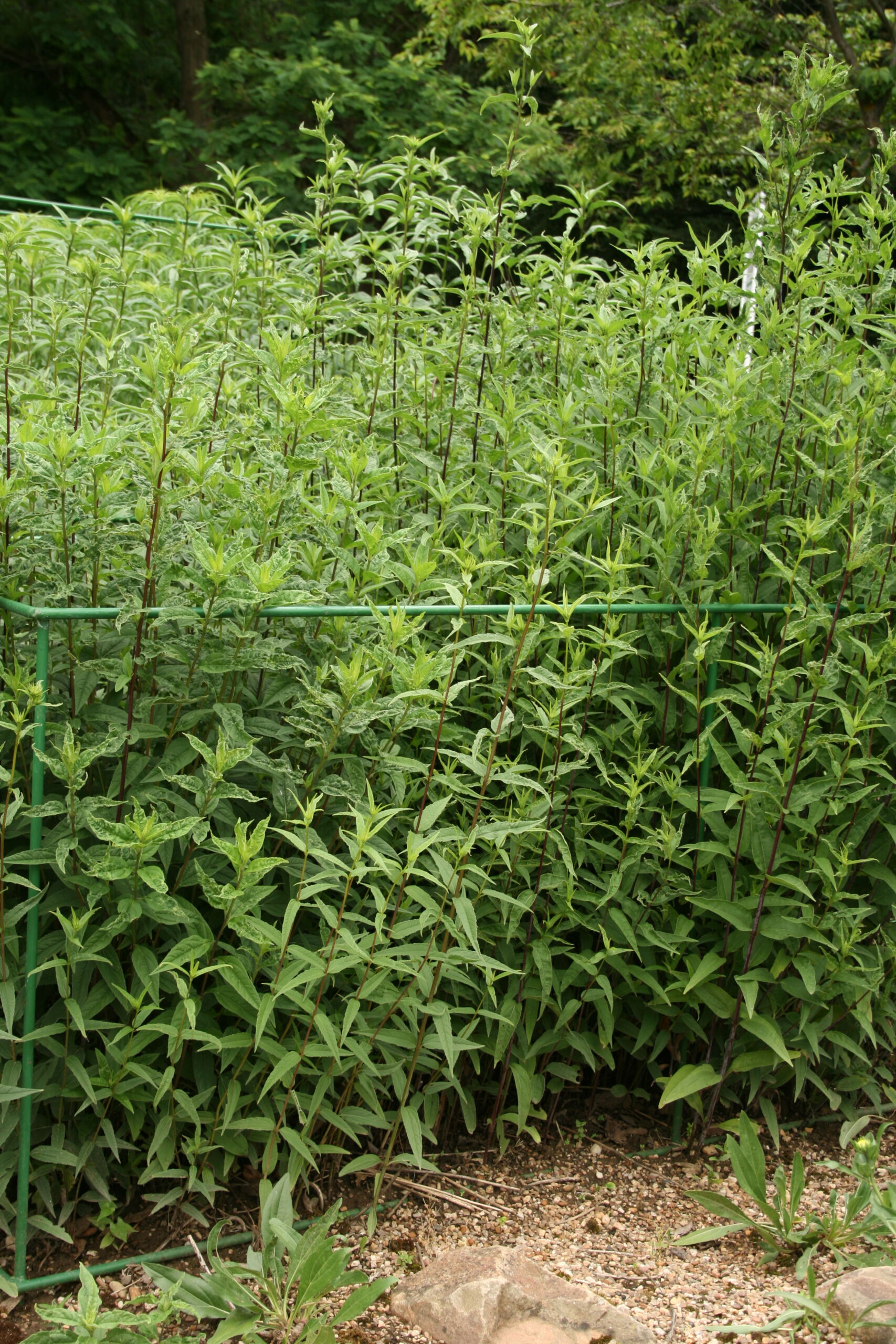
Woodland sunflower is the sunflower for gardeners who do not have a prairie. It is an erect, rhizomatous perennial, typically two to six feet tall, with a smooth central stem that branches where the flower heads occur. The leaves are the identification: opposite, sessile or nearly so — they clasp the stem without a stalk — rough-textured, and often paired so neatly that the plant looks like it was arranged by someone with a ruler. The species name divaricatus means “spread apart,” for the spreading branches and the paired heads that open along them.
The flowers are classic sunflower but smaller and more numerous than the garden annual’s: daisy-like heads about one and a half to three inches across, with yellow ray florets around a dark yellow disk, opening from July into October in a long, generous season. A colony in bloom at a woodland edge is a drift of yellow that goes on for weeks, and it does it in light shade where the famous annual would stretch, flop, and sulk. The plant spreads by rhizomes into loose colonies, which is a feature at a woodland edge and a warning in a small border.
The butterfly context is the Gorgone Checkerspot guide, whose Host plants section names “woodland sunflower Helianthus divaricatus in the south” among the sunflowers its caterpillars eat. This guide covers Helianthus divaricatus only. Prairie sunflower, giant sunflower, and the genus-level sunflowers have their own guides in this series, and none is covered here. Giant ragweed, Iva, and Viguiera, the other hosts in that list, are different plants and none is covered here. Woodland sunflower is also a noted nectar plant for the endangered Karner blue butterfly, though its caterpillars feed exclusively on wild lupine — a reminder that a plant can matter to a butterfly twice over, once as a nursery and once as a restaurant.
One plain-text disambiguation, because the sunflower names are a thicket. This guide covers Helianthus divaricatus only, also called rough sunflower and rough woodland sunflower. It is told from the similar hairy sunflower (Helianthus hirsutus) mainly by its rough, nearly hairless stem — hirsutus is the hairy one, divaricatus the rough one, and the distinction matters more to botanists than to gardeners but completely to checkerspots. Common sunflower (Helianthus annuus) is a different, annual species with its own growing guide, and it is not covered here. The site’s Sunflowers genus guide covers Helianthus as a genus, and it is not this species guide. Buy and plant by Latin name.
How to grow
Woodland sunflower is one of the easiest native perennials for a difficult spot: the dry shade edge. Plant nursery plants in spring or fall in part shade to full sun, in rocky or sandy woodland soil, dry open sites, or thickets — it is native to southeastern Canada and the north-central and eastern United States, and it likes the conditions at a forest’s edge: dappled light, decent drainage, and soil that is not rich. Space plants eighteen inches to two feet apart, water until established, and then let the rhizomes do their work. A colony that is happy will spread, and a colony that is happy in the wrong place will need dividing every few years.
It tolerates dry soil once established and is notably unbothered by conditions that defeat fussier perennials — which is why it is recommended for stabilizing steep banks and hard-to-mow areas, where its rhizomes hold soil and its flowers hold attention. Cut stems back hard in late winter, divide congested clumps in spring, and do not pamper it: rich soil and heavy water make tall, lax stems that flop, while lean soil and sun make a tighter, sturdier plant. If you want a shorter plant, cut it back by a third in early summer; it will branch and bloom a little later and a little lower.
Florida note, stated plainly rather than hopefully. Woodland sunflower is a temperate woodland plant of the eastern and midwestern United States, and it is not a Florida garden plant — it wants a real winter and a woodland edge, not a subtropical summer. A Florida gardener who wants a native sunflower should look to dune sunflower and swamp sunflower, the site’s Academy-profiled Florida natives, instead. The Gorgone Checkerspot’s southern woodland-sunflower record is a central- and southern-continent story, not a Florida planting list, and this guide says so rather than pretending otherwise.
For the garden, the honest translation is a yellow drift for the shade edge. Plant it where the lawn meets the trees, along a woodland path, or on a bank you would rather not mow, let it colonize into a drift, and let the checkerspots, bees, and goldfinches do what they do. It is not a specimen plant and does not try to be; it is a colony plant, and its beauty is the drift, not the individual.
Water & feeding
Water woodland sunflower like a woodland-edge plant: enough to establish, then little. It prefers dry to medium, well-drained soil and tolerates drought once its rhizomes are down. Wet feet in heavy soil are the enemy — the crown rots while the plant looks fine above ground, and by the time you notice, the colony has a hole in it. In a rainy climate, plant it on a slope or in gritty soil and it will be happier than in a rich, irrigated border.
Feeding: essentially none. Woodland sunflower grows in rocky woods and dry thickets, and ordinary soil is already more than it asks for. Fertilizer mostly produces taller, floppier stems that need staking and fall over in the first autumn rain. A thin mulch of leaves in winter is plenty, and the soil science here is the rhizome bargain: the plant spends its energy underground, building a network that lets the colony survive drought, shade, and neglect, and then spends the surplus all at once on weeks of yellow flowers — because in a woodland edge, the pollinators that matter are generalists, and a long season of medium flowers beats a short season of big ones.
Common problems
- Running. Rhizomes spread into colonies. Divide clumps every few years, or plant where a colony is welcome.
- Flopping. Rich soil, shade too deep, or too much water makes tall, lax stems. Grow it lean and sunny, and cut back by a third in early summer for a tighter plant.
- Wrong sunflower, wrong tag. Hairy sunflower (Helianthus hirsutus) is the lookalike; divaricatus has the rougher, nearly hairless stem and sessile leaves. Check the Latin name.
- Powdery mildew. Sunflowers get it in humid air with poor circulation. Space for airflow, water at the base, and accept some late-season mildew — the flowers carry the show anyway.
- Spraying the host patch. Checkerspot caterpillars eat the leaves. Spraying a sunflower patch for insects empties it of the very thing this guide exists to feed.
Harvest
Woodland sunflower’s harvest is not a crop but a colony: divisions in spring for new drifts, stems for autumn arrangements — the small yellow heads make a cheerful filler — and seeds for the birds if you leave the heads standing. The simplest harvest is a September afternoon with no agenda: a drift of yellow at the woodland edge, bees working the disks, a checkerspot flickering over the leaves, and the knowledge that the hardest spot in the garden is also one of the brightest.
Saving seeds
Woodland sunflower gives you two honest ways to make more of it, and the lazy one is the better one. This is a rhizomatous perennial: it spreads underground, it comes back every year, and the easiest propagation is simply to divide the patch you already have. In early spring, just as new shoots appear, or in fall after flowering, dig up a section of the clump with a fork, tease or cut it into pieces, and make sure every piece carries roots and at least one growth point. Replant at the same depth, water it in well, and keep it moist until it settles. Divisions are clones, so they are exactly the plant you divided — same height, same flower, same woodland-edge manners. The only caution is the plant’s own enthusiasm: those rhizomes wander, so a division program doubles as crowd control, and a patch left to itself will colonize more ground than you planned.
Seed works too, and it is worth doing if you want a lot of plants cheaply or you enjoy a little genetic surprise. Wait until late summer or fall, when the petals have dropped and the backs of the heads have turned brown and dry. Cut the heads, rub the seeds — technically achenes, the dry one-seeded fruits that sunflowers pretend are seeds — out over a container, and winnow away the chaff. Dry them thoroughly indoors before storage: spread thin, good airflow, at least a week, and longer in Florida humidity, until the seed feels hard and snaps rather than bends. Then store in a labeled, airtight container with a desiccant packet, cool and dark. Florida air will re-wet poorly stored seed in a hurry, so seal it properly and do not trust a paper envelope left in a shed through August.
For sowing, the woodland way is the easy way: sow outdoors in fall, lightly covered, and let winter do the stratification for you. Seeds kept for spring sowing do better with a cold, moist spell in the fridge first — several weeks in damp mix in a sealed bag, checked now and then so it stays moist but never soggy — because perennial sunflower seed expects a winter before it wakes up. Sow shallowly, keep the soil moist but not waterlogged, and be patient: perennial seed is rarely as instant as the annual sunflower’s. On coming true: seed from a straight species plant grown away from other sunflowers will mostly resemble its parent, but sunflowers cross readily with their cousins when bees are ferrying pollen between them, so seed from a mixed planting may wander. If exactness matters, divide. If a woodland full of slightly different sunflowers sounds like a feature rather than a flaw, sow seed and let the bees collaborate.
Species
Woodland sunflower (Helianthus divaricatus, also called rough sunflower and rough woodland sunflower) is the species this guide covers. Hairy sunflower (Helianthus hirsutus) is a different, similar species and is not covered here. Common sunflower (Helianthus annuus), prairie sunflower (Helianthus petiolaris), and giant sunflower (Helianthus giganteus) are different species with their own guides, and none is covered here. The site’s Sunflowers genus guide covers Helianthus as a genus, and it is not this species guide. No named garden varieties of the wild species were verified, and none is claimed here. This guide covers Helianthus divaricatus only.