
🌿 Heliotrope
What it looks like
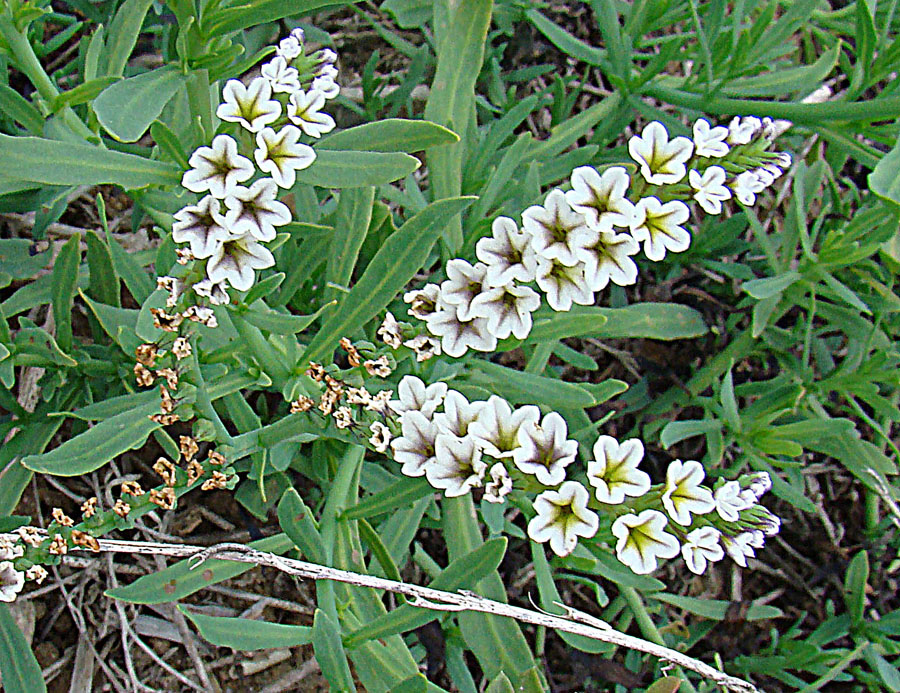
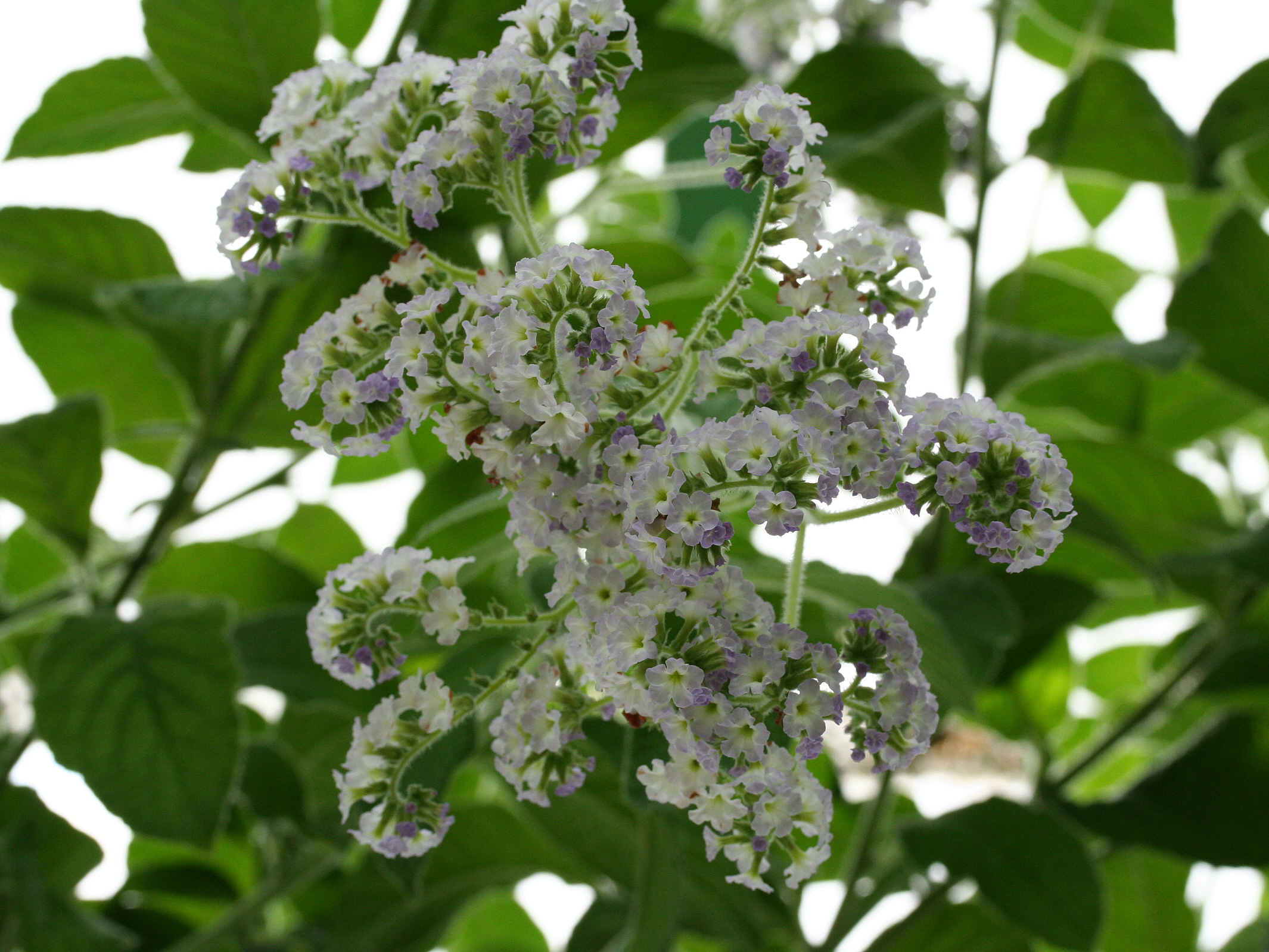
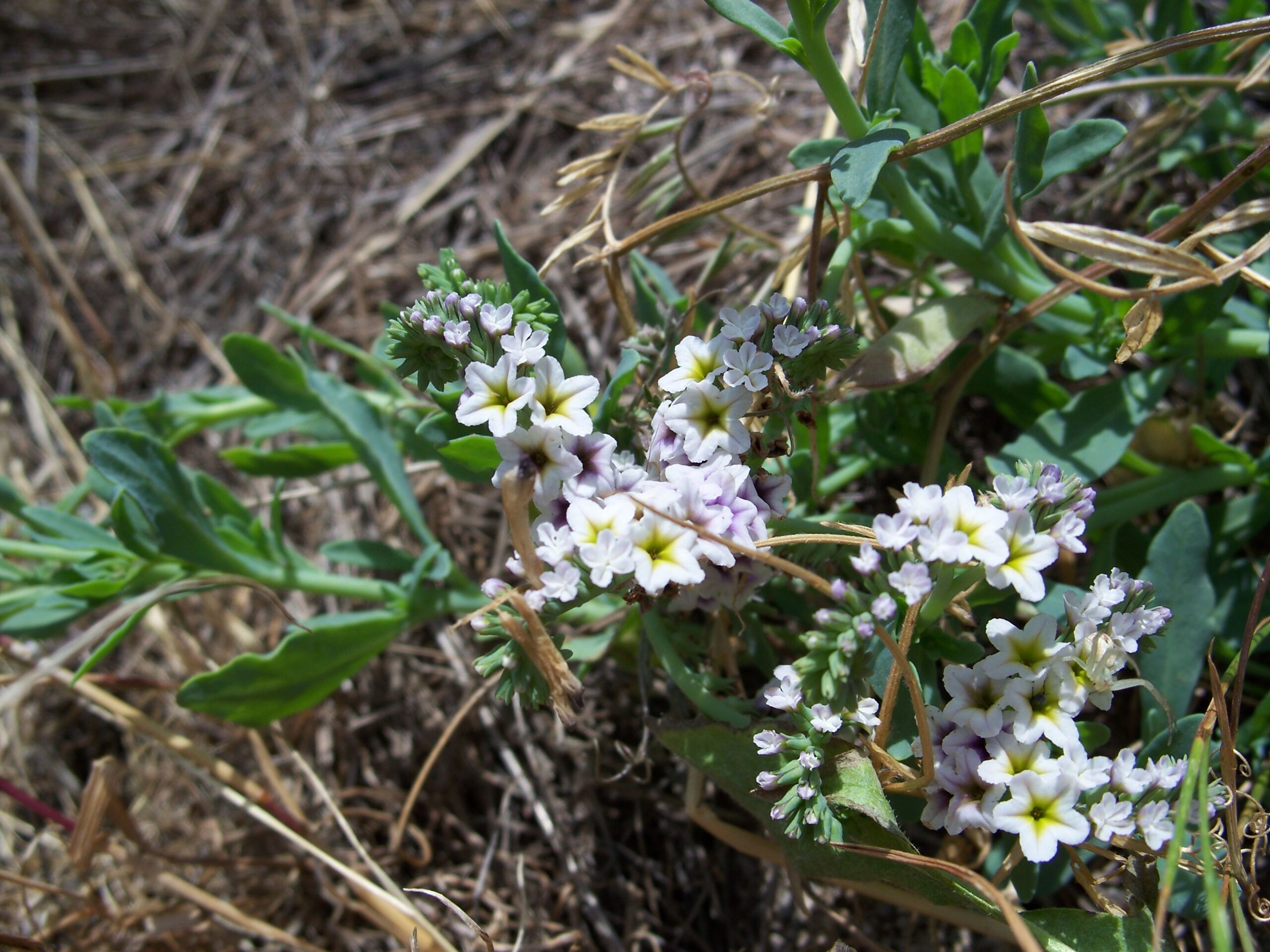
Heliotrope is a name that describes a behavior: helios, sun, plus trope, turning. The flowers really do turn toward the sun — or at least the young growth does, in the same family habit as sunflowers — and the genus has been loved for that sun-following, vanilla-scented charm since Victorian gardeners planted it by the doorstep so every visitor walked through perfume. The flowers are small, clustered in coiled spikes that unroll as they bloom, usually purple, lavender, or white, with a sweet scent in the garden species that no photograph can convey and no garden should be without.
The genus is large — hundreds of species in the borage family, spread across the warm and temperate world — and it contains plants as different as a garden bedding annual and a salt-marsh wildflower. Garden heliotrope (Heliotropium arborescens, also sold as Heliotropium peruvianum) is the scented one: a tender perennial from Peru, grown as an annual in most gardens, with deep purple flower clusters and a vanilla-cherry perfume. Salt heliotrope (Heliotropium curassavicum) is the tough one: a sprawling, fleshy-leaved plant of saline ground and coastal marshes through much of the western hemisphere, with white flowers touched with purple and yellow throats. European heliotrope (Heliotropium europaeum) is the weedy one: a small, hairy annual of Old World roadsides and fields, with white flowers and a habit of showing up uninvited.
The butterfly context is the Wandering Skipper guide, whose Nectar plants section says adults nectar at small marsh flowers, including European seaheath and “heliotrope flowers” — with no Latin stated. This genus guide claims only that bare genus-level form: heliotrope, Heliotropium. No single species is claimed for the Wandering Skipper mention, and the guide says why: the butterfly lives in Pacific coastal salt marsh, where salt heliotrope is the heliotrope that grows in the marsh — but the guide’s own text does not name a species, and the outside source that documents this butterfly’s nectar (the San Diego Management and Monitoring Program account) names the genus Heliotropium, not a species. Salt heliotrope is discussed here as the coastal-marsh candidate, explicitly not as a verified identification of the mention. Garden heliotrope and European heliotrope are different species and neither is claimed as the mention.
One plain-text disambiguation and one warning, because both matter. First, the name: “heliotrope” is also used for unrelated plants, including the garden heliotrope’s lookalikes and the stone called heliotrope (bloodstone), which is a rock, not a plant, and is not covered here. Second, the warning: heliotropes contain pyrrolizidine alkaloids, the same liver-damaging compounds as ragwort and comfrey, and they are not edible and not medicinal in any home sense. Admire them, smell them, plant them for butterflies — do not eat them, do not brew them, and do not let a herbal blog talk you into a heliotrope tea.
How to grow
Growing heliotrope depends entirely on which heliotrope you mean, and the honest way to grow the genus is to pick one species and follow its rules. Garden heliotrope is the one most gardeners grow: start seed indoors ten to twelve weeks before the last frost, or buy nursery plants, and set them out after frost in full sun in rich, well-drained soil. It is a tender perennial, hardy only in roughly zones 10 to 11, and everywhere else it is grown as an annual — which is fine, because it blooms all summer from planting to frost, and a single plant perfumes a whole patio. Pinch the tips to keep it bushy, deadhead lightly, and bring a cutting indoors before frost if you want the same plant next year: it roots easily in water on a windowsill.
Salt heliotrope is a different proposition and mostly not a garden plant at all: it grows itself on saline ground, coastal marshes, and alkaline flats, and it belongs to those places, not to a border. If you garden on a salty coast and want it, it will volunteer where the ground is salty and open — and if you garden anywhere else, do not try to recreate a salt marsh in a pot. European heliotrope is a weed of Old World roadsides; it grows itself wherever it is introduced and needs no help from anyone. The genus rule is simple: the garden species wants richness, sun, and frost protection; the wild species want to be left alone in the places they already live.
Florida note, stated plainly rather than hopefully. Garden heliotrope grows in Florida as a warm-season annual and will perfume a patio from spring to fall, but it is not a Florida native and it is not a plant to naturalize — keep it in pots and beds, not in natural areas. Salt heliotrope does occur on Florida’s coasts and salt flats, and it is the heliotrope a Florida marsh gardener might meet wild — but a coastal marsh is a protected habitat, not a garden center, and the plant belongs there undisturbed. The Wandering Skipper is a Pacific coastal-marsh butterfly, not a Florida butterfly, and its heliotrope record is a California marsh story, not a Florida planting list.
For the garden, the honest translation is a scented annual for the patio and a wildflower to recognize, not to plant. Grow garden heliotrope in pots by the door, where its vanilla scent does its work every evening, and learn salt heliotrope on a coastal walk so you know what the skippers are drinking when you see them working the small marsh flowers. One is a garden plant; the other is a marsh plant; the genus holds both, and that is the whole story.
Water & feeding
Water garden heliotrope generously and consistently: it is a tender, fast-growing annual that wilts fast in dry soil and rewards regular water with continuous bloom. Keep the soil evenly moist but not waterlogged, mulch to hold moisture, and water at the base to keep the foliage dry — wet leaves in humid air invite disease. Salt heliotrope, by contrast, waters itself in its marsh and flat habitats and wants nothing from a gardener; European heliotrope likewise takes care of itself wherever it grows.
Feeding: garden heliotrope is a hungry annual and appreciates regular feeding — a balanced liquid feed every couple of weeks through the season keeps the flowers coming, and rich soil at planting gives it the start it wants. The wild species need no feeding at all, and feeding a marsh plant is a contradiction in terms. The soil science here is the scent story: garden heliotrope’s vanilla perfume comes from volatile compounds the plant makes to attract pollinators, and a well-fed, well-watered plant makes more flowers and more scent — which is why a starved heliotrope smells of nothing and a happy one smells like a bakery.
Common problems
- Frost. Garden heliotrope is tender and dies at the first frost. Treat it as an annual outside zones 10 to 11, or take cuttings before frost.
- Dry soil. A thirsty annual that wilts fast. Keep garden heliotrope evenly moist, especially in pots, which dry out faster than beds.
- Wrong heliotrope, wrong tag. Garden heliotrope (H. arborescens), salt heliotrope (H. curassavicum), and European heliotrope (H. europaeum) are different species. Check the Latin name, and do not assume a marsh record means a garden plant.
- Toxicity. Heliotropes contain pyrrolizidine alkaloids. They are not edible and not medicinal. Do not eat them, do not brew them, and keep them away from livestock forage.
- Whiteflies and aphids. Garden heliotrope in greenhouses and warm climates attracts both. Check leaf undersides, and control with water sprays or insecticidal soap rather than broad insecticides that kill pollinators.
- Genus-species confusion. A genus guide does not cover a species, and a species guide does not cover the genus. The site’s Academy profile for Scorpion’s Tail (Heliotropium angiospermum) is a different species profile, not this genus guide.
Harvest
Heliotrope’s harvest is scent, not crop: cut stems of garden heliotrope for small bouquets that perfume a room, take cuttings before frost for next year’s plants, and leave the wild species where they grow. The simplest harvest is a summer evening with no agenda: a pot of garden heliotrope by the door, vanilla on the warm air, moths and small butterflies working the purple clusters, and the knowledge that a flower named for turning toward the sun spends its evenings giving its scent away for free.
Saving seeds
Heliotrope is one of those plants where the seed-saving advice comes with a friendly warning label: yes, you can save seed, but cuttings are how you keep the plant you actually fell in love with. Seed-grown heliotrope varies — seedlings differ in flower color and in that vanilla-cherry fragrance that is the whole reason most people grow it — while a cutting is a clone, identical in scent and color. So this section covers both, and tells you which one to reach for depending on what you want.
For seed, let some flower heads ripen and dry fully on the plant, then crush the dried heads gently to release the small, dark seeds. Dry them thoroughly indoors — spread thin, good airflow, at least a week, longer in Florida humidity — until they feel hard and dry, and store them in a labeled, airtight container with a desiccant packet, cool and dark. Florida air is the enemy of stored seed: a jar that is not truly sealed will quietly re-wet its contents over a humid summer, so seal it properly and keep it out of the shed. Sow indoors ten to twelve weeks before your last frost, barely covering the seed, in a warm spot around 70 to 75 degrees, and keep the soil evenly moist but never soggy. Then be patient in a way that tests gardeners: germination is slow and uneven, with sources reporting anything from a couple of weeks to well over a month, so do not declare failure at week three. Pot seedlings on once they are big enough to handle, and do not plant out until the soil is properly warm, since heliotrope sulks in cold soil.
For cuttings, take healthy, non-flowering stem tips about four to six inches long, cutting just below a leaf node, and strip the lower leaves. Root them in a sterile, moist mix of perlite and peat, or in water, under warmth and high humidity — a plastic cover or dome helps — and expect roots within a few weeks. Take cuttings in late summer if you want to overwinter them: heliotrope is a tender perennial that is usually grown as an annual where winters bite, so in most of Florida’s cooler spots the smart move is to pot up cuttings and keep them in bright light indoors through winter, then plant out in spring. In Florida’s warmest, frost-free pockets a plant may persist outdoors, but even there a few backup cuttings indoors are cheap insurance against one cold night undoing a favorite plant.
Two honesty notes to finish. First, named cultivars will not come true from seed — if you saved seed from a named variety and the seedlings smell faintly of nothing and flower the wrong purple, that is not your failure, it is genetics doing its thing, and cuttings are the fix. Second, heliotrope is an ornamental, not a kitchen herb: admire the perfume, do not eat the plant. Save seed for fun and for numbers, take cuttings for fidelity, and keep a mother plant or two overwintered and you will never have to buy heliotrope again.
Species
Notable Heliotropium species: garden heliotrope (Heliotropium arborescens, also sold as H. peruvianum) — the vanilla-scented tender perennial, grown as an annual in most gardens; salt heliotrope (Heliotropium curassavicum) — the sprawling species of saline ground and coastal marshes, the coastal-marsh candidate for the Wandering Skipper mention, explicitly not verified as that mention; European heliotrope (Heliotropium europaeum) — the small, hairy Old World annual weed; scorpion’s tail (Heliotropium angiospermum) — a different species with its own Academy profile, not covered here. Other Heliotropium species are different plants, and none is covered here beyond this list. No single species is claimed for the Wandering Skipper’s bare “heliotrope flowers” mention. This guide covers Heliotropium spp. as a genus.