
🎺 Hendersonii Allamanda
What it looks like
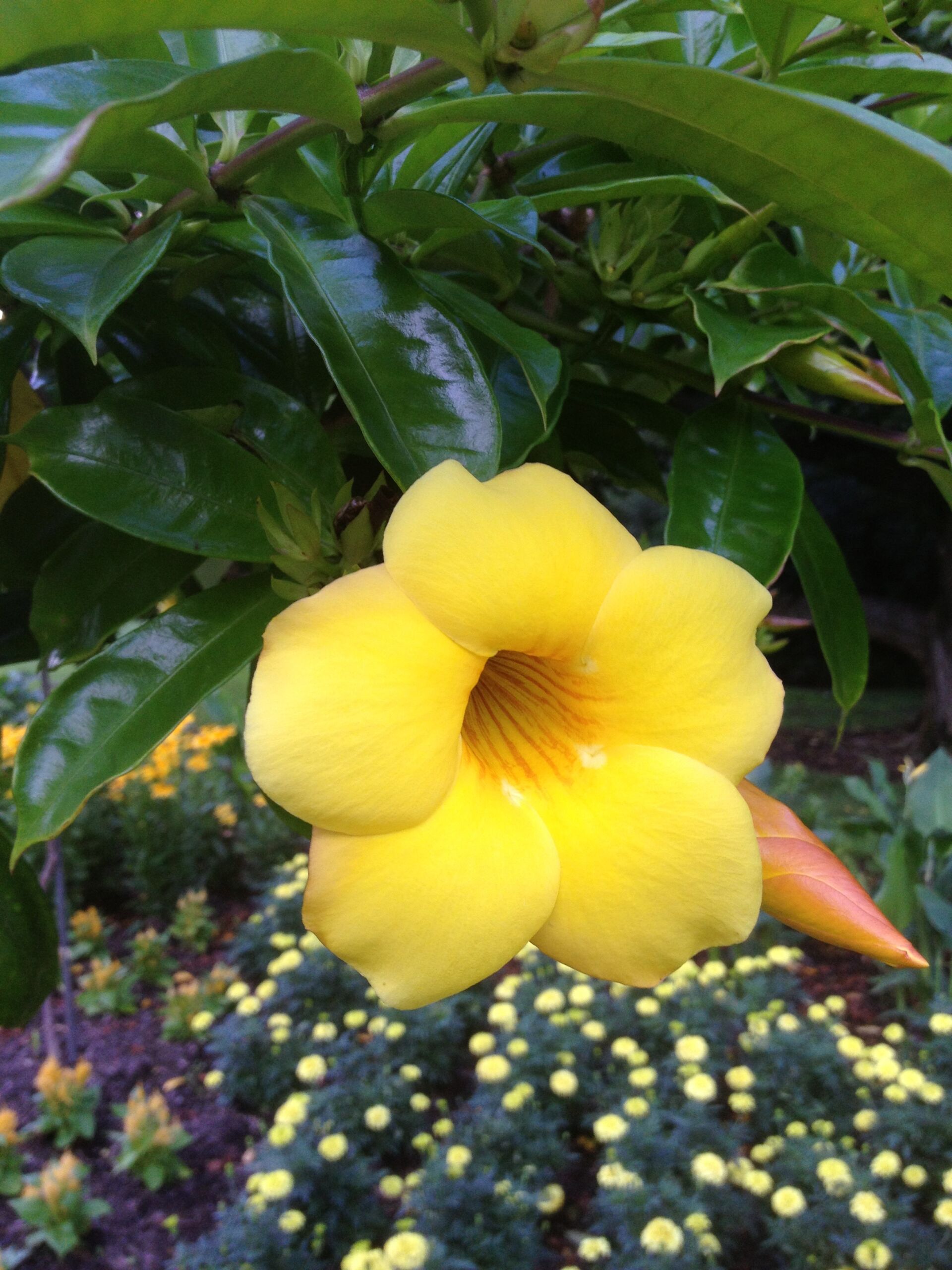
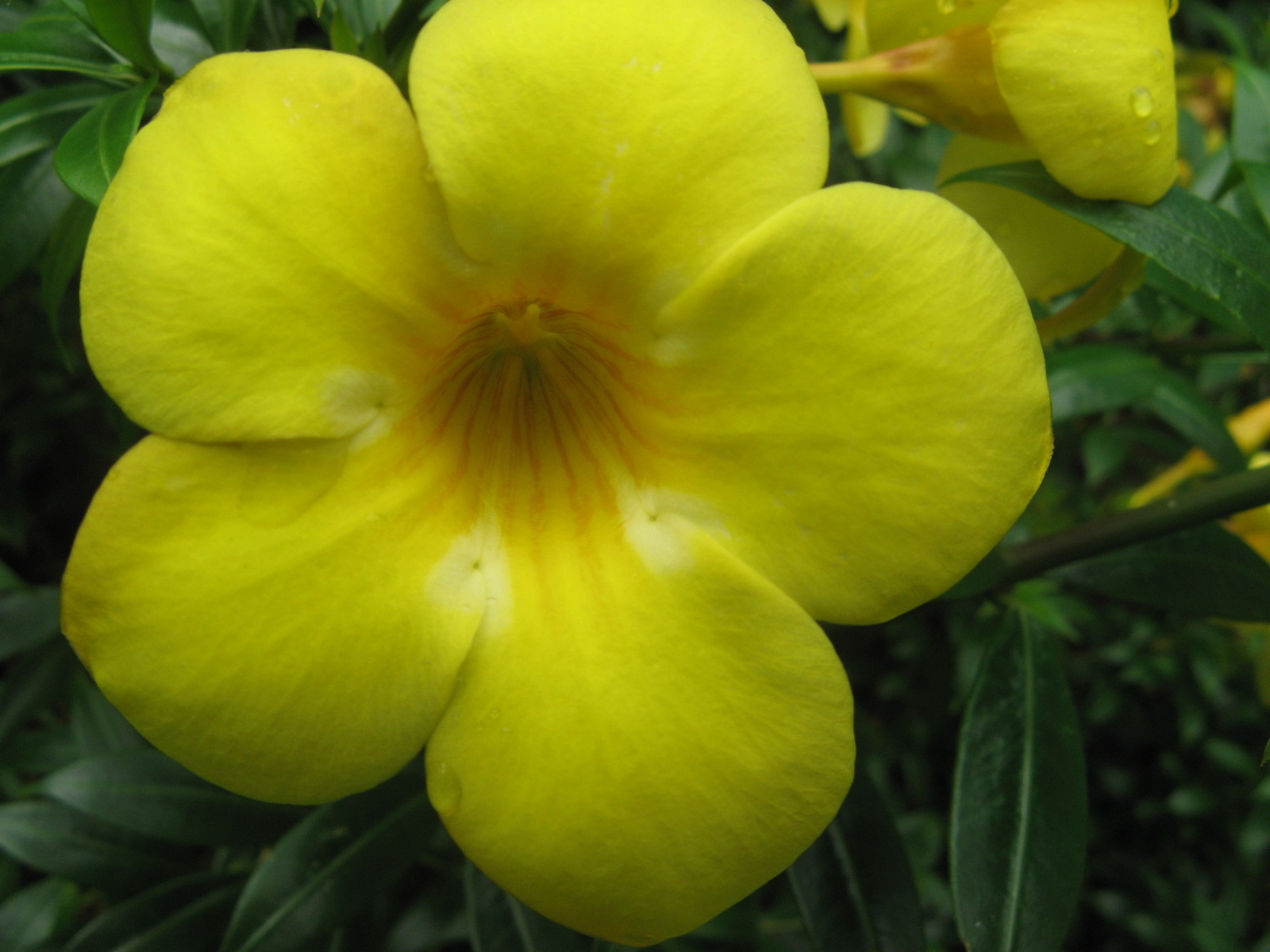
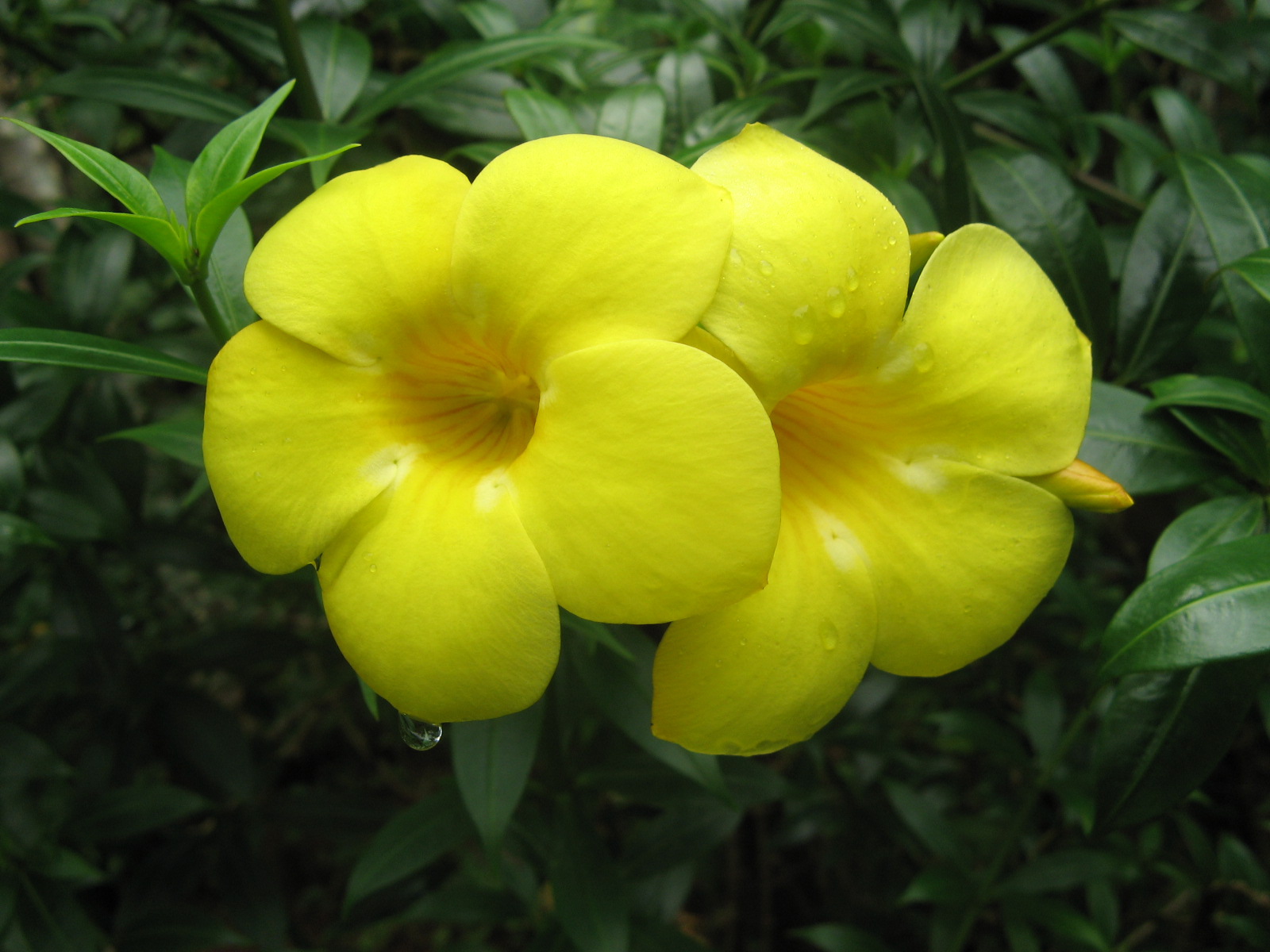
Hendersonii is the large-flowered form of golden trumpet: a vigorous vine-shrub with 5-inch leaves and yellow trumpet blooms up to 5 or 6 inches across, larger than the typical species flower, on stems that can reach great lengths in frost-free climates. It is the allamanda most often pictured in Southern gardens, and the one most often meant when someone simply says ‘allamanda’.
Why this variety
Hendersonii is probably the most popular allamanda in cultivation, and the reason is size: bigger leaves, bigger flowers, and a more vigorous vine than the typical species form, with the same golden-yellow trumpets and night fragrance. If you want an allamanda that reads from across the garden, Hendersonii is the form to plant — it does not whisper, it trumpets.
It is also sold as Allamanda cathartica var. hendersonii, which is worth knowing when shopping: same plant, variety rank rather than cultivar rank, same giant yellow flowers. Treat it as a vine form — give it a strong support, tie stems as they grow, and expect real vigour in a frost-free Florida garden, where it can cover a fence in a single season.
How to grow
Plant in spring in full sun in rich, well-drained soil, against a strong trellis, fence, or pergola, and tie stems to the support — Hendersonii scrambles and leans rather than twining, so untied stems flop. In Florida it is perennial in zones 9-11; protect young plants on cold nights, and in colder parts of the state grow it in a large container brought indoors before freezes.
Prune in late winter or early spring to shape and to remove cold-damaged wood, and prune again lightly through the season to keep it to its support. Work worm castings into the planting hole and mulch well; a vigorous vine making giant flowers is a hungry plant, and a starved Hendersonii flowers sparsely for its size.
For the general picture, start with the Allamanda growing guide, then use this guide for the details that make Hendersonii different. And a plain-language note on the hero stats above, because vines and shrubs are not vegetables: “Spacing” here means mature planting distance, and “Days to harvest” means time to first bloom — the moment the plant starts paying you back in flowers, not a picking date.
And a plain-language note on the hero stats above, because vines and shrubs are not vegetables: “Spacing” here means mature planting distance, and “Days to harvest” means time to first bloom — the moment the plant starts paying you back in flowers, not a picking date.
Water & feeding
Water to establish, then deeply during dry spells; consistent moisture through the warm season keeps the big flowers coming. Feed in spring and through flowering with a balanced organic fertilizer, avoid waterlogging, and reduce water in winter while growth slows.
Common problems
- Mealybugs and scale on stems and leaf joints — inspect regularly and treat with horticultural oil or insecticidal soap in mild weather.
- Leaf spot and sooty mold in humid, crowded growth — improve airflow, water at soil level, and prune out spotted growth.
- Cold damage — a light freeze burns foliage back. Wait for spring growth before pruning, and protect young plants on cold nights in the northern part of its range.
- Sap toxicity — allamanda sap is irritating and all parts are toxic if eaten. Wear gloves when pruning and keep it out of grazing reach.
Harvest
The harvest is giant golden trumpets for cutting and for the fence show. Cut stems in the morning for vases — a single Hendersonii trumpet can carry an arrangement — and deadhead to keep new buds coming. Prune in late winter or early spring, wear gloves for the milky sap, and keep all parts away from grazing pets and children.
Browse all plant & pest guides
Saving seeds
Hendersonii is the most popular allamanda in cultivation, sold as Allamanda cathartica var. hendersonii, with bigger leaves and bigger flowers than the typical species form — propagate it by cuttings to hold that giant-flowered form, and give it a strong support to climb. The Propagation section of the Allamanda guide covers propagation for the species.