
🦔 Horned Melon
What it looks like
How to grow
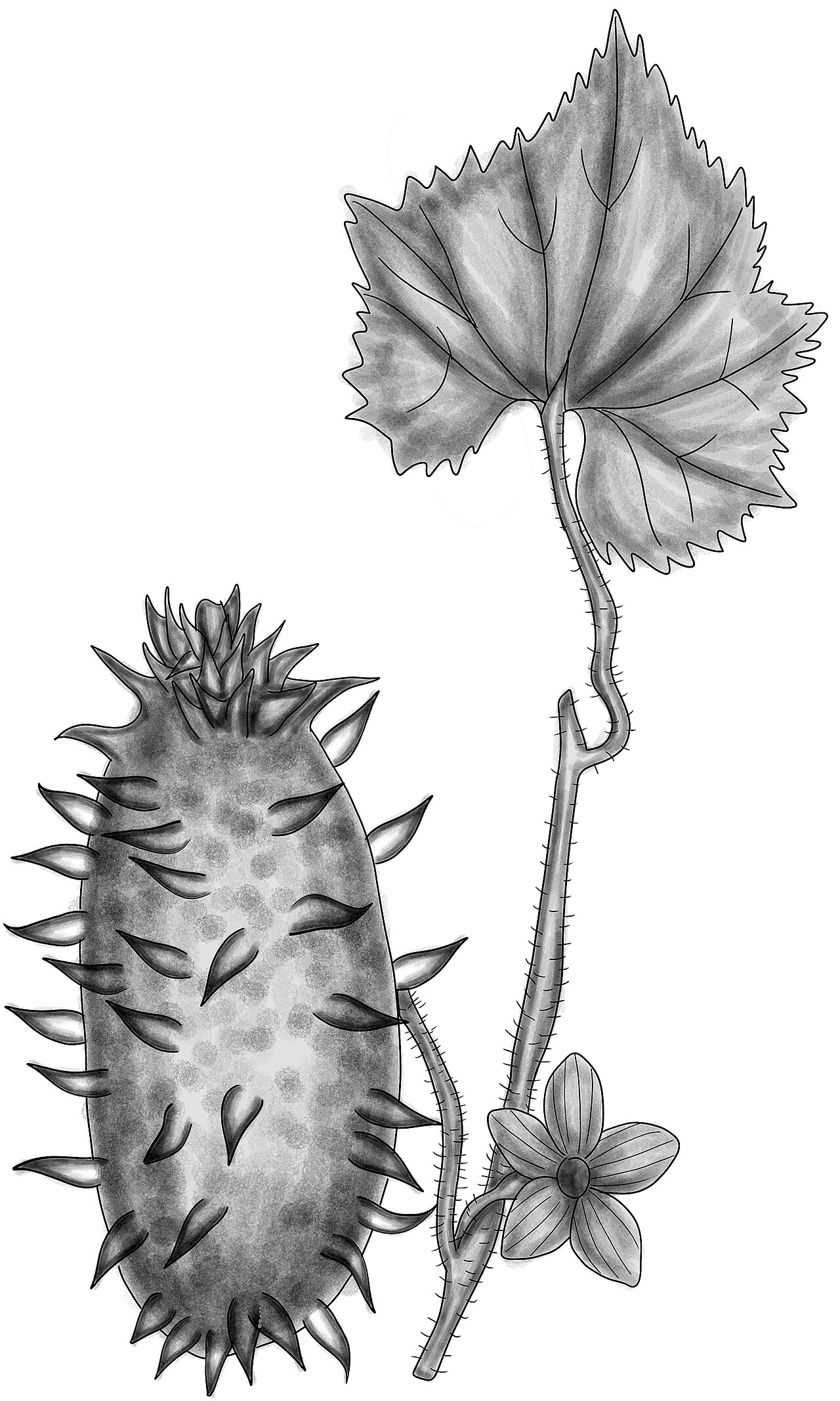
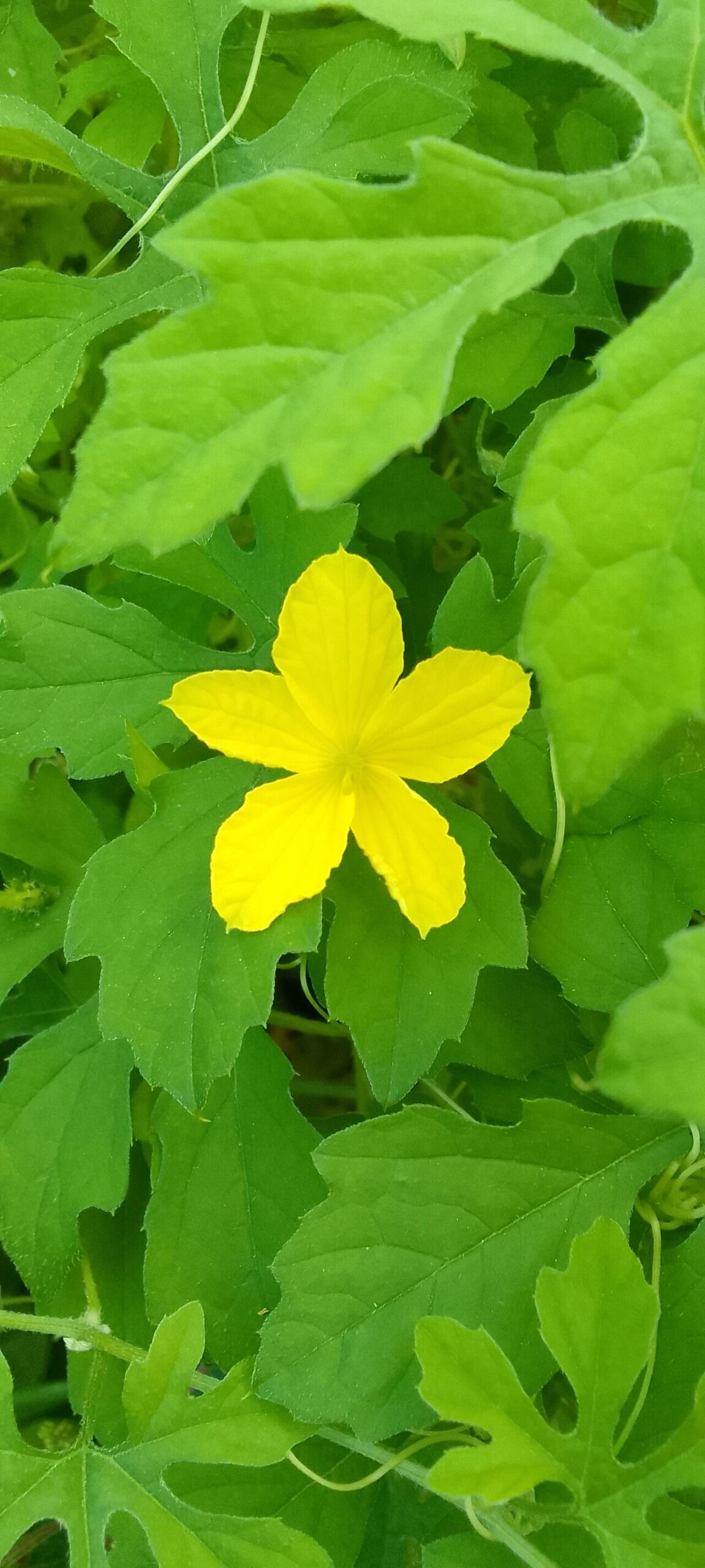
Horned melon, sold as kiwano, is an African cucumber relative that grows like a vigorous cucumber vine. Start seed indoors where the season is short — it needs warm soil, at least 70°F to germinate — and set plants out only after all frost danger, in full sun and rich, well-drained soil. Give it a strong trellis: fruit hangs better, stays cleaner, and is easier to spot than fruit sprawling on the ground. Like other cucurbits it makes separate male and female flowers, so bees matter; if fruit sets poorly in a sheltered garden, hand-pollinate in the morning. One vine can ramble a long way, so give it room or prune the tip once it passes the top of the trellis.
Water & feeding
Water deeply and evenly, about 1-2 inches a week, keeping the root zone moist but not soggy. Mulch to hold moisture and keep fruit off bare soil if you let vines trail. Feed at planting with compost, then side-dress with a balanced fertilizer once vines are running; avoid a heavy nitrogen dose that makes leaves and no fruit.
Common problems
- Cold soil and late frost — wait for real warmth; cold seedlings sulk and may never catch up.
- Powdery mildew — give airflow, water at the base, and remove badly affected leaves.
- Cucumber beetles and aphids — hand-pick, use row cover until flowering, then remove it so pollinators can work.
- Fruit rotting on damp ground — trellis, or mulch thickly under trailing fruit.
Harvest
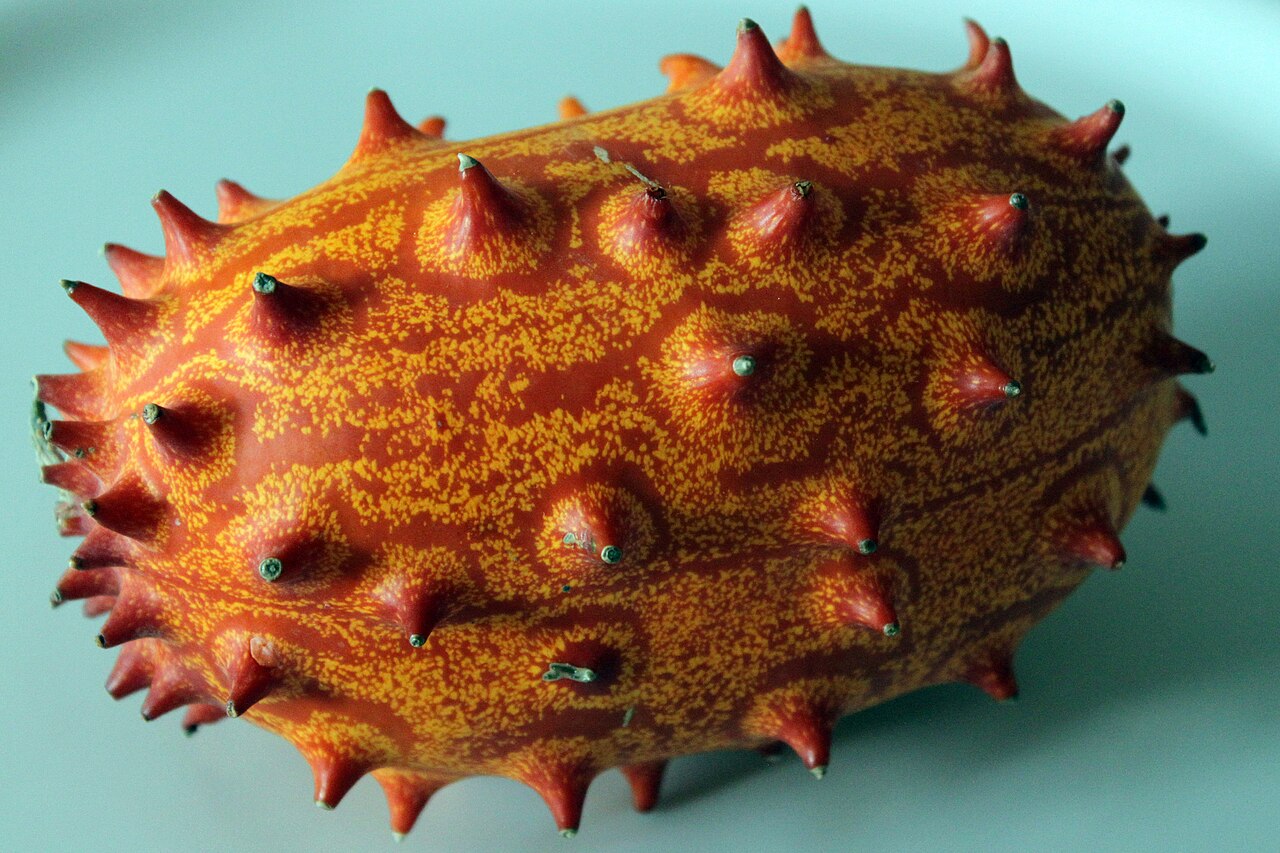
Pick when the fruit turns fully orange and the spines firm up; green fruit is unripe and bland. Cut in half and scoop the green, jelly-like pulp with a spoon, seeds and all, or squeeze it into drinks and fruit salad. Ripe fruit stores for weeks at room temperature, which is a rare gift from a melon.
Saving seeds
Saving horned melon seed starts with a small scientific argument, and you deserve to hear both sides before you trust a seed jar. One popular garden source warns that horned melon, being a Cucumis, can cross with cucumber and turn bitter. Botanical crossing studies, on the other hand, found Cucumis metuliferus isolated from the other species in the genus — cross-incompatible with cucumber and melon alike — and other growers report the same. Sources disagree, so this section takes the cautious middle road: save seed as if purity matters, but do not panic about your cucumber patch, and judge every saved generation by its fruit, not by its pedigree.
Pick your seed fruit with intent, not appetite. Let it ripen fully on the vine until it is deep orange and the spines have firmed up, and leave it a little longer than an eating fruit — a fully ripe fruit gives fully ripe seed. Taste matters here for a reason beyond pleasure: cucurbits can turn bitter when stressed or crossed with bitter wild relatives, and bitterness in this family is a warning, not a flavour note. Never save seed from a bitter fruit, and rogue out any plant whose fruit tastes bitter, because that is how a sweet line stays sweet. Grow at least a couple of plants so pollinators have company, and if purity is your priority, hand-pollinate: bag a female flower bud before it opens, dust it with pollen from a freshly opened male flower of the same plant or another horned melon, and re-bag it until the fruit sets, so no bee can smuggle in outside pollen.
Cleaning is gloriously messy. Cut the ripe fruit open and scoop the green jelly and seeds into a jar with a little water. Let it ferment for a day or two until the jelly loosens, or simply rub the pulp through a sieve under running water — either way, wash the seeds clean, rinse, and keep the sinkers, since floating seeds are usually empty. Spread them in a single layer on a plate or screen out of direct sun until they are snap-dry; in Florida humidity, if they feel at all tacky they are not dry, and damp seed sealed in a jar is dead seed. Store dry seed airtight, cool, and dark with a desiccant packet, labelled with the year and the mother fruit. Saved cucurbit seed kept this way commonly lasts several seasons, but sow the oldest seed first and sow a few extra for insurance, because germination is never a promise.
Sow warm, after the soil has truly warmed — this is a heat lover, and at its optimum of roughly twenty to thirty-five degrees seed germinates within days, while cold soil below about eight degrees stops it entirely. Sow about half an inch deep, keep the soil moist but not soggy, and expect sprouts within a week or two in warm weather. Seedlings will not be identical to a trademarked or selected line — horned melon is mostly sold as the straight species, which is in your favour — but they will be horned melons, spiky, orange, and weird in exactly the way you wanted. And keep the Florida bargain in mind: this vine wants heat, sun, and airflow against powdery mildew, so trellis it or mulch thickly under trailing fruit, and give saved seed the driest jar in the house.