
🌿 Horsebrush
What it looks like
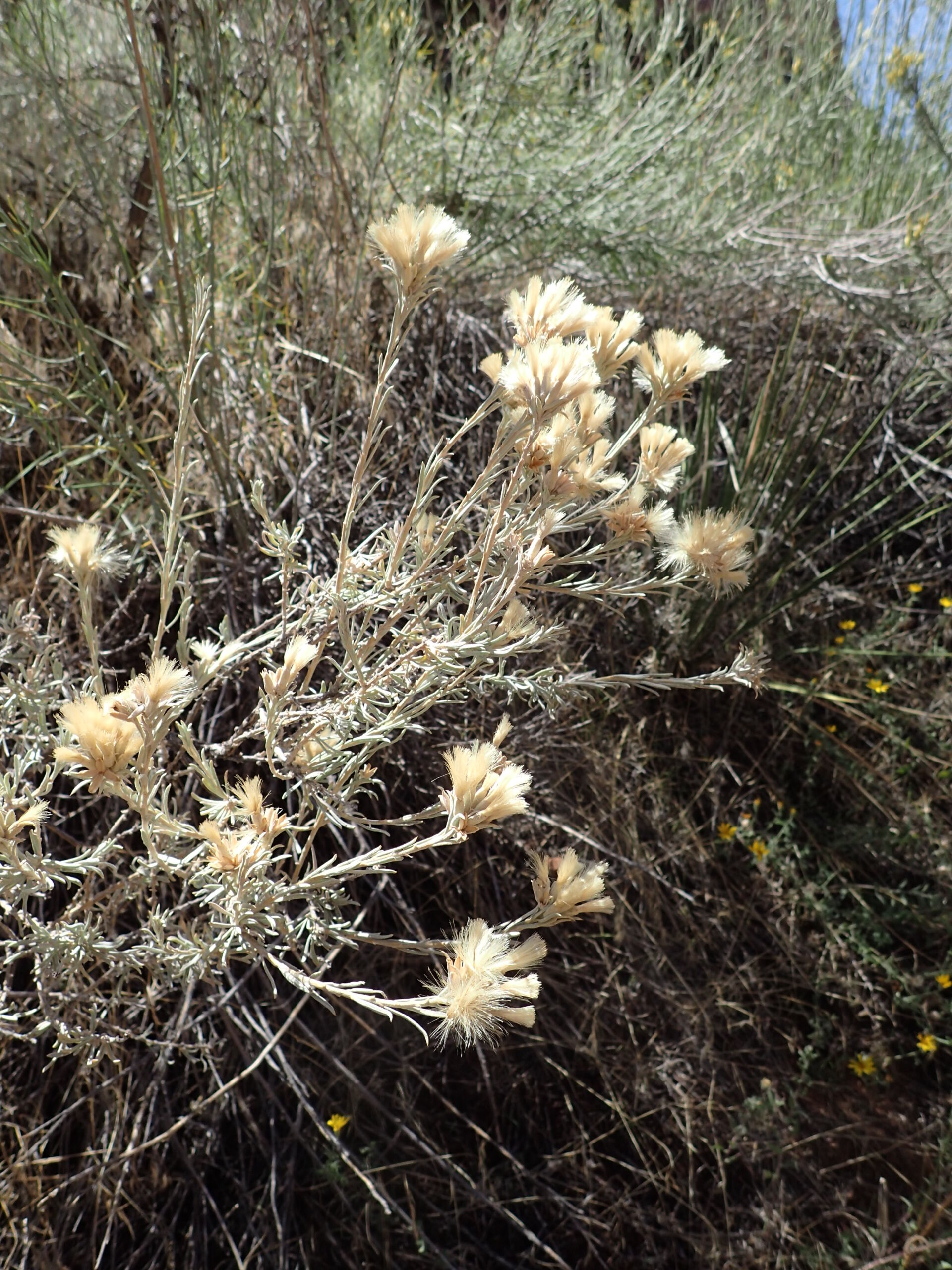
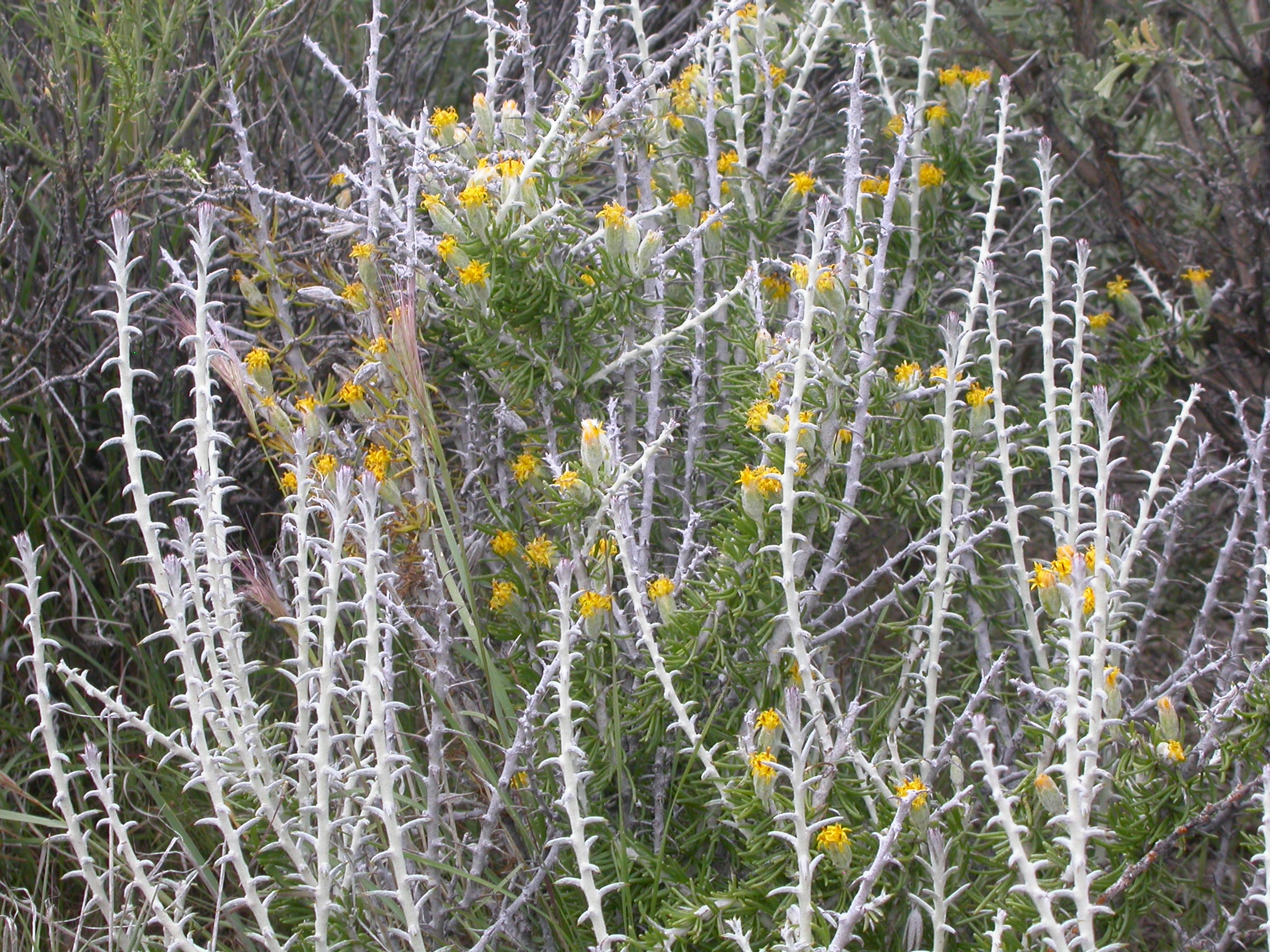
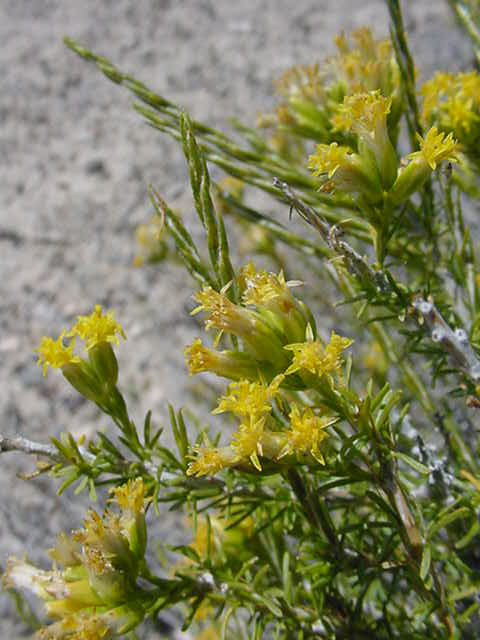
Horsebrush is not one plant, and this guide does not pretend otherwise. The name belongs to the genus Tetradymia, a small clan of woolly, much-branched shrubs in the sunflower family, native to the arid West. The Sooty Hairstreak guide lists horsebrush among its nectar plants with no Latin at all, and the published nectar record for that butterfly names the genus Tetradymia, not a single species. A guide that picked one horsebrush species and claimed the mention would be guessing, so this is a genus guide, and every photo here is captioned by its own species.
The look is unmistakable once you know it: a low, gray-white shrub, often knee- to waist-high, with leaves and bracts coated in dense white wool, so the whole plant looks dusted with frost even in July. The flower heads are small and clustered at the branch tips, each holding just a few yellow to cream disc flowers, four in the classic spineless horsebrush head. Spiny species add sharp primary leaves that harden into spines, which is the difference between admiring a horsebrush and learning to admire it from a respectful distance. The fruit is a small hairy achene with a bristly pappus, built to travel on wind across open ground.
The butterfly context is a ridge-top one. The Sooty Hairstreak guide says its adults feed on flower nectar including arnica, wild buckwheat, bitterbrush, groundsel, and horsebrush, on rocky ridges where what is blooming is what the butterfly drinks. Horsebrush is in that list as a wild nectar source, not as a garden plant, and this guide keeps that distinction front and center. Planting horsebrush in a lowland garden will not summon a Sooty Hairstreak, because the butterfly lives on lupine-dotted ridges, and ridges are not something you plant.
How to grow
In its native range, horsebrush mostly grows itself, on dry open ground, sagebrush steppe, pinyon-juniper woodland, and rocky slopes, in gravelly or sandy loam with very little summer water. If you garden inside that range and want it as a native shrub, give it the conditions it already chose: full sun, sharp drainage, lean soil, and no summer coddling. It is a taprooted shrub, so transplanting established plants is a poor bet; seed or a small nursery plant in its own patch of open ground is the honest route. Space plants several feet apart, because a mature horsebrush is as wide as it is tall, and crowding it only makes a woolly tangle.
Do not plant horsebrush as forage, and do not plant it anywhere sheep graze. All Tetradymia species should be considered toxic to sheep, and the danger peaks in spring at the bud stage, when young tissues are most palatable. Eaten horsebrush causes liver damage, and in sunlight it causes the swelling of lips, ears, and face known as bighead, with blindness, abortion, and death in severe cases. Littleleaf horsebrush is reported as the most toxic of the group. That is not a footnote to a garden guide; it is the reason this genus is a habitat plant for its home ground, not a plant to scatter near livestock, pets, or a kitchen garden.
Water & feeding
Water is the short story: very little, once established. Horsebrush country gets roughly five to twelve inches of rain a year in the spineless horsebrush accounts, and the plant is built for it, with woolly leaves that cut water loss and a taproot that goes looking for moisture. In a garden inside its range, water a new plant through its first dry season, then back off. Summer water that keeps it green also keeps it soft, and a soft horsebrush is a horsebrush out of character. Feeding is simpler still: none. Lean, mineral soil is the point, and fertilizer mostly grows weak growth that flops and invites trouble.
Common problems
- Wrong horsebrush, wrong plant. Several species share the bare name, and they differ in spines, toxicity, and range. Buy and identify by Latin name, and never assume a bare horsebrush label is one particular species.
- Sheep and bighead. The standing danger. Keep horsebrush out of sheep pasture, and keep hungry sheep away from it in spring, especially after watering, when they may eat toxic amounts.
- Florida fantasy. Horsebrush is a cold, dry-country shrub. Florida heat, humidity, and summer rain are not its address, and no zone number in this guide should be read as a Florida recommendation.
- Confusion with sagebrush and rabbitbrush. Before flowering, horsebrush is commonly confused with sagebrush and rabbitbrush species. Wait for the flower heads, four yellow florets to a head in the spineless species, before calling it.
Harvest
There is no harvest here, and that is the honest harvest section. Horsebrush is not a food plant, not a tea plant for casual picking, and not a forage plant. Its value is ecological: yellow flowers on a ridge in July, cover and nectar in country where little else flowers, and a shrub that holds dry ground together. If you meet it on a hike, admire the wool, note the four-floret heads, watch for the hairstreak working the flowers, and leave the plant where it stands. A guide that told you to pick it would be telling you to pick a poison, and this guide does not.
Browse all plant & pest guides
Saving seeds
Stop and read this first, because this section comes with a warning that outranks everything else in it: every species of horsebrush, Tetradymia, should be considered toxic, and it is most dangerous to sheep. Hungry sheep that browse the buds and young leaders in spring — especially when other forage is scarce, after watering, or while being trailed through infested country — can suffer liver damage and, after eating certain sagebrushes alongside it, a sun-triggered swelling of the lips, ears, and face known as bighead. Losses of many animals at a time have been recorded. This is a genus guide, so what follows is the genus-level method, labelled as such — and it is written for restoration and habitat work in horsebrush country, not as an invitation to plant a toxic shrub beside a pasture, a trail, or anywhere grazing animals wander. If livestock are anywhere in the picture, do not plant it there at all.
With that understood, horsebrush reproduces in the wild from wind-blown seed and, in some species, from sprouting root crowns, and seed is the method restoration growers use. Collect in late summer or fall, when the fluffy white seed heads are mature and dry. Hand-strip the heads into a paper bag or knock the seed loose over a tray, then dry it fully indoors and clean away the fluff — the seed itself is a small achene, and the fluff is just its parachute. Work with gloves and keep the dust out of your eyes; this is not a plant to handle casually, and its seed heads are not a craft project for children.
Expect modest results, and plan for them honestly. Germination in this genus is poor and uneven: one old test got only a tiny fraction of spiny horsebrush seed to sprout, and gray horsebrush is described as a poor germinator too, so sow generously and do not judge the batch by its first week. A moist cold spell of about four to six weeks in the refrigerator helps, so bag the cleaned seed in moist sand, chill it, and sow in spring in a well-drained, gritty mix, pressed into the surface or barely covered. Fall sowing outdoors in its native range lets winter do the chilling instead. Keep the seedbed moist but never soggy, give it sun, and leave the tray alone for weeks — germination may straggle in over a month or more, and some seed simply never wakes up. Seedlings from an isolated stand mostly resemble their parents, but this is not a plant with garden cultivars to protect, so true-to-type here means true to the local wild population, which is exactly what restoration work wants.
Store dry seed airtight, cool, and dark, and in Florida, dry it thoroughly before the jar closes, with a desiccant packet against humidity. One last piece of honesty about place: horsebrush is a desert and sagebrush-steppe shrub, and Florida’s heat and humidity are not its country. This section describes how its seed behaves where it belongs; it is not a recommendation to grow it in a Florida garden. Admire it on a ridge in July, save its seed only where its planting is wanted and safe, and keep the sheep — and the seed jar’s label, with species, place, and year — well away from each other.
Species
Spineless horsebrush (Tetradymia canescens, also called gray horsebrush) is a taprooted, much-branched shrub roughly eight inches to about two and a half feet tall, with white-woolly leaves and yellow to cream flower heads. Spiny horsebrush (Tetradymia spinosa, also called shortspine horsebrush) is a spiny shrub of basins and plateaus west of the Rockies, growing in sagebrush, woodland, and scrub, often among shadscale in alkaline ground. Littleleaf horsebrush (Tetradymia glabrata) is an erect bushy shrub of the Great Basin and Mojave Desert, reported as the most toxic of the horsebrushes. Hairy horsebrush (Tetradymia comosa) is a whitish woolly shrub of southern California chaparral and woodland. Longspine horsebrush (Tetradymia axillaris, also called cottonthorn) is a shrub of sagebrush and desert communities in the Southwest. No single one of these species is claimed as the Sooty Hairstreak mention; the mention is genus-level, and this genus guide is its home.