
🌿 Idaho Fescue
What it looks like
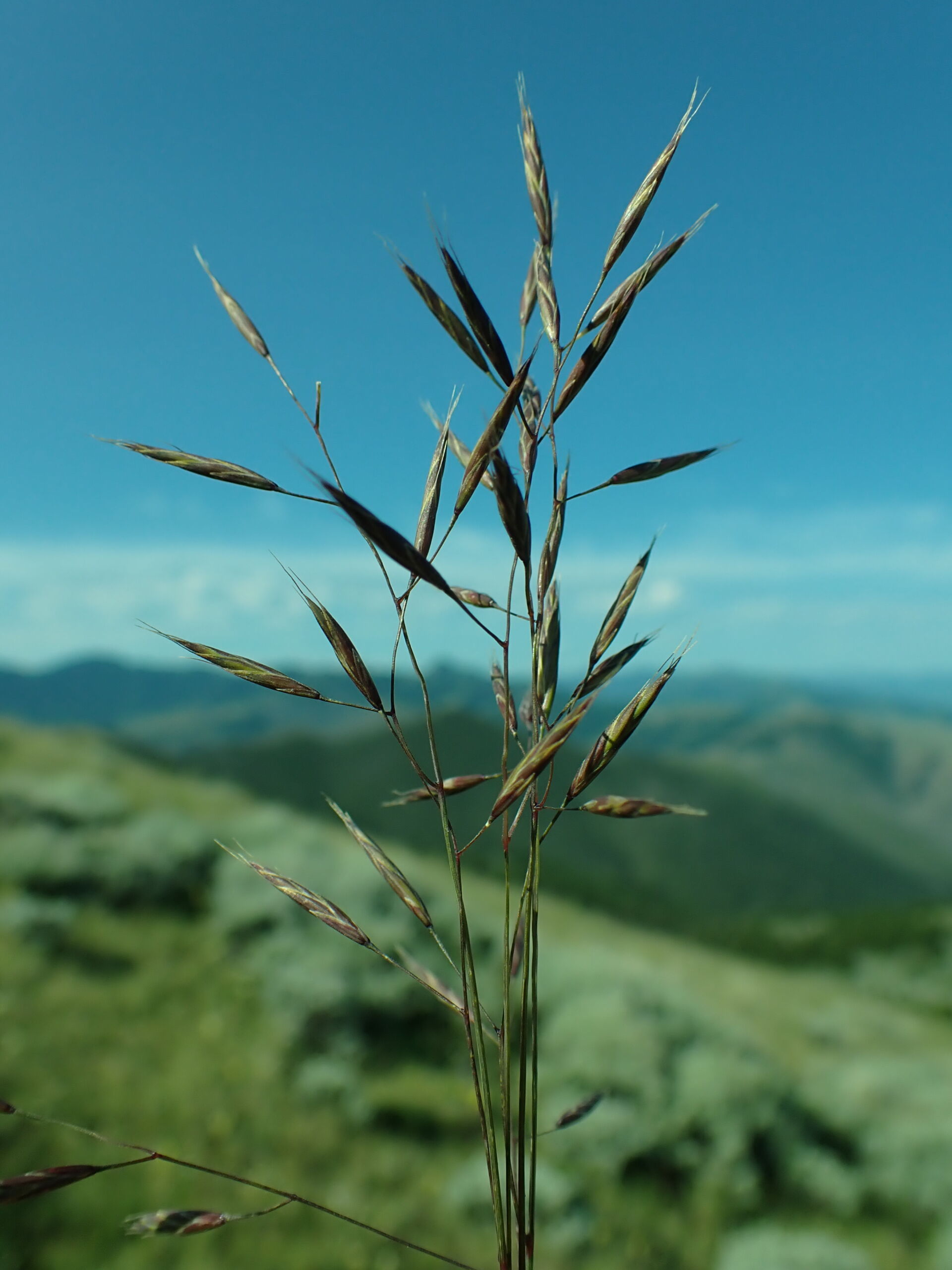
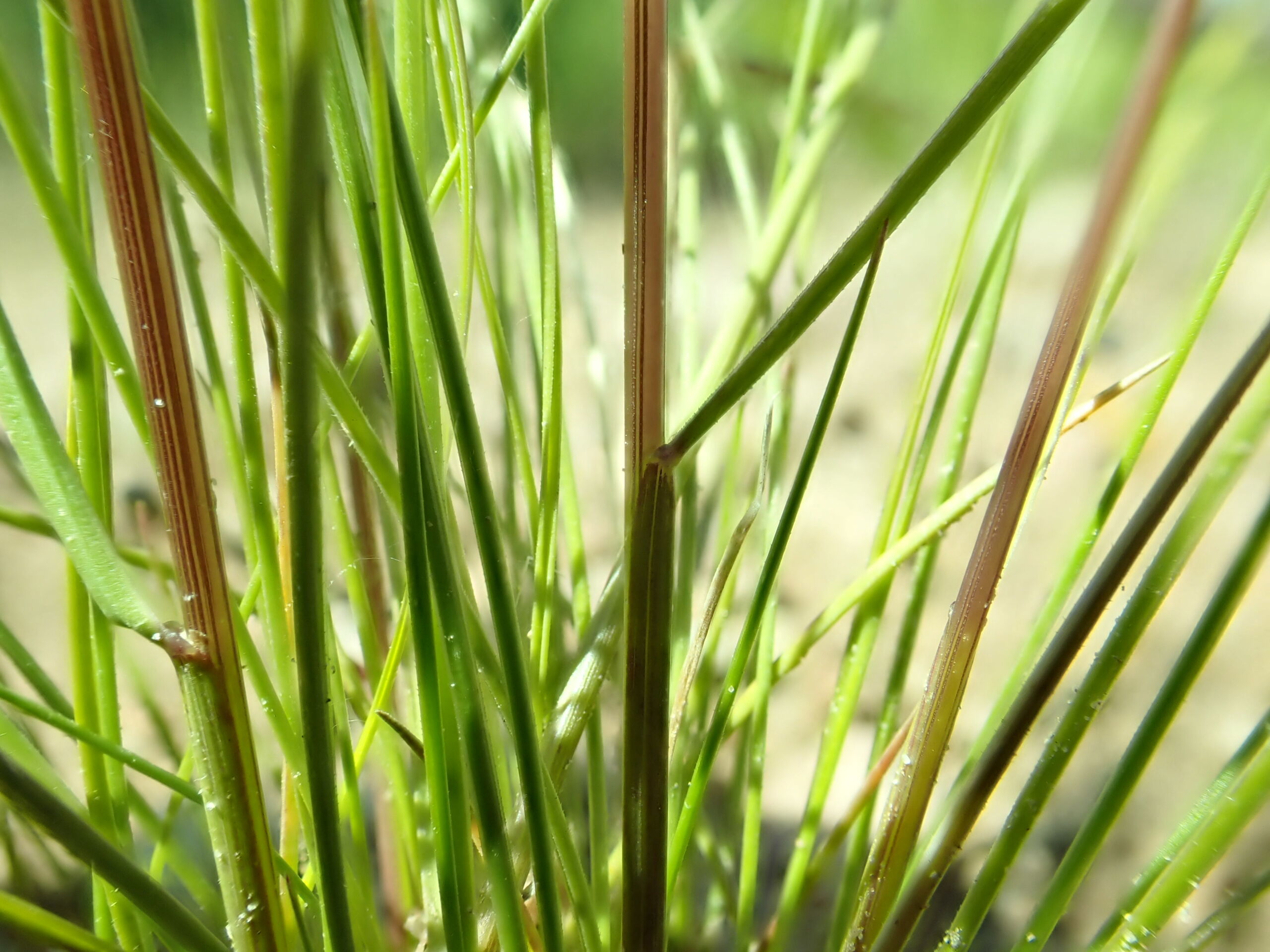
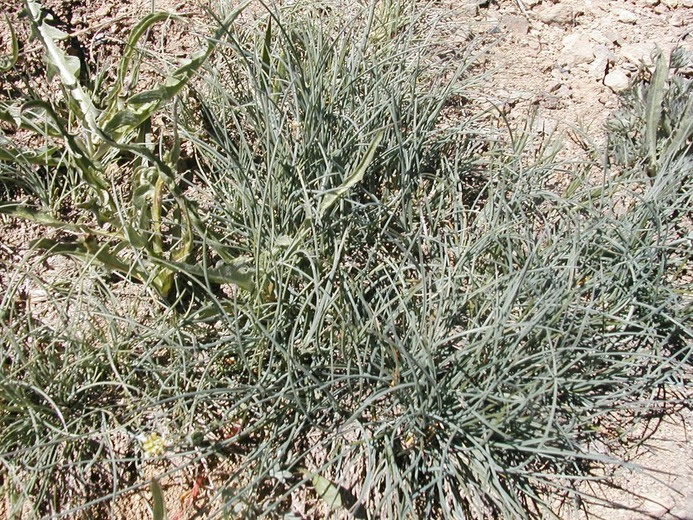
Idaho fescue is a cool-season perennial bunchgrass, and the first thing to learn about it is the split between the tuft and the flower. The foliage mound is a dense tuft of very fine, blue-green to gray-green blades, usually under a foot tall, that looks like a pincushion someone combed. The flowering stems rise well above it, commonly one to three feet, slender and airy, carrying open panicles that catch light in a way a lawn never does. It does not run by rhizomes the way a lawn grass does; it clumps, and a mature clump is about a foot across, which is why a meadow of Idaho fescue reads as a field of separate tufts rather than a carpet.
The butterfly context is specific and serious. The Mardon Skipper guide names Idaho fescue (Festuca idahoensis) first among its host grasses, alongside red fescue and Roemer’s fescue, and says the caterpillars need native fescue meadows, not lawn, not pasture, not a garden bed. The site’s Fescue genus guide already mentions Idaho fescue and even pictures it, but a genus guide covering four hundred or more Festuca species is not a species guide, and this guide is the dedicated one. Red fescue and Roemer’s fescue are different species and are not covered here, though the Mardon skipper eats them too.
How to grow
Plant Idaho fescue where cool seasons do the work: open prairie, sagebrush steppe, open woodland, and montane meadow country across the Pacific Northwest, the Great Basin, and the Rockies, from low grassland to high mountain sites. In the garden, give it full sun to light shade, any well-drained soil from sandy loam to rocky ground, and room for the flowering stems, which are taller than the catalogue photo suggests. Sow seed in fall or early spring, or plant small plugs eight to twelve inches apart for cover, and keep the patch moist until germination. It is evergreen with some summer water in mild climates, and it may behave more like a slow sod-former in ideal conditions, but do not count on a lawn; count on tufts.
Florida note, stated plainly: Idaho fescue is not a Florida grass. It is a cool-season western native, and Florida summers, hot, humid, and long, are its enemy, just as the genus guide says of fescues generally. A Florida reader who wants the Mardon skipper story should read this guide as natural history, not as a planting list. The Mardon skipper itself is state-listed as endangered in Washington, and its remaining populations live in protected prairies, not gardens, so the honest way to help it is to support Pacific Northwest prairie conservation, not to sow a fescue patch in a subtropical yard and hope.
Water & feeding
Water Idaho fescue like a western grass, not like a lawn. It is very drought tolerant once established, and it prefers a dry-to-moist, well-drained site over a wet one. In cool climates, give it occasional summer water to keep it green; without it, it will turn golden and wait, which is not death, it is the grass doing what bunchgrasses do in a dry summer. In its native range it grows on sites receiving as little as fourteen to twenty inches of rain in reclamation plantings, and on north slopes and cooler, moister microsites where it stays green longer. The mistake is the opposite one: constant irrigation in heavy soil, which rots the crown and invites the very lush, floppy growth that a bunchgrass should never have.
Feeding is minimal. Idaho fescue grows in lean, mineral soils, and it does not need a fertilizer program. A light topdressing of compost in a garden bed is plenty, and a high-nitrogen lawn program will mostly grow tall flower stems that fall over and a tuft that loses its tight blue-green character. The soil science that matters here is the root story: Idaho fescue produces an extensive, deep root system, which is why it stabilizes disturbed soils and why a mature tuft is hard to move. Plant it where it can stay, and let the roots do the quiet work.
Common problems
- Summer dormancy mistaken for death. A golden tuft in a dry August is usually dormant, not dead. Check the crown for green at the base before digging it out.
- Too much water, too heavy a soil. Wet feet in clay are the fastest way to lose a bunchgrass. If your soil holds water, plant on a slope or in a raised, gritty bed.
- Mowing it like a lawn. Mowing several times in the growing season to about four inches is a management option in the nursery accounts, but a mowed tuft never flowers, never sets seed, and never feeds a skipper caterpillar. Keep one patch unmowed for wildlife.
- Wrong fescue, wrong label. Blue fescue (Festuca glauca) has its own guide, red fescue is Festuca rubra, and Roemer’s fescue is now usually treated as a separate species or subspecies. Buy by Latin name, and check whether a cultivar such as Siskiyou Blue or Tomales Bay is really idahoensis before claiming it.
Harvest
There is no kitchen harvest for Idaho fescue, and the guide does not invent one. Its harvest is a meadow harvest: seed in late summer if you want to sow more, cut back or mow high in early spring to clear last year’s stems, and divide a mature tuft in cool weather if you want more plants. The real yield is the one the Mardon skipper guide describes, a native fescue meadow that feeds caterpillars, and the quieter yield of a blue-green tuft that holds a dry slope together without irrigation, fertilizer, or fuss. That is a crop, even if you never eat it, and it arrives on the grass’s own schedule, green in spring, golden in drought, and back again with the cool rain.
Browse all plant & pest guides
Saving seeds
Idaho fescue is a bunchgrass, not a lawn grass, and saving its seed is refreshingly straightforward — no stratification rigmarole, no scarification, no dormancy obstacle course. The main skills are timing the harvest and keeping the seed dry. Seed ripens in mid-summer, roughly mid-July into August depending on your site. Watch the inflorescence: collect when it has begun to dry and the seed is in the soft-to-hard dough stage, but before it shatters off the head. Miss that window and the wind does your harvesting for you, scattering the crop across the county.
Strip the seed from the heads by hand or clip whole heads into a paper bag. For small amounts, rub the dried heads between your hands or over a screen to free the seed, then winnow away the chaff — a gentle breeze or a fan on low does the job, and the light chaff floats off while the heavier seed stays. If the seed still has awns attached, a bit more rubbing breaks up the doubles. Store uncleaned seed in paper bags at room temperature until you clean it; once cleaned, keep it cool and dry, ideally in the fridge, in a breathable container or a sealed jar with a desiccant packet. In Florida humidity, the desiccant is not a garnish — damp seed in a sealed jar is a mold farm.
One quirk worth knowing: Idaho fescue seed can have a short after-ripening requirement, meaning germination is sometimes better after the seed has sat in storage for a few months than it is straight off the plant. One study found germination improved after about six months of storage, and another found new seed germinated best but declined with age, losing viability over one to three years. The practical takeaway is unglamorous but true: sow fresh seed first, sow older seed more thickly, and do not assume a two-year-old packet will behave like a fresh one. Seed from different sites also varies — plants grown from seed collected in one habitat can differ from those collected elsewhere, so save from plants growing in conditions like the ones you will plant into.
Sow shallow, roughly a quarter to a half inch deep, in well-drained soil, and keep the medium moist until germination, which usually begins in about a week and finishes within two weeks at mild temperatures (roughly 60–75°F). Fall sowing or spring sowing both work. Division is the alternative if you want an exact copy of a particular clump, but for restoration plantings and meadow patches, seed is the way — one head holds hundreds of tiny seeds, and a single good plant can seed a whole drift. Just be honest with yourself about the map: Idaho fescue is a cool-season western native, and it is not a Florida lawn grass. In Florida heat and humidity it will struggle no matter how good your seed is, so treat it as a cool-climate plant, not a local one.
Species
Idaho fescue (Festuca idahoensis) is the species this guide covers, and it is listed here alongside its relatives in plain text, with the naming warning repeated because it matters. Red fescue (Festuca rubra) is a different species, and Roemer’s fescue (Festuca roemeri, formerly treated as a variety of idahoensis) is a different species in current treatments, and neither is covered here. Blue fescue (Festuca glauca) has its own guide, and sheep fescue (Festuca ovina) is a different species. Named cultivars reported for idahoensis include Tomales Bay, Stony Creek, Siskiyou Blue, and Warren Peak, but cultivar identity should be checked against the nursery tag, since the blue fescue trade mixes species freely. This guide covers Festuca idahoensis only.