
🌿 Invasive Cogongrass
What it looks like
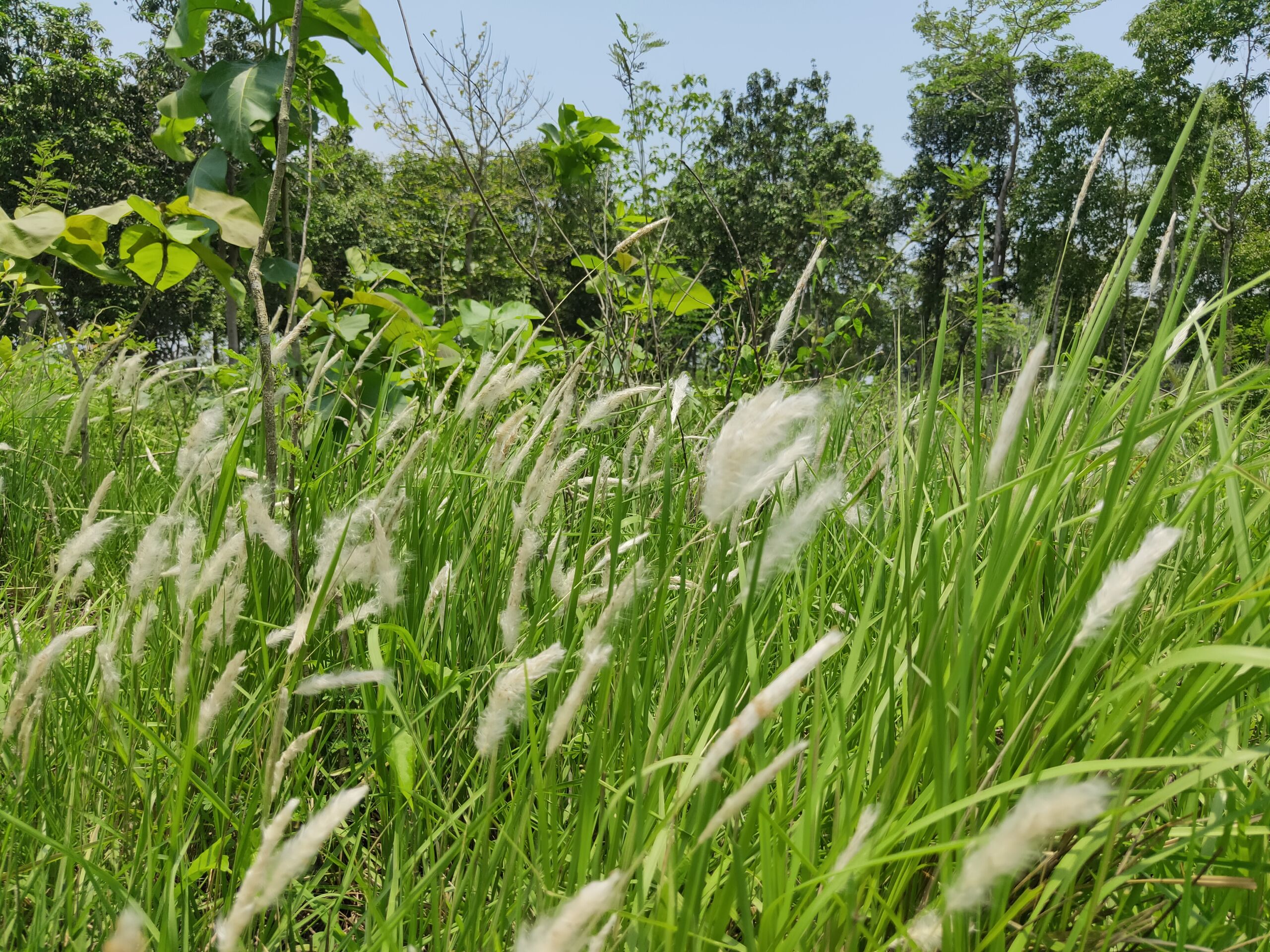
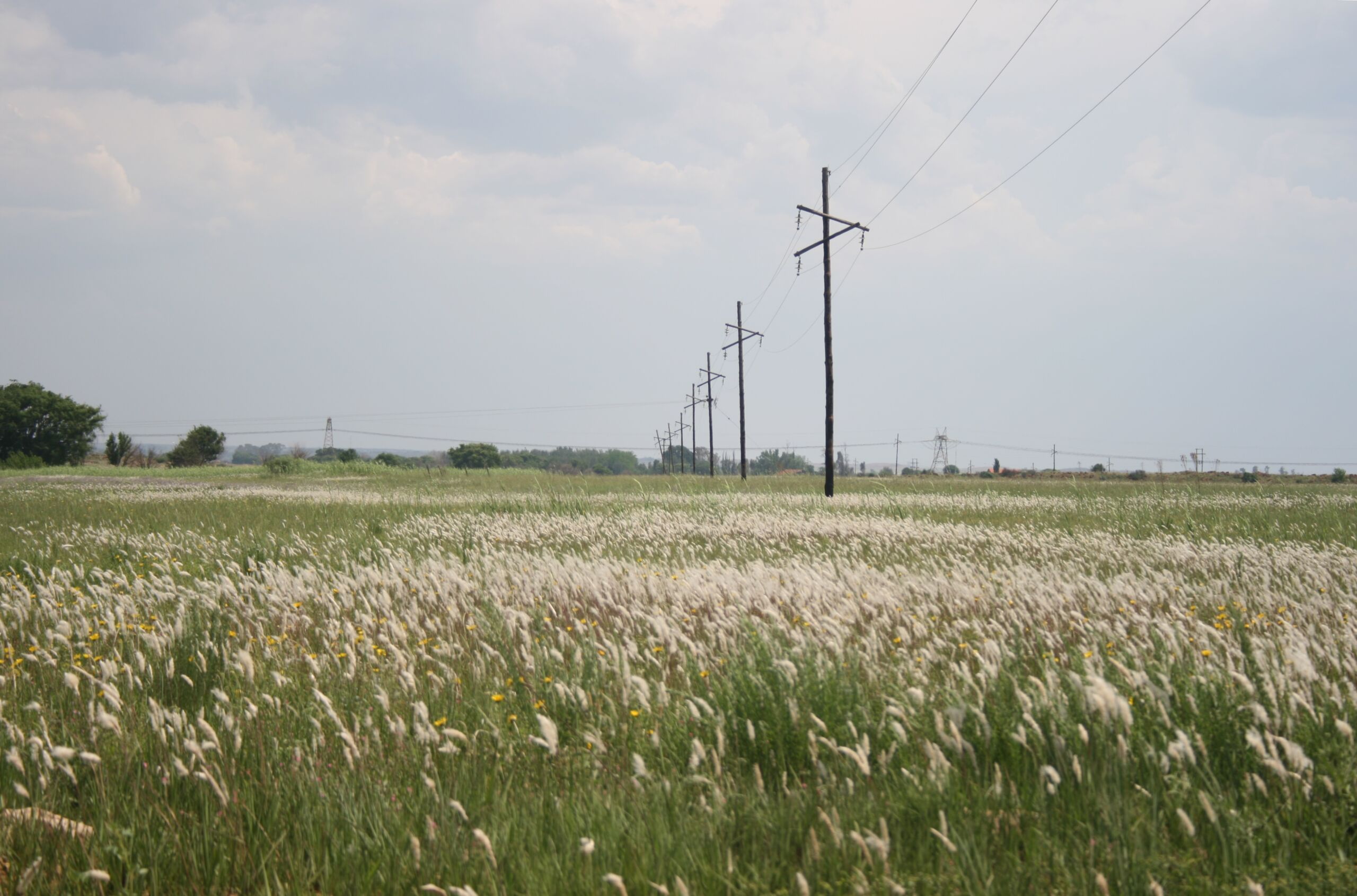
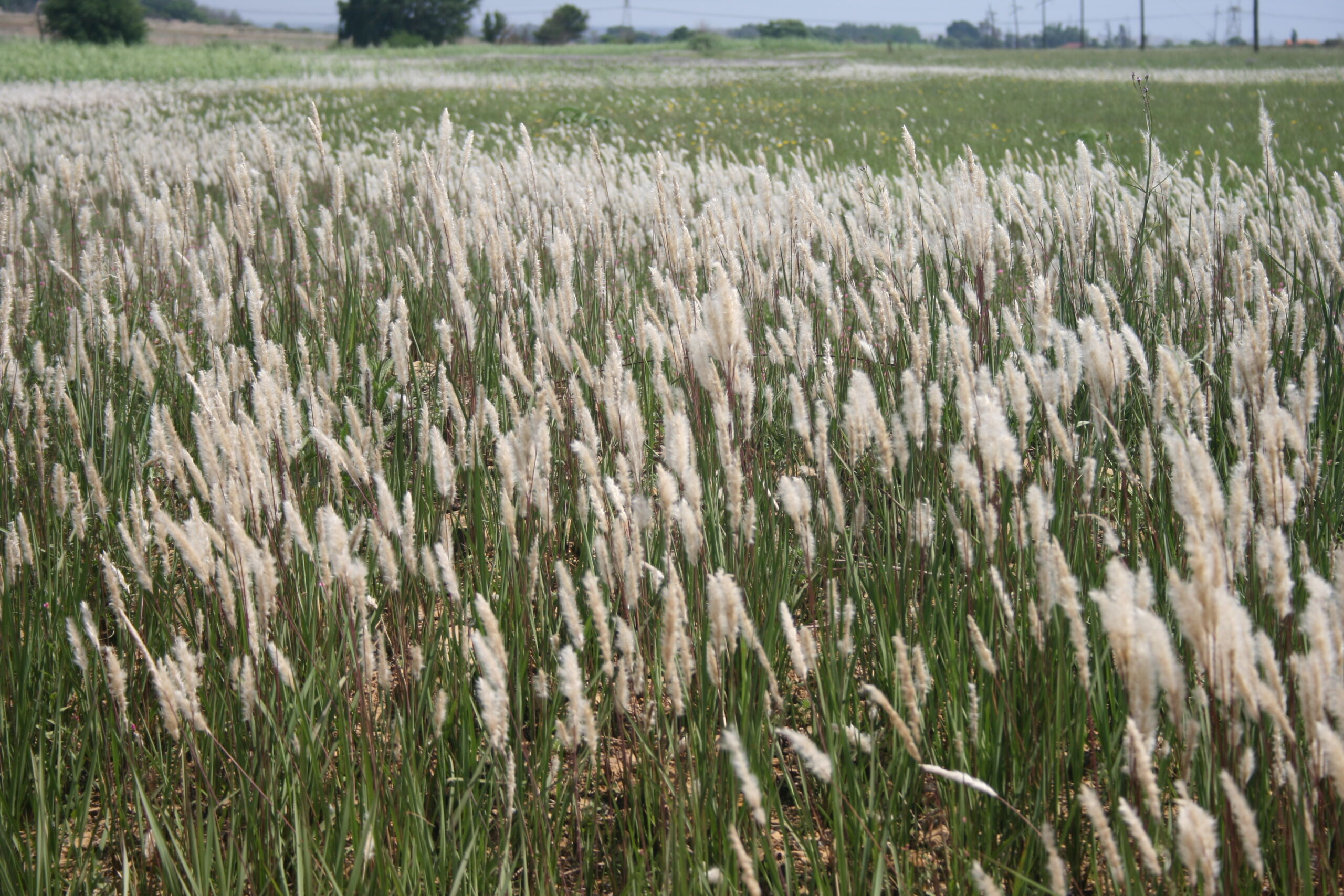
First, the sentence that matters most in this guide: do not plant cogongrass. Not the wild form, not a red-tipped cultivar, not a plant sold as Japanese bloodgrass or Red Baron. The Twin-spot Skipper guide names invasive cogongrass (Imperata cylindrica) among the grasses reported as a host, and that host record is real, but a host record is not a recommendation. The plant is a federal noxious weed, a Florida noxious weed, and a Florida Exotic Pest Plant Council Category I invasive, which means it invades undisturbed natural areas and displaces native plants. This guide exists so you can recognize it, report it, and remove it, not so you can grow it.
Recognition starts with the leaf. Cogongrass is an aggressive, colony-forming perennial grass, one to six feet tall, often leaning in mats when it passes three feet. The leaves are long, yellow-green blades, half an inch to an inch wide, with a midvein clearly offset to one side, not centered the way most grass midveins are, and with finely serrated margins that feel sharp if you run a finger along them the wrong way. The stem is hidden by overlapping leaf sheaths. In late winter in the south through early summer in the north, it throws up a silky, silver-plumed, cylindrical seed head, one to eight inches long, on a slender reddish stalk. Below ground is the real plant: branching, sharp-tipped, white, scaly rhizomes that can fill soil to a depth of feet and make up most of the plant’s biomass. If you dig a patch and find a mat of white rhizomes, you have found the reason pulling the tops off never finishes the job.
How to recognize it, not how to grow it
Cogongrass grows in full sun to part shade, in dry to wet soils, on roadsides, in pine plantations, old fields, pastures, rights-of-way, mining sites, and borrow pits, and it invades moist to dry upland pine sites across Florida and the Southeast. It forms dense, nearly monospecific stands that exclude most other vegetation, and it spreads by wind-blown seed and by rhizome fragments in moved soil, hay, and dirty equipment. Burning does not control it; burning promotes it, because fire clears competitors and cogongrass resprouts from rhizomes, and because it is highly flammable and burns very hot, raising the intensity of fires until overstory trees can die outright. A patch of cogongrass is not just a weed patch, it is a fuel patch, and that is the sentence to remember when someone suggests mowing it and walking away.
Do not confuse cogongrass with the native grasses it displaces, and do not confuse the red-tipped ornamental cultivars with a safe version. The Bugwood and FDACS accounts are explicit: do not plant the red-tipped cultivars, remove prior plantings, and control sprouts and seedlings. A red leaf does not make a noxious weed into a garden plant. If you think you have cogongrass, check the off-center midvein, the serrated margin, and the white rhizomes, photograph it, and contact your state agriculture department or extension service before moving soil or equipment from the site. Moving a rhizome fragment is planting cogongrass, whether you meant to or not.
Water & feeding
Cogongrass needs no water plan and no feeding plan, which is precisely why it is a problem. It tolerates poor soils, drought, salt, and a wide range of light and moisture, and it thrives where other grasses struggle. The management translation is the opposite of a growing guide: do not water it, do not feed it, and do not disturb soil near it unless that disturbance is part of a treatment plan. Disturbance without follow-up treatment spreads rhizomes and opens ground for seed, so a well-meaning clean-up that stops at mowing can make the infestation larger. If a patch is on your land, the water and feeding advice is to starve it of attention and give it treatment instead, on the schedule below.
Common problems
- Mowing alone. Mowing removes tops and leaves rhizomes intact. Do not mow when seed heads are present, or you spread seed, and do not burn without a follow-up herbicide treatment.
- Moving soil or equipment. Rhizome fragments in fill dirt, and seed on mowers and logging equipment, are how cogongrass travels. Clean equipment after working in an infested area, and do not accept fill from an infested site.
- Red cultivars sold as ornamentals. Japanese bloodgrass and Red Baron are Imperata cylindrica cultivars. Planting them is planting cogongrass, and the guides that list them as ornamentals are out of date with the weed lists.
- Butterfly-host confusion. A Twin-spot Skipper caterpillar eating cogongrass does not make cogongrass a butterfly garden plant. The skipper also eats native grasses, and the honest butterfly help is native grasses near wetland edges plus pickerelweed nectar, not a noxious weed.
Removal
Removal is a multi-year job, and this guide says so plainly rather than promising a weekend fix. For small infestations, repeated aggressive tillage or deep digging that removes rhizomes, done several times in a season, can exhaust the rhizome bank, but only where tillage will not damage desirable plants or spread fragments. For larger infestations, the FDACS and IFAS accounts describe the standard integrated approach: mow or burn first to remove thatch and force fresh, active regrowth, allow about twelve inches of resprout, then apply a labeled herbicide treatment, commonly a foliar glyphosate or imazapyr application at label rates, or a tank mix, with repeat treatments as resprouts appear. Follow the label exactly, mind imazapyr’s soil activity and planting restrictions, and expect to repeat. Seeds and rhizomes persist, and a patch declared dead after one treatment is a patch that will surprise you next spring. Report the infestation, keep equipment clean, and do not replant the cleared ground with another aggressive grass; replant with natives that hold the ground, and watch the site for at least two more seasons.
Browse all plant & pest guides
Species
Cogongrass (Imperata cylindrica) is the species this guide covers, and it is the only species claimed. It is native to Southeast Asia, introduced to the United States in the early 1900s for soil stabilization, and now spread through the southeastern United States including Florida, Louisiana, Alabama, Mississippi, and Georgia. Other Imperata species are not covered here, including Brazilian satintail, Imperata brasiliensis, the native lookalike, and the red-tipped cultivars Japanese bloodgrass and Red Baron are cultivars of this same species, not different, safer plants. This guide covers Imperata cylindrica only, as a weed to recognize and remove, never to plant.