
🌿 Ipomoea Carnea
What it looks like
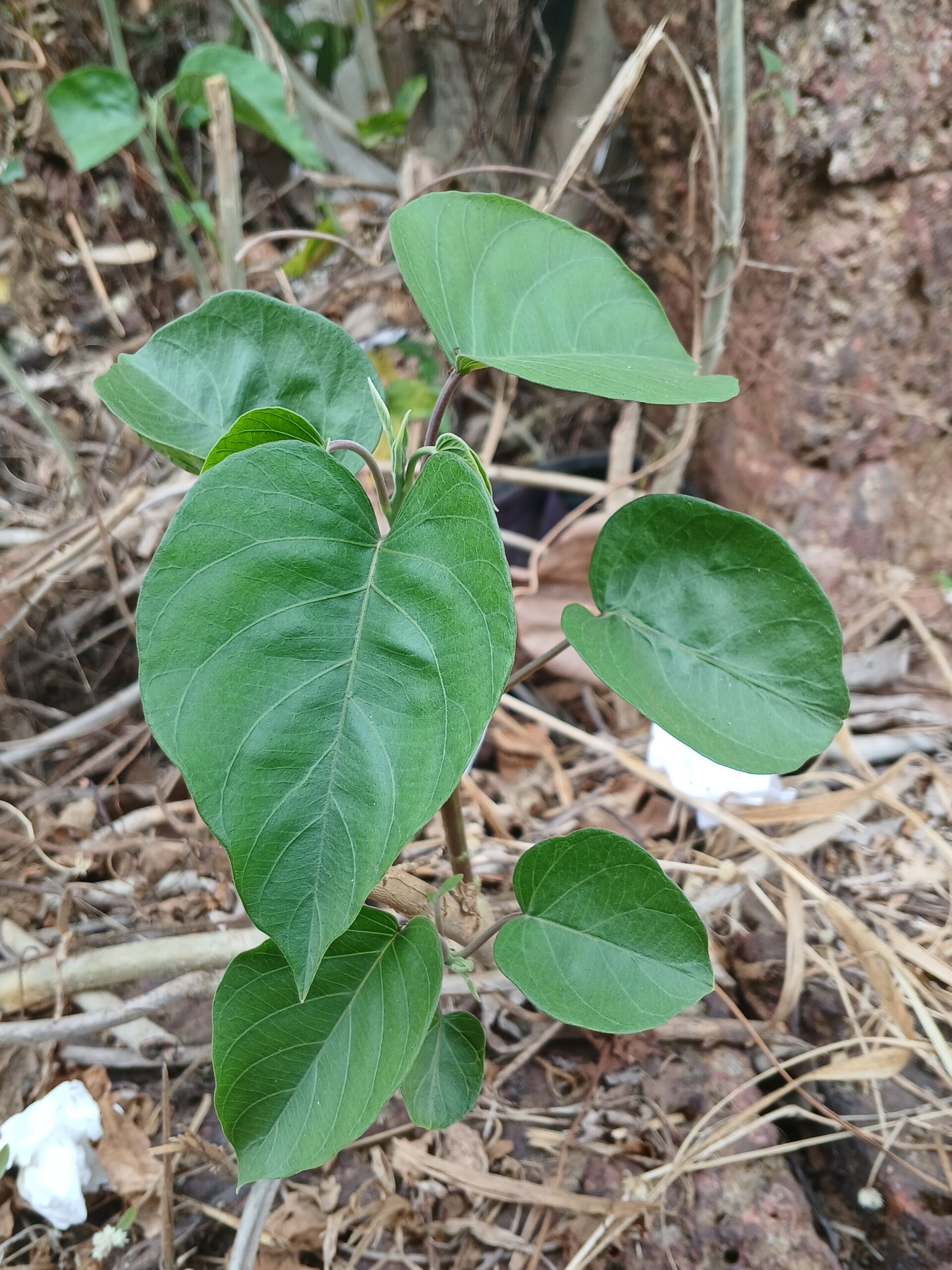
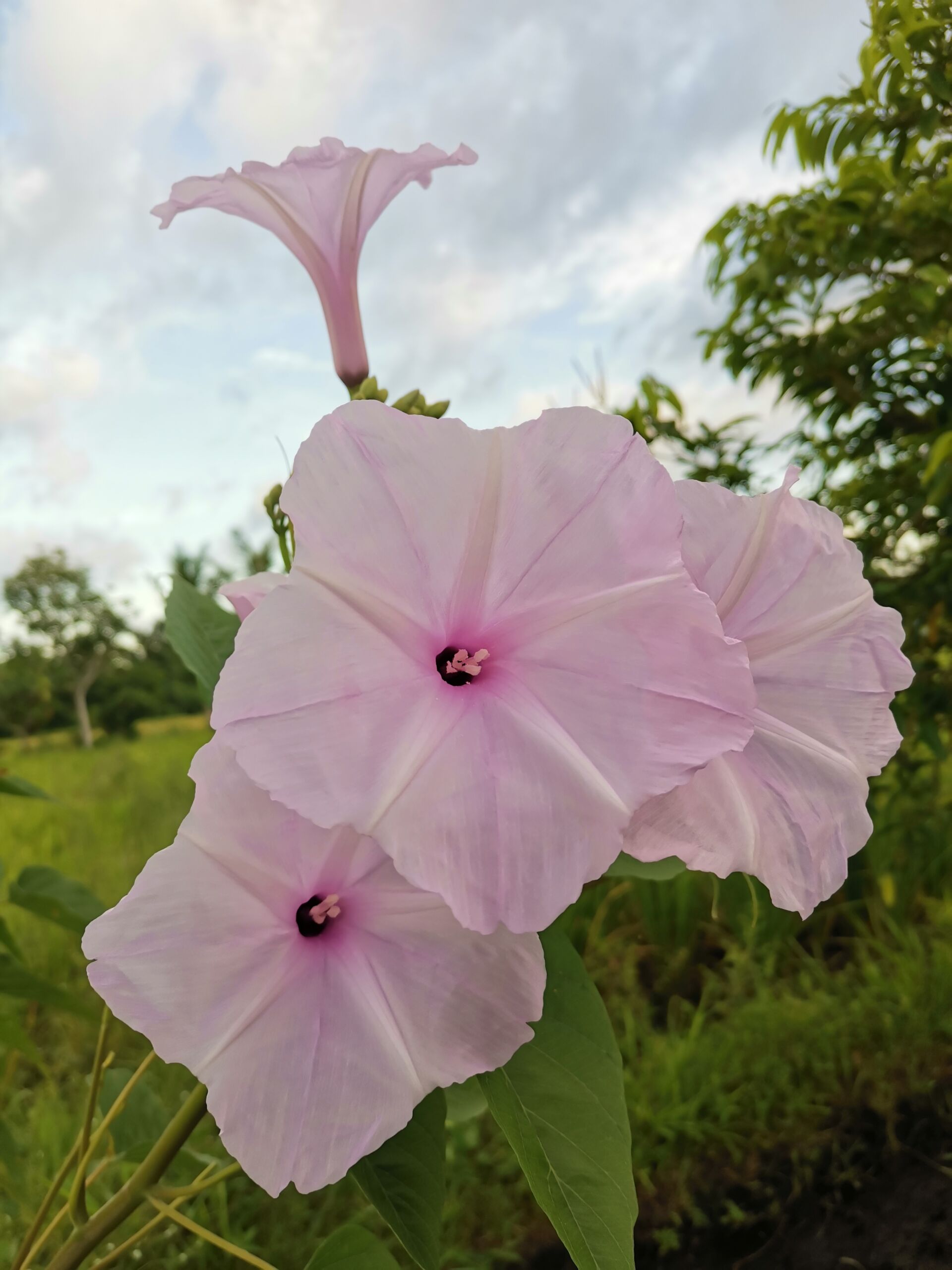
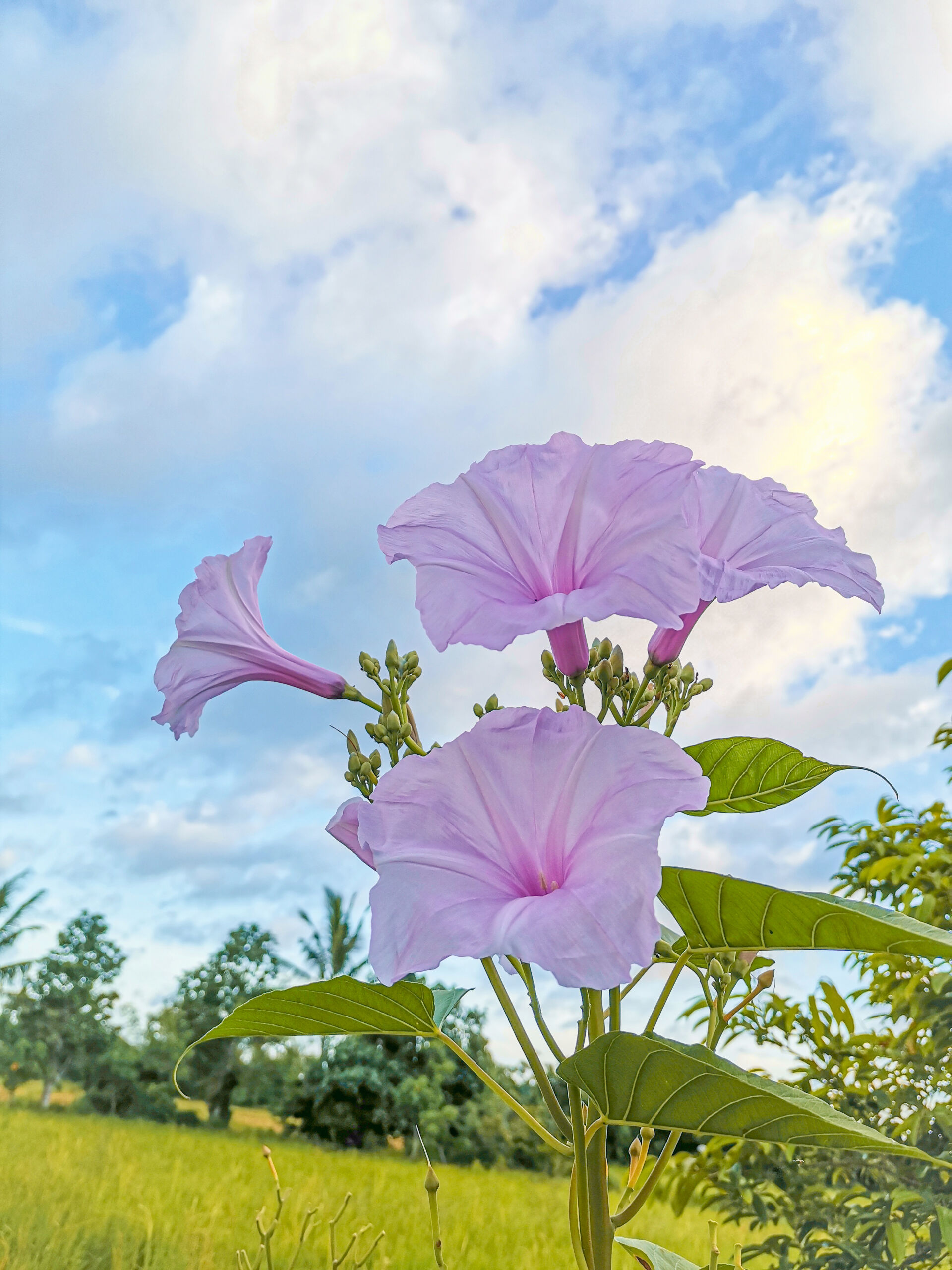
Ipomoea carnea is the exception that proves the morning glory rule, and the Mimic butterfly guide lists it twice, once as the common form Ipomoea carnea and once as the Latin form, which is why this single guide covers both ranks 457 and 458. Most morning glories are twining vines; this one is a robust, fast-growing, erect shrub or small tree, usually three to five meters tall, with thick, woody, somewhat hollow stems that develop into a trunk over several years, and many branches from the base. The leaves are heart-shaped to broadly ovate, green, and hairy underneath, and the flowers are the classic morning glory trumpet, pink to mauve or white, in clusters at the ends of branches, each corolla several centimeters long. The fruit is a brown capsule, and the seeds are covered with hairs, which is a polite way of saying they travel.
The butterfly context is tropical, not Floridian. The Mimic guide lists Ipomoea carnea among a range of low tropical plants, mostly acanthus- and mallow-family herbs and shrubs plus purslanes, growing in disturbed tropical ground, roadsides, and gardens, and it says plainly that in Florida, where the butterfly is only a stray, there is no local host-plant story, and none is invented. This guide follows that honesty: it covers the plant, it does not pretend a Florida Mimic colony follows from planting it. The site’s Morning Glories genus guide covers Ipomoea as a genus, with vines front and center; this species guide is for the shrub that breaks the genus pattern.
How to grow
Where it is legal and climatically at home, Ipomoea carnea grows with embarrassing ease: full sun to part shade, well-drained fertile soil, and a warm, frost-free climate, perennial only in essentially frost-free conditions, about zone 10 and up, and grown as a warm-season annual where winters freeze. It is drought tolerant once established, it flowers over a long season, and it can be grown in a large container with support, though left alone it forms a wide, squat shrub with drooping branches. Prune hard to keep it in bounds, because an unpruned bush morning glory is a plant with plans, and those plans include the fence, the hedge, and the neighboring shrub. Propagate by seed or stem cuttings, both of which work readily, which is part of the problem in the next section.
Now the warning that belongs in the growing section, not buried at the end. Ipomoea carnea is invasive in many tropical and subtropical regions, it clogs water channels, it spreads along seasonal watercourses, and one account reports it as prohibited in Florida and Arizona. Do not plant it in Florida, do not plant it near waterways anywhere, and check your local weed list before planting it at all. It is also toxic to livestock, containing swainsonine, and its seeds are toxic, so keep it away from grazing animals, children, and pets. A plant that is both invasive and toxic is a plant to admire in its native range and in a botanical garden, not a plant to scatter along a ditch because the flowers are pretty.
Water & feeding
Water is moderate and forgiving: regular water while young, drought tolerance once established, and no need for constant irrigation. It grows in a wide range of soils, preferring well-drained, fertile ground, and it tolerates the lean soils of disturbed ground, which is why it colonizes roadsides so well. Feeding is light; a balanced feed in spring is plenty, and heavy nitrogen mostly grows more stem to prune. The soil science here is the allelopathy note in the literature: Ipomoea carnea is reported to release substances that inhibit neighboring plants, which is one more reason a bush morning glory patch tends to become a bush morning glory monoculture if left alone. Feed it lightly, water it sensibly, and prune it ruthlessly, or do not plant it at all.
Common problems
- Invasive spread. Self-seeding and waterborne spread along channels. Never plant near waterways, and deadhead before seed sets if you grow it where legal.
- Toxicity to livestock. Swainsonine poisoning in livestock, and toxic seeds. Keep grazing animals away, and do not compost trimmings where animals browse.
- Frost. Top growth is killed by frost. Perennial only in frost-free climates; elsewhere it is a warm-season annual, and overwintering indoors is the only way to keep a plant through winter.
- Wrong morning glory. The genus guide’s vines, Ipomoea tricolor, alba, and indica, are different species. This shrub is not a vine, and a vine guide will not tell you how to prune a tree.
Harvest
The harvest of Ipomoea carnea is flowers, and only flowers, and only where the plant is legally grown. Cut stems for a vase, prune after flowering to keep the shrub in shape, and collect seed only if you intend to grow it again where it is allowed, because seed saved casually is seed spread casually. There is no food harvest, no tea harvest, and no forage harvest in this guide, because the plant is toxic and the literature’s medicinal uses are not a home remedy recommendation. The honest harvest is a vase of pink trumpets in a tropical garden, and a shrub kept in bounds by a gardener who knows what it can do when it is not.
Browse all plant & pest guides
Saving seeds
Lead with the warning, because this one matters: Ipomoea carnea seed is toxic to livestock, and the plant itself is no innocent bystander. Its toxicity is tied to swainsonine from its fungal endophytes and to selenium accumulation, concentrated most in the seeds, and ingestion by cattle, goats, and sheep causes serious endocrine, gut, and neurological problems. The plant is also allelopathic — it chemically suppresses neighboring plants — and it has escaped gardens to become invasive in warm regions. Save seed only if you are growing it deliberately as an ornamental shrub, keep labeled seed jars far from children, pets, and livestock, and never plant it near pasture or where grazing animals can reach it. This is a plant to contain, not to scatter.
With that said, the mechanics are easy. Ipomoea carnea grows as a shrubby bush morning glory rather than a vine, and it sets ovoid capsules that ripen pale brown, each holding black seeds about a centimeter long, covered in long woolly brown hairs. Collect capsules when they are dry and brown and just beginning to split, and handle them with gloves — those woolly hairs irritate skin, and the dust is not something you want in your eyes. Open the capsules over a tray, pick out the seeds, and dry them thoroughly before storage. In Florida humidity, dry means spread thin on paper in a dry room until fully hard, then into a labeled envelope or an airtight jar with a desiccant packet, cool and dark. Seed stored dry and cool generally keeps for a few years, but sow the oldest first and a little thickly.
Sow in warm conditions after frost danger has passed, or start indoors a few weeks earlier. Morning glory seed has a hard coat, so nick each seed gently with a file or soak it in warm water overnight to help water in — swollen seeds are ready, hard ones can be nicked and soaked again. Sow about a quarter to a half inch deep in well-drained mix, keep it warm and moist, and expect germination in roughly one to three weeks. Seedlings grow fast and want full sun and room to become the large shrub they are.
Two honesty notes to close. First, seedlings will not necessarily repeat a named selection, so use softwood stem cuttings for an exact clone — cuttings are also the faster route to a flowering shrub. Second, this plant self-seeds and spreads where it is happy, and it is already a problem plant in parts of the tropics and subtropics. Deadhead before capsules mature if you do not want volunteers, do not dump prunings or seed where they can establish, and think twice before planting it anywhere near natural areas. A beautiful pink shrub is not worth a new weed problem.
Species
Ipomoea carnea is the species this guide covers, in both its mention forms: the common form Ipomoea carnea and the Latin form Ipomoea carnea, which are the same plant listed twice in the Mimic guide, and which this single guide merges. The commonly grown form is often called subsp. fistulosa, the bush morning glory of tropical America. Note the trap in that common name: in temperate North America, bush morning glory usually means Ipomoea leptophylla, a different species, not this one. Other Ipomoea species, including Ipomoea tricolor, Ipomoea alba, and Ipomoea indica in the genus guide, are different species and are not covered here. This guide covers Ipomoea carnea only, with a do-not-plant warning for Florida and for waterways everywhere.