
🌿 Isomeris Arborea
What it looks like
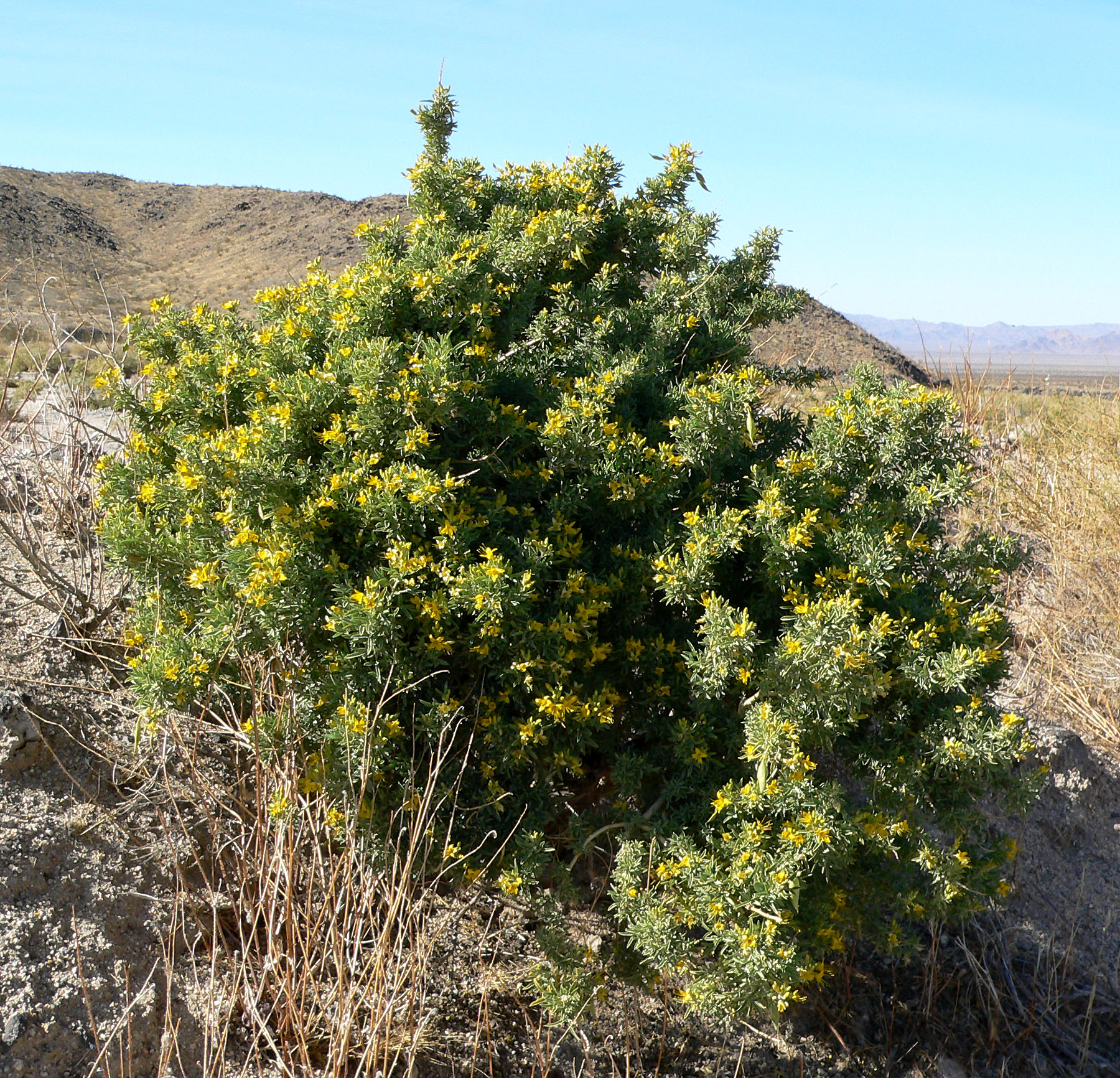
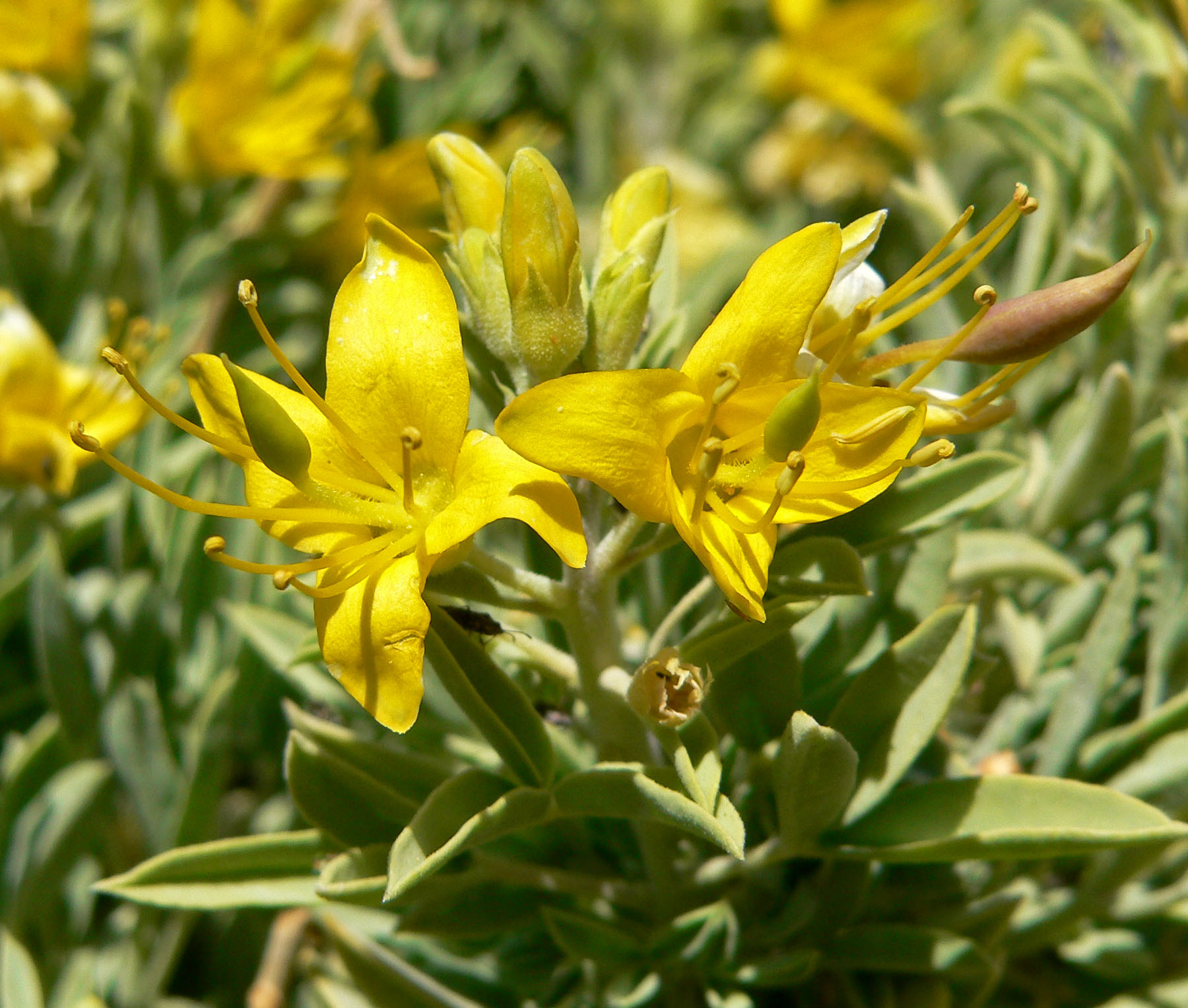
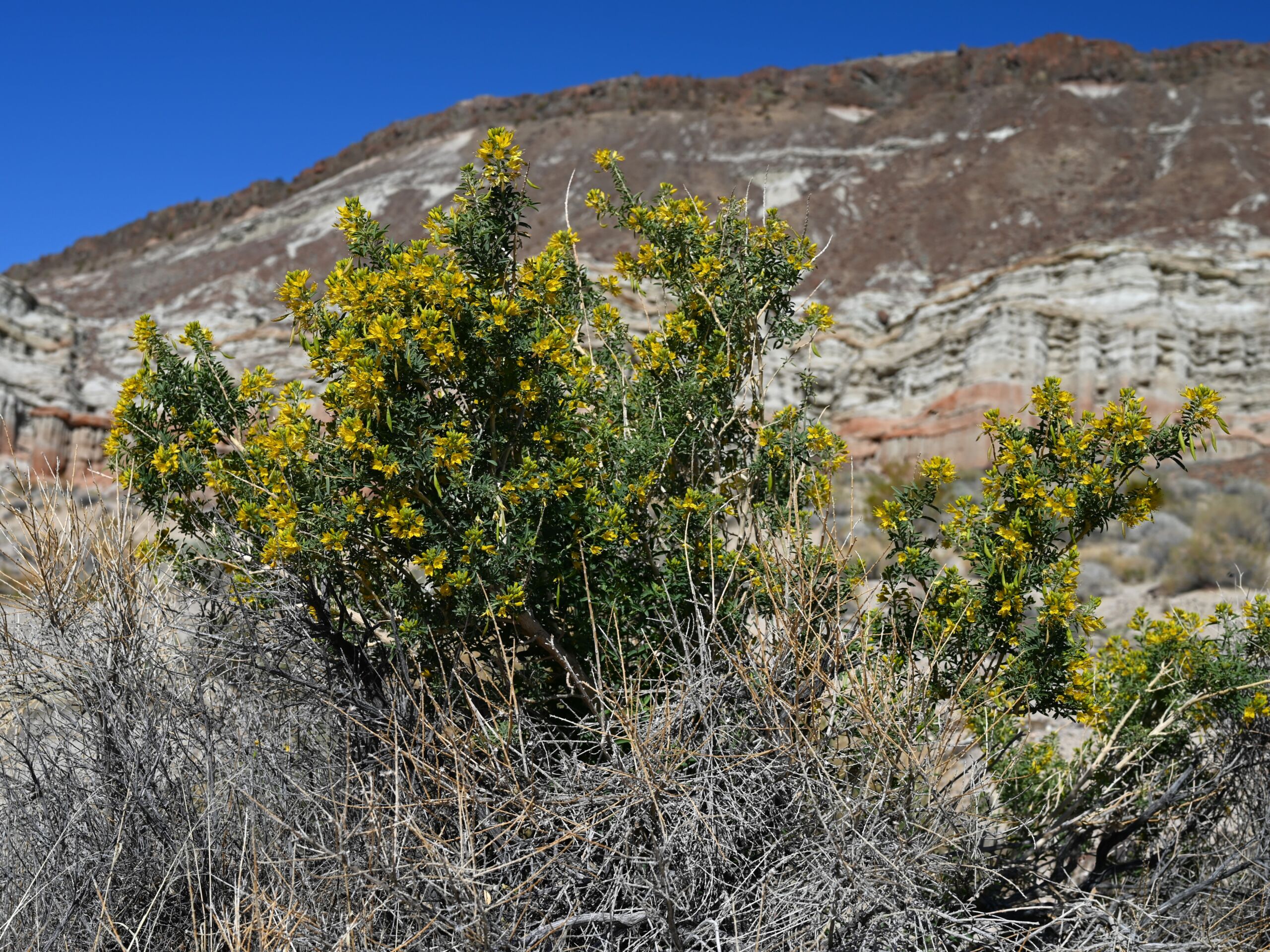
Bladderpod is a densely branching, evergreen shrub, usually two to seven feet tall and about as wide, with corky bark, smooth twigs, and tiny hairs over the whole plant. The leaves are gray-green, in threes, narrowly oval leaflets about an inch and a half long, with a pungent, salty aroma that nursery accounts compare to burnt popcorn or to bell peppers and onions cooking, which is a smell you either love or learn to love. The flowers are bright yellow, in clusters, and they appear in bloom in almost every month of the year in its home range, which is the plant’s great virtue. The fruit is the namesake: an inflated, bladder-like pod, two to three centimeters long, abruptly narrowed at both ends, on a stout, recurved stalk, carrying smooth seeds. A shrub that flowers all year and then hangs balloons on itself is not trying to be subtle, and it does not need to be.
The butterfly context is the Becker’s White guide, which lists bladderpod (Isomeris arborea) among the relatives of its mustard hosts, alongside prince’s plume, pinnate tansymustard, tumble mustard, and black mustard. The name in that guide is Isomeris arborea, and this guide keeps that name in its title and slug, because that is the name the butterfly guide uses. Modern treatments move the plant to Cleomella arborea, with Peritoma arborea as another synonym, and this guide states that plainly rather than hiding the move. Buy it under any of the three names, and check the Latin on the tag, because the nursery trade uses all three, and a tag that says only bladderpod could be this plant or a different bladderpod entirely.
How to grow
Grow bladderpod where it lives: southern California, from near the seashore to inland valleys, foothills, and low and high deserts, and into Baja California and Arizona, on roadsides, desert dry washes, coastal bluffs, and flat areas up to about four thousand feet. Give it full sun, well-drained, lean soil, and room to become a round, mounding shrub four to five feet tall and slightly wider. It is fast-growing, evergreen, and very drought tolerant once established, and it tolerates coastal conditions and desert heat that would finish a softer shrub. Plant it in fall or spring, water through the first dry season, and then leave it largely alone; a bladderpod that is pampered grows soft, and a soft bladderpod loses the tight, dense habit that makes it handsome.
Florida note, stated plainly: bladderpod is not a Florida shrub. It is a California desert and coastal shrub, and Florida humidity, summer rain, and a lack of cool, dry air are not its climate. A Florida reader should enjoy this guide as the story of a Becker’s White relative, not as a planting list. The Becker’s White itself is a butterfly of wild mustards in the desert and Great Basin, not a garden butterfly, and its hosts are wild plants to let be, not plants to order for a subtropical yard.
Water & feeding
Water bladderpod like a desert shrub: deep and infrequent while young, very little once established, and never a lawn schedule. It grows in dry washes and on bluffs, which is a plant telling you it expects drainage and drought, not irrigation. In a garden inside its range, occasional deep water in a dry summer keeps it flowering, and constant water makes it leggy. Feeding is none to light; lean soil is the point, and a rich, fertilized bed grows weak stems that need pruning and lose the plant’s natural round form. The soil science is the family story: bladderpod sits in the spiderflower family, Cleomaceae, formerly tucked inside the caper family and before that inside the mustard family, which is why a Becker’s White, a mustard butterfly, treats a spiderflower relative as kin. Chemistry, not taxonomy alone, decides what a caterpillar eats, and bladderpod’s mustard-like chemistry is the bridge.
Common problems
- Name confusion on the tag. Isomeris arborea, Cleomella arborea, and Peritoma arborea are the same plant in different treatments. Check the Latin, and do not buy a bladderpod that is not this species.
- The smell. The foliage and flowers emit a foul or pungent odor that discourages herbivores and, in some noses, discourages gardeners. Site it where the smell is a curiosity, not where you sit for dinner.
- Too much water. Wet feet and constant irrigation are the fastest way to lose a desert shrub. If your soil holds water, plant on a slope or in a raised bed.
- Florida fantasy. California desert plants do not become Florida plants because a guide exists. This one does not, and the guide says so rather than selling a zone number.
Harvest
The harvest of bladderpod is flowers, almost all year, and the inflated pods that follow them, which dry into curiosities for a vase and into seed for the next plant. Collect seed from dry pods if you want more plants, and prune lightly after a flowering flush to keep the shrub round. There is no food harvest in this guide, and no medicinal recommendation, because the plant’s traditional uses are not a home remedy, and its smell is a warning that this is not a salad green. The real harvest is a yellow-flowering shrub in a dry garden in January, when most of the garden is waiting for spring, and a butterfly relative’s host plant doing its quiet work in its own country.
Browse all plant & pest guides
Saving seeds
Bladderpod seed is one of the easier native-seed projects you can take on, and the plant’s own design tells you why: the inflated, balloon-like pods are built to be noticed, and they are full of pea-sized seeds that practically volunteer. Sources disagree on whether the seed needs any pretreatment at all — some references say scarify and soak before sowing, others report near-total germination with no treatment whatsoever, simply burying seed a quarter to a half inch deep and watching it come up in a couple of weeks. The honest summary is that bladderpod seed is not fussy: try untreated seed first, and keep scarification in your pocket for a stubborn batch rather than treating it as gospel.
Collect pods when they have turned from green to yellow-brown and feel papery and inflated, usually in fall. Strip the pods from the plant, open them over a tray, and pick out the hard, smooth, pea-like seeds — each pod holds a handful, roughly 5 to 25 depending on the pod. Dry the seed thoroughly before storage, which in Florida humidity means spreading it thin on paper until fully hard, then keeping it in a labeled envelope or an airtight jar with a desiccant packet, cool and dark. Seed stored dry and cool generally keeps for a few years, though fresh seed germinates most eagerly, so sow the current year’s seed first.
Sow about a quarter to an inch deep in well-drained, average-fertility soil in full sun, or start in flats in late winter and transplant out in spring or fall. Keep the mix consistently moist until germination, which usually arrives in about one to three weeks in warm conditions, and give seedlings room — bladderpod becomes a multi-branched shrub several feet across, so space plants several feet apart rather than crowding the flat’s graduates. Cuttings also work for an exact clone if you have a particular plant you love, but seed is the easy route, and wild plants self-seed readily, so expect volunteers near a happy parent.
One range note to close: bladderpod is a southwestern desert and coastal plant, and it wants sun, drainage, and lean soil. In Florida’s humidity and summer rain it may struggle with fungal problems that desert plants never meet, so treat it as a dry-garden experiment in a raised, sharply drained spot rather than a sure thing for a wet lowland bed. Save seed from your own plants, not from wild populations, and let the plant’s own easy germination do the persuading.
Species
Bladderpod (Isomeris arborea, now usually Cleomella arborea, syn. Peritoma arborea, Cleome isomeris) is the species this guide covers, filed under the butterfly guide’s name, Isomeris arborea. It was long considered the only species in the genus Isomeris, which is why the old name still appears on tags and in butterfly guides. Other bladderpods in other genera are different plants and are not covered here. This guide covers Isomeris arborea only, under all three of its current and former names.