
🌿 Japanese Hop
What it looks like
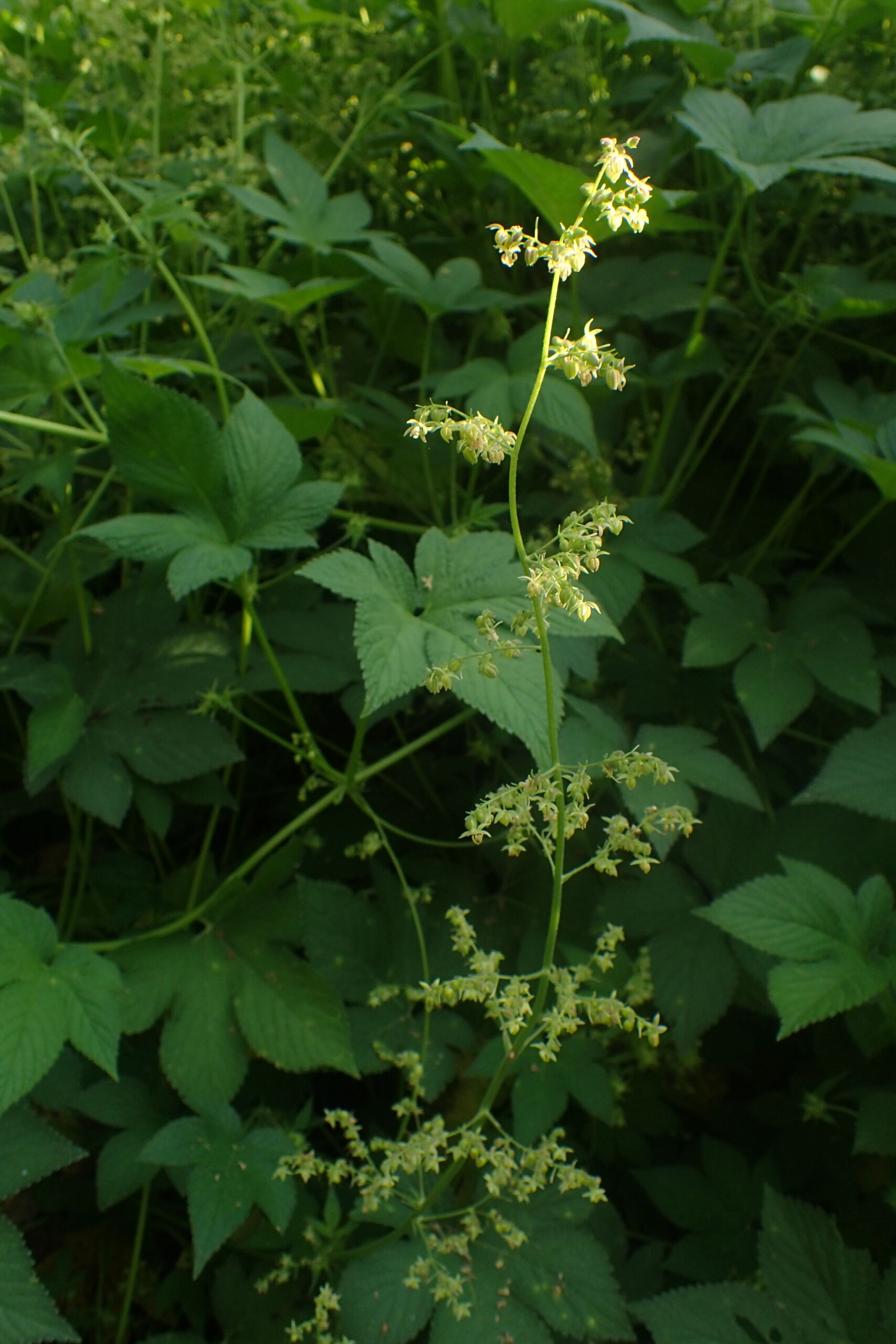

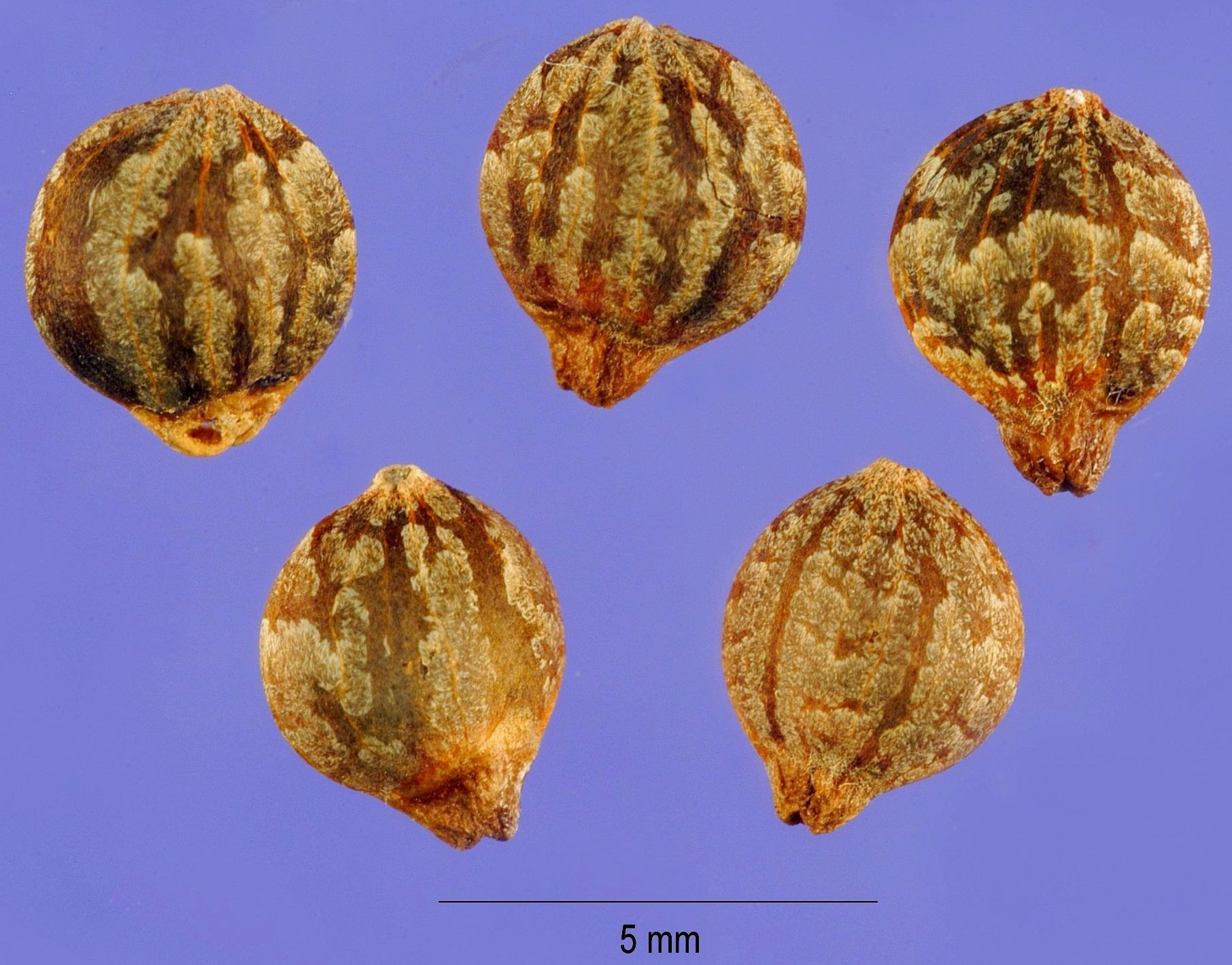
First, the sentence that matters most: do not plant Japanese hop. It is an annual, herbaceous, climbing vine, native to eastern Asia, invasive across eastern North America, especially in the Northeast and Mid-Atlantic, and listed as prohibited or restricted in some states, including Wisconsin, where it is prohibited in most counties and restricted in the rest. The Question Mark butterfly guide lists Japanese hop (Humulus japonicus) among its hosts, alongside elms, hackberry, nettles, and false nettle, and that host record is real, but it is not a recommendation. The Question Mark’s first-rank hosts are elms, and a yard with elm or hackberry and a patch of nettles is a Question Mark yard without a single Japanese hop vine in it.
Recognition is easy once you know the vine. Japanese hop is dioecious, with male and female flowers on separate plants, and it climbs by twining, with no tendrils, helped by tiny, sharp, downward-pointing prickles on stems and leaves that make handling it painful and that give it its other common name, hooked hair hops. The leaves are opposite, rough, palmately lobed, usually five lobes, sometimes seven or nine, two to five inches long, with serrated margins, on petioles as long as or longer than the leaf, with down-curved bracts at the base. The stems can reach eight to thirty-five feet in a single growing season, and a mature vine forms dense mats several feet deep that block light to everything underneath. The flowers are small and green, inconspicuous, male flowers in upright panicles and female flowers in drooping, cone-like clusters, and the fruit is a yellow-brown achene whose seeds remain viable in soil for up to three years.
How to recognize it, not how to grow it
Japanese hop grows in floodplains, stream banks, lakeshores, roadsides, open fields, and woodlands, wherever soil is moist, exposed, and sunny, and it spreads by wind and water, with seeds that travel downstream and wait in soil for years. It was introduced to North America in the mid-to-late 1800s as an ornamental and for medicinal purposes, and it is not usually planted any more, precisely because of what it does next: it climbs over low vegetation, shrubs, and small trees, it smothers restoration plantings, and it prevents new plants from emerging. A riverbank covered in Japanese hop is not a hop garden, it is a monoculture with prickles, and the vine’s speed is the point: a seedling in spring is a thirty-foot vine by frost, and a bumper crop of seed by the time frost kills it.
Do not confuse it with common hop (Humulus lupulus), the beer hop, which typically has three-lobed leaves and upper leaves that sometimes lack lobes altogether, and which lacks the sharp downward prickles and down-curved bracts that mark Japanese hop. Do not confuse it with native bur cucumber, which has tendrils, less deeply lobed leaves, and no sharp prickles. If you think you have Japanese hop, check the five-lobed rough leaves, the prickly stems, and the lack of tendrils, photograph it, and contact your state invasive-species program before moving soil or plant material. Seeds live three years, so control is a three-year commitment at minimum, not a single pull.
Water & feeding
Japanese hop needs no water plan and no feeding plan, which is why it is a weed and not a crop. It prefers plentiful sunlight and moisture and rich, exposed soil, and it grows fastest where a stream has left bare, moist ground, which is also where native riverbank plants are trying to establish. The management translation is the opposite of a growing guide: do not water it, do not feed it, and do not leave bare, moist ground next to a stream unplanted with natives after removal, because bare ground is an invitation. Replant cleared banks with native shrubs and trees that shade the ground, because Japanese hop growth is hindered by shade from a tree canopy, and a shaded bank is a bank it struggles to retake.
Common problems
- Skin irritation. The hooked hairs and prickles irritate and blister bare skin. Wear gloves, long sleeves, and eye protection when pulling it.
- Seed bank of three years. Seeds remain viable for up to three years, so a site cleared once must be watched and re-pulled for at least three seasons.
- Not a beer hop. Japanese hop is not used for beer making, despite the name. Planting it in hopes of homebrew is planting an invasive vine for no brewing return.
- Butterfly-host confusion. A Question Mark caterpillar eating Japanese hop does not make it a butterfly garden plant. Elms, hackberry, nettles, and false nettle are the honest hosts, and all have their own guides or are native plants to leave unsprayed.
Removal
Removal starts early and stays consistent. Hand-pull plants before seeds ripen, ideally in spring and early summer while they are small, with skin protection, and bag and dispose of pulled plants rather than composting them, because seed survives composting that does not get hot enough. For larger infestations, cut vines before flowering, keep cutting regrowth, and replant with native shade-makers, because shade is the long-term control that pulling alone cannot provide. Expect regrowth from the seed bank for at least three years, and check the site each spring, because a single missed plant can reseed a bank. Report the infestation to your state program, clean equipment and boots after working in it, and do not move soil from an infested bank to a clean one. A riverbank is a corridor, and a vine that travels by water travels fast, so the removal that matters is the one that happens before the seed crop, every year, until the bank is shaded and the seed bank is spent.
Browse all plant & pest guides
Species
Japanese hop (Humulus japonicus, also classified as Humulus scandens) is the species this guide covers, and it is the only species claimed. Common hop (Humulus lupulus), the beer hop, is a different species, with native North American varieties as well as the European variety, and it is not covered here. Other Humulus species are not covered here. This guide covers Humulus japonicus only, as an invasive vine to recognize and remove, never to plant. In the European Union, Japanese hop has been listed as a species of Union concern since 2019; no United States federal listing was verified for this guide.