
🌶️ Japanese Prickly-Ash
What it looks like
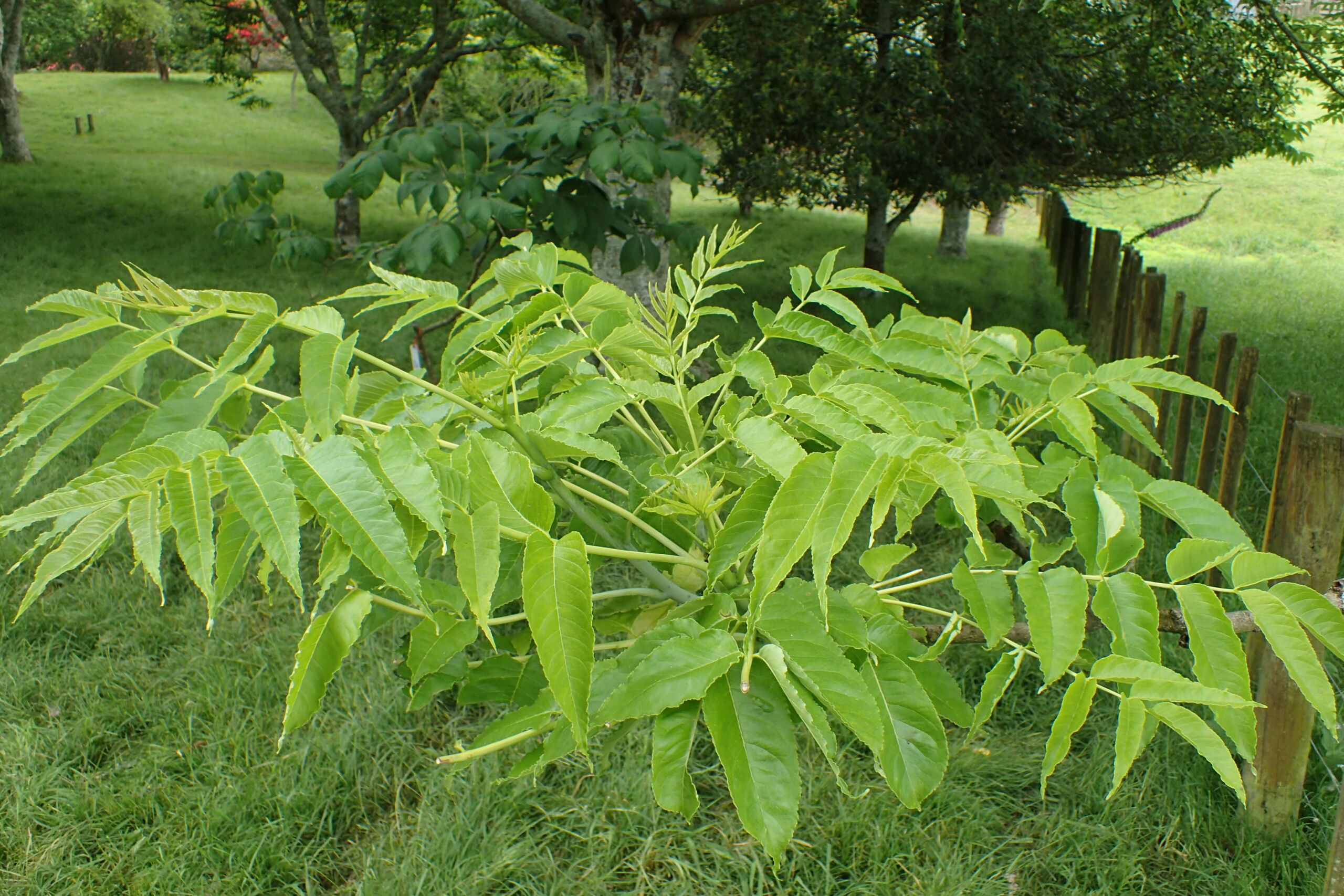
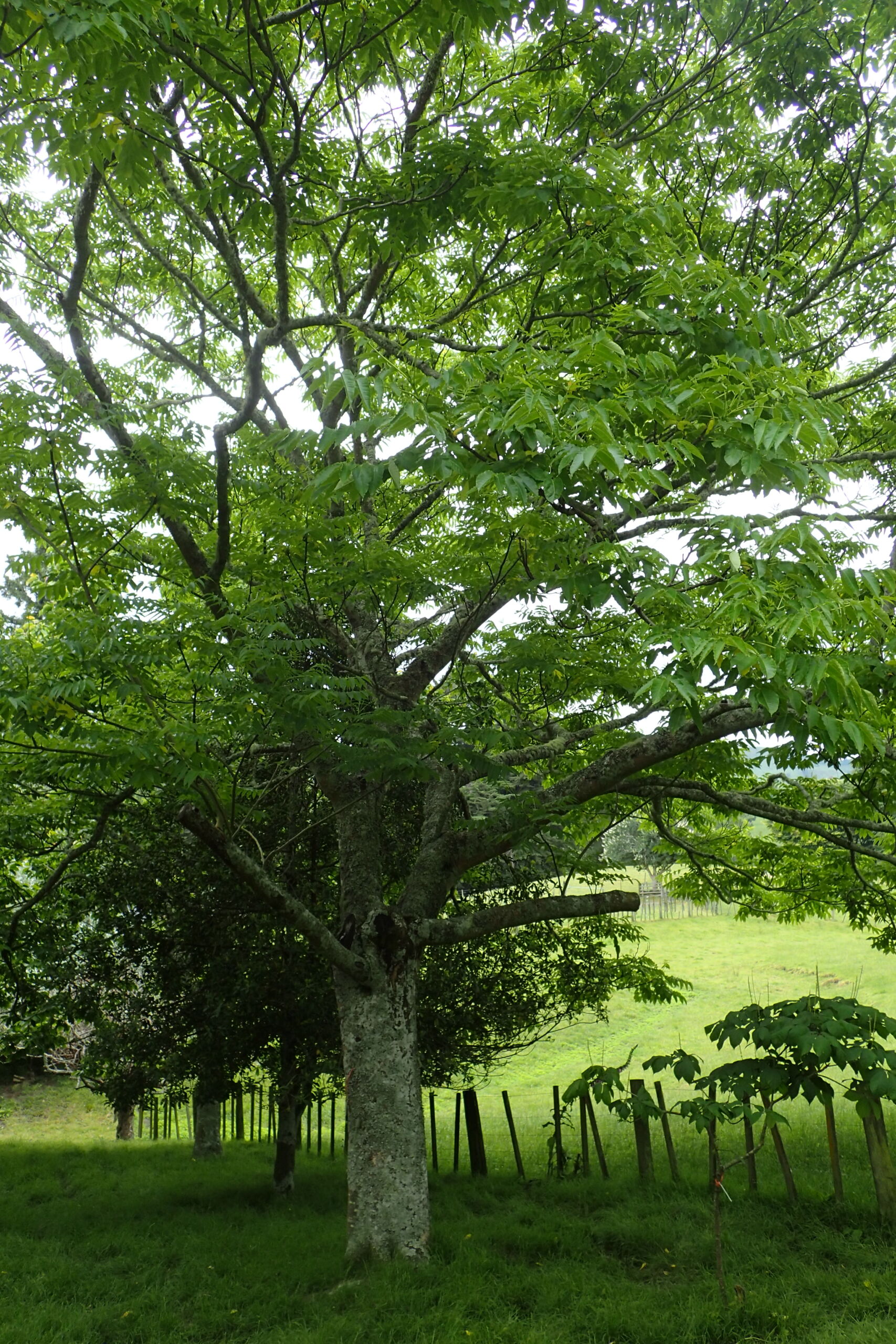
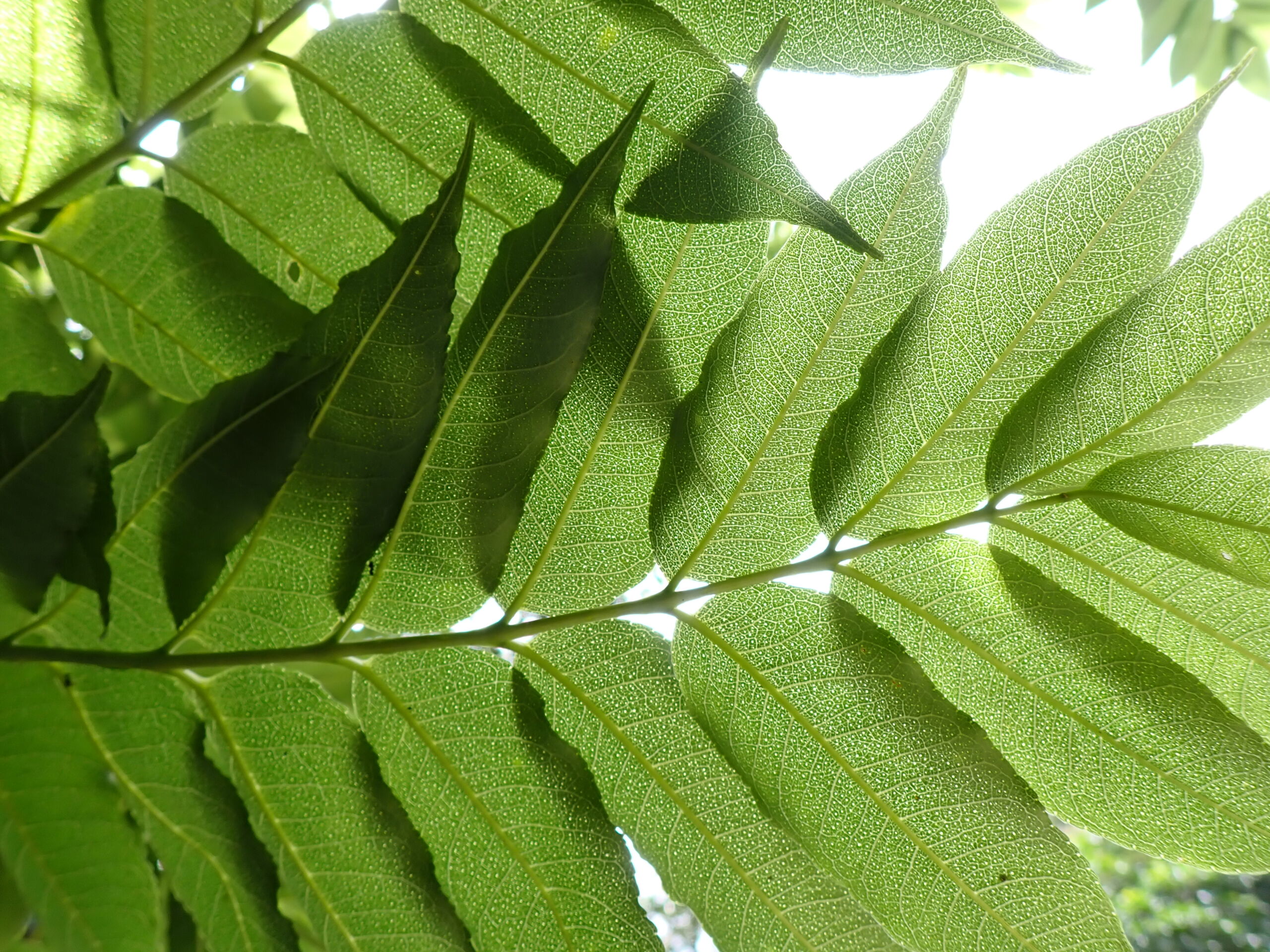
Japanese prickly-ash is a deciduous tree of the citrus family, Rutaceae, native to forest country in southeastern China, Taiwan, Southeast Asia, and Japan from Honshu southward. The species name tells you what to look at first: ailanthoides means ailanthus-like, and the long pinnate leaves, with many leaflets arranged along a central rib, really do recall the tree-of-heaven, Ailanthus. The difference is in the details and in the defences. Zanthoxylum stems and leaf ribs carry prickles, the crushed foliage smells of citrus and pepper rather than of anything you would want near a house, and the small flowers give way to follicle fruits that split open to show dark seeds — the classic prickly-ash pattern, in a tree-sized package.
The butterfly connection is the reason this guide exists, and it is a citrus-family story. The Chinese swallowtail feeds on Rutaceae, and its host list names Zanthoxylum species including Japanese pepper tree and Japanese prickly-ash, alongside cultivated Citrus, trifoliate orange, Amur cork tree, and rue. That pairing matters for identification: in that host list, Japanese pepper tree and Japanese prickly-ash are two different Zanthoxylum items, not two names for one plant. This guide claims the prickly-ash item only.
One plain-text disambiguation, because the common name is genuinely confusing and this guide must not swallow its neighbour. Some sources apply the name Japanese prickly-ash to the sansho pepper, Zanthoxylum piperitum, and published accounts warn outright that the name is confusing for exactly that reason. In the Chinese swallowtail host list, the sansho plant is the Japanese pepper tree item, a separate unit, and the prickly-ash item is filed here as Zanthoxylum ailanthoides, the ailanthus-like prickly ash, also called ailanthus-like prickly ash and, in Japanese, karasu-zansho, crow prickly-ash. Buy and plant by Latin name: if the tag says Zanthoxylum piperitum, you are holding the Japanese pepper tree, not this tree. The Zanthoxylum genus guide covers the genus broadly; this guide claims Zanthoxylum ailanthoides only, not the genus and not piperitum.
Florida note: Say this plainly: Japanese prickly-ash is not a Florida native and not a Florida landscape staple. Its published hardiness range of zones 8–11 overlaps the warmer parts of Florida on paper, but this is an East Asian forest tree grown for its citrus-family character and its swallowtail connection, not a plant with a Florida track record in the sources used here. If you grow it in a warm, sheltered Florida spot, grow it as a specimen tree with room and with its prickles respected — and do not expect a Florida butterfly story from it, because the Chinese swallowtail’s practical host story in the United States is a Hawaiian citrus story, not a Florida one.
How to grow
Grow Japanese prickly-ash where a small-to-medium deciduous tree has room: full sun to light shade, in moist but well-drained soil rich in organic matter, sheltered from hard, drying winds. The PFAF species table gives a tree to 18 metres, hardy in zones 8–11, which makes this a tree for a generous spot, not a foundation planting — give it the space of a small ornamental tree and keep paths clear of its prickly lower growth. Plant nursery stock in spring or autumn, water deeply through the first year while roots establish, and mulch to hold moisture without piling mulch against the trunk.
Propagation follows the Zanthoxylum pattern: seed sown fresh, or semi-hardwood cuttings in summer. Seed of prickly-ashes is not a sow-and-forget proposition — published accounts describe dormancy that responds to stratification and to fresh seed — so nursery stock is the sane option for most gardeners, and it has the added advantage that you can check the Latin name on the tag before you buy. Prune only to remove dead, damaged, or crossing wood, and wear gloves and eye protection: the prickles are the point of the genus name’s warning system, and they do not negotiate.
For wildlife, the honest scale is this: in its native range this is a forest tree whose foliage feeds citrus-family swallowtails, and whose fruit is taken by birds and by foraging mammals — published accounts even note Japanese macaques foraging it in the wild. In a garden outside its native range, its wildlife value is as a citrus-family host plant in the broad sense and as a fruiting tree for birds, not as a guaranteed swallowtail magnet. Plant it because it is a handsome, spiny, citrus-scented tree, and treat any swallowtail visit as a bonus.
Water & feeding
Water is straightforward: consistently moist soil while young, then moderate watering in dry spells once established, with drainage that never leaves the roots standing in water. A mulch of bark or leaf mould holds moisture and feeds the soil as it breaks down, which suits a forest-edge tree. Feeding is light: compost at planting and a spring topdressing of compost in poor soil is the right scale. Heavy fertilizer produces soft, fast growth on a tree whose whole character is slow, spiny toughness, and soft growth is exactly what prickles and wind do not forgive.
The soil science here is the citrus-family story. Rutaceae trees, prickly-ashes included, run on the same deal as their citrus cousins: deep, humus-rich, well-drained soil, mycorrhizal fungi threading through the root zone, and leaf litter returning aromatic oils and minerals to the ground each autumn. A prickly-ash in a mulched, leaf-littered bed is not just a tree — it is a small piece of forest-floor chemistry, and the peppery smell when you crush a leaf is the receipt.
Common problems
- Wrong species, wrong tag. A tag that says Japanese pepper, sansho, or Zanthoxylum piperitum is the Japanese pepper tree, not this tree. A tag that says only prickly-ash, with no Latin name, could be any of several species. Check before you buy.
- Prickles. The stems and leaf ribs are armed. Site the tree away from paths, play areas, and anywhere you prune in shirtsleeves, and wear gloves for every cut.
- Size surprise. An 18-metre tree is not a shrub. Do not plant it under wires or against a house and then act betrayed when it keeps its side of the bargain.
- Dry soil. A forest tree in a hot, dry, exposed spot sulks, drops leaves early, and grows slowly. Mulch, water through establishment, and give it afternoon shelter in the hottest sites.
- Slow nursery availability. This is a specialty tree, not a garden-centre staple. If a supplier cannot give you a Latin name, they cannot sell you this species.
- Fruit mess. Falling follicles and seeds under a female tree are litter, not a crisis — but site the tree where litter is welcome, not over a patio you sweep daily.
Harvest
The harvest story of Japanese prickly-ash is a spice story with a history lesson attached. Published accounts report that the piquant fruit served as a local substitute for red pepper in China before the Columbian exchange brought true chillies, and that young leaves are used in cuisines in Taiwan. The seeds and husks carry the numbing, citrus-pepper character of the whole Zanthoxylum clan — the same family of compounds that makes Sichuan pepper tingle. This guide does not present the tree as a casual kitchen crop: harvest only if you have positively identified the species, take fruit sparingly from your own tree, and treat the numbing quality as a feature to dose carefully, not as a dare. The ornamental and butterfly-host value is the main crop; the pepper is a footnote with flavour.
Browse all plant & pest guides
Saving seeds
First, the fact that decides whether there is any seed to save at all: Japanese prickly-ash is dioecious, meaning male and female flowers grow on separate trees, and only female trees set the fruit clusters. A lone tree, however healthy, will flower and never fruit — and a female with no male in bee range will do the same. If your tree has never fruited, it may be a male, or a lonely female. Plan the seed harvest around a female tree with a male nearby, and check in summer whether the small fruits are actually forming in clusters. No male, no seed. It really is that simple.
Collect the fruit clusters in fall, when they are ripe and the small fruits have begun to split, showing the black seed inside. Clip whole clusters into a paper bag and let them finish drying indoors for a week or so, then rub the clusters gently to free the seed and pick out the fragments. The seed is small, hard, and glossy black, and it is easy to lose on a dark countertop, so work over white paper. Dry it thoroughly before storage — spread it thin on paper until it feels completely dry — because in Florida humidity, seed stored even slightly damp will mold in a closed container.
Sow fresh seed in fall if you can, under cover, as soon as it is ripe — that is the method the classic references recommend, and it lets winter do the chilling for you. For stored seed, give it a cold spell in the fridge first: mix it with damp vermiculite or a damp paper towel inside a sealed bag and refrigerate it. Sources disagree on the length, so take the honest range — some give six to eight weeks, while the classic references stretch it to about three months — and scarification, a light rub with sandpaper or a careful nick, may also help, since the coat is hard. Just nick enough to let water in, without damaging the embryo inside. Check the bag now and then; the medium should stay moist, never soggy.
Then settle in, because germination is slow and uneven. Expect sprouts in late spring, and do not be surprised if some seed waits until the following year — the classic references warn it can take another twelve months, and they are not exaggerating. Keep the mix consistently moist but never waterlogged, in bright indirect light, and do not throw the flat away early. Prick seedlings out into individual pots once they are big enough to handle, grow them on under cover for their first winter, and plant out in early summer.
Store any seed you are not sowing right away in a labeled envelope or an airtight jar with a desiccant packet, cool and dark, and sow the oldest packets first. Seedlings will not necessarily match a named parent, so save seed from species plants for predictable results. If you want an exact copy of a particular tree, cuttings of half-ripe wood in summer, root cuttings, or suckers removed in late winter are the reliable routes — the classic references give all three, and suckers are the easiest of the lot. One last practical note: this tree is armed, so wear gloves and long sleeves when you reach in for seed clusters. The thorns are not decorative.
Species
Japanese prickly-ash is a single species, Zanthoxylum ailanthoides, and this section names its neighbours in plain text, because the prickly-ashes are a big genus and this guide will not pretend otherwise. The Zanthoxylum genus guide covers the genus broadly, including the northern prickly-ash of eastern North America, Zanthoxylum americanum, and the southern prickly-ash, Zanthoxylum clava-herculis. The Japanese pepper tree, Zanthoxylum piperitum, the sansho pepper of Japan and Korea, is a separate species with its own unit and is not covered here. Sichuan pepper, Zanthoxylum bungeanum, and the Chinese prickly-ash of the Sichuan pepper trade are further relatives, not this tree. Gardeners should buy by the species name, Zanthoxylum ailanthoides, and treat other prickly-ash names as different trees to learn, not as synonyms to collect.