
🚫 Johnson Grass
What it looks like
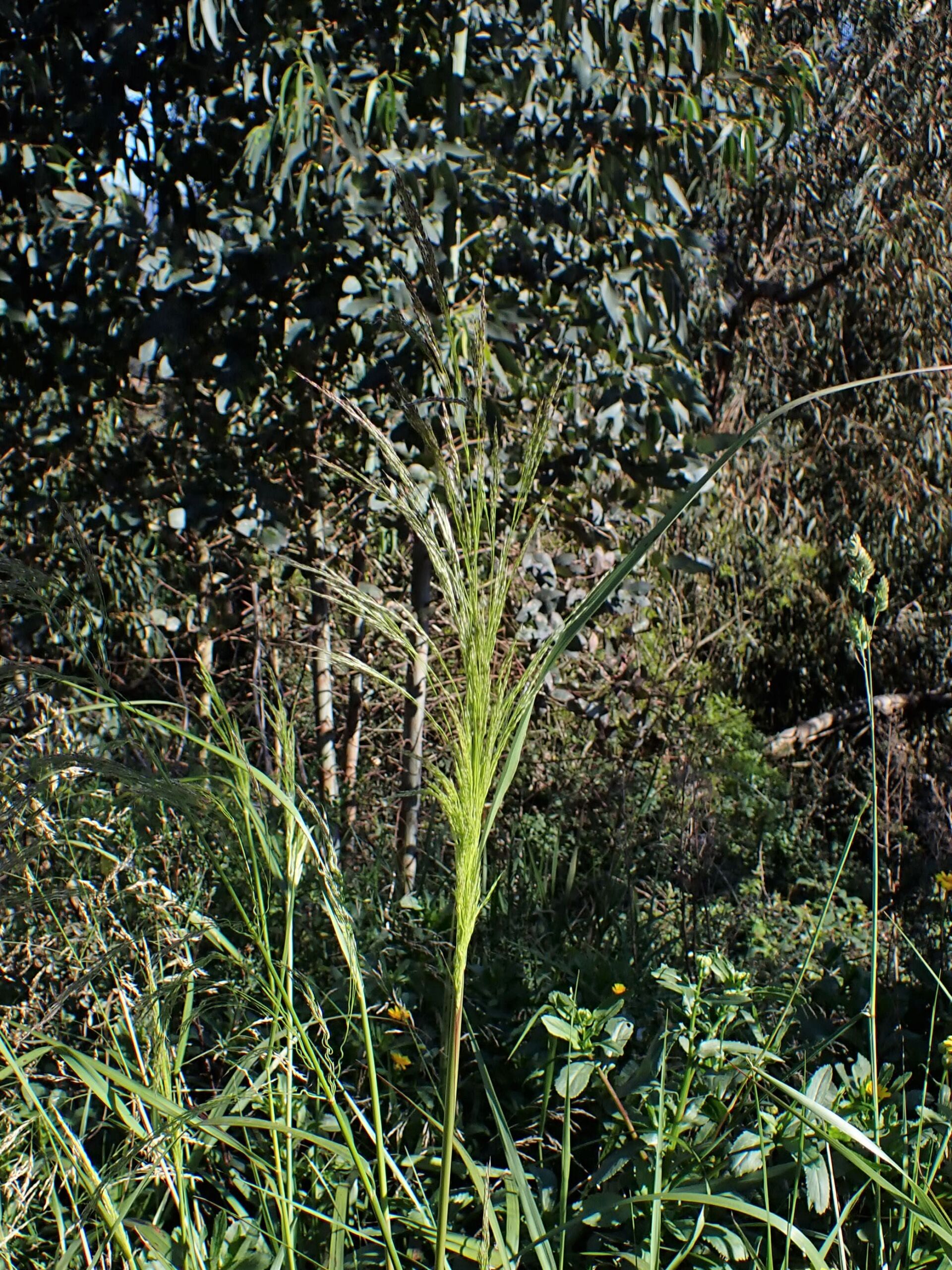
Johnson grass is a tall, rhizomatous, perennial grass of the Mediterranean region, introduced to the United States in the 1830s and 1840s as a forage crop — named, in the story told, for William Johnson, the Alabama planter who promoted it — and it has spent the nearly two centuries since proving that a forage grass with no off switch is not a forage grass but a weed. Published accounts call it one of the ten worst weeds in the world, reported as a major problem in more than fifty countries, and it is the reason this guide exists in a different form from most growing guides: there are no planting instructions here, because planting Johnson grass is the mistake this guide exists to prevent.
The butterfly connection is real and it does not change the verdict. The eufala skipper’s host list names Johnson grass, Sorghum halepense, among its grasses — and the eufala skipper also uses other grasses, as skippers do. A caterpillar eating a weed does not make the weed a garden plant, any more than a caterpillar eating a crop makes the crop a weed. Do not plant Johnson grass for the eufala skipper. If Johnson grass is already on your ground, the skipper will find it without your help, and your job is still to remove it.
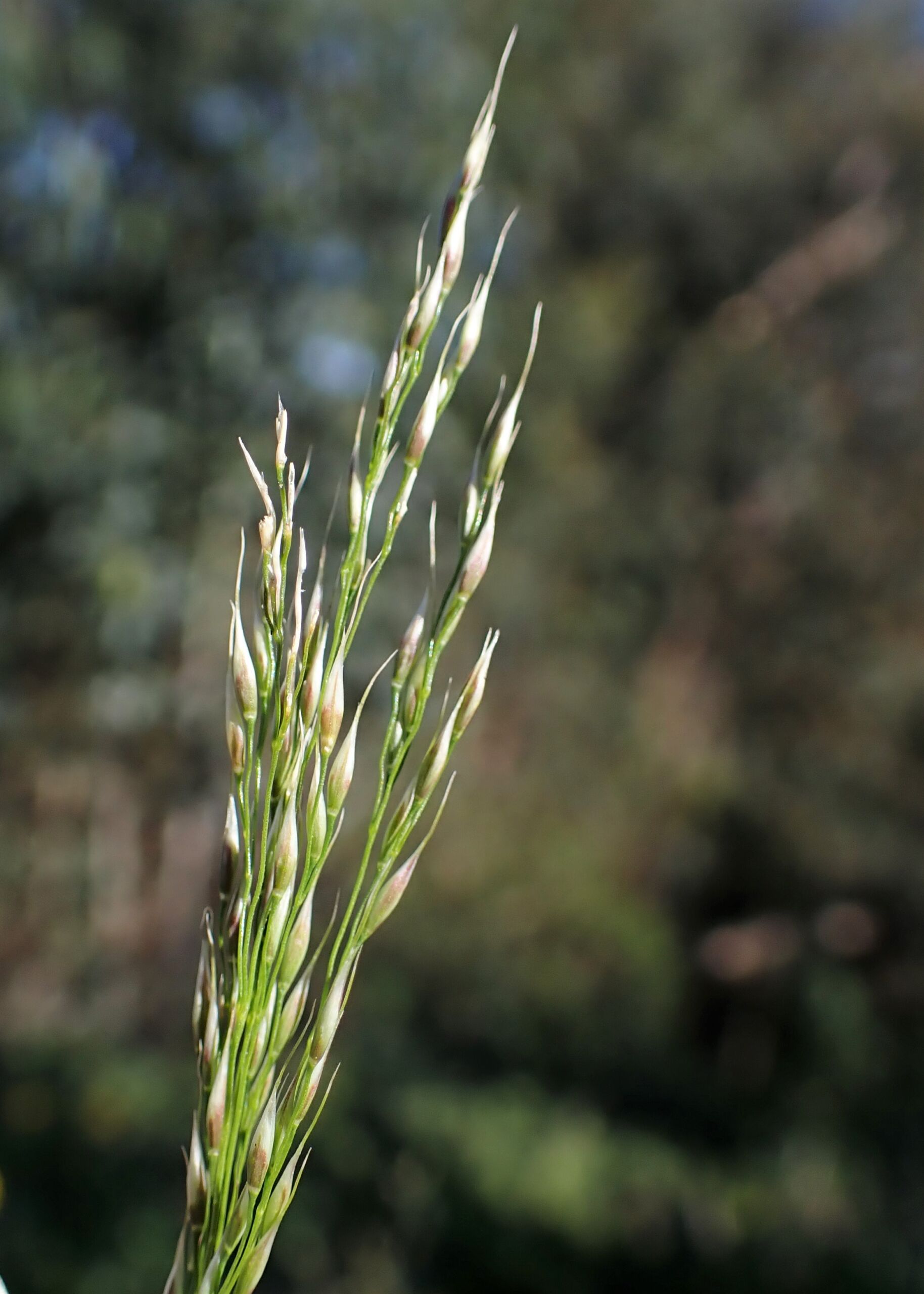
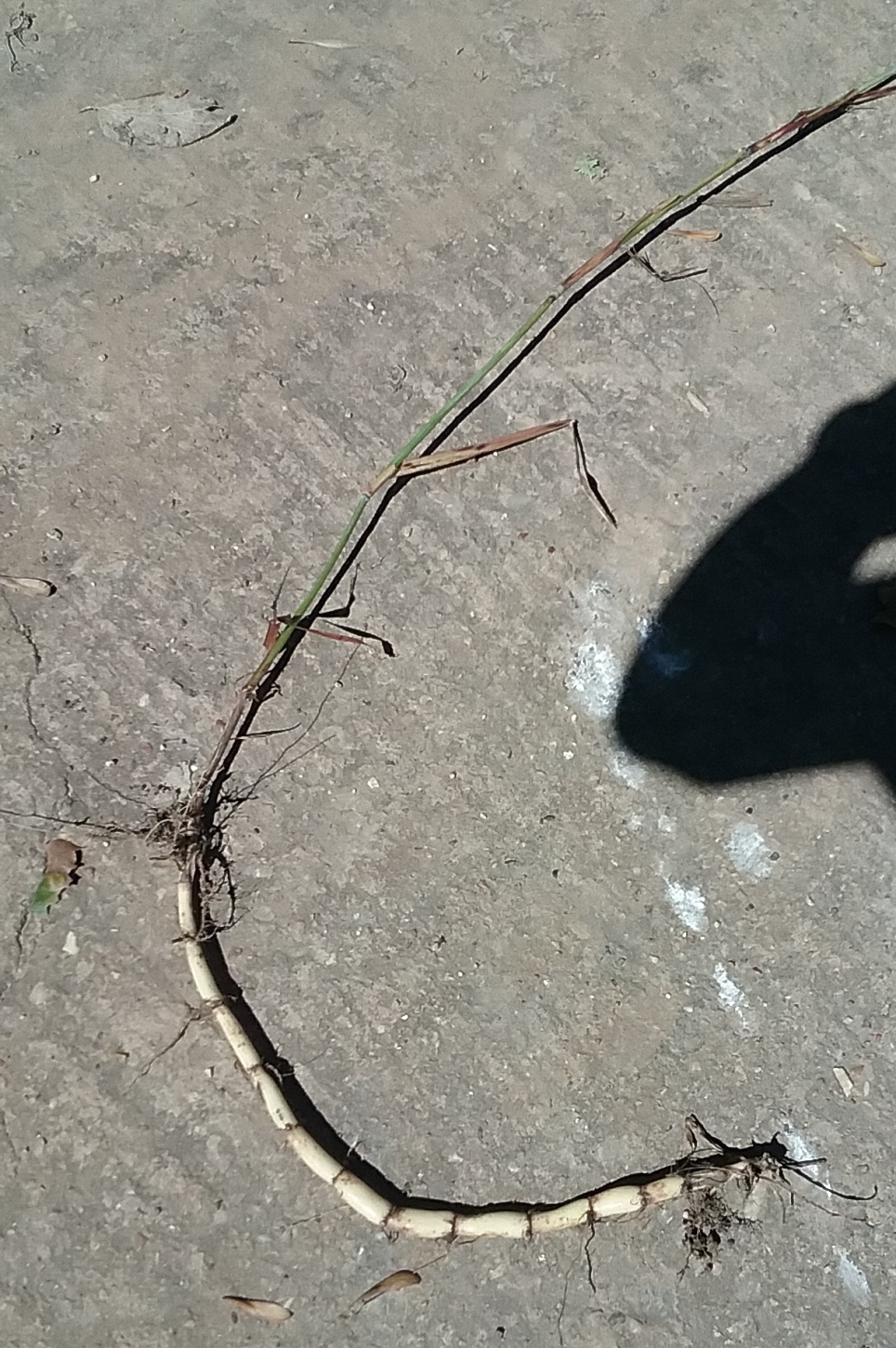
Identification, because everything else depends on it. Johnson grass is a coarse perennial grass with hollow, round stems, leaves 6 to 20 inches long and up to about an inch and a half wide, hairless, with a conspicuous white midrib running down the centre — the single best field mark — and a pronounced membranous ligule, a thin membrane a fraction of an inch wide where the blade meets the sheath, fringed with fine white hairs. The flowering head is a loose, spreading, purplish panicle, diamond- to pyramid-shaped when fully open, up to about two feet long, with small copper-coloured flowers. Underground is the real plant: a dense, extensive network of thick, starchy rhizomes, creamy white when young and orange-scaled with age, running near the surface in most soils and deeper where cracks allow. A patch of Johnson grass is not a collection of individual plants. It is one rhizome system wearing many hats.
Florida note: Johnson grass occurs throughout the United States, and Florida is squarely in its range — it is a weed of fields, roadsides, ditches, and disturbed ground across the Southeast, including the Gulf Coast where the problem is most serious. If you garden in Florida and you see a tall grass with a white midrib and a purplish open panicle, assume Johnson grass until a closer look proves otherwise, and do not let it seed while you decide.
How to recognize it — and what it is not
Young Johnson grass resembles young corn, but corn quickly grows wider leaves and becomes easy to distinguish, while Johnson grass keeps its white midrib and its rhizome habit. Mature switchgrass has leaves about half the width of Johnson grass leaves, and it lacks the thick, aggressive rhizome system. Sudangrass and cultivated sorghum are close relatives, but they are annuals grown from seed each year, not perennial rhizome networks that return uninvited. The combination that settles it is white midrib plus membranous ligule plus purplish open panicle plus rhizomes: any two might be another grass, but all four together are Johnson grass, and a plant with all four should be treated as Johnson grass even before it flowers.
The hazards are not theoretical. Johnson grass competes with crops and native plants and wins, shading them out and, in published accounts, producing compounds that suppress its competitors. It is also a livestock hazard: wilted growth after frost or drought stress can contain high levels of cyanide compounds, and the plant can accumulate nitrates in quantities that cause bloat. It is sometimes still used as forage or hay, and that history is exactly why it spread — a plant that is useful in a managed hayfield and a disaster everywhere else is still a disaster everywhere else.
How to remove it
Removal is a multi-year project, and this guide will not pretend otherwise. For small, young patches, pull plants by hand when the soil is moist, getting as much rhizome as possible — a fragment left behind is a new plant, and rhizome fragments are the reason mowing alone fails. Dig out the rhizome network with a fork, not a tiller: tilling chops rhizomes into plantable pieces and spreads the problem across the bed. For larger patches, mow repeatedly through the growing season, cutting before seed heads mature, to exhaust the root reserves over several seasons — published accounts describe control taking repeated treatment across years, not a single heroic weekend.
Never compost Johnson grass seed heads or rhizomes, never move soil from an infested patch to a clean bed, and bag seed heads for disposal rather than leaving them on the ground. Where herbicide is used, it must be a product labelled for Johnson grass in your state, applied exactly by its label, and repeated as regrowth appears — and some populations are reported resistant to glyphosate, which is one more reason mechanical removal of small patches, early, beats chemical rescue of large ones, late. Check your state’s noxious weed listing before you act: Johnson grass is listed as a noxious weed in many states, and in some jurisdictions you have a legal duty to control it, not just a gardening preference. For a large infestation, especially near water or desirable natives, call your local extension service before you spray anything — the right product, timing, and buffer depend on your site, and this guide does not substitute for that call.
After removal, replant the ground promptly with desirable, preferably native, plants, and monitor the spot two or three times a year. A healthy, vegetated bed resists re-invasion; bare, disturbed soil invites it. The goal is not a single clean patch but a patch that stays clean because something better is growing there.
Common problems
- Rhizome fragments. Tilling or shallow digging multiplies the plant. Dig deep, fork out rhizomes whole, and sift the soil of small patches.
- Seed bank. Johnson grass produces seed prolifically — published accounts report tens of thousands of seeds per plant in a season — and seed survives in soil. Cut before seed matures, every time, for several years.
- Mowing alone. Mowing slows Johnson grass but does not kill it. Mowed plants regrow from rhizomes and can still flower low. Mow as part of a plan, not as the plan.
- Livestock poisoning. Do not graze wilted, frosted, or drought-stressed Johnson grass, and do not feed it as hay without knowing its cyanide and nitrate risks. When in doubt, keep livestock off it.
- Herbicide resistance. Some populations resist glyphosate. If a labelled treatment fails, do not simply reapply at a higher rate — get extension advice and switch tactics.
- Mistaken identity. Spraying or pulling the wrong grass wastes a season. Confirm the white midrib, ligule, panicle, and rhizomes before you declare war.
Harvest
There is no harvest in this guide, and that is deliberate. Johnson grass has a forage history, and it has been used for hay, but its cyanide risk in wilted growth, its nitrate risk, and its invasive status make any harvest recommendation irresponsible in a garden guide. The only thing to take from a Johnson grass patch is the plant itself, bagged, for disposal — and the lesson, which is free: a plant that spreads by rhizome and by tens of thousands of seeds, that resists herbicide, and that poisons livestock when stressed, is not a crop that got out of hand. It is a weed that was once mistaken for a crop, and the correction is removal.
Browse all plant & pest guides
Species
Johnson grass is a single species, Sorghum halepense, and this section names its relatives in plain text, because the sorghums are a confusing clan and this guide will not pretend otherwise. Cultivated grain sorghum is Sorghum bicolor, an annual crop species, not this plant. Sudangrass, Sorghum sudanense and its hybrid with bicolor, is an annual forage grass, not this perennial weed. Older names for Johnson grass in the literature include Andropogon halepensis and Holcus halepensis — all names for the same rhizomatous weed this guide covers. Gardeners and farmers should identify by the combination of white midrib, membranous ligule, purplish open panicle, and rhizome network, and treat any plant with that combination as Sorghum halepense, whatever the seed packet once said.