
🫐 Jostaberry
What it looks like
How to grow
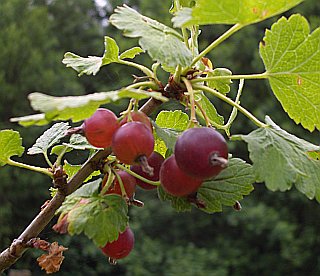
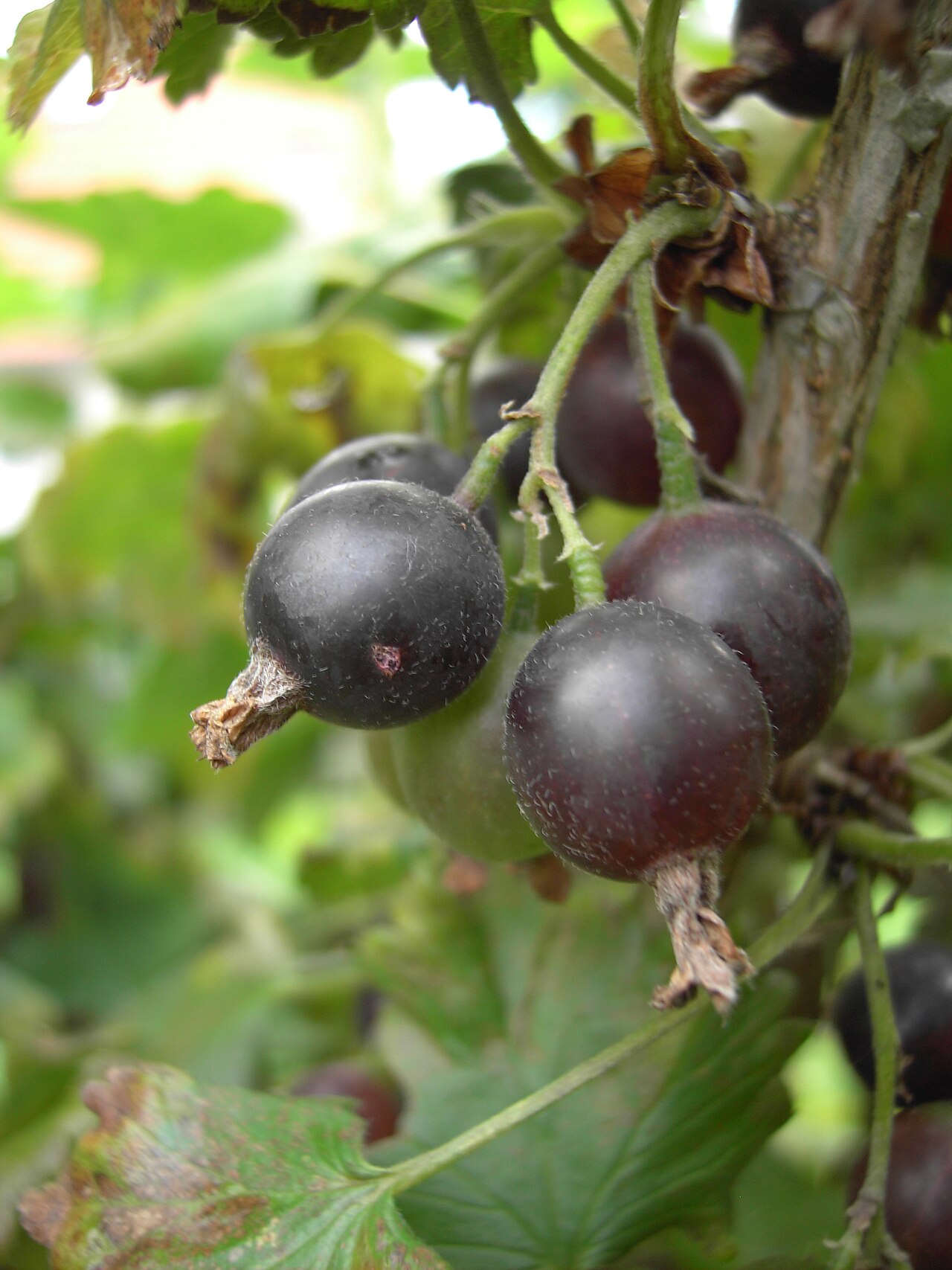
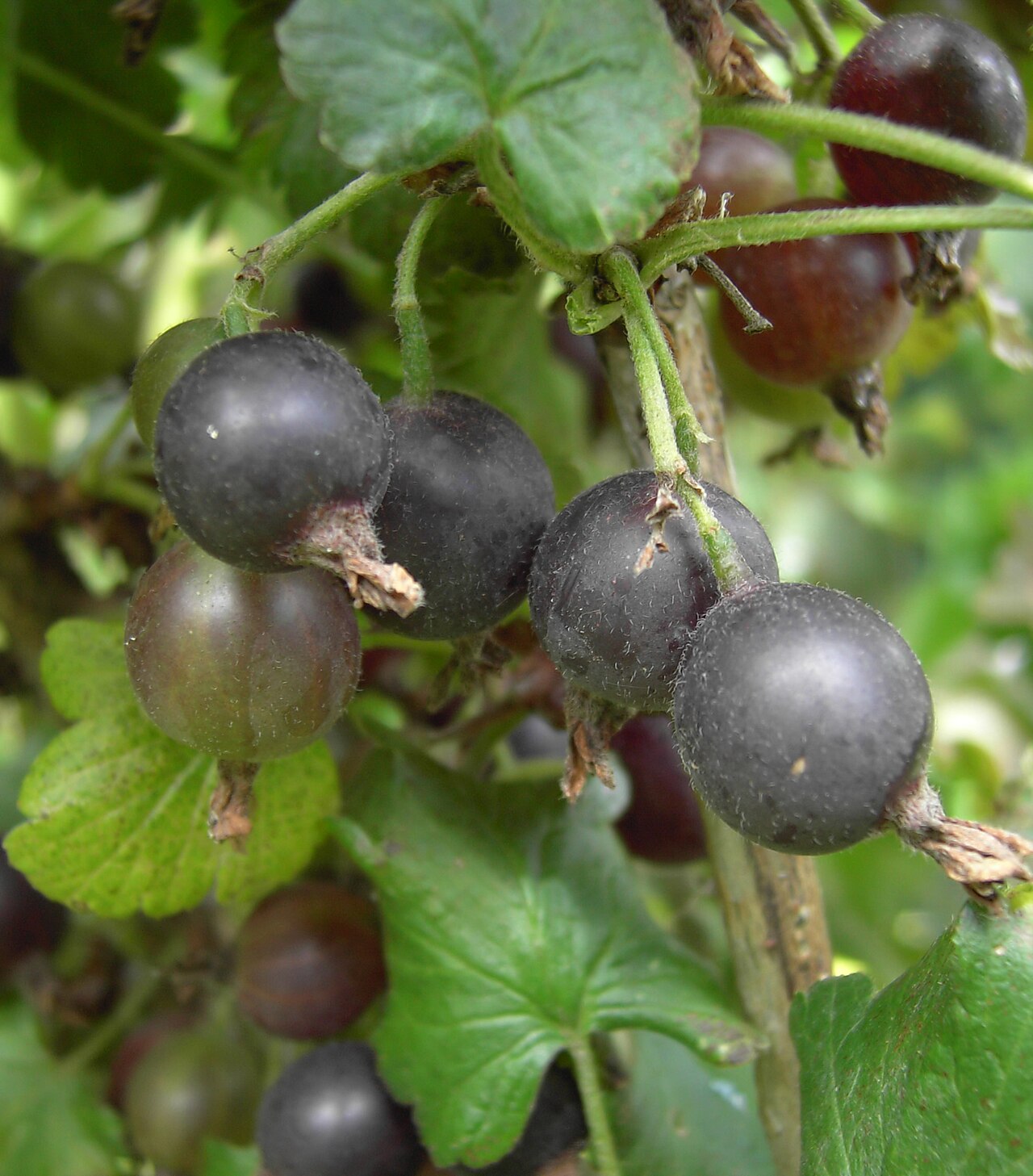
Jostaberry is a deliberate hybrid — black currant crossed with gooseberry — bred in Germany to combine the currant’s flavor and disease resistance with the gooseberry’s larger fruit, minus the gooseberry’s thorns. The result is a vigorous, thornless shrub (4–6 feet) that produces large, dark berries with a flavor somewhere between a currant and a gooseberry: tart, rich, and excellent cooked. Jostaberries are self-fertile, so one plant fruits, though yields improve with a second. Plant in spring or fall in rich, moist, well-drained soil, mulch thickly, and prune in winter to remove old wood and keep the center open. Note the legal footnote: currants and gooseberries are restricted or banned in some states because they host white pine blister rust — check your state’s rules before planting any Ribes, including jostaberry.
Water & feeding
Consistent moisture is important; Ribes shrubs are shallow-rooted and fruit poorly in drought. Mulch to hold water and keep roots cool. Feed in spring with compost; avoid heavy nitrogen that pushes soft growth.
Common problems
- White pine blister rust regulations — check state restrictions before buying
- Birds — net before the berries darken
- Powdery mildew in humid, crowded plantings — space for airflow and prune for light
- Leaf spot and currant sawfly in some regions — remove affected leaves and keep the plant vigorous
Harvest
Pick when the berries are fully dark purple-black and soft — they ripen over several weeks, so harvest in passes. Use fresh for a tart snack, or cook into jams, pies, sauces, and juice, where jostaberries hold their flavor better than either parent.
Browse all plant & pest guides
Propagation
The honest headline: if you want another jostaberry exactly like the one you have, take a cutting. Jostaberry is a hybrid — Ribes × culverwellii, a cross of blackcurrant, gooseberry, and the North American coastal black gooseberry — and like most hybrids it does not come true from seed. A seedling is a genetic reshuffle: berry size, flavor, and cropping are all unknown until the bush is old enough to fruit, by which time you have given several years of garden space to a plant that may be mediocre. A cutting is an exact clone of a bush you have already tasted from, and that is the whole argument.
Hardwood cuttings are the classic route, and they are the easiest. In late autumn into winter, while the bush is dormant, cut young shoots into pieces 15–20 cm long, each carrying 4–5 buds. Plant them in the ground or in pots of well-draining mix with two buds above the soil, and wait — jostaberry cuttings root slowly, over several months, so do not dig them up in spring to check. Give them winter protection (a mulch layer or fleece) if a hard freeze is coming, and leave them undisturbed until you see strong new growth.
Half-ripe cuttings are the summer alternative: take soft, current-season shoots in July or August, trim them to about 15 cm, strip the lower leaves, dip the cut end in rooting hormone, and set them in moist mix under cover to hold the humidity. They need steady moisture and bright, indirect light, and they root faster than hardwood cuttings — but they also dry out faster, so the cover stays on until they are clearly growing.
Layering is the lazy gardener’s method, and it works beautifully on a bush with low, flexible branches. In fall, bend a young shoot down to the ground, nick the bark lightly where it touches the soil, peg it down, and cover the buried section with earth, leaving the tip exposed. Leave it alone all winter; by the following year it will have rooted, and you can cut it free from the parent and move it. Jostaberry also throws suckers from the base, and those are the easiest material of all — separate them in winter, while the plant is dormant, and transplant them straight away, roots and all.
Seed is the one method to skip. It can be done — fresh seed sown in autumn, or stored seed after about three months of cold stratification — but the offspring will be variable, germination is slow and uneven, and you will wait years to find out whether the berries are any good. Save seed for breeders. And one Florida reality check before you start: jostaberry is a cool-climate shrub that wants a real winter chill, and most of Florida does not provide one. In north Florida it is a fair experiment in the coolest, mulched spot you have; in central and south Florida, expect a struggling shrub that fruits lightly if at all. Good cuttings cannot fix a climate mismatch — they can only give you the best possible start in the right spot.
Varieties
Every named variety of Jostaberry with its own growing guide:
- Jogranda Jostaberry — The big-berried jostaberry: larger fruit than Josta on a robust, late-ripening bush, the jostaberry for jam and pies.
- Josta Jostaberry — The original jostaberry: the first gooseberry-blackcurrant hybrid, thornless-ish and self-fertile, the jostaberry to start with.