
🌳 Walnuts
What it looks like
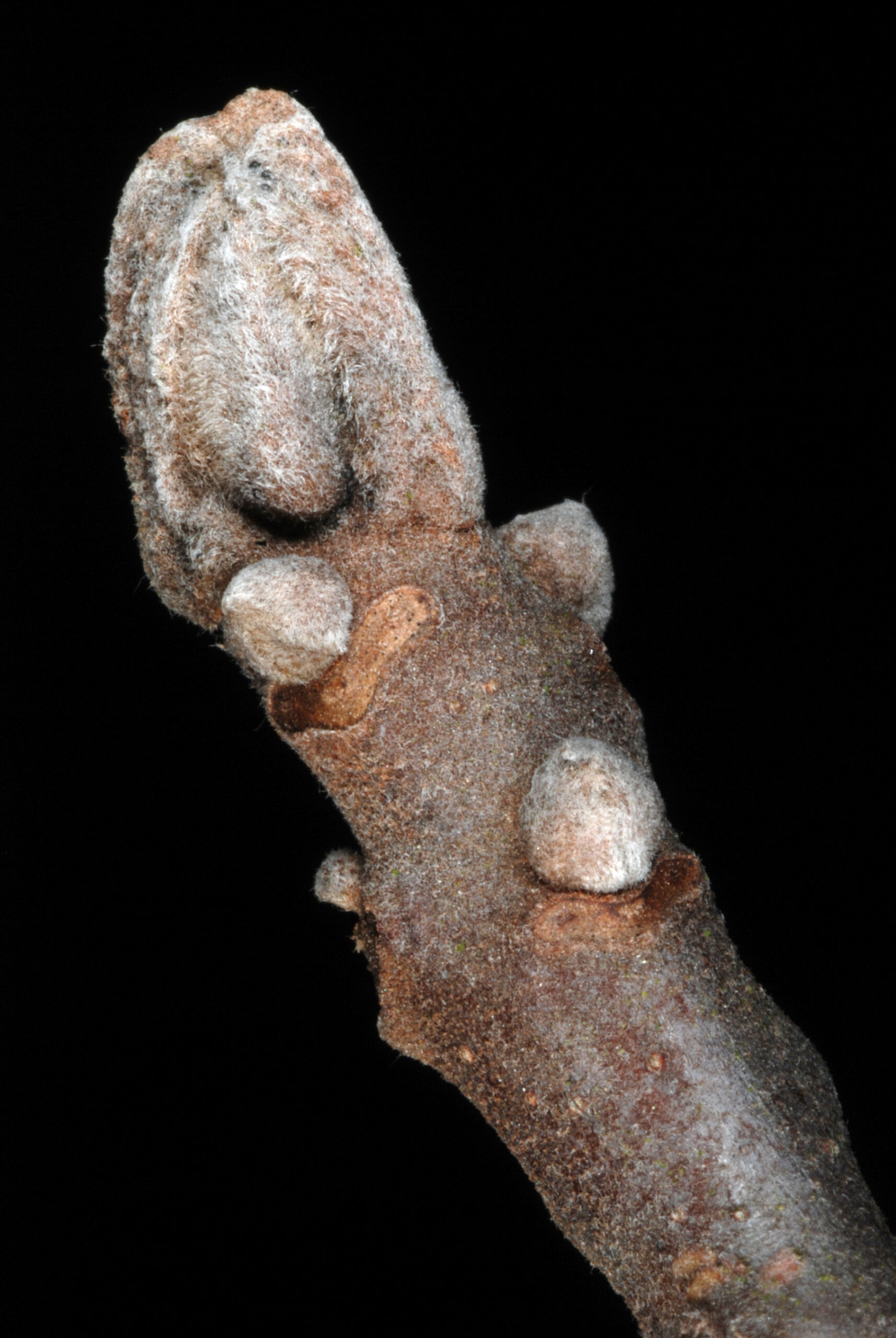
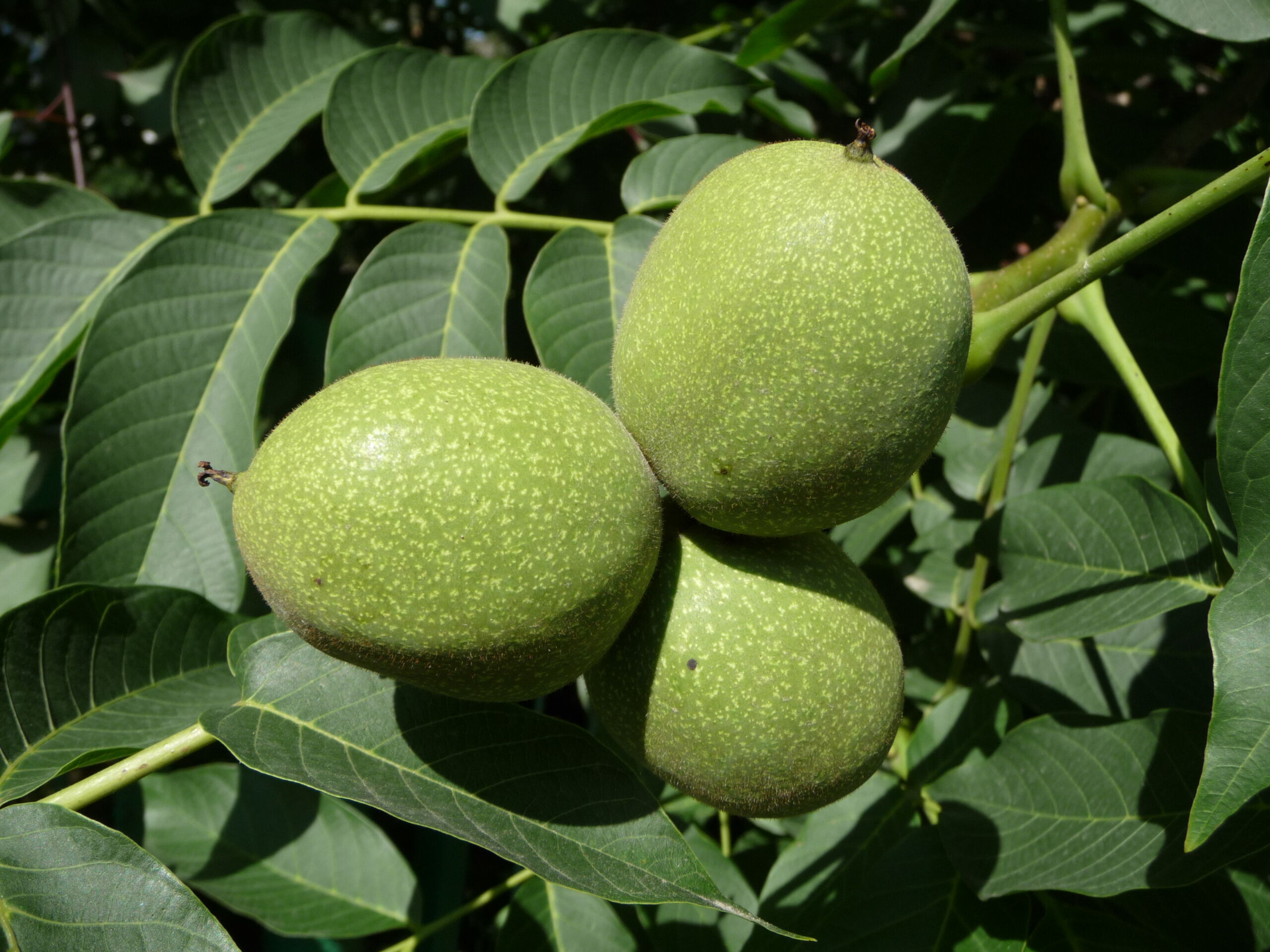
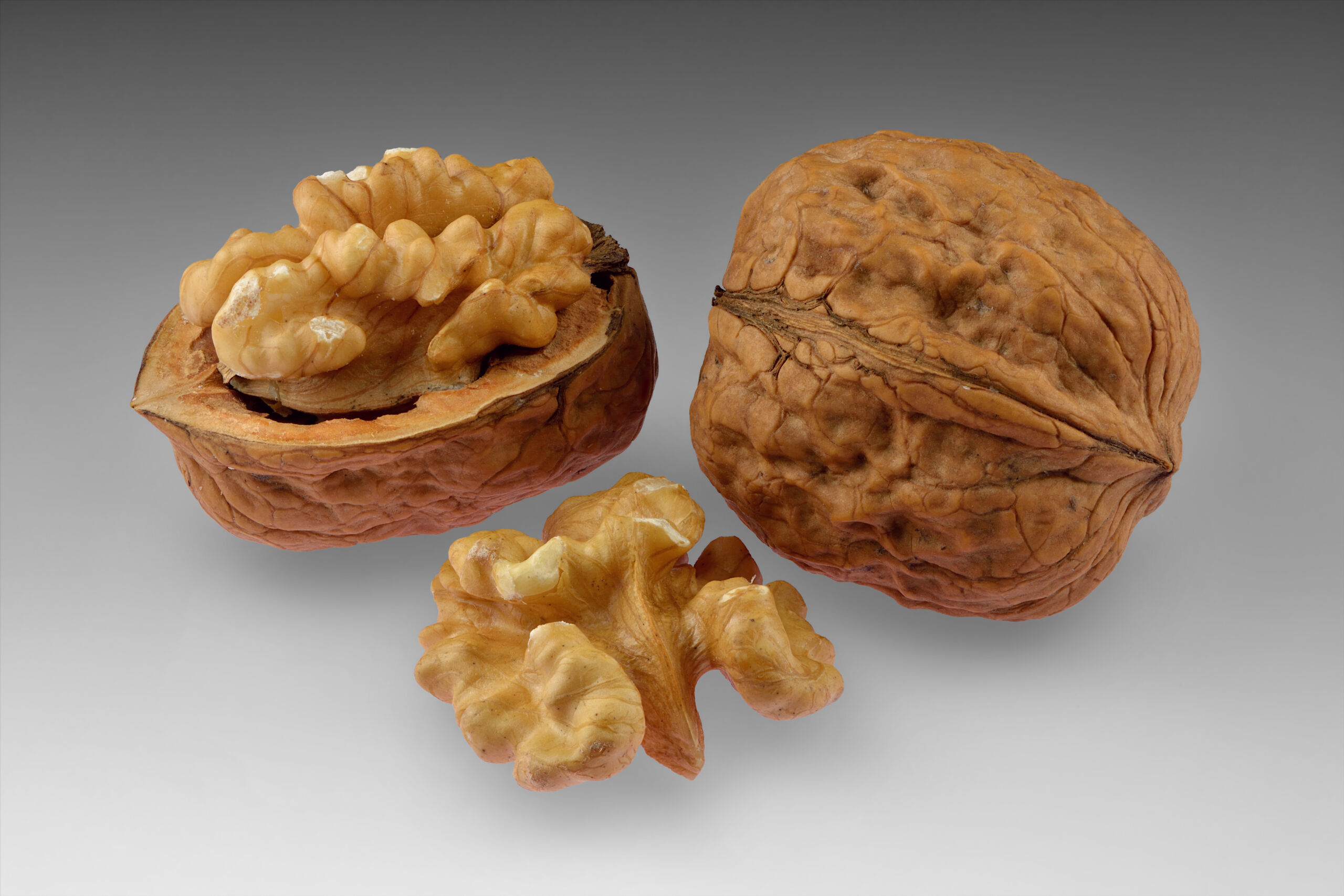
Walnuts are deciduous trees of the genus Juglans, in the family Juglandaceae, about twenty-one species ranging across the north temperate Old World from southeast Europe east to Japan, and more widely in the New World from southeast Canada west to California and south to Argentina. They are big trees — 10 to 40 metres tall — with pinnate leaves 200 to 900 millimetres long, carrying 5 to 25 leaflets, and with a fruit that is a nut in a husk: green and fleshy when young, dark and staining when ripe, splitting to reveal a hard, grooved shell and a kernel shaped, with uncanny accuracy, like a small brain. That kernel is the grocery-store walnut, and the timber is the dark, hard, durable wood of furniture, panelling, gunstocks, and musical instruments.
The butterfly connection is a host story in the nut-tree world. The banded hairstreak feeds on oaks including chestnut oak, white oak, and northern red oak, plus American chestnut, walnuts (Juglans species), and hickories (Carya species) — a broad host list within the nut trees, with eggs laid on woody twigs to overwinter and hatch in spring as the leaves emerge. The mention is genus-level, Juglans species, with no single walnut named — which is exactly why this guide is a genus guide. A banded hairstreak on a walnut in the eastern United States is most likely on black walnut, but the guide’s claim is the genus, and this guide honours that scope.
One plain-text disambiguation, because the site already has a Walnut guide and this guide must not swallow it. The existing Walnut guide, page 7062, covers two species only: English (Persian) walnut, Juglans regia, the grocery-store walnut with a thinner shell, and black walnut, Juglans nigra, the North American native timber and shade tree — with grafted regia cultivars like Chandler and Hartley as its variety guides. This guide claims the whole genus, Juglans spp., including the species the Walnut guide does not cover: butternut, California black walnut, Arizona walnut, Japanese walnut, Manchurian walnut, and the rest. If you are growing regia or nigra for nuts, the Walnut guide is your detailed guide; if you are learning the genus, identifying a walnut you did not plant, or growing any other Juglans species, you are in this guide’s territory.
Florida note: Say this plainly: most walnuts are temperate trees, and Florida is at the warm edge of their world. Black walnut’s published range reaches across northern Florida, and it can grow there as a large shade and timber tree, but English walnut is not a Florida tree — it wants colder winters and drier summers than Florida offers — and no walnut belongs in a small Florida yard. A walnut needs the space of a small house lot, deep soil, and neighbours that tolerate juglone, the chemical moat described below. In Keystone Heights, a black walnut is a legacy tree for a large property, not a garden-bed plant.
How to grow
Grow walnuts where they have room: full sun, deep, fertile, well-drained soil, and 30 to 60 feet of space in every direction — black walnut can reach 75 to 100 feet tall and wide, and even the smaller species are trees, not shrubs. Plant grafted trees in late winter or early spring while dormant, with the graft union above soil level, and plant seedlings with the same spacing and the same patience: walnuts take 4 to 10 years to first nuts depending on species and whether grafted, and they are century trees, not quick crops. Walnuts are wind-pollinated and mostly self-fertile, though a second variety improves set, and they are best pruned in fall or late summer, since spring pruning makes walnuts bleed sap heavily.
Propagation follows the nut-tree pattern: seed (stratified nuts sown in fall), grafting for named cultivars, and nursery stock for everyone who does not want to wait a decade to learn they planted the wrong walnut. Buying nursery stock is the sane option, and it is worth saying that nursery stock labelled only walnut, with no Latin name, could be any Juglans species or hybrid — ask for the species, and match it to your climate, your space, and your juglone tolerance. A walnut planted in the wrong place is a fifty-year argument with a tree that always wins.
For wildlife, the rule is to respect the juglone moat and enjoy everything outside it. Walnut leaves, husks, and roots release juglone, a compound that inhibits many plants — tomatoes, peppers, potatoes, and other juglone-sensitive species fail under walnuts, while tolerant plants, grasses, and many natives carry on. Squirrels plant walnuts for you, birds and mammals eat the nuts, and the banded hairstreak lays its eggs on the twigs. A walnut in a large, unsprayed yard is a small, honest piece of nut-tree habitat: no fussy neighbours underneath, no spray, just a big tree, a husk litter in autumn, and a canopy that feeds more than the gardener.
Water & feeding
Water is straightforward: deep, fertile, well-drained soil, watered deeply through establishment and in dry spells, with drainage that never leaves the roots standing in water. Walnuts are deep-rooted trees that resent both drought and waterlogging, and a young walnut in a dry, shallow soil grows slowly and stays small — which, for a tree that wants to be 100 feet tall, is a polite way of failing. Mulch to hold moisture without piling mulch against the trunk, and keep the root zone free of competing turf for the first few years.
Feeding is moderate: compost at planting and a spring topdressing of compost in poor soil is the right scale, with soil pH around 6.0 to 7.0 for the commonly grown species. The soil science here is the juglone story: juglone is released from leaves, husks, and roots, broken down by soil microbes over weeks to months, and concentrated where husks and leaves accumulate. A walnut’s root zone is therefore a chemical neighbourhood, not just a shady one, and the plants that thrive there are the ones that tolerate juglone or avoid the root zone altogether. Planting under a walnut is not just gardening in shade — it is gardening in a tree’s chemistry, and the right neighbours are the receipt.
Common problems
- Juglone damage. Sensitive plants yellow, wilt, and die under walnuts. Do not plant tomatoes, peppers, potatoes, or other sensitive crops in the root zone, and do not mulch vegetable beds with walnut leaves or husks.
- Size surprise. A walnut is a century tree for a large property. Do not plant it under wires, against a house, or over a septic system and then act betrayed.
- Slow nuts. Seedling walnuts take years to fruit, and some take a decade. Buy grafted stock if nuts are the point, and buy patience either way.
- Butternut canker. Butternut, Juglans cinerea, is endangered across its range by an introduced fungal disease, butternut canker. Do not move butternut material casually, and buy nursery stock from reputable sources.
- Husk stain. Ripe walnut husks stain hands, clothes, and concrete dark brown. Harvest with gloves, and site the tree where stain is welcome.
- Wrong species, wrong climate. English walnut wants cold winters; black walnut wants deep soil and space. A tag that says only walnut tells you neither. Check the Latin name.
Harvest
The walnut harvest is the nut, gathered when the husk splits and the nut drops, in autumn. Husk promptly — gloves on, stain expected — wash, dry thoroughly, and cure before storing, because a damp walnut moulds and a mouldy walnut is a wasted year. English walnuts crack easily and give the grocery-store kernel; black walnuts give an intensely flavoured kernel in a famously hard shell that wants a hammer, a vice, or a purpose-built cracker, and the flavour repays the effort. The timber harvest is a different timescale: walnut wood is harvested from mature trees, and a walnut planted for timber is a gift to the next generation, not to the planter. Leave most nuts for squirrels and birds where the tree is wild, and take your share from your own tree with gratitude and gloves.
Browse all plant & pest guides
Saving seeds
Walnut seed works beautifully — it is how walnuts have spread themselves across continents for millennia — but know what you are signing up for before you start. A seed-grown tree takes roughly 8–15 years to bear nuts, and the nuts will not match the parent tree: seedlings shuffle size, shell thickness, kernel flavor, and cropping. Named cultivars — ‘Chandler’, ‘Hartley’, ‘Thomas’, and the rest — are grafted, not grown from seed, and grafted trees fruit in about 4–7 years. Seed is for species trees, rootstocks, timber, and patient experimenters; grafting is for anyone who wants a particular nut. If you sow extras, the spares make excellent rootstock for top-working with scion wood from a tree whose nuts you have actually tasted.
Collect nuts in late September through November, when the husks split naturally and the nuts drop with a gentle shake. Husk them promptly — wear gloves, because walnut husks stain skin, clothes, and concrete a deep brown that does not wash out, and the husk juice is where much of the juglone lives. The float test sorts the keepers: drop the husked nuts in a bucket of water and keep the sinkers, discarding the floaters, which are usually empty or damaged. Do not let the good nuts dry out before the next step — dry walnut seed dies, and a nut left on a shelf for a month is a dead nut.
The next step is a long cold nap. Walnuts need 90–120 days of cold-moist stratification to break dormancy — some references give the full 120 days for black walnut and about 90 for English walnut, but the range is the honest answer. Mix the nuts with damp sand or peat moss in a bag or bucket, seal it, and refrigerate at roughly 34–41°F, checking now and then that the medium stays moist, never soggy. Or skip the fridge entirely and sow the nuts outdoors in fall, letting winter do the chilling for you — the simplest method, and the one the trees themselves use.
Sow 2–3 inches deep, pointy end down, in deep pots or directly where the tree will grow. Deep matters: walnuts throw a taproot early and resent transplanting, so a shallow pot is a false start. Keep the soil warm — around 60–70°F — and moist, and expect sprouts in about 2–4 weeks after stratification. Grow seedlings on in pots for a season or two before planting out, and protect sown nuts from squirrels with wire mesh, because squirrels consider your seed stash their pantry.
Now the juglone note, which is not optional reading. Walnuts release juglone, a chemical that inhibits many other plants, from their roots, husks, and fallen leaves — black walnut most of all. Tomatoes, apples, azaleas, and a long list of other garden favorites will wilt, yellow, and die within the tree’s root zone, which can reach roughly 50 feet from a mature black walnut. Site the tree accordingly: give it room, keep the vegetable garden and the prized shrubs well away, and never compost walnut leaves or husks, because the juglone rides along into the compost and into next year’s beds. Do not plant where a walnut once stood, either — the juglone lingers in the soil after the tree is gone.
In Florida, the honest framing is that walnuts are a north Florida experiment. Black walnut wants a colder winter than most of the state provides, and English walnut wants chill that central and south Florida simply does not get. In the Panhandle and north Florida, a seed-grown black walnut in deep, fertile, well-drained soil has a fair chance; further south, expect a struggling tree that may never fruit well. Plant it where it will have room to become the 30-to-100-foot tree it is destined to be, and plant it knowing the payoff is measured in decades, not seasons.
Species
Walnuts are a genus of about twenty-one species, and this section names the notable ones in plain text, because the banded hairstreak’s Juglans species mention covers the genus and this guide will not pretend otherwise. Juglans regia, English or Persian walnut, is the walnut of commerce, widely cultivated and usually grafted. Juglans nigra, eastern black walnut, is the North American native timber and shade tree, with its own detailed coverage in the Walnut guide. Juglans cinerea, butternut or white walnut, is the sweet, oily-nutted eastern species, endangered by butternut canker. Juglans californica, California black walnut, is the southern California species, often used as rootstock for regia. Juglans major, Arizona walnut, is the southwestern species of canyons and streams. Juglans ailantifolia, Japanese walnut, Juglans mandshurica, Manchurian walnut, and Juglans cathayensis, Chinese walnut, are the Asian members of the genus. Gardeners should buy by the species name, and treat a tag that says only walnut as an unanswered question, not as an identification.