
🦐 White Shrimp Plant
What it looks like
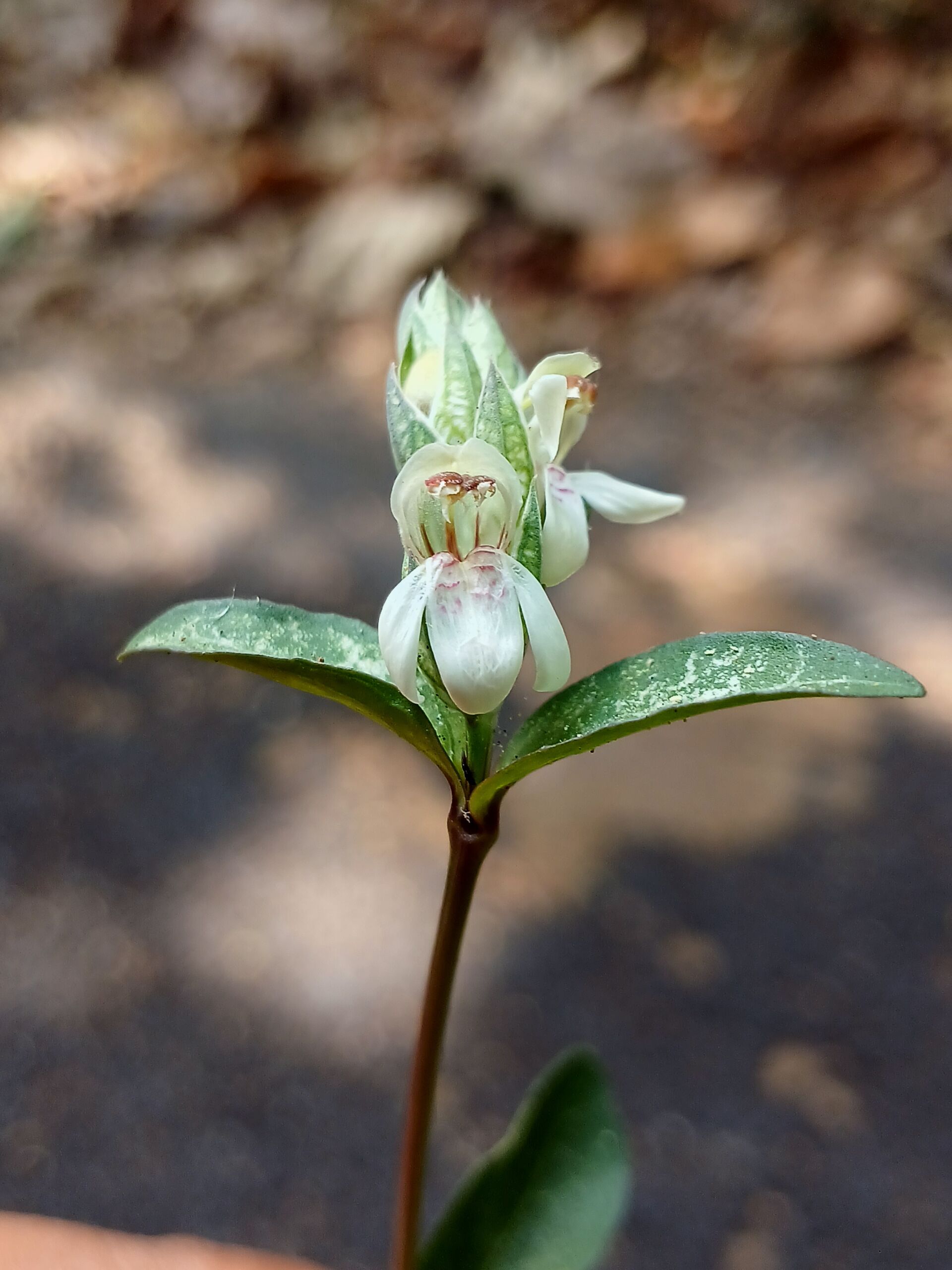
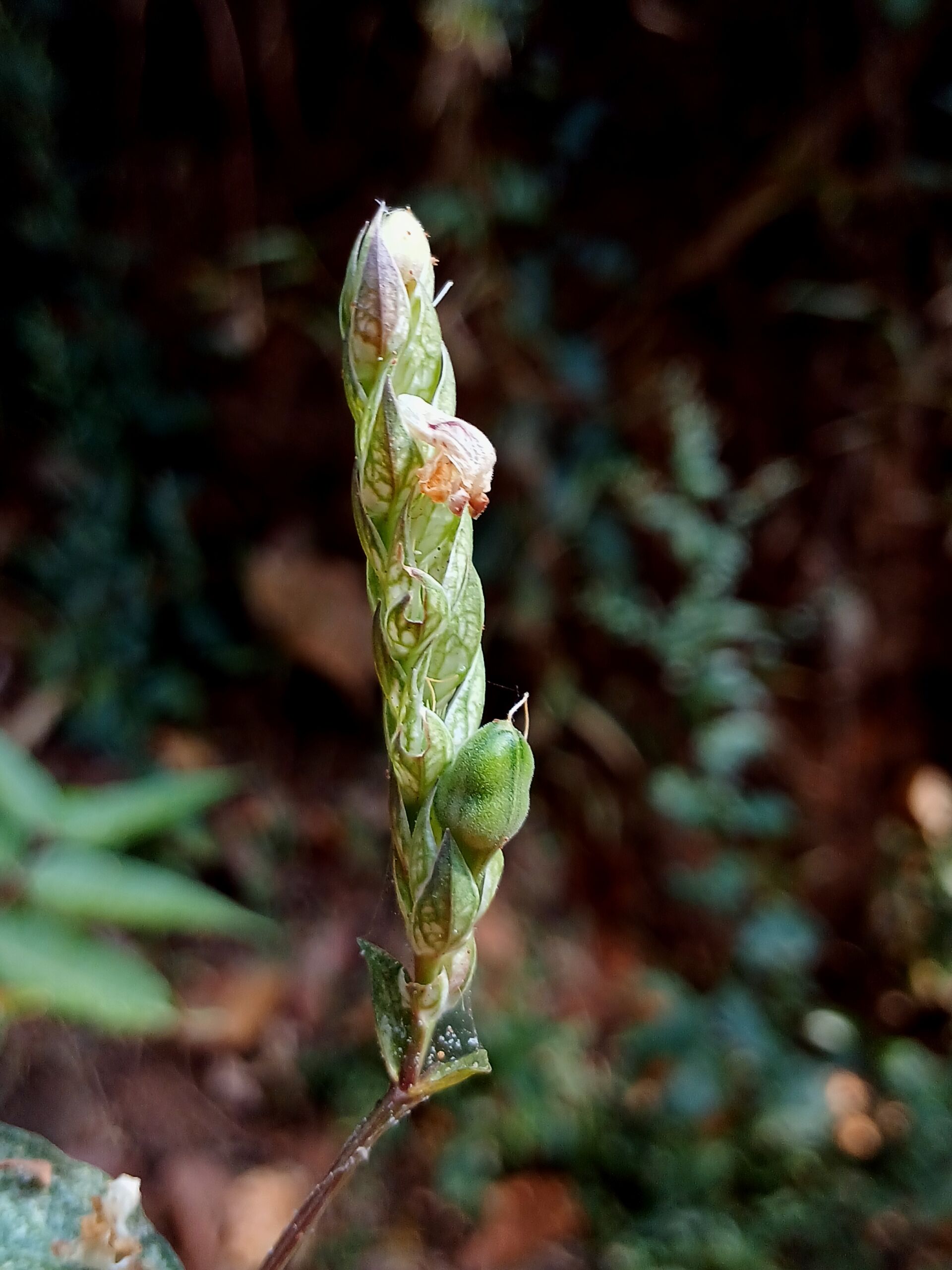
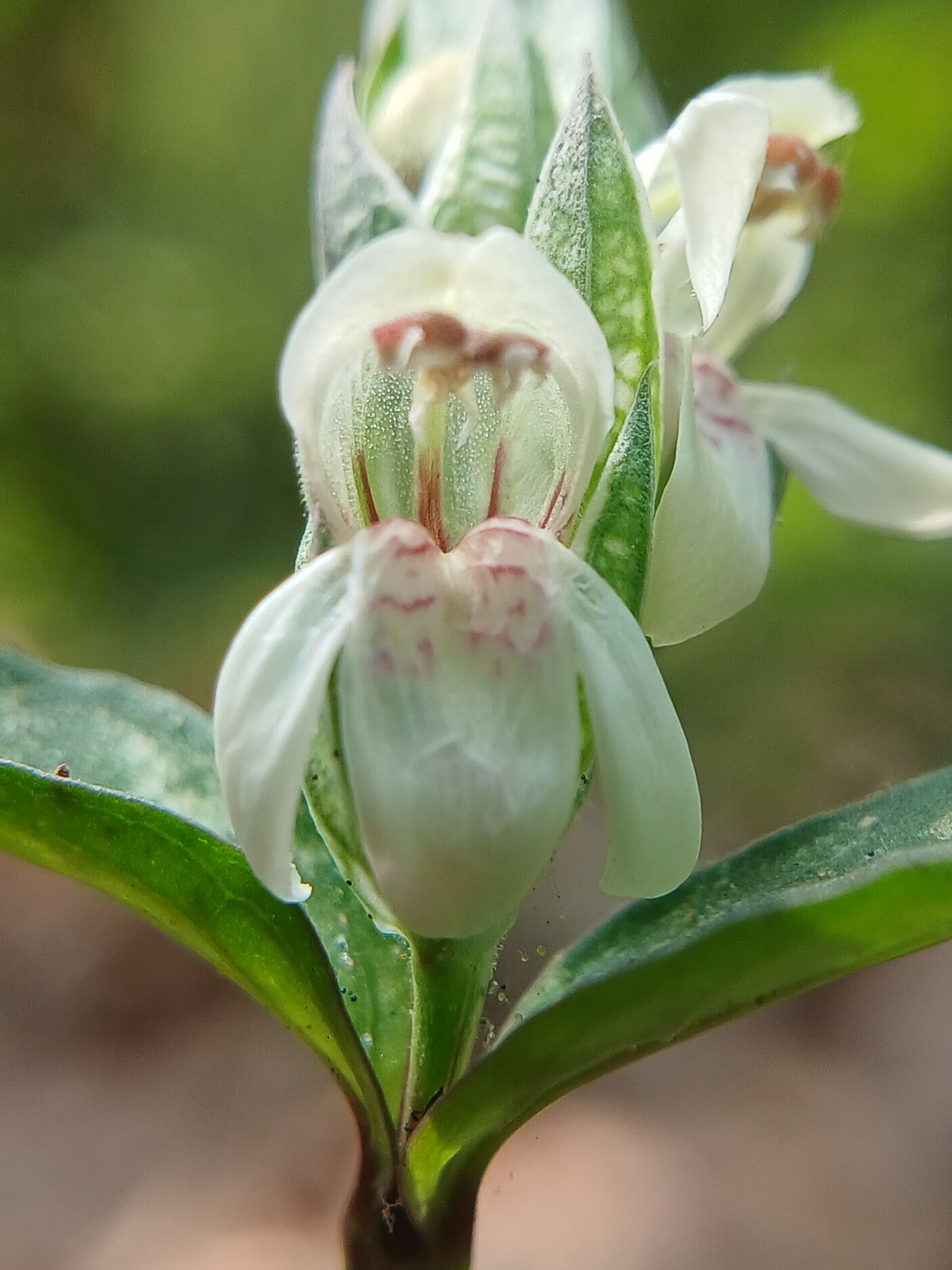
White shrimp plant is a shrubby herb of the acanthus family, Acanthaceae, native to tropical Africa and tropical Asia, and widely cultivated as an ornamental for inflorescences that look like nothing else in the garden. The show is not the flower but the bracts: upright terminal or axillary spikes, up to about 15 centimetres long, of overlapping papery white bracts with distinctive green veining, held erect above the foliage from late spring through autumn. Between the bracts emerge small tubular flowers, distinctly two-lipped, with a cupped upper lip and a three-lobed lower lip marked white and magenta-purple, opening white to pale lavender and maturing to pink — so a single spike carries several colours at once, like a shrimp that cannot decide what to wear. The leaves are opposite, egg-shaped to elliptic, dark green and slightly glossy, on upright four-angled stems often tinged or lined with purple, and the plant typically grows 1 to 2 metres tall as a free-branching, upright shrub that goes leggy without pruning.
The butterfly connection is a host story from the tropics. The mimic butterfly’s caterpillars feed on a range of low tropical plants including Asystasia gangetica, Asystasia lawiana, Barleria cristata, Justicia betonica, Ipomoea carnea, and several mallow-family genera — and the mimic guide is explicit that, in Florida, where the butterfly is only a stray, there is no local host-plant story and none is claimed. This guide follows that honesty: Justicia betonica is a genuine mimic host where the butterfly and the plant meet in the tropics, and it is not a Florida butterfly plant. Plant it for its bracts, not for a Florida mimic colony.
One plain-text disambiguation, because the shrimp-plant names are a trap and this guide must not swallow its neighbours. White shrimp plant, Justicia betonica, is not the common shrimp plant, Justicia brandegeeana, the pink-bracted Mexican species sold everywhere as shrimp plant — different species, different bract colour, different plant. It is also not the Tube-tongue genus guide’s plant in the species sense: the Tube-tongue guide covers Justicia spp. broadly, with well over 900 species, and this guide claims Justicia betonica only. Taxonomy adds a further wrinkle, stated openly: Kew recognises this plant as Nicoteba betonica, with Justicia betonica as a synonym, which is why the photographs here carry the Nicoteba name. This guide files the plant under the butterfly guide’s name, Justicia betonica, and notes the Nicoteba synonym so a nursery tag under either name is recognisable.
Florida note: White shrimp plant sits in zones 9–10, which puts it in reach of central and south Florida gardens as a tropical ornamental — but reach is not the same as recommendation without conditions. The plant is naturalized across the Hawaiian islands, where published assessments flag high-risk traits, and it is regarded as an environmental weed in Queensland, Australia, forming dense stands along ponds, rivers, and streams. In Florida, grow it as a contained ornamental — deadhead before seed capsules split, do not dump cuttings or prunings where they can root, and never plant it near natural waterways. A shrimp plant in a pot or a tended bed is a curiosity; a shrimp plant in a ditch is a weed with a head start.
How to grow
Grow white shrimp plant in full sun to part shade, in moist but well-drained soil rich in organic matter, with shelter from hard frost — it is a tropical plant, and a hard freeze is the end of the above-ground story, though established crowns in the warmest spots may resprout. Set nursery plants in spring after frost danger, mulch to hold moisture, and prune regularly: the plant branches freely but goes leggy without cutting back, and pruning after a flush of spikes encourages fresh, compact growth and a new round of bracts. Space plants about 2 to 3 feet apart where they are grown as a group, and give a single specimen room to reach its full shrubby height without crowding.
Propagation follows the acanthus pattern: stem cuttings root readily, especially where stems touch soil and root at the nodes, and seed is produced in club-shaped capsules that open explosively when ripe, scattering seeds some distance from the parent. That explosive seed habit is charming in a greenhouse and a warning in a garden: deadhead spent spikes if you do not want volunteers, and treat every fallen capsule as a planting you did not approve. Buying nursery stock is the sane option, and it is worth saying that nursery stock labelled only shrimp plant, with no Latin name, is most likely Justicia brandegeeana, not this plant — check the Latin name, and check the bract colour, before you buy.
For wildlife, the honest scale is this: the long-lasting spikes attract butterflies and bees through the warm months, and the plant’s value as a mimic host belongs to the tropics where mimic caterpillars actually feed on it. In a Florida garden, its wildlife value is as a nectar plant for passing butterflies and bees, not as a host-plant promise. Grow it for the bracts, deadhead it for containment, and let the bees do the rest.
Water & feeding
Water is straightforward: consistently moist soil while young and through dry spells, with drainage that never leaves the roots standing in water. A tropical shrubby herb in a sunny bed dries out faster than its looks suggest, and a white shrimp plant that dries out stops flowering and thins from the base. Mulch helps enormously, holding moisture and cooling the roots in summer, and it doubles as the organic matter the plant feeds on as it breaks down.
Feeding is moderate: compost at planting and a balanced feed through the growing season in poor soil is the right scale. Heavy fertilizer produces soft, leggy growth on a plant that already wants to go leggy, which is the opposite of what a compact, bract-covered shrub needs. The soil science here is the acanthus story: fast-growing tropical herbs run on steady moisture, steady organic matter, and a living soil community that cycles nutrients quickly in warm conditions. A white shrimp plant in a mulched, compost-fed bed is not just a curiosity — it is a small piece of tropical understorey chemistry, and the green-veined white bracts are the receipt.
Common problems
- Wrong shrimp plant. A tag that says only shrimp plant is usually Justicia brandegeeana, the pink-bracted species, not this white-bracted plant. Check the Latin name and the bract colour.
- Escaping. Stems root at the nodes and capsules explode seed. Deadhead, contain, and never dump prunings near waterways or natural areas.
- Legginess. Unpruned plants go leggy and bare at the base. Cut back after flowering flushes to keep the shrub compact.
- Frost. A hard freeze kills top growth. In zone 9, site against a warm wall and mulch the crown; in colder spots, grow it as a container plant brought under cover.
- Dry soil. A tropical herb that dries out stops flowering. Mulch deeply and water through dry spells.
- Volunteers. Seedlings appear where capsules split. Pull volunteers while small, and do not mistake them for a gift — they are the plant’s business plan, not yours.
Harvest
White shrimp plant has no vegetable harvest, and this guide does not invent one. The plant contains lignans, alkaloids, flavonoids, and tannins, and it is the source of a unique compound called jusbetonin — but this guide does not recommend medicinal use, and it does not dose anything. The garden harvest is the spike: cut stems for arrangements, where the papery bracts last well and keep their green veining, and leave most spikes standing for pollinators. A white shrimp plant’s crop is bracts, bees, and the occasional tropical butterfly story, measured in spikes, not in baskets.
Browse all plant & pest guides
Saving seeds
White shrimp plant makes saving seed feel like a small heist, because its seed capsules open explosively when ripe and fling the seed away from the parent. The trick is to catch them first: watch the club-shaped capsules as they turn brown, and either check daily or tie a small paper or muslin bag over a ripening head so the seed pops into the bag instead of across the garden. Let popped capsules finish in the bag, then clean away the chaff and dry the small seed thoroughly before storage.
Sow on the surface of moist seed-starting mix — the seed needs light to germinate, so press it gently into the surface and do not bury it. Warmth is what wakes it up: bottom heat around 75 to 80 degrees gives the fastest, most even germination, usually in two to three weeks. Keep the mix moist but not soggy, and give seedlings bright indirect light until they are sturdy enough to pot on. A short soak in lukewarm water for a few hours before sowing is sometimes recommended, but fresh seed sown warm usually needs no persuasion at all.
Two things worth knowing about this plant’s habits. First, it self-sows freely in warm climates, so a plant left to set seed will scatter volunteers around the bed — a gift if you want more, a chore if you want tidy, in which case deadhead before the capsules ripen. Second, seed is not the only route, and it is not the most faithful one: stem cuttings root in two to three weeks from 10 to 15 centimetre sections taken in spring or early summer, and division in spring works too. Cuttings and divisions are clones of the parent, so if you have a plant you love, take cuttings; save seed when you want numbers, or when you are happy to meet whatever the seedlings turn out to be.
For storage, dry the seed completely and keep it in a labeled envelope in a cool, dark place. In Florida humidity this matters more than usual — seed put away even slightly damp will mould in the jar, so spread it thin on paper until it is fully dry, and add a desiccant packet if you have one. Sow the oldest seed first, and sow a little thickly: shrimp plant seed is small, and a generous sowing covers the inevitable duds.
Species
White shrimp plant is a single species, Justicia betonica, and this section names its neighbours in plain text, because the Justicia genus is enormous and this guide will not pretend otherwise. The Tube-tongue guide covers Justicia spp. broadly, with well over 900 accepted species. Justicia brandegeeana, the common shrimp plant with pink bracts, is a different species and is not covered here. Justicia carnea, Brazilian plume flower, and Justicia spicigera, Mexican honeysuckle, are further relatives, not this plant. Older and current synonyms for this species include Nicoteba betonica, Jacobinia betonica, Adhatoda betonica, and Dicliptera betonica — all names for the same white-bracted shrub this guide covers. Gardeners should buy by the Latin name, under either Justicia betonica or Nicoteba betonica, and treat a tag that says only shrimp plant as an unanswered question, not as an identification.