
🌻 Kimberley Sunset Strawflower
What it looks like
Why this variety
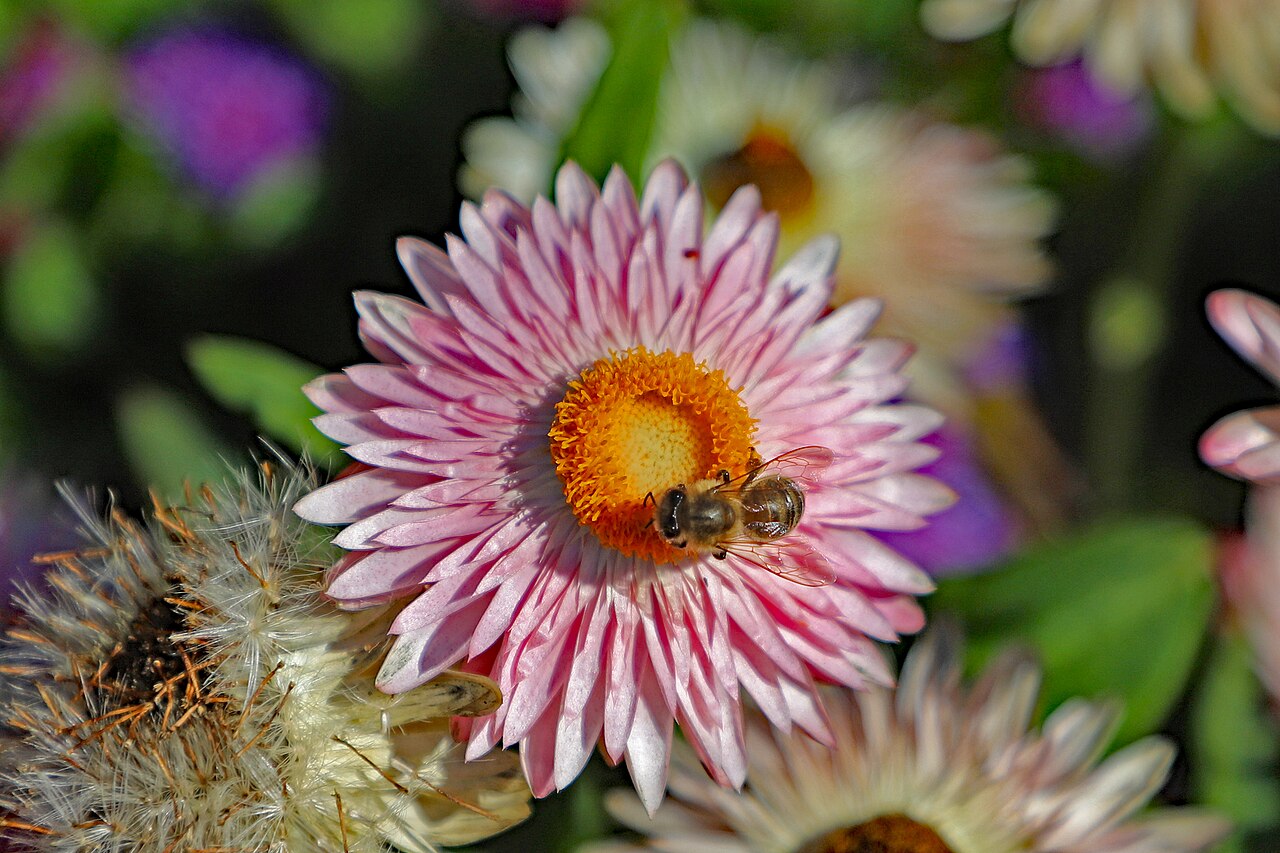
Kimberley Sunset is the strawflower for gardeners who want everlasting color beyond yellow: a shrubby, grey-leaved plant, about 3 feet tall and wide, with soft pink paper daisies from spring to fall — pink being a rare color in strawflowers, which are usually gold, orange, or white. It is similar to Dargan Hill Monarch in habit but pink in flower, and it pairs beautifully with silver foliage, white flowers, and purple companions, bringing a sunset tone to a border dominated by gold.
The trade-off is the same as all perennial strawflowers: it wants sun, drainage, and room, and it grows woody with age, needing a hard prune after bloom to stay shapely. Give it full sun, well-drained soil, and space, cut stems for drying when the flowers are fully open, and prune hard in spring to refresh growth. Pink bracts fade a little faster when dried than yellow ones, so dry Kimberley Sunset in a dark, airy spot to hold its color longest.
If you are new to choosing between cultivars, the Varieties Matter guide explains why the name after the plant matters as much as the plant itself. Kimberley Sunset is a perfect example: it is not just a strawflower in the abstract, it is a strawflower with a specific job, a specific history, and specific strengths.
Florida honesty: strawflower is a genuine statewide Florida plant, thriving in heat and blooming from spring to fall. Kimberley Sunset, as a perennial form, is best in Central and South Florida, where it never freezes hard; in North Florida it may freeze back and regrow, or be treated as an annual. Give it sun and drainage, and it will be one of the easiest pink everlastings you can grow.
How to grow
Start seeds indoors 6 to 8 weeks before the last frost, or sow directly after frost danger — strawflower seed germinates with warmth. Set plants out after frost in full sun and well-drained soil, work worm castings into the bed at planting, and give them room: a mature perennial strawflower is a shrub, not a bedding plant. Cut stems for drying when the flowers are fully open, and prune perennial forms hard in spring to refresh growth.
Set plants 18-24 inches apart in soil with a pH around 6.0-7.5. Work worm castings into the bed at planting and mulch to hold moisture. A well-fed strawflower plant rewards that care directly: steadier growth, better bloom, and a show that actually shows up.
Water & feeding
Water to establish, then water sparingly — strawflowers are drought-tolerant once established and sulk in wet soil. Water at the soil line, do not mulch heavily, and feed lightly: castings at planting is usually enough. In a drought, occasional deep watering keeps it blooming; in a wet summer, drainage is the care program.
Common problems
- Rot in wet soil — strawflower’s killer; plant in sharp drainage or raised beds and do not overwater.
- Woody, leggy growth with age — prune perennial forms hard in spring to refresh growth and keep them shapely.
- Fading when dried in light — dry stems in a dark, airy spot to hold color longest; pink forms fade faster than yellow.
- Wilting in dry soil — strawflowers wilt fast in drought; water deeply in dry spells.
- Aphids on new growth — blast with water and encourage ladybugs; avoid broad-spectrum sprays.
Harvest
Cut stems for fresh and dried arrangements from spring into fall, when flowers are fully open — strawflowers last weeks fresh and years dried, and their papery daisies suit every dried arrangement. Cut in the cool of the morning, hang bunches upside down in a dark, airy spot to dry, and do not dry in light, which bleaches pink forms fastest. Prune perennial forms hard in spring to refresh growth.
Browse all plant & pest guides
Saving seeds
Kimberley Sunset is the strawflower for gardeners who want everlasting color beyond yellow, a shrubby, grey-leaved plant with soft pink paper daisies from spring to fall, so saved seed comes true — start seeds indoors 6 to 8 weeks before the last frost, or sow directly after frost danger, and prune perennial forms hard in spring to refresh growth. The full method is in the Saving seeds section of the Strawflower guide.