
🌸 Knapweed
What it looks like
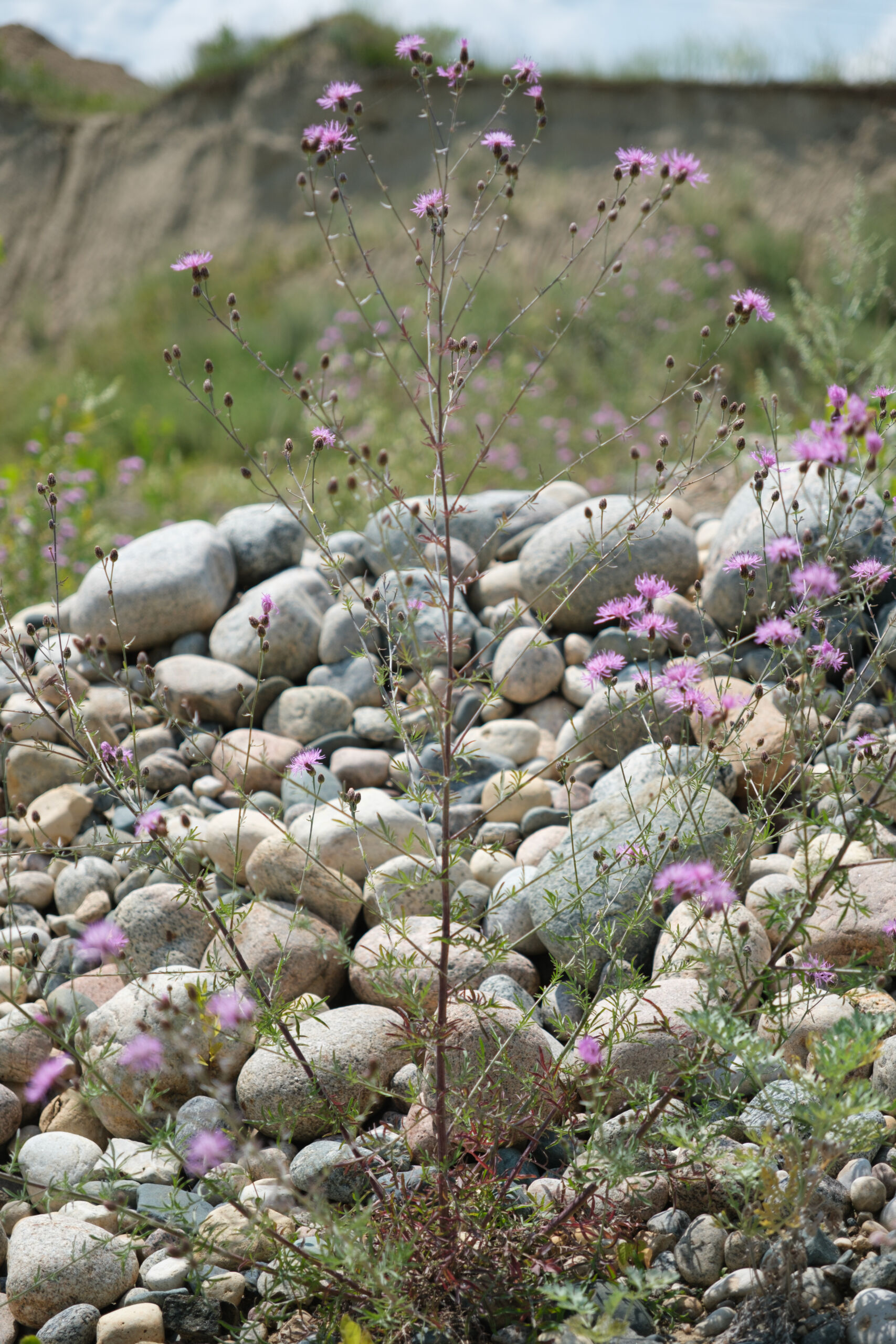
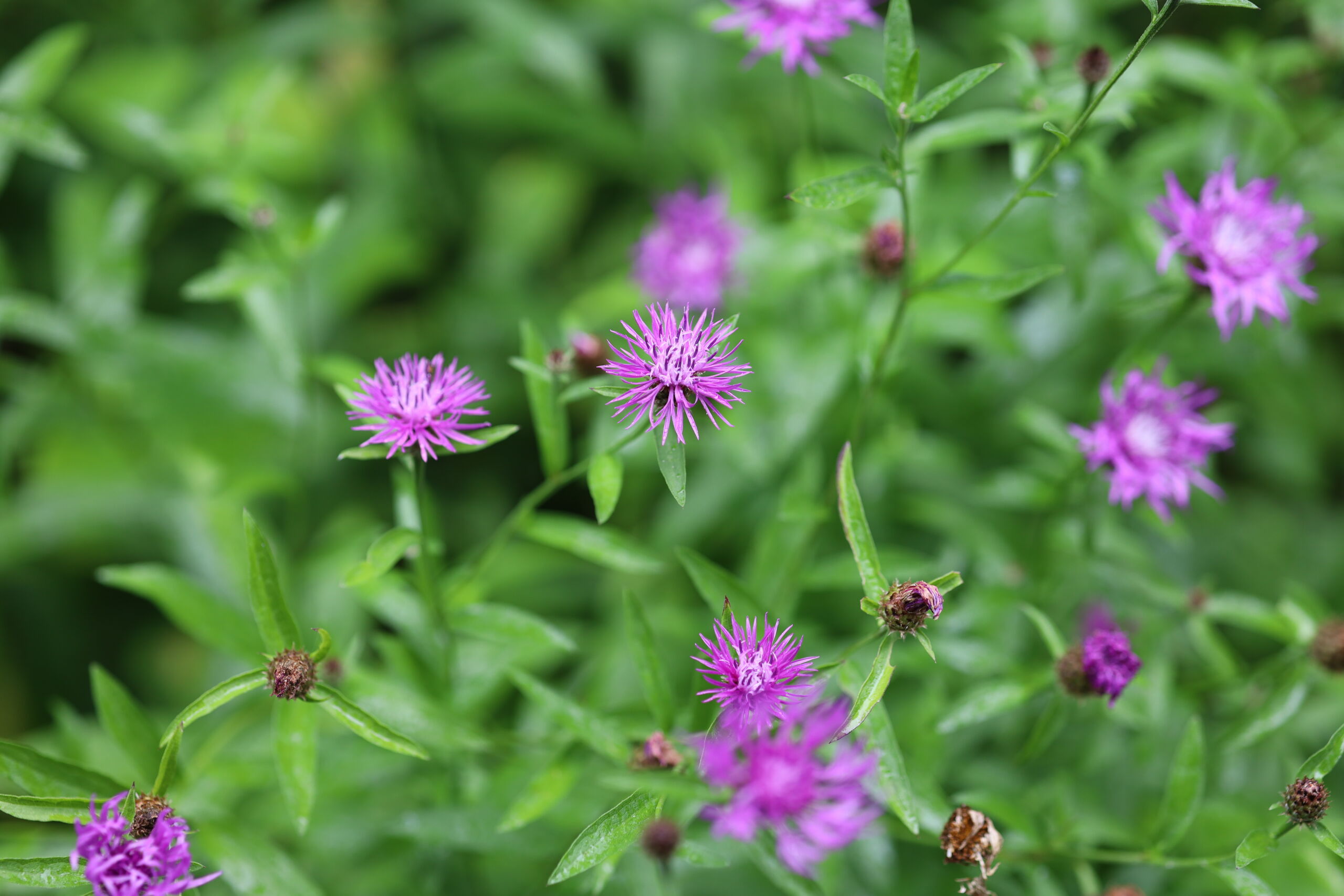
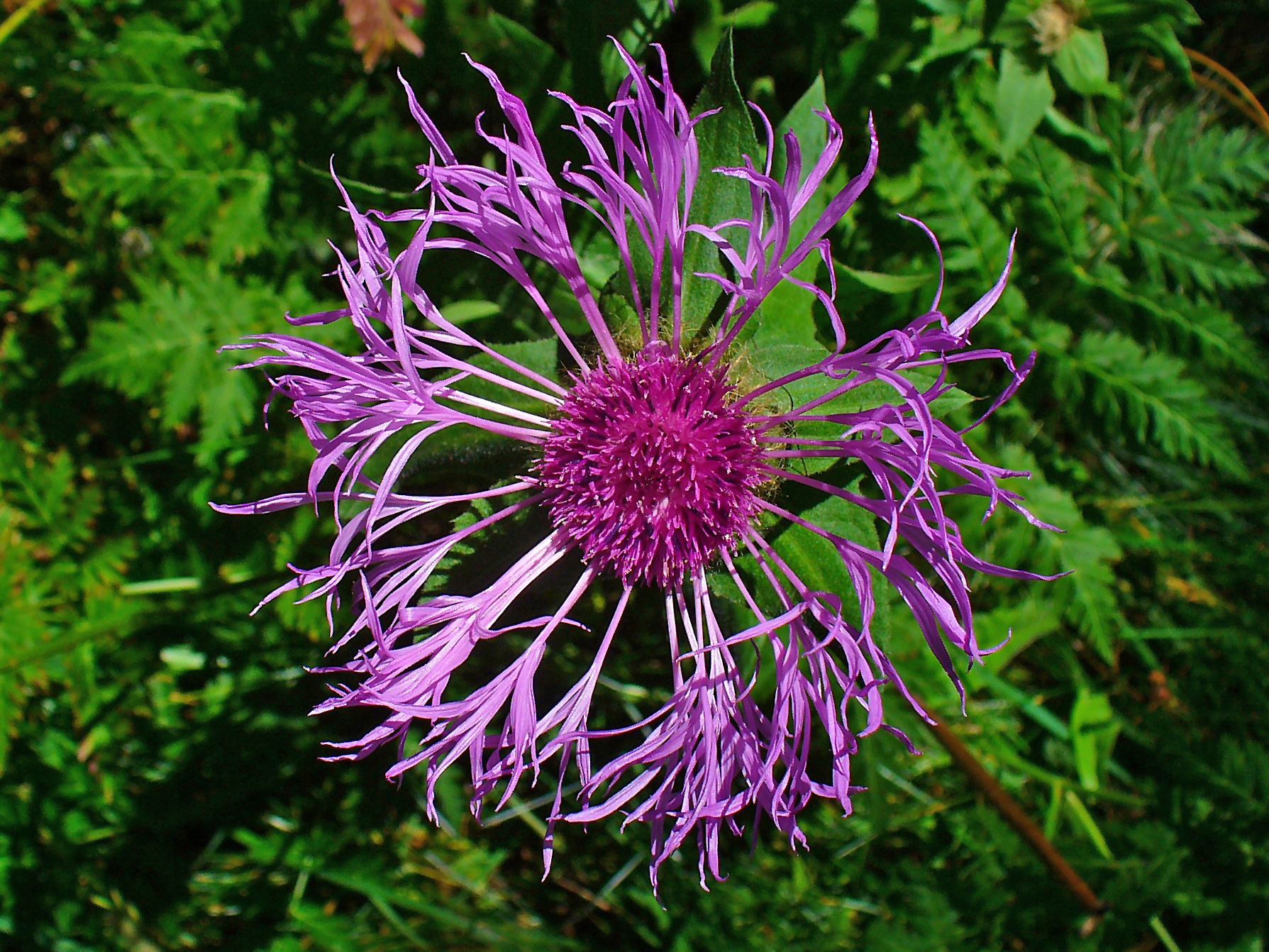
Knapweeds are herbaceous plants of the aster family, Asteraceae, genus Centaurea — a large genus of biennials and short-lived perennials with thistle-like flower heads and a talent for dry, poor, disturbed ground. The flower head is the field mark: a thistle-shaped head of pink, purple, or occasionally white florets, surrounded by overlapping bracts, the phyllaries, whose tips are fringed, dark-spotted, or papery depending on species. Spotted knapweed gets its name from the dark spot on each bract tip, which makes the closed head look spotted; black knapweed from the dark, fringed bracts that look almost black; greater knapweed from its larger, showier heads. The leaves vary — deeply lobed and blue-grey in spotted knapweed, unlobed or less finely lobed in other species — and many knapweeds form a rosette in their first year and flower in their second, the classic biennial pattern.
The butterfly connection is a nectar story, and it is a generalist one. The common blue nectars on a wide range of wildflowers including bird’s-foot trefoil, clovers, marjoram, thyme, knapweed, fleabane, thistles, and vetches, and the common branded skipper nectars on small meadow flowers including thistles, knapweeds, clovers, and asters — both in their Nectar plants sections, both with no species named. That is why this guide is a genus guide covering both the singular knapweed and the plural knapweeds forms: a butterfly working a meadow of knapweeds is not filing a species report, and neither should this guide pretend it is.
One plain-text disambiguation, because the site already has a knapweed-adjacent guide and this guide must not swallow it. The existing Bachelor’s Button guide, page 6288, is Centaurea cyanus only — cornflower, the cottage-garden annual with blue flowers, direct-sown in fall in Florida for spring blooms. This guide claims the genus Centaurea spp., including the wild and weedy knapweeds, and it does not replace or duplicate the cyanus species guide. If you want knapweed flowers in a garden, cornflower is the garden member of this genus — and it has its own guide. If you have a wild knapweed in a meadow, roadside, or pasture, you are in this guide’s territory, and the next section decides whether that is good news or a removal job.
The do-not-plant warning, stated first because it matters most. In North America, the knapweeds most people meet are not garden plants. Spotted knapweed, Centaurea stoebe, also published as Centaurea maculosa, is an herbaceous biennial or short-lived perennial from Europe and western Asia, considered invasive in many states, mostly in the northwest and north-central United States, crowding out native species and livestock forage on stream banks, prairies, old fields, pastures, and roadsides. Diffuse knapweed, Centaurea diffusa, is a highly competitive herb of the aster family, present in at least nineteen states and naturalized across the West, infesting well over a million hectares of rangeland in published estimates. Spotted knapweed is on prohibited or restricted lists in states like Minnesota, where efforts must be made to prevent seed maturation and where transport, propagation, and sale are not allowed. Do not plant spotted knapweed. Do not plant diffuse knapweed. Do not let either one seed on your ground while you admire its flowers.
Florida note: Knapweeds are cool- and dry-country plants, and Florida is neither cool nor dry in the way they want. Spotted and diffuse knapweed are northern and western problems, not Florida landscape plants, and no wild knapweed belongs in a Florida garden. Cornflower, the garden member, is a cool-season annual in Florida, sown in fall for spring bloom and gone when summer heat arrives. If you garden in Florida and you see a thistle-like plant with spotted bracts, do not assume it is a garden flower — identify it, and if it is a weedy Centaurea, pull it before it seeds.
How to grow — and how to remove
For the garden members of this genus, the recipe is simple: full sun, dry, poor, well-drained soil, and no coddling. Cornflower and the perennial garden knapweeds like mountain bluet want sun and drainage, tolerate drought once established, and flop in rich, wet soil. Sow cornflower in fall where winters are mild, or in spring where they are not, rake seed into the surface — the seed needs light — and deadhead to extend bloom or let it self-seed where a tradition is welcome. That is the whole garden story, and it belongs to cyanus and the other garden species, not to the weeds.
For wild knapweeds, the job is removal, and this guide will not pretend it is a weekend task. Light infestations of spotted knapweed can be managed by pulling by hand or by mowing early, when the plant is just beginning to flower — but mowing alone will not stop it, because mowed plants continue to flower and produce seed on shorter plants, prolonging the season. The effective pattern, from published weed accounts, is prevention and early detection first: keep pastures and meadows healthy and vegetated, use weed-free hay and seed, and destroy new rosettes promptly. Established plants must be pulled with the taproot — spotted knapweed is tap-rooted, which makes hand-pulling easier than for fibrous-rooted meadow knapweed — or spot-treated with a product labelled for knapweed in your state, applied exactly by its label. Bag seed heads for disposal, never compost them, and monitor the spot two or three times a year, in spring, summer, and fall, destroying any new rosettes. Large infestations are a multi-year project involving biocontrol agents — the knapweed flower weevil and root weevil are published biocontrols for diffuse and spotted knapweed — and replanting with desirable, preferably native, species. For a large infestation, call your local extension service before you act: the right combination depends on your state listing, your site, and your neighbours, and this guide does not substitute for that call.
For wildlife, the honest scale is this: knapweed flowers feed butterflies, bees, and other pollinators — the common blue and the common branded skipper are proof — and that nectar value is real. But nectar value does not excuse invasion. A spotted knapweed monoculture feeds pollinators for a season and starves the meadow for a decade, displacing the grasses and wildflowers that feed everything else. The pollinator-friendly move is not to keep the knapweed. It is to remove it and plant native asters, cornflower where it belongs, and the meadow plants that belong to your region.
Water & feeding
Water is the opposite of the Joe-Pye story: knapweeds want dry feet. Garden knapweeds thrive in dry, sterile, gravelly or sandy soils in full sun, and they sulk in wet, rich soil, where they grow lush and flop. Water seedlings until they are up and running, then back off — overwatering causes floppy stems and short lives. Feeding is minimal: no fertilizer program, no rich compost beds. A knapweed in lean soil is a sturdy plant; a knapweed in rich soil is a floppy one. The soil science here is the dry-meadow story: poor, well-drained soil with a living community of drought-adapted microbes and fungi cycles nutrients slowly, and a knapweed’s deep taproot reaches water and minerals that shallow-rooted plants cannot. That same taproot is why a wild knapweed is hard to kill and why a garden knapweed hates wet feet — the plant is built for drought, and it keeps its side of that bargain whether you want it to or not.
Common problems
- Wrong knapweed. A plant labelled only knapweed could be a garden cornflower or a prohibited weed. Identify by bract tips: spotted bracts mean spotted knapweed, dark fringed bracts mean black knapweed, and either one in a wild meadow means removal, not admiration.
- Seeding. A single spotted knapweed produces hundreds of seeds that mostly fall within a few feet of the parent, forming monoculture colonies. Cut before seed matures, every time.
- Mowing alone. Mowed knapweed flowers lower and longer. Mow as part of a plan — pull, treat, replant, monitor — not as the plan.
- Skin irritation. Published accounts warn that spotted knapweed can irritate skin and that sap should be kept out of open cuts. Wear long sleeves and gloves when handling it.
- Allelopathy. Spotted knapweed is reported to exude chemicals through roots and leaves that inhibit surrounding vegetation. Removing the plant is only half the job; replanting the ground is the other half.
- Flopping in rich soil. Garden knapweeds in rich, wet soil grow lush and fall over. Lean soil, full sun, and no fertilizer give sturdier plants and more flowers.
Harvest
Wild knapweed has no garden harvest, and this guide does not invent one. The garden harvest is cornflower: cut stems for arrangements, where the blue flowers last well, and let a few heads go to seed where a self-sown tradition is welcome. The wild harvest is the plant itself, bagged, for disposal — and the lesson, which is free: a flower that feeds a butterfly for a day and a meadow for a decade is worth keeping only if it is the right species in the right place. Cornflower in a cottage bed is that flower. Spotted knapweed in a pasture is not, and the difference is a Latin name and a bract tip.
Browse all plant & pest guides
Saving seeds
Here is the honest seed-saving advice for this genus: for two of its species, do not save it, do not share it, and do not plant it. This section exists to explain why, not to teach the technique. The genus holds a garden flower and two of North America’s worst rangeland weeds in the same breath, and the seed biology is exactly why the warning has teeth. Identify by species first, every time — the bare common name covers both the flower and the weed, and this guide will not pretend otherwise.
Spotted knapweed (Centaurea stoebe) is a listed prohibited noxious weed in several states, where no transportation, propagation, or sale of the plant is allowed and efforts must be made to prevent seed maturation and dispersal. Diffuse knapweed (Centaurea diffusa) gets the same treatment. The numbers explain the law: a single plant can produce hundreds of seeds, and those seeds stay viable in the soil for seven to eight years or more, waiting out every removal effort. Spotted knapweed also releases chemicals that suppress neighboring plants, so a patch does not just occupy ground, it clears it. A seed head that escapes into a ditch or a hay bale is a new infestation with a decade-long tail.
So the useful seed skill here is prevention, not collection. If you find spotted or diffuse knapweed, remove plants before the seed matures — pull or dig out as much of the deep taproot as you can, wear gloves and long sleeves since the plant can irritate skin, and bag every seed head you find. Dispose of bagged material with household trash, never in compost, where the seed will simply wait you out. Do not mow after seed has set, because mowing then just scatters it. Clean boots, tools, and vehicle undercarriages after working near an infestation, and replant bare ground with competitive native plants so the seed bank has somewhere harder to land. Report sightings to your local extension office so a small patch gets handled before it becomes a meadow.
That is not the whole genus, and fairness requires saying so. The garden species — mountain bluet (Centaurea montana), black knapweed (Centaurea nigra), and greater knapweed (Centaurea scabiosa) — are a different story, and saving their seed is straightforward: let the flower heads dry on the plant, snip them into a paper bag, rub out the seed, dry it thoroughly, and store it cool and dark in a labeled envelope. Sow in fall or give stored seed a cold spell in the fridge first. Just keep the two worlds separate in your head and in your seed box: garden knapweed seed is a gift, wild spotted or diffuse knapweed seed is a problem wearing a flower. Never collect seed from a wild knapweed you have not identified to species — and never mail a mystery knapweed seed to a friend. That is exactly how invasions travel, one well-meaning envelope at a time.
Species
Knapweeds are a large genus, and this section names the notable species in plain text, because the bare common name covers the genus and this guide will not pretend otherwise. Centaurea stoebe, spotted knapweed, also published as Centaurea maculosa, is the invasive biennial or short-lived perennial of northern and western rangelands — do not plant. Centaurea diffusa, diffuse knapweed, also called white knapweed or tumble knapweed, is the highly competitive western rangeland weed — do not plant. Centaurea nigra, black knapweed, and Centaurea scabiosa, greater knapweed, are the European meadow species of the butterfly guides’ nectar lists. Centaurea montana, mountain bluet, is the perennial garden knapweed with blue flowers. Centaurea cyanus, cornflower or bachelor’s button, is the cottage-garden annual with its own growing guide and is not duplicated here. Gardeners should identify by species, and treat any wild Centaurea in North America as a plant to identify before admiring, not as a flower to collect.