
🐑 Lamb’s Ear
What it looks like
How to grow
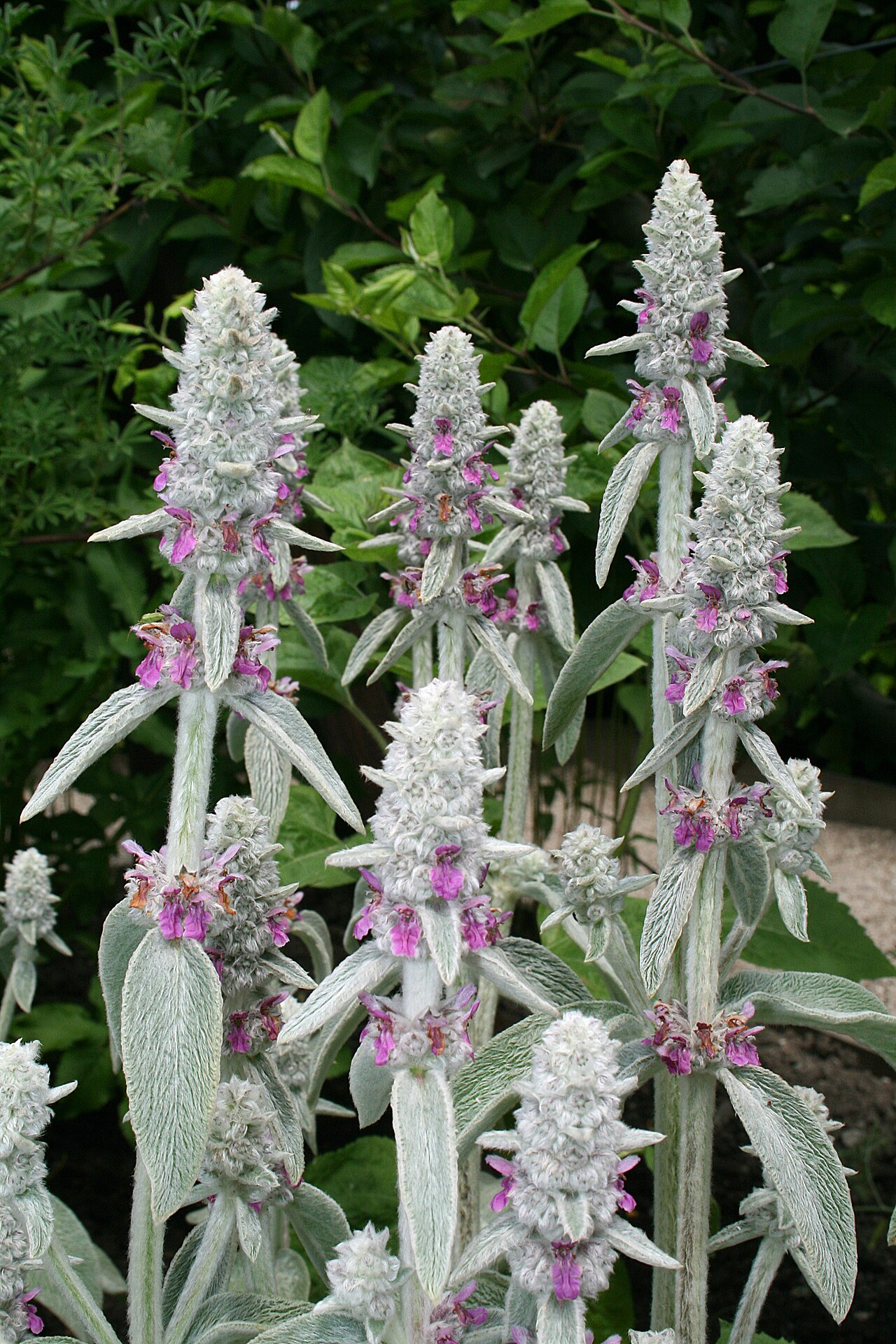
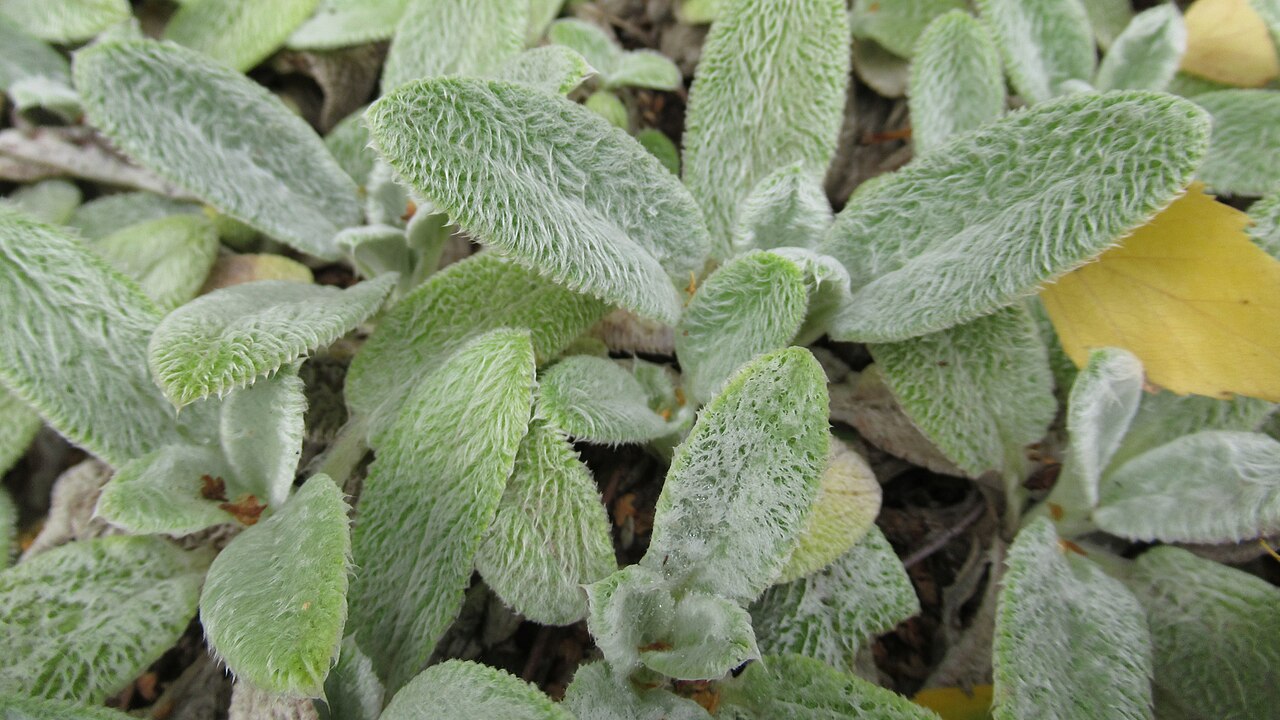
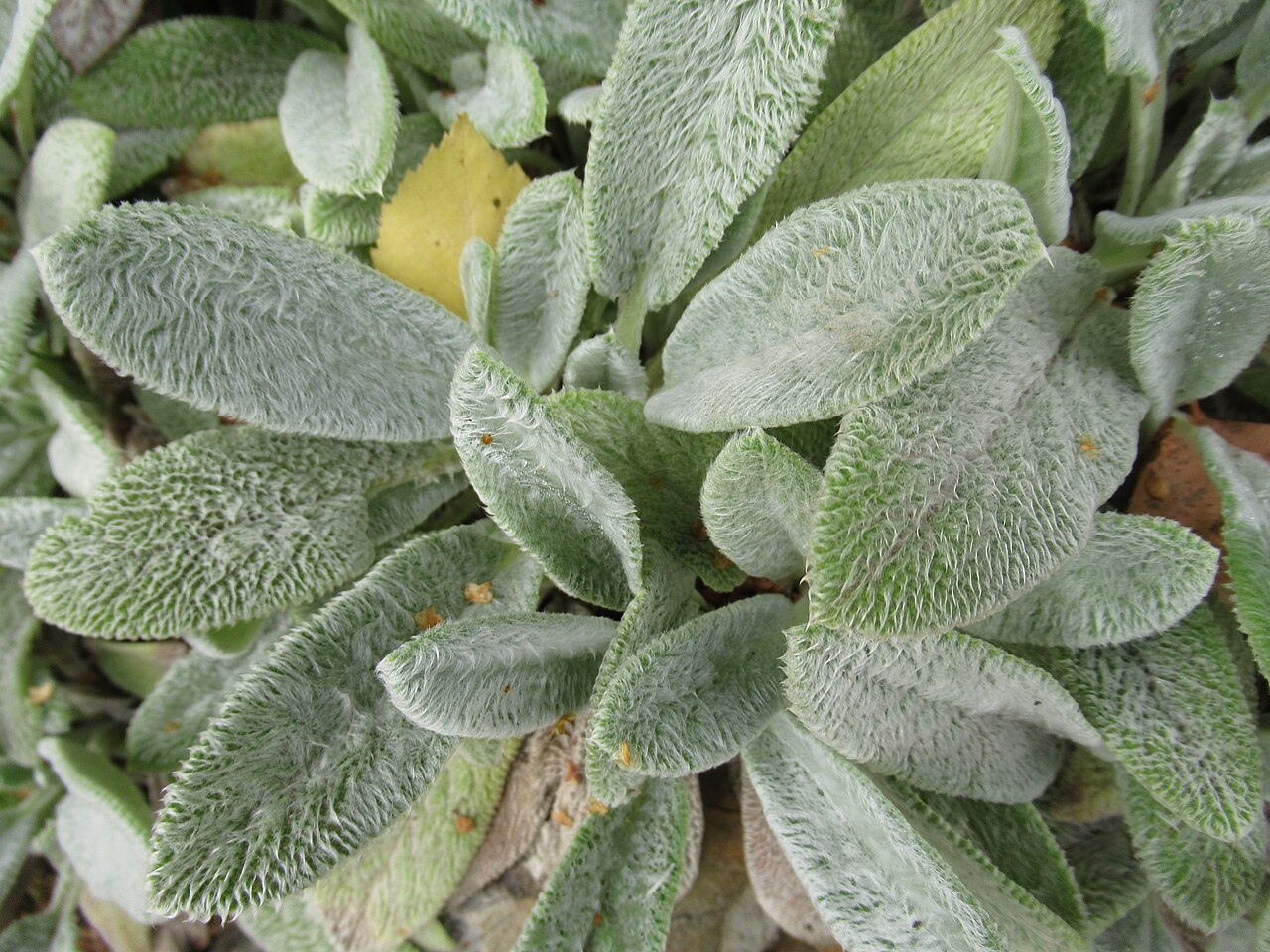
Lamb’s ear is grown mostly for its leaves: thick, woolly, silver-gray ovals so soft that children, gardeners, and at least one sheep farmer’s naming committee could not resist them. The foliage forms a low mat 6–12 inches tall, and in late spring it may send up flower spikes to 2 feet with small pink-purple flowers — many gardeners cut those off, since the flowers flop and the leaves are the show. Plant in spring in full sun and well-drained soil; lamb’s ear tolerates poor soil and drought but rots fast in wet, humid conditions, so drainage and air flow are everything. In hot, humid climates, choose the less-flowering ‘Helene von Stein’ type, which stays tidier.
Water & feeding
Water sparingly once established and water at soil level where you can — wet leaves invite rot and mildew, and overhead watering in humidity is asking for trouble. It is a light feeder; compost in spring is enough. Mulch lightly with gravel rather than moisture-holding wood mulch in damp climates.
Common problems
- Leaf rot in wet or humid conditions — improve drainage, increase air flow, divide crowded clumps.
- Floppy flower stalks — cut them off at the base; the plant looks better without them.
- Center dying out — divide every 3–4 years in spring.
- Powdery mildew — avoid overhead watering and give space; remove affected leaves.
Notes
Shear the foliage back after flowering or whenever it looks ragged, and fresh silver leaves will follow. Divide clumps in spring to renew them and to share — lamb’s ear is a classic pass-along plant, and a clump divided among neighbors is practically tradition. It is deer- and rabbit-resistant, which is a polite way of saying even deer find it too fuzzy to bother with.
Browse all plant & pest guides
Saving seeds
Lambs-ear saves its own seed with enthusiasm — sometimes too much enthusiasm, which is why this section comes with a caution attached. The soft, silver rosettes send up tall flower stalks in summer, topped with small pink-purple flowers that bees love, and those flowers set seed in small capsules along the stalk. If you let the stalks stand, the seed ripens, drops, and next spring you will have lambs-ear in places you never planted it. That is the deal with this plant: free seed, free plants, and a garden that slowly turns silver.
To save seed deliberately, pick a few strong plants to be your seed parents — the ones with the thickest, wooliest leaves — and let their flower stalks mature undisturbed. When the capsules have turned dry and brown and the seed shakes free easily, cut the stalks into a paper bag and let them finish drying indoors for a week. Rub the dried stalks over a tray to free the small, dark seeds, then winnow away the chaff with a gentle breeze. Dry the cleaned seed thoroughly before storage, spread thin on paper until it feels completely dry, then keep it in a labeled envelope or an airtight jar with a desiccant packet, cool and dark. In Florida humidity, seed stored even slightly damp in a closed jar will mold, so do not shortcut the drying step.
Sow in spring, on the surface or barely covered — the seed wants light — on a moist, well-draining mix, and keep the tray warm, roughly 65–75°F. Expect sprouts in one to three weeks. Lambs-ear also self-sows so freely that the easiest method is often to do nothing at all: let the seed fall where it may, then move the volunteers in spring to wherever you actually want them. Seedlings transplant readily when young, so thinning a drift of volunteers is less a chore and more a free plant sale.
Two truths before you fill the seed rack. First, the self-seeding caution, stated plainly: in a moist, fertile bed, lambs-ear spreads by seed and by creeping stems, and a patch left alone becomes a colony. Deadhead the flower stalks after bloom if you would rather it stayed put, and pull volunteers in spring before they root deeply. In a dry, poor spot it behaves itself; in rich, watered soil it wanders. Plan accordingly, and give it a place where wandering is welcome. Second, named cultivars do not come true from seed. The popular non-flowering form ‘Helene von Stein’ (sold as ‘Big Ears’) barely flowers at all, so it is propagated by division, not seed — lift and split the clumps in spring or fall, and each division is an exact copy. Seed-grown plants vary a little in leaf size and woolliness, which is half the charm in a drift planting.
In Florida, lambs-ear is a good citizen with one weakness: humidity. The woolly leaves that make it so touchable also trap moisture, and in a wet Florida summer the centers can rot, especially in heavy soil or where water sits. Give it the sharpest drainage you have, full sun, and air circulation, and water at the base rather than overhead. A plant grown a little lean and dry in Florida outlasts a pampered one — and its seed, stored dry in a cool jar, will be waiting for spring.
Varieties
Every named variety of Lamb’s Ear with its own growing guide:
- Big Ears Lamb’s Ear — The giant felt: enormous silver-velvet leaves up to a foot long, the lamb's ear for maximum petting.
- Silver Carpet Lamb’s Ear — The flowerless felt: dense silver-velvet foliage with no flower stalks, the lamb's ear for paths and edges.