
🌸 Lathyrus
What it looks like
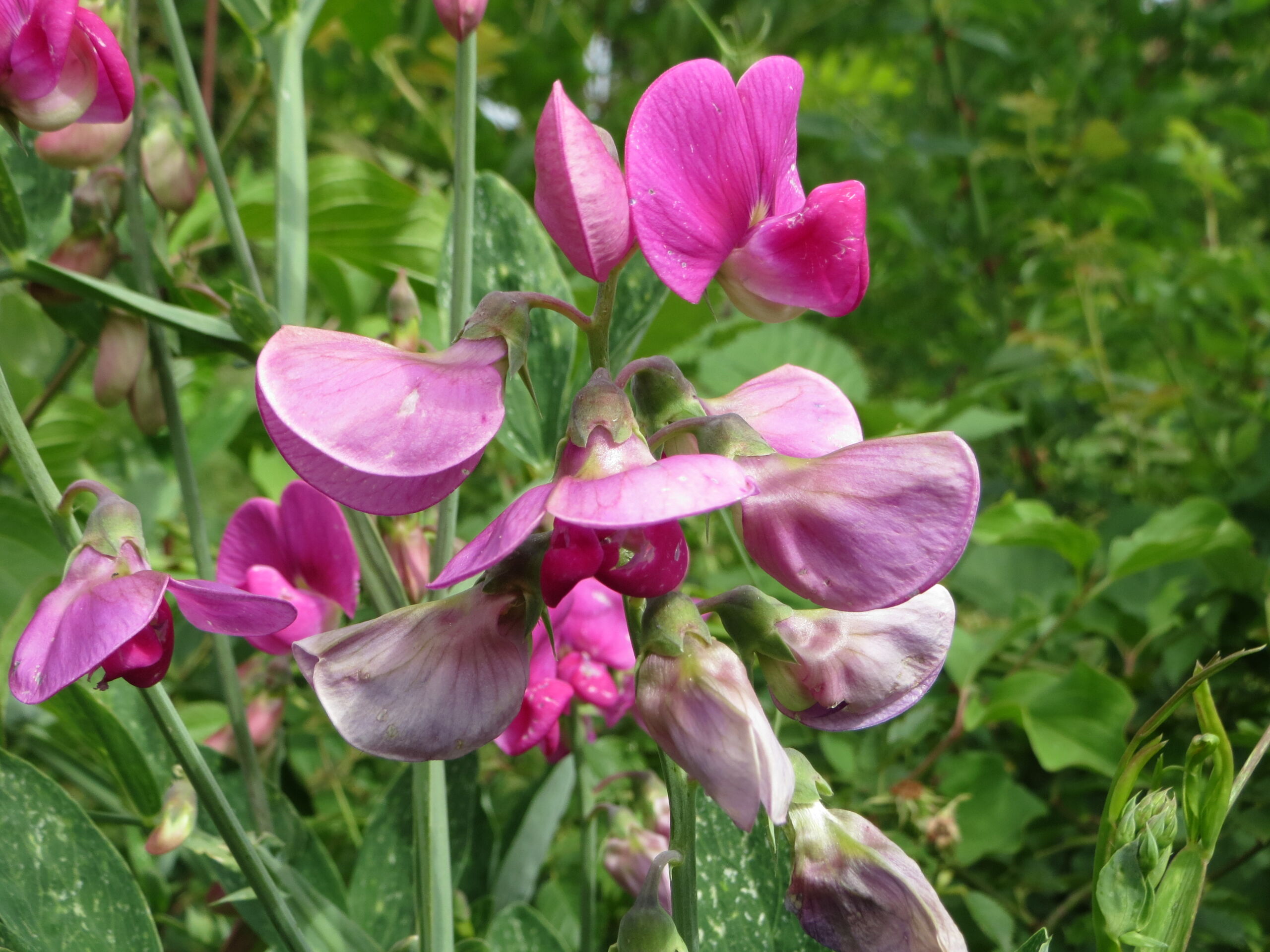
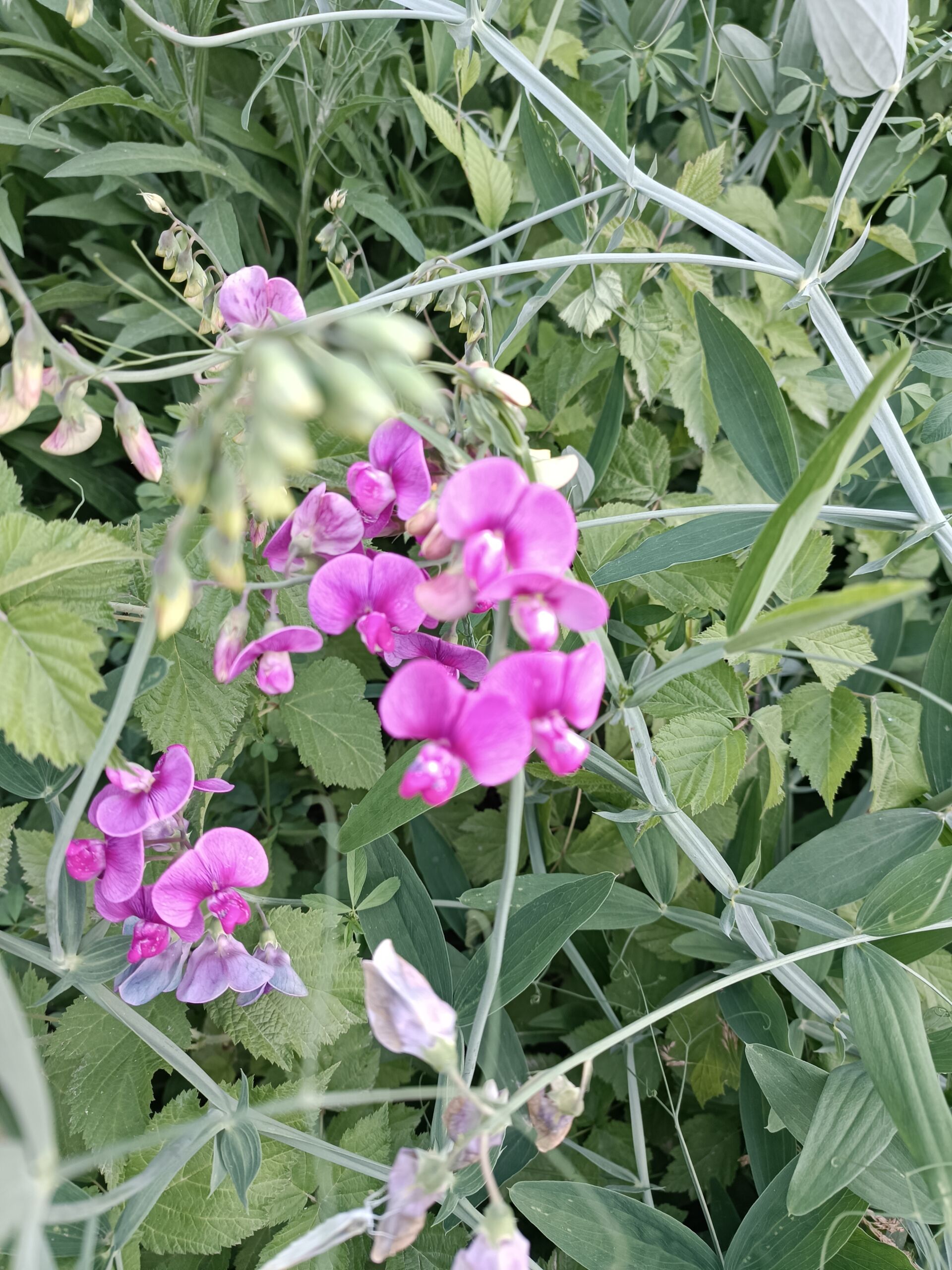
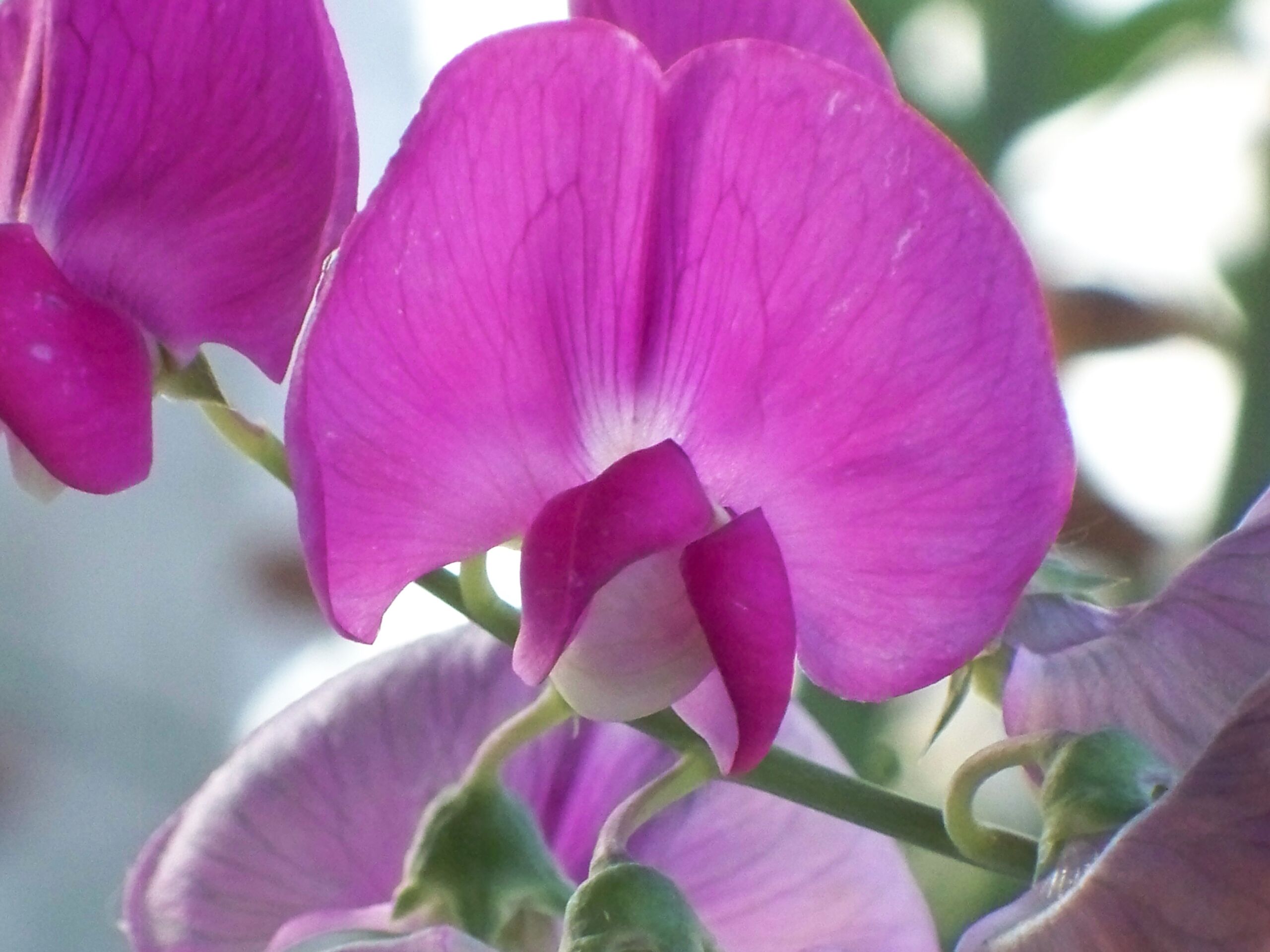
Lathyrus is a genus of roughly 150 to 160 species in the pea family, Fabaceae, and it is the genus behind one of the most beloved cut flowers in the world and one of the most confusing plant names in the garden. The flowers are unmistakably pea-shaped: a big upright banner petal, two side wings, and a keel tucked underneath, like a little butterfly that decided to sit still. The leaves are pinnate, usually with just one or two pairs of leaflets, and the leaf tip keeps going past the last leaflet and turns into a tendril, a coiling green grappling hook that grabs fences, strings, and neighboring plants and hauls the vine upward. That tendril is the genus’s signature move. Give a lathyrus something to climb and it will climb it. Give it nothing and it will sprawl across the ground and climb whatever wanders by, including your other plants, which it does without a shred of remorse.
The two species most gardeners meet are a study in contrasts. Sweet pea, Lathyrus odoratus, is an annual climber from Sicily, southern Italy, and the Aegean islands, growing 1 to 2 metres tall where it has support, with wild flowers in purple, 2 to 3.5 centimetres across, and cultivated flowers larger and wildly variable in color, from white and cream through pink, red, blue, lavender, and deep purple, usually with the intense, sweet fragrance that gave the species its name. Everlasting pea, Lathyrus latifolius, is its perennial cousin: a twining herbaceous perennial that also reaches about 2 metres, with bright magenta-pink flowers, but unlike sweet pea it is unscented, which is the fastest way to tell them apart in a garden. One smells like a Victorian perfume counter. The other looks the part and smells like nothing at all.
Beyond those two, the genus sprawls across temperate regions of Europe, Asia, and North America in a riot of habits: meadow vetchling (Lathyrus pratensis) in grassland, beach pea (Lathyrus japonicus) on seashores, marsh pea (Lathyrus palustris) in wetlands, and the two-flowered everlasting pea (Lathyrus grandiflorus) of southern Europe, another unscented perennial with magenta-pink flowers. Some are annuals, some are perennials, some climb, some sprawl, and nearly all of them are better at fixing nitrogen than they are at behaving themselves. Like other legumes, lathyrus roots host nitrogen-fixing bacteria in nodules, which is why a patch of vetchling can quietly improve the soil it grows in while looking like it is doing nothing but flowering.
Florida note: In Florida, treat sweet peas as a cool-season annual, not a summer flower. Plant in fall for winter and spring bloom in the northern and central peninsula, and expect summer heat to end the show. Perennial peas are a cooler-climate proposition and are not reliable Florida garden plants; if you want the pea-flower look in a Florida summer, look to the heat-loving legumes that actually belong here rather than forcing a Mediterranean annual through August. And in every zone, remember the genus’s one hard rule, which is not about climate at all: ornamental lathyrus peas are not food.
How to grow
Give lathyrus sun, support, and soil that drains, and it will do the rest with enthusiasm. Full sun gives the heaviest bloom; part shade is tolerated, especially in hot climates where a little afternoon shade keeps annual sweet peas flowering longer. Soil should be humus-rich, moisture-retentive but well-drained, and neutral to slightly alkaline for sweet pea, which sulks in strongly acid soil. Dig in compost before planting and, for sweet peas, a little lime if your soil is acidic, because a sweet pea in sour soil is a sweet pea that never quite gets going.
Support is not optional for the climbers. A trellis, fence, netting, or a wigwam of canes all work, as long as the tendrils have something thin to grab; thick posts defeat them, since a tendril coils best around twine, wire, or a thin cane. Sow annual sweet peas where they are to grow or start them in deep pots, because peas resent root disturbance, and plant them 6 to 12 inches apart along the support. Perennial peas go in as plants, spaced wider, and need a permanent structure, since they come back every year and get bigger and more ambitious about it. Mulch to keep roots cool and moist, and water steadily through the growing season, because a dry spell at flowering time turns buds into disappointments.
For the wild and meadow species, the honest advice is different: most of them are not garden plants in the bedding sense. Meadow vetchling and beach pea belong in meadow plantings, wild corners, and restoration work, where their scrambling habit and nitrogen fixing are features. If you grow a perennial pea in a border, give it room and neighbors it cannot smother, or accept that it will wander. Lathyrus does not ask permission. It tendrils.
Water & feeding
Water regularly and deeply, and keep the root zone consistently moist without waterlogging it. Sweet peas are thirsty plants for their size, especially in containers and in bloom, and a plant that dries out repeatedly will drop buds and go to seed early, which is its way of telling you the season is over. Water the soil, not the flowers, and mulch well, since cool, moist roots are the secret to a long sweet pea season. Perennial peas are tougher once established and tolerate drier spells, but they still flower best with steady moisture.
Feed lightly. Because lathyrus fixes its own nitrogen, heavy nitrogen fertilizer produces lush vines and few flowers, which is the opposite of what anyone plants a sweet pea for. A balanced feed or a high-potash feed every couple of weeks through the flowering season suits containers and hungry soils; plants in rich garden soil often need nothing at all beyond the compost dug in at planting. If your sweet pea is all leaves and no flowers, it is probably too well fed, too shaded, or both. More sun and less nitrogen will sort it out faster than any tonic.
Common problems
- Poisonous seeds — do not eat them: Sweet pea seeds contain a neurotoxin, and eating them causes lathyrism, historically called odoratism for this species. Ornamental lathyrus is not the garden pea, which is Pisum sativum, a different genus entirely. Never eat sweet pea seeds or pods, and keep seed packets away from children who might mistake them for edible peas.
- Heat ends the annuals: Sweet peas are cool-season plants. Hot weather stops flowering, encourages mildew, and pushes plants to seed. In warm climates this is a calendar problem, not a care problem: plant early, enjoy the cool months, and let them go when summer arrives.
- Powdery mildew: The classic sweet pea affliction in warm, humid, or crowded conditions. Space plants for airflow, water the soil rather than the foliage, and remove badly affected growth. Perennial peas are generally less troubled.
- Aphids: Pea aphids cluster on shoot tips and buds, especially in spring. They rarely kill a vigorous plant, but they distort growth and spread viruses. A strong jet of water, or simply pinching out infested tips, usually keeps them in check.
- Perennials that wander: Everlasting pea spreads by seed and by creeping roots, and it can outstay its welcome in a small border. Deadhead before seed sets if you want to limit it, and site it where a wanderer is welcome.
- Confusion with edible peas: Sweet pea, everlasting pea, and garden pea all share the word pea and almost nothing else that matters at the table. If a plant’s tag says Lathyrus, it is ornamental. If it says Pisum, it is dinner.
Harvest
The harvest of lathyrus is flowers, and the rule for sweet peas is gloriously simple: pick, pick, and pick again. Cutting flowers for the house is also deadheading, and a sweet pea that is picked regularly keeps producing new blooms for weeks, while a sweet pea left to set seed decides its work is done and stops. Cut stems in the morning, when flowers are fresh, and take long stems down to a leaf joint; the plant will branch and flower again from below the cut. A jam jar of sweet peas on a windowsill is one of the great cheap luxuries of gardening, and the fragrance alone justifies the whole enterprise.
For seed, let a few pods ripen on the plant if you want to save seed for next year, but handle saved seed as what it is: planting material, not food, and label it clearly. Perennial peas are divided in early spring or fall when clumps get congested, and a divided clump re-establishes readily. And for the meadow species, the harvest is ecological rather than floral: leave them standing where they feed pollinators and fix nitrogen, and let the sulphur butterflies that use wild lathyrus as caterpillar food have their share. A genus that feeds both cut-flower vases and butterfly caterpillars has earned its keep twice over.
Saving seeds
Read this first, before you touch a pod: lathyrus seeds are poisonous and the plants are ornamental only. Sweet pea (Lathyrus odoratus) looks like a garden pea, smells like heaven, and produces pods that look exactly like the ones you eat — but it is not a food plant. Its seeds contain lathyrogens, the compounds behind lathyrism, a serious nervous-system condition that follows sustained eating of the seed. A single seed is unlikely to cause harm beyond a stomach upset, but the seeds must never be eaten, cooked, fed to livestock, or stored anywhere near food. Keep them labelled, keep them out of reach of children, and wear gloves when you handle the harvest. The flowers are for looking at and smelling. That is the whole deal, and it is a very good deal.
With that settled, saving the seed is easy. Let a few pods ripen on the plant after flowering finishes — the annual sweet pea will set pods all along the vine once you stop deadheading, and the perennial everlasting pea (Lathyrus latifolius) does the same. Pick the pods when they turn brown, dry, and papery, just before they split open along the edge. Open them over a tray, wearing gloves, and tip out the hard, dark seeds. Dry them indoors for a week or two in a single layer, then store them in a labelled, airtight jar in a cool, dark place — labelled with the variety name and the year, and with the word POISONOUS on the label if children ever visit your garden. That label is not paranoia; it is good gardening.
To grow them, the seed coat needs a little help. Soak the seed in lukewarm water for about a day, and lightly nick the coat with a file or a rub of sandpaper if it still resists swelling — a seed that stays hard and wrinkled after soaking is a seed that has not let the water in. Sow in individual pots, since sweet peas resent transplanting and build a taproot early, and plant them out while they are still young. Named sweet pea varieties cross freely with their neighbours, so saved seed may come back in a different colour or scent than the parent. If you want an exact repeat of a beloved variety, buy fresh seed; if you enjoy a lucky dip of perfume and colour, saved seed is perfect.
The perennial kinds offer a second route: in spring you can lift and divide an established clump, cutting the rootball into sections with a sharp spade, and replant the divisions. It is slower to establish than seed, but it gives you an exact copy of the parent, and it spares you handling the toxic seed altogether.
Florida note: treat sweet pea as a cool-season annual here. Sow in autumn so the plants flower through the mild months, and expect them to fade as the heat arrives — that is normal, not a failure. Dry your saved seed thoroughly before storage, because Florida humidity will kill stored seed faster than almost anything else in this guide.
Species in this group
- Sweet pea — Lathyrus odoratus: The famous one. Annual climber, 1 to 2 metres, intensely fragrant flowers in nearly every color except true yellow, which breeders have chased for decades without success. The existing sweet pea guides on this site cover this species and its varieties; this genus guide covers the wider Lathyrus clan.
- Everlasting pea — Lathyrus latifolius: Perennial climber to about 2 metres, magenta-pink flowers, unscented, and far more persistent in the garden than its annual cousin, for better and for worse.
- Two-flowered everlasting pea — Lathyrus grandiflorus: A perennial of southern Europe, twining to about 2 metres, with bright magenta-pink flowers and a darker red keel, and, like everlasting pea, unscented.
- Meadow vetchling — Lathyrus pratensis: A scrambling perennial of meadows and grassland, with yellow pea flowers, at home in wilder plantings rather than formal borders.
- Beach pea — Lathyrus japonicus: A coastal perennial of seashores and dunes, low and sprawling, built for sand, salt wind, and neglect.
- Marsh pea — Lathyrus palustris: A wetland perennial of marshes and damp meadows, slender-stemmed and scrambling, for wet ground where most peas would rot.
- Grass pea — Lathyrus sativus: The cautionary tale of the genus. Grown as a food crop in drought-prone regions, its seeds cause lathyrism when eaten as a staple over long periods, which is why this genus’s edibility always comes with a warning label attached.