
🌿 Leucothoe
What it looks like
How to grow
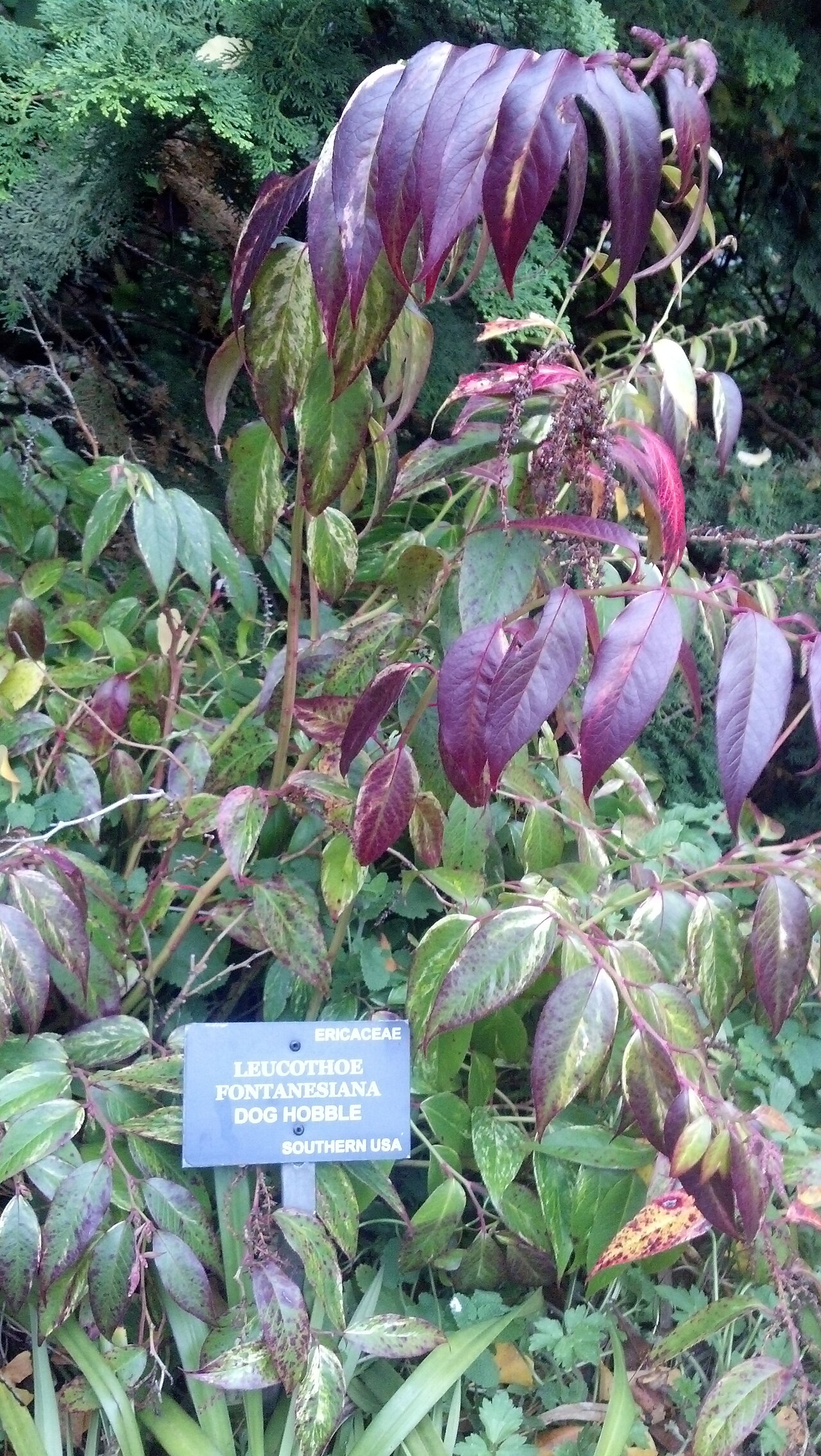
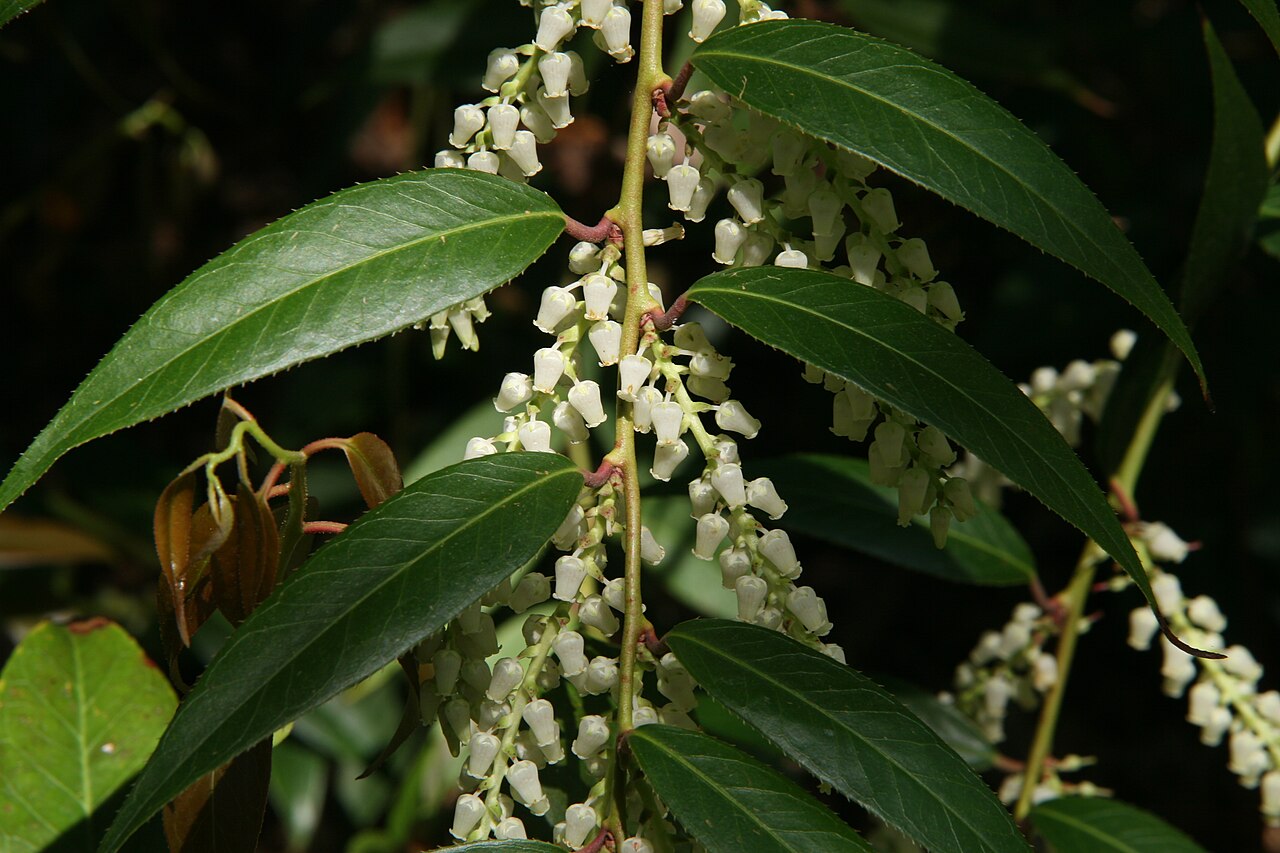
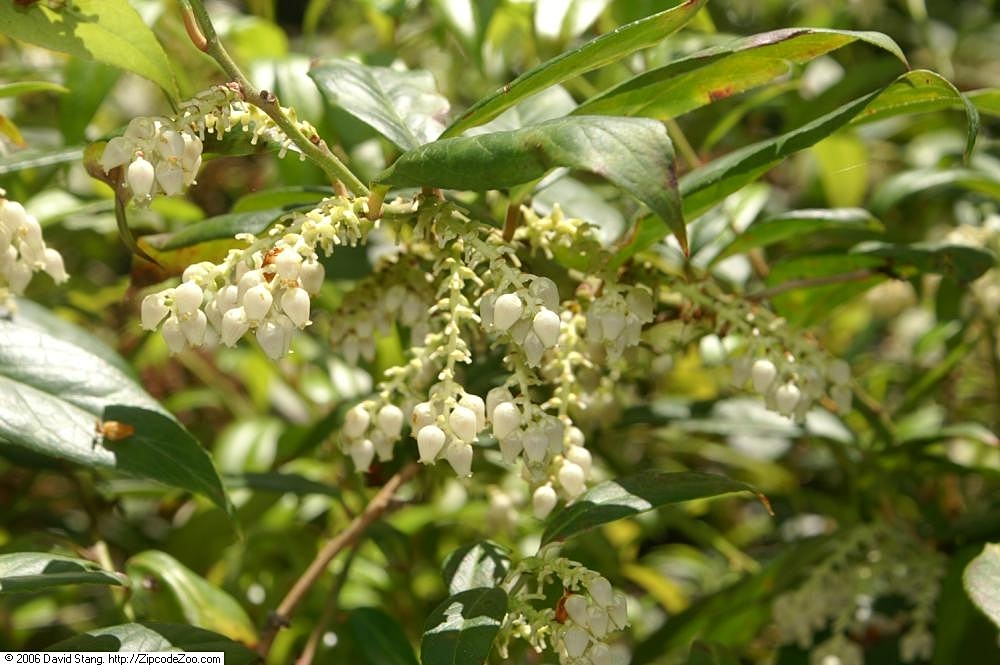
Drooping leucothoe, also called doghobble or fetterbush, is a graceful evergreen shrub with long, arching stems and lustrous dark green leaves that turn bronze-purple in cold weather. In spring, clusters of white, bell-shaped, pieris-like flowers dangle beneath the branches. It grows 3-6 feet tall and wide, with dwarf cultivars like ‘Scarletta’ staying around 2-3 feet. Plant in spring or fall in part shade, sheltered from winter wind, in moist, well-drained, strongly acidic soil rich in organic matter. Leucothoe is not a sun or dry-soil plant: give it a woodland edge, a shaded foundation bed, or a spot under high trees, and it will reward you with four seasons of foliage.
Water & feeding
Keep the soil consistently moist — leucothoe does not tolerate drought, so water thoroughly each week during hot, dry weather and mulch thickly to keep roots cool. Feed yearly after flowering with a fertilizer for acid-loving plants, and mulch with pine needles to help hold acidity. Do not let it dry out in its first two seasons; that is when most failures happen.
Common problems
- Leaf scorch — usually sun, wind, or drought; move toward shade and moisture, not more fertilizer.
- Leaf spot and fungi — improve air circulation and prune out affected stems after flowering.
- Leggy growth in deep shade — it will survive, but a little dappled light keeps it denser.
- Winter browning — protect from exposed winter wind with a sheltered site or a windbreak planting.
Harvest
There is no harvest, though the arching stems are lovely in winter arrangements. Prune only occasionally, after spring flowering, removing the oldest stems at ground level. Propagate by cuttings or layering.
Browse all plant & pest guides
Saving seeds
Leucothoe seed is small, fiddly, and — by shrub standards — refreshingly cooperative. The capsules ripen in mid to late autumn, and that is the time to collect them: snip the dried capsules off the plant, then lightly beat and rub them to open them completely and shake the fine seed out. The seed is tiny, so work over a tray or a sheet of paper, and do it indoors out of the wind unless you enjoy watching your seed crop blow away. Label the lot with the species and the year right away, while you still remember what it is — a plain envelope of anonymous dust is useless by spring.
Here is the good news: leucothoe seed needs no pretreatment. According to the USDA woody plant seed manual, the seeds germinate readily without pretreatment, and the standard nursery practice is to sow them on the surface of a moist, sterile medium — pine bark sifted fine is the classic choice — and keep the surface from ever drying out completely. Light matters: germination trials found the seed requires light to germinate, so do not bury it. Press it gently onto the surface, mist it, and cover the tray with a plastic tent or keep it under mist to hold the humidity. Warmth helps too — germination studies used around 25°C (about 77°F), with bottom heat a common nursery practice. Expect epigeal germination, the seedling pushing its seed leaves up out of the soil, and be patient: leucothoe is slow to establish as a plant, and it is not in a hurry as a seedling either. Keep seedlings shaded, moist, and sheltered from wind, and feed lightly once the first true leaves appear.
One honest caveat, and it matters: seed gives you the species, not the cultivar. Named varieties like ‘Scarletta’ and ‘Rainbow’ do not come true from seed — a seedling of ‘Rainbow’ will be a leucothoe, but it will not reliably be a rainbow one. If you want an exact copy of a named variety, propagate it vegetatively instead: semi-hardwood cuttings root readily, taken from June through December without any need for rooting hormone, according to Dirr and Heuser, and layering — bending a low branch down to the soil and letting it root while still attached — works well too. Seed is for the straight species and for happy accidents; cuttings are for the plant you fell in love with.
Florida gardeners should know leucothoe is a zones 5–8 shrub, so in Florida it is realistically a north-Florida shade plant that wants the coolest, moistest, most sheltered spot you have — it will not forgive a hot, dry, sunny bed. That same moisture that keeps it alive also invites the leaf spot this shrub is prone to in still, humid air, so give seedlings and young plants airflow as well as shade, and water the soil rather than the leaves. Saved seed keeps best cool, dark, and dry in a labeled envelope; sow it the following spring, and start more than you think you need, because a slow shrub earns its keep one patient seedling at a time.
Varieties
Every named variety of Leucothoe with its own growing guide:
- Rainbow Leucothoe — The variegated leucothoe: cream-and-green leaves splashed with pink, plus white bell flowers in spring — for shade and acid soil.