
🌾 Lindheimer’s Muhly Grass
What it looks like
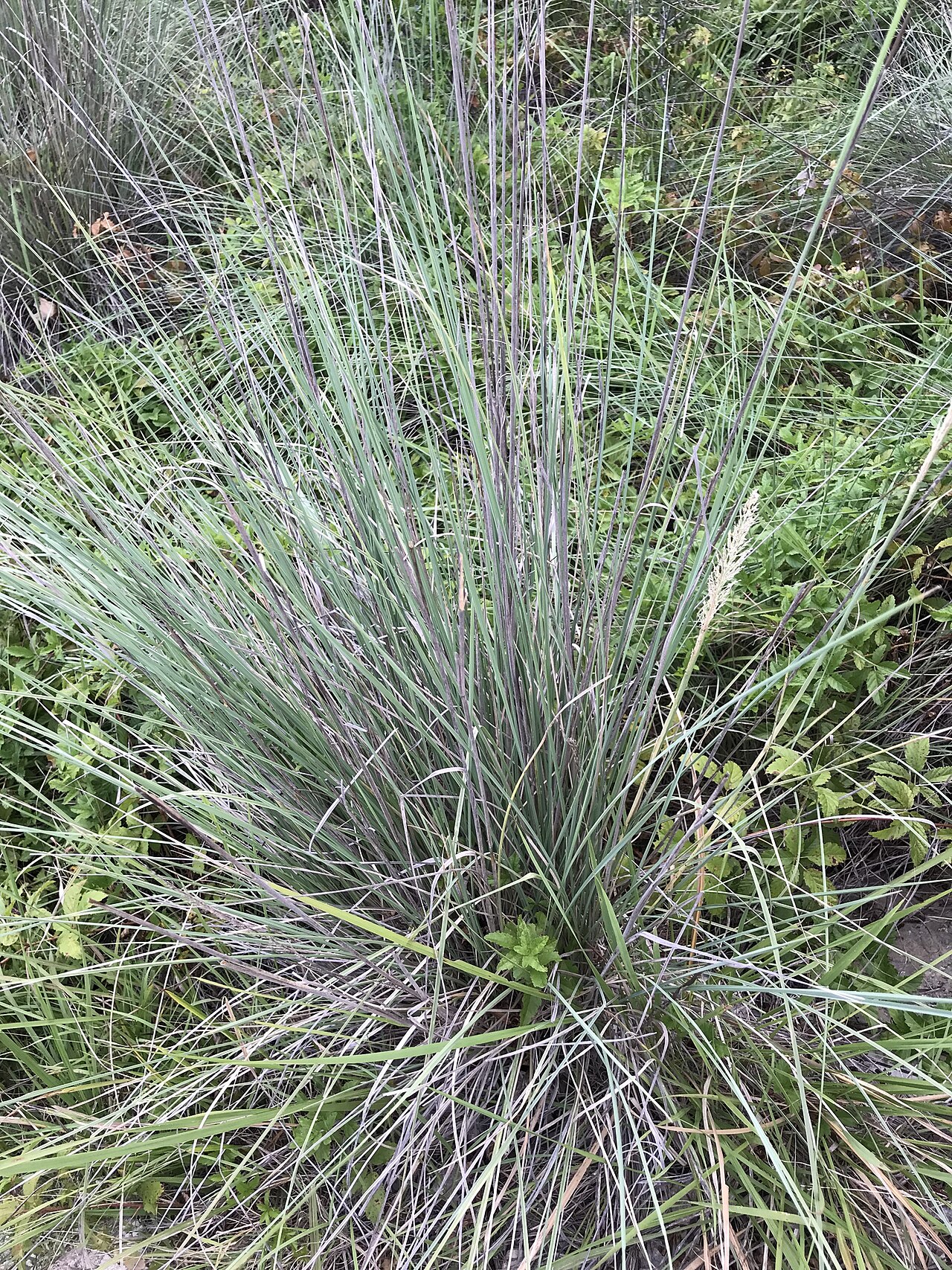
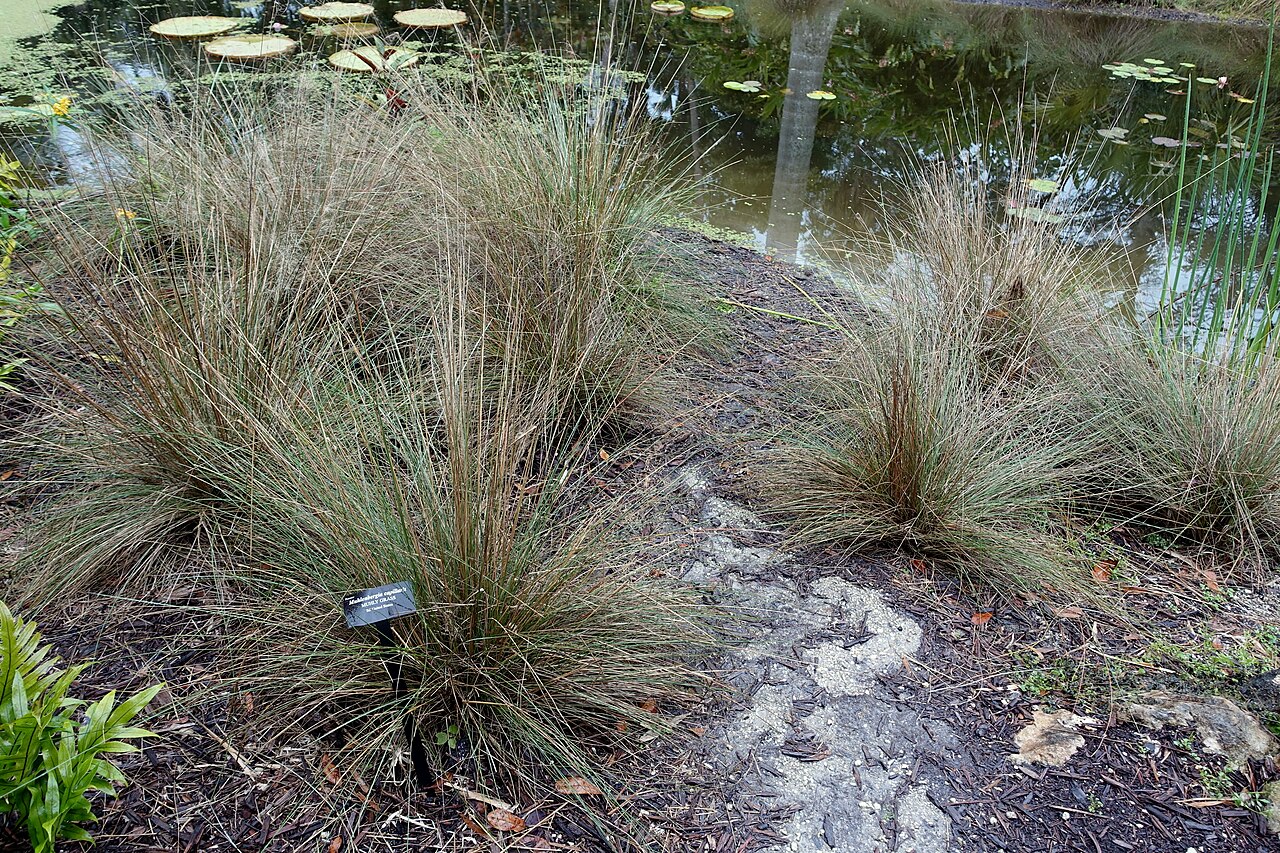
Lindheimer’s muhly, also called big muhly and blue muhly, is the large-scale muhly. It is a perennial bunchgrass from the Edwards Plateau of Texas and northern Mexico, forming dense clumps of erect stems 2 to 5 feet tall and 3 to 4 feet wide, with gray-green to blue-green foliage and long, narrow panicles that bloom from May through November in purplish, silvery, or whitish-gray. The seed heads are silvery and airy, less pink and more metallic than pink muhly, and they last through winter, which is why this grass is used as a screen rather than just as a flower.
In the landscape it reads as architecture: a tall, fountain-like clump with fine texture that softens a wall, screens a view, or anchors a meadow edge without the bulk of a shrub. It is the muhly you plant when you want height and movement together, and it is the one Texas gardeners reach for instead of pampas grass, because it gives a similar tall-grass presence without escaping into wild areas.
Why this variety
Choose Lindheimer’s muhly when the job is screening, erosion control, or a tall native accent. Pink muhly is a flower display; Lindheimer’s is a structure that happens to flower beautifully. It is useful as a green screen, it holds soil on slopes, and its seed heads provide nest material for birds, which is a wildlife value most ornamental grasses cannot claim honestly. The cultivar ‘Autumn Glow’ is the named ornamental selection of this species, with its own guide in this group.
It is also a low-drama plant in the right spot: calcareous soils, which defeat many garden plants, suit it, and it tolerates soils that hold a little moisture better than most muhlys, though it still wants drainage. If your garden has limestone, thin soil, or a slope that dries out, this grass is already on home ground.
How to grow
Plant in spring in full sun to part shade, spacing 3 to 4 feet apart for a screen, farther apart as specimens. It grows on limestone outcrops and along streams in the wild, so give it sun, reasonable drainage, and room to reach its full 3 to 5 foot height. Water to establish, then water moderately: it is not as drought-hard as pink muhly in deep sand, and it appreciates soils that hold a little moisture, but it will not tolerate standing water. Cut back in late winter before new growth, and rake out dead foliage rather than shearing the crown to the ground if you want the earliest spring regrowth.
Florida note: Lindheimer’s muhly is a Texas native, not a Florida native, and this guide does not pretend otherwise. It is Florida-suitable in north and central Florida gardens with sun and drainage, where its heat tolerance and tall form are assets. In the far south, or in a soggy, humid low spot, plant Florida’s own pink muhly first; Lindheimer’s is the trial plant for gardeners who want height and are willing to give it the drained, sunny site it asks for.
Water & feeding
Water regularly until established, then moderately. Lindheimer’s muhly likes a little more moisture than pink muhly, especially in its first year, but it still wants drainage: soggy soil rots the crown, while dry, lean soil just slows it down. Compost at planting is enough fertilizer; heavy feeding makes it flop and softens the foliage color.
Common problems
Flopping in rich, wet soil: move to leaner, drier ground and full sun rather than staking.
Slow first year: bunchgrasses spend their first season building roots. The second year is when the screen appears.
Late spring emergence: warm-season grass, late to wake. Do not replace it in April.
Old, woody centers: divide in spring every few years, or cut back hard in late winter to renew the clump.
Harvest
The harvest is height and seed heads, not food. Cut plumes in fall for tall dried arrangements, leave the clump standing through winter for screening and bird cover, and cut back in late winter to start the cycle again. For wildlife gardeners, the seed heads left standing are the point: birds use the material and pick at the seed through the lean months.
Browse all plant & pest guides
Saving seeds
Saving Lindheimer’s muhly seed is refreshingly simple, which is a nice change of pace for a plant that mostly asks you to leave it alone. Wait until fall, when the seed heads have dried and turned tan, then strip them into a paper bag. The seed is small and light, and a little chaff in the mix is fine. Spread what you collect in a shallow tray indoors for a week or so until it feels completely dry, then store it in a labeled paper envelope or jar in a cool, dry spot. Florida humidity is the enemy here: seed that goes into storage even slightly damp will mold in the jar, so do the drying step indoors with airflow, not in a humid garage, and do not seal it up until it is truly dry.
Sow in spring, once the soil has warmed. Scatter the seed on the surface of a loose, well-drained mix and press it in gently, barely covering it, because small grass seed does best close to the light. Keep the surface moist with a mister rather than a hose, which would wash the seed away or bury it. Germination is not instant, so give it a few weeks and steady moisture before deciding anything failed. Thin or pot up the seedlings once they are big enough to handle, and grow them on through their first season before planting out.
Division is the honest shortcut, and for a named selection it is the only one that works: seed-grown muhly is a genetic lucky dip, and a named form will not come true from seed. In early spring, before new growth takes off, dig up a clump and split it into chunks with roots attached, then replant the divisions at the same depth. It is fast, it is reliable, and the plant barely notices. Leave some seed heads standing through winter either way, because the birds pick at them through the lean months, and a muhly stripped bare of every head is a bird feeder with nothing in it.