
🌾 Little Bluestem
What it looks like
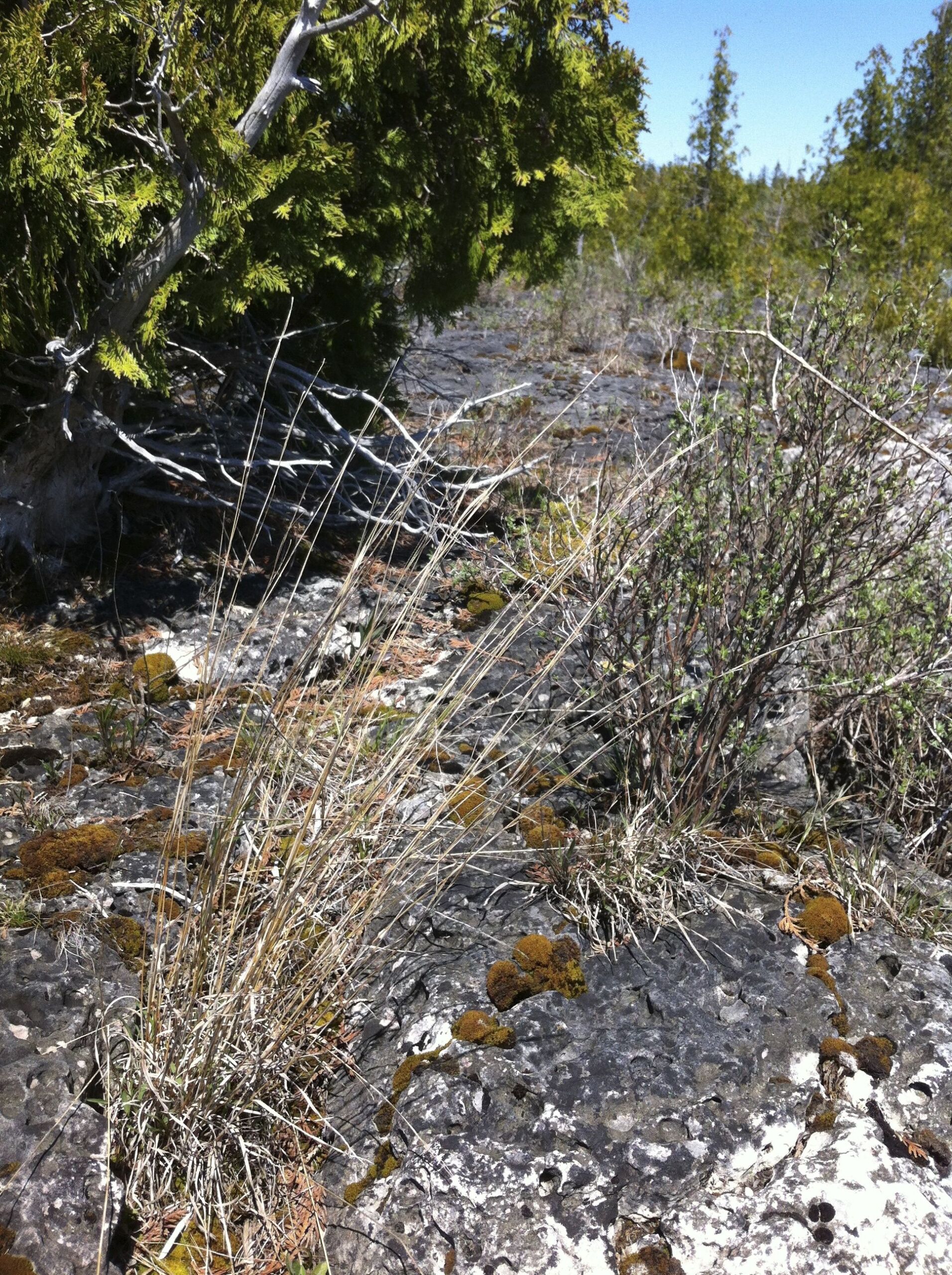
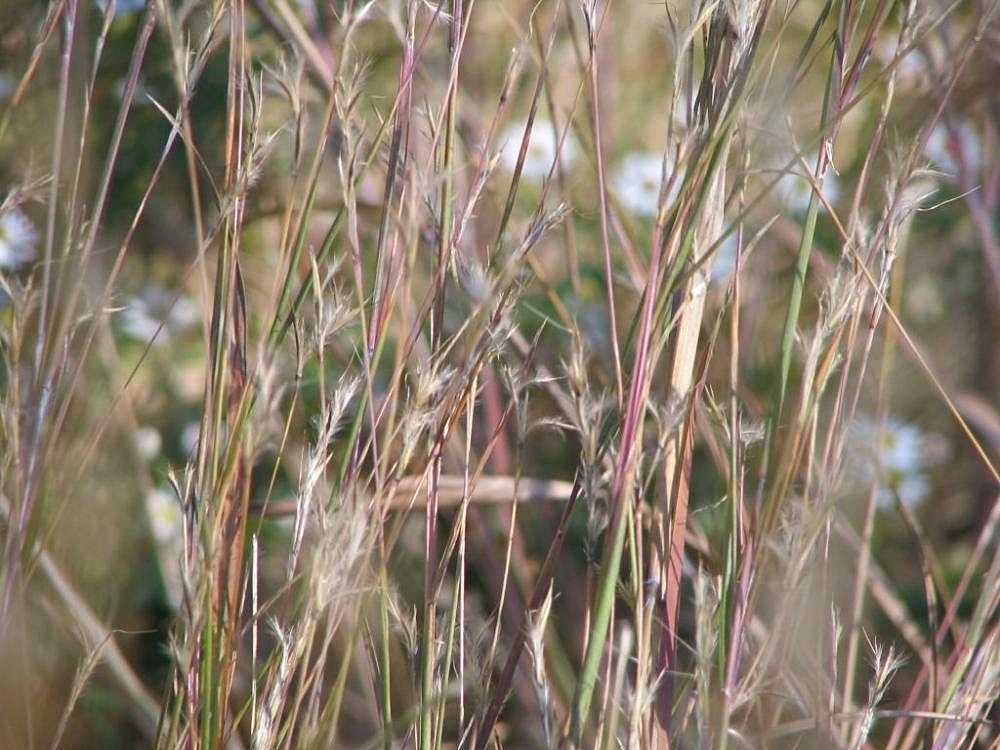
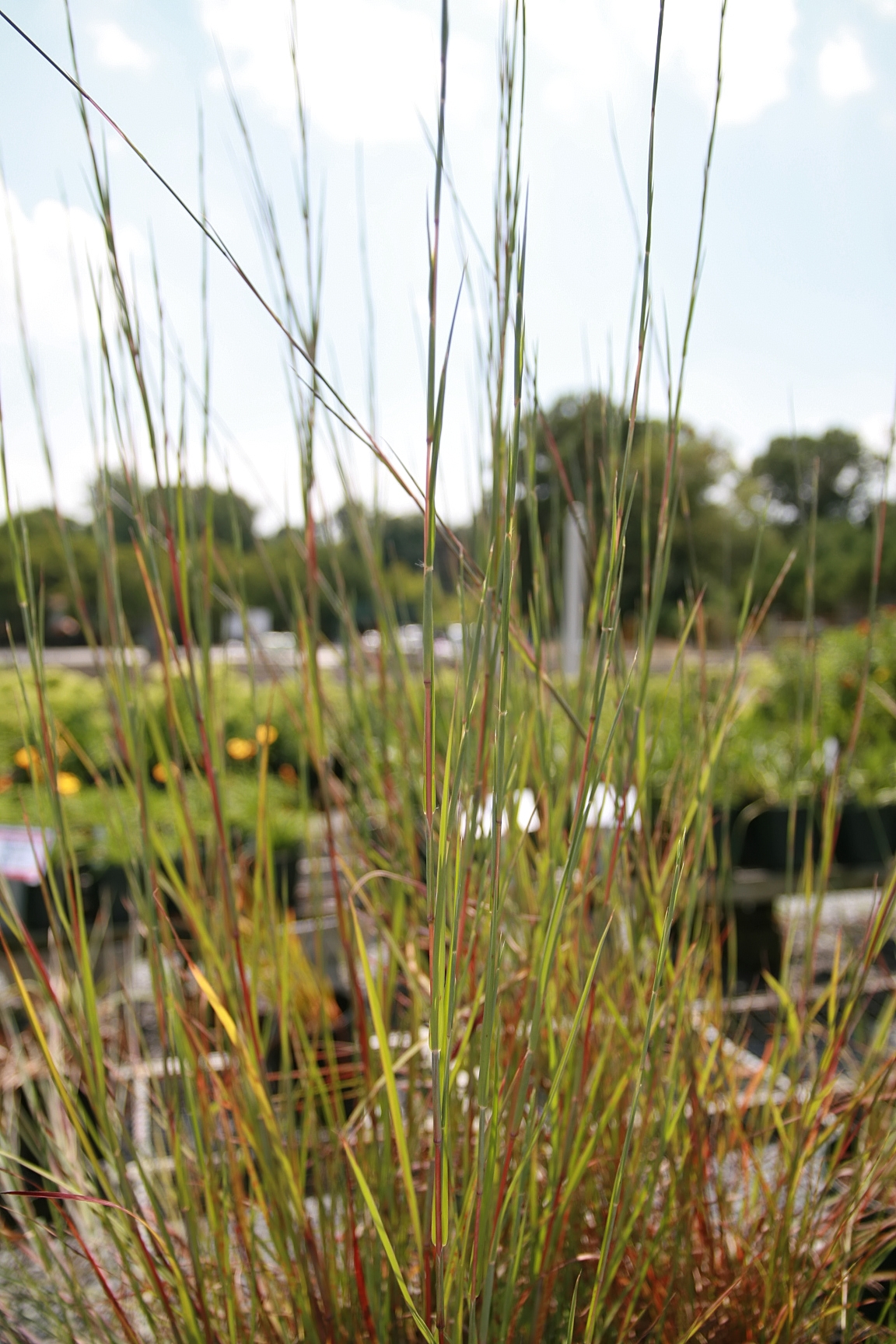
Little bluestem is a warm-season perennial bunchgrass of the grass family, Poaceae, and one of the defining grasses of the North American prairie. It grows as a tufted, upright mound of soft, blue-green or grey-green blades in spring and early summer, about two to three feet high, then sends up flowering stalks in summer that reach four to five feet, carrying purplish-bronze flowers in single, slender racemes above the foliage. The blades are narrow and flat, with a bluish tinge at the base, and they fold or roll inward in dry weather like a plant conserving its own counsel.
Then comes the part that sells it: in autumn the whole clump turns copper, bronze, mahogany-red, and orange, and the fluffy white seed tufts catch low light like frost. A little bluestem in October is doing the work of three perennials, and it is doing it on soil that would starve most of them. It is the official state grass of both Nebraska and Kansas, and it was named the Perennial Plant Association’s Perennial Plant of the Year for 2022 — a rare case of a wild prairie grass getting a garden award and deserving it.
The Latin name carries a history lesson. Schizachyrium comes from the Greek schizein, to split, and achyron, chaff, for the split glumes of the spikelets. Older books and nursery tags call the plant Andropogon scoparius, and the butterfly guide that names it as a host uses that older name in parentheses: Schizachyrium scoparium, formerly Andropogon scoparius. If you find it under the old name, you have found the same plant wearing its old jacket. It is native to most of the contiguous United States except California, Nevada, and Oregon, plus a small area north of the Canada–United States border and northern Mexico, and its roots run deep — some accounts put them six to eight feet down — which is part of how it helped build the rich, dark prairie soils that now grow much of the country’s food.
How to grow
Start with sun, because little bluestem wants it: at least six hours of direct light. It tolerates partial shade better than many prairie grasses, but shade costs vigour and colour — the foliage stays greener, the plant grows taller and more open, and the autumn show is muted. A sunny, open border, a prairie planting, a gravel garden, a slope, or a sunny bank are all right. A shady corner under trees is wrong, and no amount of good soil will make up for missing light.
Soil is where this grass repays a relaxed attitude, and where most gardeners go wrong by being too kind. Little bluestem tolerates a wide range of soils, from sand to clay-loam, average to poor, even rocky, provided the drainage is good, and it genuinely thrives on lean ground. It occurs naturally on dry upland sites, ridges, hilltops, and steep slopes, and tolerates clay and occasional inundation, but it does not persist in highly fertile or constantly moist conditions. Rich, wet soil makes it flop, and flopping is the plant telling you it has been overfed. If your soil is heavy clay, plant on a slight rise and mix in grit; if your soil is poor sand, congratulations, you already have bluestem soil.
Plant in spring, after the last frost, or sow seed in fall or winter for prairie plantings. Seed should be sown shallowly on a firm seedbed, because bluestem seed needs soil contact to germinate well, and nursery plants go in at the same depth they grew in their pots. Space plants 18 to 24 inches apart; a mature clump runs about 1 to 2 feet wide, and the flowering stalks rise well above that. Plant in groups of three, five, or seven for a natural look rather than dotting single plants about like exclamation marks. In a meadow planting, mix little bluestem with other prairie grasses and flowers and let them compete; it evolved in company, and it looks best in it.
One practical note for gardeners who like tidy borders: little bluestem self-sows. Not aggressively, not thuggishly, but a happy plant will scatter seedlings, and in a gravel garden or a small border you will want to deadhead or weed out volunteers in spring. In a meadow or prairie planting, self-sowing is a feature, not a fault — it is how the planting renews itself and fills gaps without your help.
Water & feeding
Water to establish, then stand back. Newly planted little bluestem needs steady moisture through its first year — check the soil and water when the top few inches dry out, especially in hot weather. Once the roots are down, and they go down a long way, established plants are drought-tolerant and need supplemental water only during extended drought. A deep soak once a week in a severe dry spell is plenty; daily sprinkling is worse than useless, because it keeps the roots shallow and the plant dependent. In a meadow or prairie planting, established little bluestem generally needs no irrigation at all.
Feeding is where restraint pays off twice over. Little bluestem needs little to no fertiliser, and over-fertilising harms it — it pushes soft, tall, floppy growth, encourages weed competition in a prairie planting, and trades the autumn colour you planted it for against a mess of green stems. A light application of compost in spring is plenty for a garden border, and in a prairie or meadow planting, no fertiliser at all is the correct amount. Feed it like a lawn and you will get a lawn’s problems: lush growth, weak stems, and a plant that falls over in the first storm.
Maintenance is mostly a spring haircut. Little bluestem is deciduous and dies back in autumn; cut the old stems back to a couple of inches above ground level in early spring, just before the new growth starts. Leave the autumn and winter stems standing until spring if you can, because they give winter structure, catch frost beautifully, and shelter overwintering insects — and because the tawny seed heads against a winter sky are one of the plant’s best looks. Little bluestem can also be dug up and divided in spring, to propagate it or to reduce the size of an old, big plant. In a meadow, the traditional alternative is fire: burn off the old foliage in late winter, which is how the prairie did it for millennia and which bluestems are superbly adapted to. Do not burn where it is illegal or unsafe, obviously, but do understand that a bluestem that has been burned is not a damaged plant — it is a plant that has just had its favourite treatment.
Common problems
- It flops. Too much water, too much fertiliser, or too much shade. Rich, moist soil makes it taller and weaker; poor soil keeps it upright. Move it to full sun, stop feeding it, and let it be a little hungry. Upright cultivars flop less.
- It is slow in spring. Normal. Warm-season grasses wait for heat. Do not dig it up in May assuming it died; it is just not awake yet.
- It spreads by seed more than you expected. A happy plant self-sows. Deadhead before seed ripens in a small border, or welcome the volunteers in a meadow.
- Rot and mushy crowns. Too much water or poor drainage, especially in winter. Lift, improve drainage, replant only firm pieces, and do not site it in a bog.
- Rust and leaf spot. These grasses can pick up rust and leaf-spot fungi, usually cosmetic on a healthy plant. Improve airflow, avoid overhead watering, and remove badly affected leaves.
- It looks scruffy in winter. That is the plant’s winter clothing, and it is supposed to look like that. Cut it back in spring, not in autumn.
Harvest & wildlife
There is no kitchen harvest here, but there is a harvest of sorts, and it has fed people and animals for a very long time. Little bluestem is good forage when young, and for seed saving, collect the seed heads as soon as they turn colour and begin to dry; the bearded seed strips easily from the stem when ripe, and a pound of little bluestem seed holds roughly 225,000 to 250,000 bearded seeds, which is a useful reminder of how enthusiastically this plant reproduces. Spread seed out in a protected spot until completely dry, then store it cool and dry.
In a garden, the real harvest is not something you take but something you leave: standing stems through winter for birds, which eat the seeds when little else is available, and cover for ground birds and small wildlife. And here is the butterfly connection that brought this guide into being: the Dusted Skipper’s caterpillars feed on grasses restricted to the genus Andropogon in the old sense, mainly little bluestem (Schizachyrium scoparium, formerly Andropogon scoparius) and also big bluestem (Andropogon gerardi). The key habitat feature, the butterfly guide says, is a dominance of the food-plant grass with patches of bare sand or rock mixed in. That is a barrens butterfly, not a garden butterfly — protecting dry native grasslands, barrens, and pine-oak savannas matters more than planting a single clump — but a clump in a sunny, sandy border is still a small act of prairie restoration, and the skippers that use little bluestem more widely will thank you for it. Cut a few stems for a dried arrangement if you like — they hold their copper colour well — and leave the rest standing for the birds and the overwintering insects.
Browse all plant & pest guides
Saving seeds
Little bluestem is one of the easiest native grasses to save seed from, which makes sense for a plant whose whole strategy is enthusiastic reproduction. Wait until the seed heads have turned color and begun to dry, then strip them by running a gloved hand down the stem into a paper bag. The bearded seed comes away easily when it is ripe, and a single clump gives you far more seed than you will ever plant. Spread the harvest in a shallow tray indoors for a week or so until it is completely dry, then rub it to separate seed from chaff and store it in a labeled envelope or jar in a cool, dry place. In Florida humidity, do the drying indoors with airflow and do not seal the jar until the seed feels papery, because damp grass seed molds fast and quietly.
For sowing, you have two honest options, and sources disagree on which is better, so pick the one that fits your patience. The easy one is fall sowing: scatter the seed where you want it in autumn and let winter do the work, since the cold, moist months break dormancy naturally. The controlled one is to cold-stratify saved seed in the fridge in damp sand for a month or two, then sow in spring, barely covering it, in a sunny spot with lean, well-drained soil. Little bluestem wants poor soil and full sun, not rich garden beds, and seedlings that get coddled with fertilizer grow floppy and sulk. Keep the seedbed moist until germination, then back off the water. This is a prairie plant, and it would rather be a little dry than a little wet.
Division is the reliable route when you want an exact copy of a named cultivar, because seed-grown plants vary and a named form will not come true from seed. In early spring, dig up a clump and split it into divisions with roots attached, then replant at the same depth. Seed is for meadows, drifts, and restoration patches, where variation is a feature. Division is for the one perfect clump by the front steps. Either way, leave some seed heads standing through winter for the birds, which eat them when little else is available. A bluestem stripped bare in October feeds nobody, and the copper stems standing against a January sky are half the reason to grow it in the first place.
Varieties & relatives
Shore little bluestem — Schizachyrium scoparium var. littorale — The coastal variety of little bluestem, native to the eastern and southern coastal strip of the United States and the shores of the Great Lakes.
Named garden cultivars — ‘Carousel’ is a compact form with especially good fall colour; ‘The Blues’ is a selection with bluer foliage; ‘Standing Ovation’ is a tight, upright form with bluer, thicker blades and sturdier stems that resist flopping; ‘Jazz’ is a shorter sport of ‘The Blues’ chosen because it will not flop over. The species itself is lovely; the cultivars are the species with the edges sanded off.
Not this plant — Big bluestem (Andropogon gerardi) is the Dusted Skipper’s other host and a much taller prairie grass; the Schizachyrium genus guide covers the bluestem clan as a whole, and the Bluestem group guide covers bluestems as a common name across two genera. This guide is the little bluestem species in full.
Note: this site also has a native-plant profile for little bluestem under the Academy’s Florida native plants; this growing guide is the plant-guides version, written for gardeners planting it, and the two coexist.