
💙 Love-in-a-Mist
What it looks like

How to grow
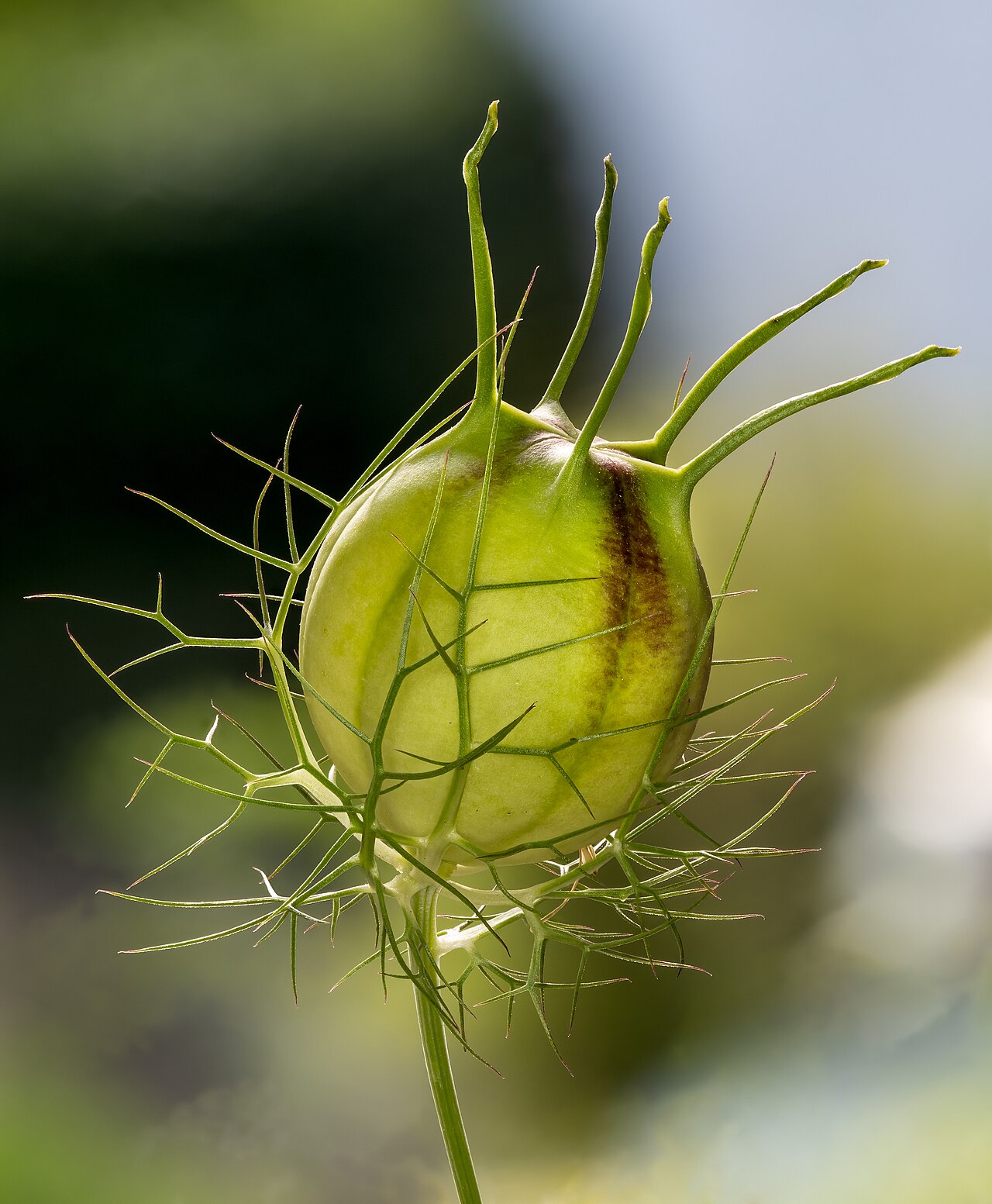
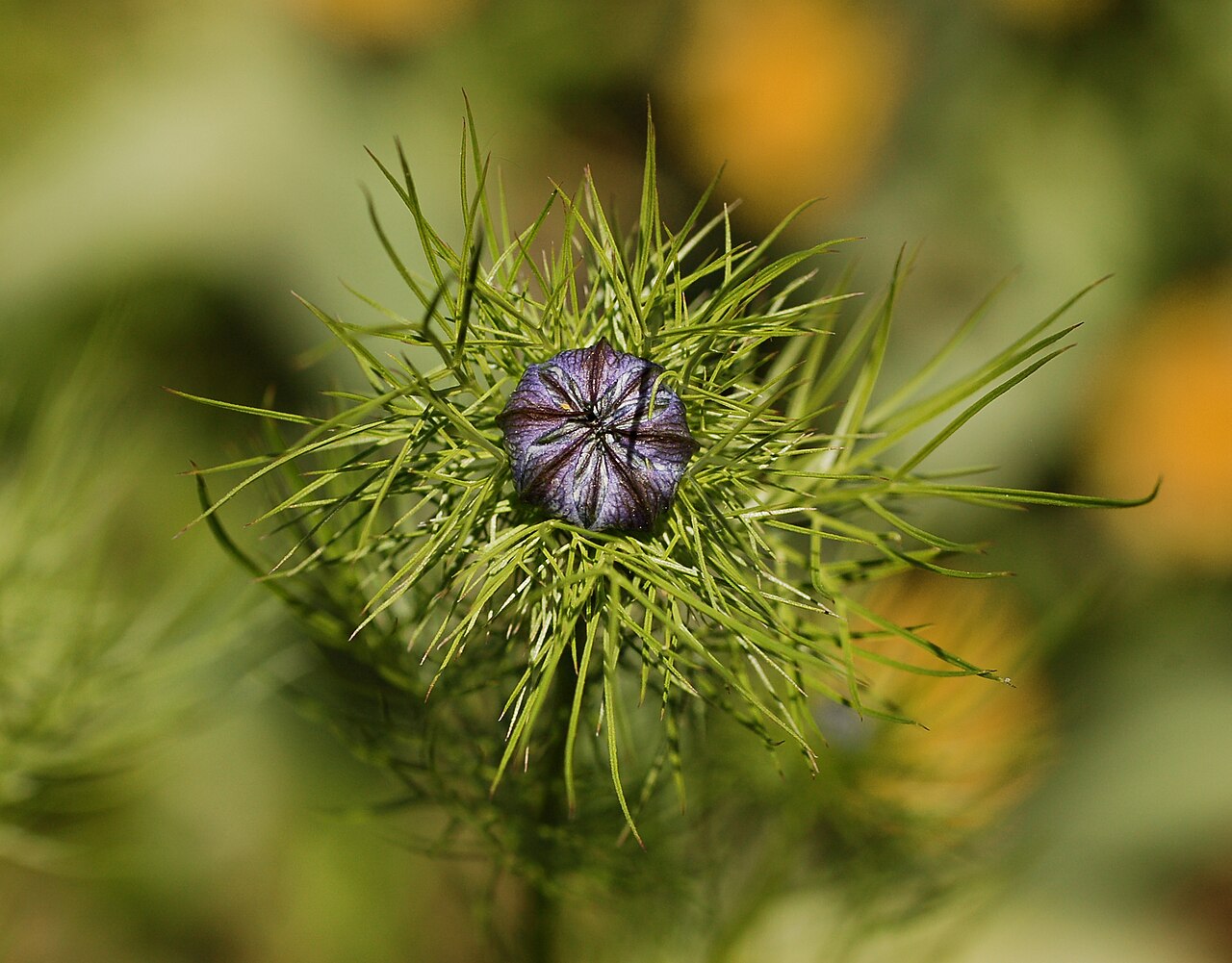
Love-in-a-mist is a charming annual, 18–24 inches tall, with finely divided, fennel-like foliage that surrounds each flower like mist — hence the name — and blue, pink, or white flowers followed by striped, balloon-like seed pods that are as ornamental as the flowers and superb for dried arrangements. Sow seed directly where it will grow in early spring (it dislikes transplanting) or in fall in mild climates, spacing 9–12 inches apart, in full sun and average, well-drained soil. Succession-sow every few weeks for a longer bloom season. It self-seeds freely, so a planting often returns year after year with no effort — thin seedlings in spring to the final spacing. Note: ornamental nigella is not the culinary black seed (N. sativa), though related; grow it for flowers and pods, not for the kitchen.
Water & feeding
Water regularly until established, then water in dry spells; love-in-a-mist prefers even moisture but tolerates some drought. Feed lightly — compost at planting is enough. Do not overwater in heavy soil.
Common problems
- Self-seeding — welcome in cottage borders; thin seedlings in spring.
- Poor transplanting — direct-sow where it will grow.
- Short bloom if sown once — succession-sow every 2–3 weeks.
- Powdery mildew in humid, crowded plantings — give air flow and spacing.
Notes
Cut flowers for bouquets when open, and cut seed pods when striped and firm for dried arrangements — they hold their shape and color for months. Leave some pods on the plant to self-seed for next year. Love-in-a-mist is a classic cottage-garden plant that asks for almost nothing and gives flowers, foliage, and pods in return.
Browse all plant & pest guides
Saving seeds
Love-in-a-mist is one of the easiest seeds in the garden to save, and one of the prettiest to look at while you do it. The striped, balloon-like pods swell after flowering and turn tan when they are ripe, and when they rattle if you shake them, they are ready. Cut whole stems, drop them into a paper bag, and let them finish drying there. Crush the pods gently and the small black seeds fall out, ready to store or sow.
There is no stratification, no scarification, no fuss. Sow the seed where you want it to grow, on the surface or barely covered, since it needs light to germinate. In Florida, a fall sowing is the way to do it: the plants grow through the cool season, flower in late winter and spring, and fade when summer heat arrives. A spring sowing works in cooler zones, but in Florida the fall window is the reliable one.
Self-seeding is the whole story of this plant. One planting becomes a colony. Leave a few pods to ripen and shatter and it will come back next year without any help from you, often in places you did not plant it. Deadhead the spent flowers if you want to limit that, and let a few pods ripen if you want it back. Either way, you are in charge of the decision, and the plant will respect it either way.
Crossing is a small matter. Nigella damascena crosses with other damascena varieties, so if you grow a blue one and a white one side by side and save seed, expect some surprises in the next generation. Grow one variety if you want seed that stays itself. And one warning worth printing in bold: damascena seed is not the culinary nigella. The spice is Nigella sativa, a different species. Do not eat damascena seed.
Stored dry, the seed keeps well for years, and the dried pods are the real prize. They hold their striped color for months in a vase, which is why Victorian gardeners dried them and why you should too. Save seed, dry pods, and you have next year’s flowers and this winter’s arrangements from the same plant.
Varieties
Every named variety of Love-in-a-Mist with its own growing guide:
- Miss Jekyll Alba Love-in-a-Mist — The white mist: pure white flowers in feathery bracts, the moon-garden love-in-a-mist.
- Miss Jekyll Love-in-a-Mist — The blue mist: sky-blue flowers in a tangle of feathery bracts, the classic love-in-a-mist.