
🌺 Mallow
What it looks like
Mallow is the plant that makes you say “hollyhock” and then correct yourself, because it is hollyhock’s smaller, tougher, wilder cousin. Plants in the genus Malva, in the mallow family Malvaceae, are herbaceous annuals, biennials, and short-lived perennials, mostly 2 to 4 feet tall, with soft, round-lobed leaves and cupped, five-petaled flowers in pink, purple, or white, often with darker veins striping each petal like someone drew on them with a fine pen. The flowers look like small hollyhocks because hollyhocks are family — Alcea is a close Malvaceae cousin, along with hibiscus, marshmallow, okra, and cotton. If you know one mallow-family flower, you know the shape: five petals, a central column of stamens fused into a tube, and a friendly, open face that bees and butterflies can land on without a map.
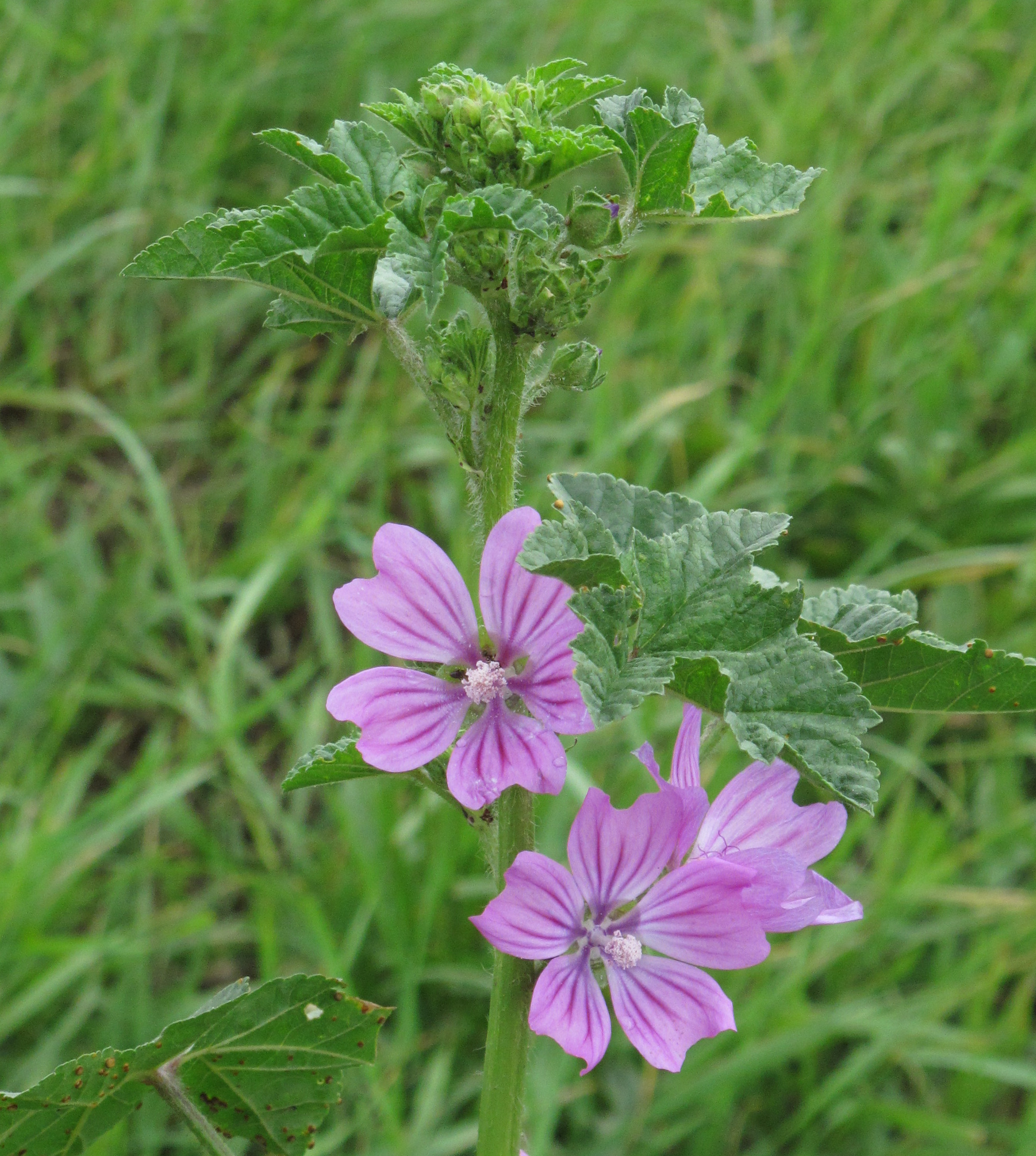
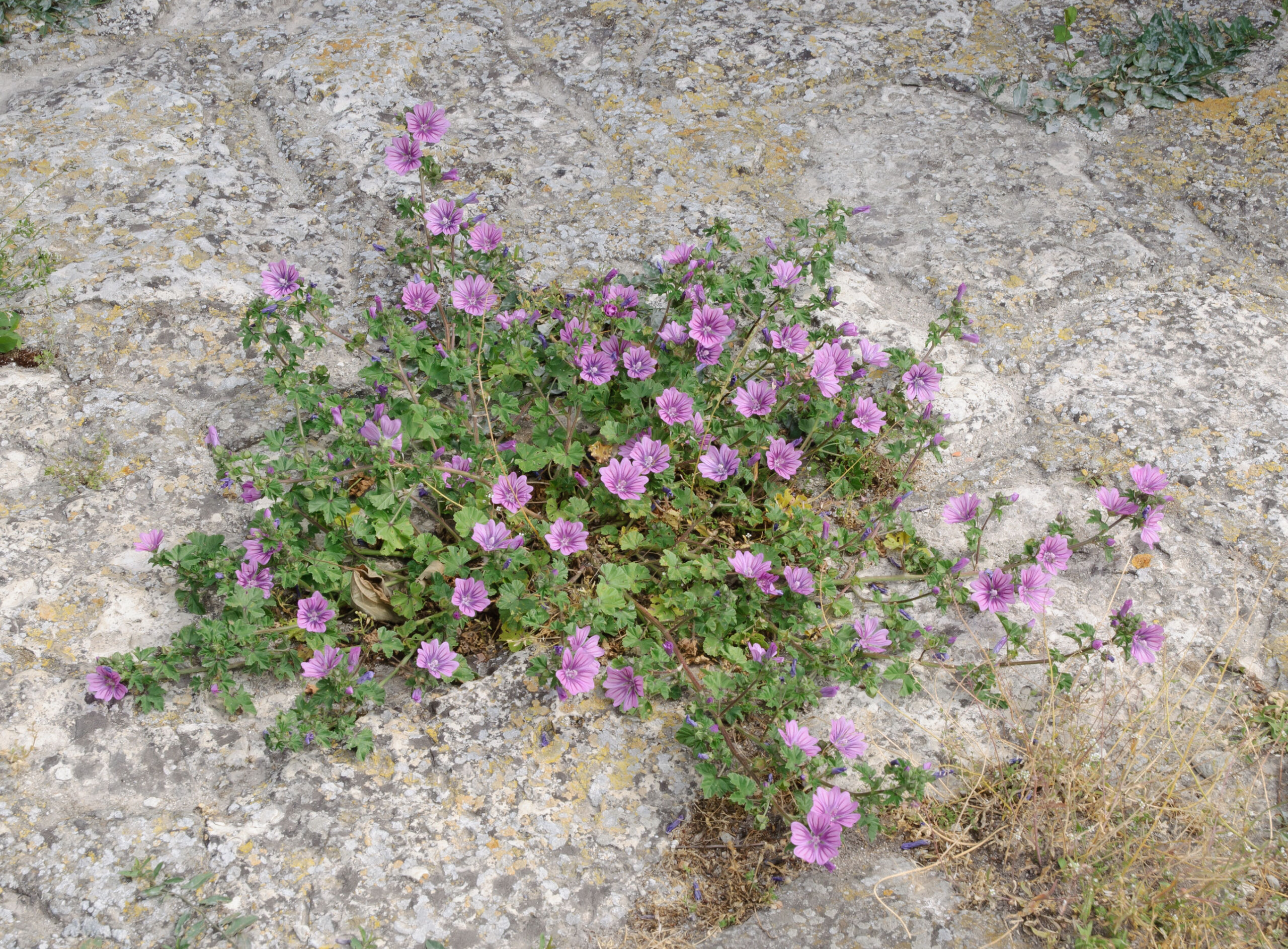
The genus holds roughly 25 to 30 species, native to temperate, subtropical, and tropical regions of Europe, Africa, and Asia, and naturalized across much of the world. The signature species is common mallow, Malva sylvestris — also called tall mallow, high mallow, and French hollyhock — a biennial to short-lived perennial with upright 2 to 4 foot stems (occasionally taller), reddish-purple flowers with darker stripes, blooming from late spring into autumn. Its most charming feature is not the flower but the fruit: a round, flattened disc that splits into wedge-shaped segments arranged like a wheel of cheese, which is why children and country people have called the plant “cheeses” and “cheeseweed” for centuries. Pull a ripe one apart and you are holding a tiny cheese wheel. Botany rarely gives you a snack-shaped fruit and a common name to match. Enjoy it.
One naming note that saves confusion later: the former genus Lavatera — the tree mallows — has been folded into Malva by modern treatments, so a plant your grandmother’s book calls Lavatera arborea is now Malva arborea, and the nursery trade is still catching up. The butterfly guides use “mallow” and “mallows” loosely, the way gardeners do: sometimes they mean Malva specifically, as in the gray hairstreak, common checkered-skipper, northern white-skipper, and West Coast lady lists that pair the name with Malva, and sometimes they mean the whole mallow family neighborhood — globe mallows, bush mallows, alkali mallows, and other cousins that have their own genera and, in several cases, their own guides. This guide covers Malva proper. The cousins get a wave, not a merger.
Florida note: Common mallow is a temperate plant, hardy roughly in zones 4 to 8, and it is not a Florida perennial in the way a tropical hibiscus is. In most of Florida it behaves as a cool-season annual at best, and gardeners in the far south should treat it as a winter curiosity rather than a backbone plant. The mallow-family plants that truly belong in a Florida butterfly garden are the tropical and subtropical cousins — the native mallows and hibiscus types — and this guide says so rather than pretending a European roadside weed is a Florida native.
How to grow
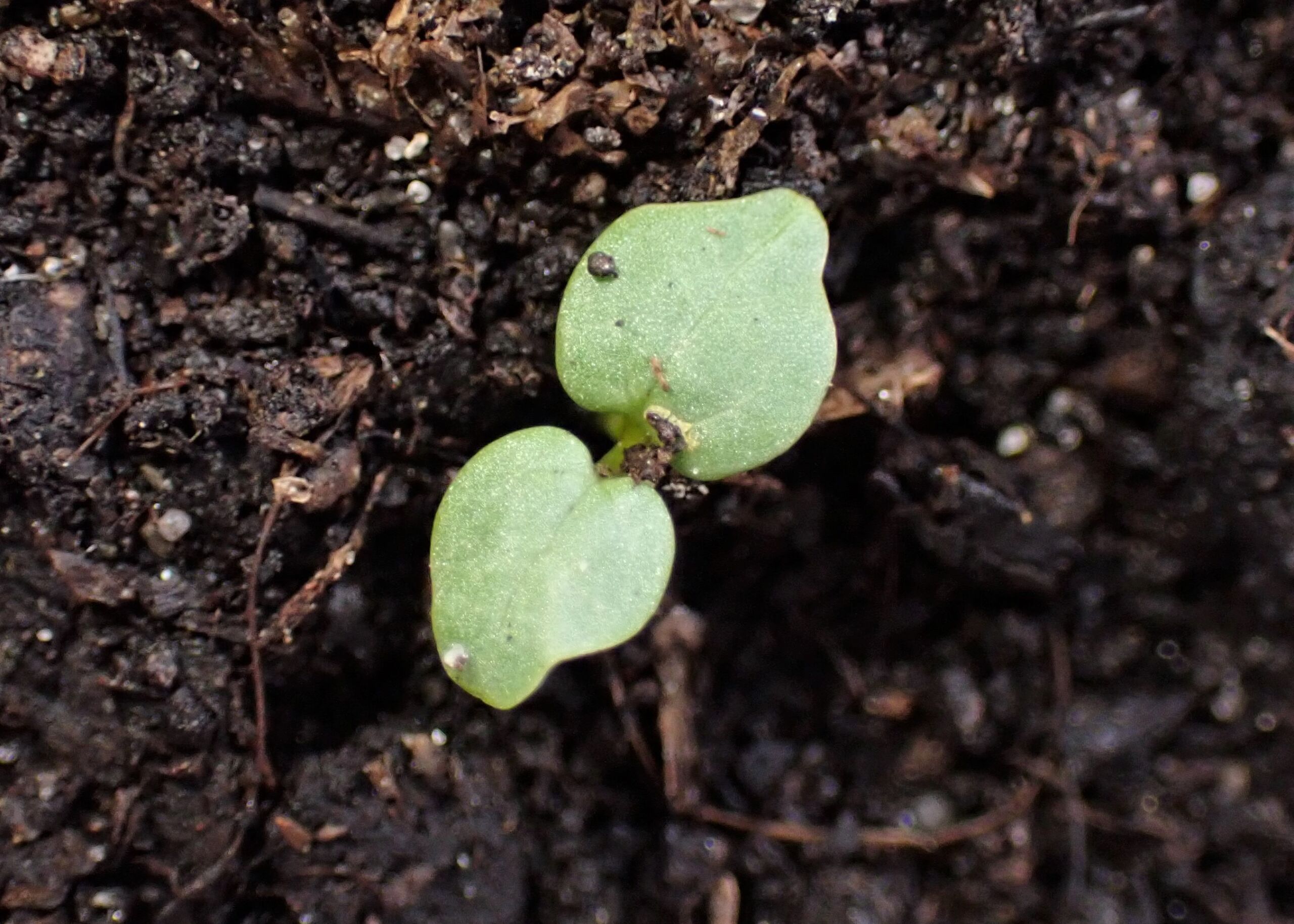
Mallow is one of the easiest plants in this whole project to grow, which is both its virtue and its warning. Sow seed directly in spring after the last frost, or start it indoors a few weeks earlier — it germinates readily, grows fast, and flowers in its first year from an early sowing even though it is technically a biennial or short-lived perennial. Plant in full sun for the best flower color and the most flowers, though it tolerates part shade, in well-drained soil of almost any type: loam, sand, or clay, as long as it drains. Common mallow prefers slightly alkaline to neutral soil, around pH 6.0 to 7.5, but it is famously unfussy, colonizing roadsides, hedgerows, field edges, and waste ground on whatever soil it finds. Space plants 18 to 24 inches apart — common mallow spreads about 1½ to 2 feet — and give taller plants a little support if your site is windy, because a 4-foot stem full of flowers is a sail.
Water to establish, then treat mallow as the drought-tolerant roadside plant it is. It likes moist, well-drained soil but handles dry spells once settled, and it dislikes soggy ground more than dry ground. A plant that thrives on a gravel verge does not need coddling. Deadhead spent flowers if you want a tidier plant and a longer bloom, or let the cheese-wheel fruits ripen if you want self-sown seedlings next year — and you will get them, because mallow self-seeds generously. That is free plants if you have room, and a weeding job if you do not. Cut back the whole plant after flowering if it gets leggy, and it will often push fresh growth and a second flush. In cold climates, common mallow may overwinter as a rosette and flower the following year; in mild climates it may behave as a perennial. Either way, treat individual plants as short-lived and the patch as permanent, because the seedlings keep the colony going.
Water & feeding
Water mallow like a cottage-garden plant, not a swamp plant: consistent moisture while establishing, then water during dry spells and let the soil dry between drinks. Overwatering in heavy soil invites root problems and floppy growth, and mallow’s roadside heritage means it would rather be a little dry than a little drowned. A mulch of compost around the base holds moisture and feeds the soil at the same time, which is all the feeding most mallow needs. If your soil is genuinely poor, a spring side-dressing of compost or worm castings is plenty. Heavy synthetic fertilizer pushes tall, soft stems that flop in the first wind and flower less, which is the opposite of the sturdy, floriferous plant you wanted.
For container growing — and mallow does well in a large pot on a sunny patio — water more often than in the ground, because pots dry fast, and use a free-draining mix rather than a water-retentive one. A pot-grown mallow is also the easiest way to enjoy the flowers without the self-seeding: deadhead before the cheese wheels ripen, and the colony stays exactly where you put it.
Common problems
- Self-seeding enthusiasm: The number one mallow “problem,” and it is really a success story. A single plant can scatter enough seed for a dozen next year. Deadhead before the fruits ripen if you want to control the colony, and pull seedlings while they are small if they land somewhere unwelcome. Seedlings are easy to pull. Established plants are not.
- Rust: The classic mallow-family complaint: orange-brown pustules on the undersides of leaves, worst in humid weather and crowded plantings. Improve airflow, space plants properly, water at the base rather than overhead, and remove badly affected leaves. It rarely kills the plant, but it makes it ugly, and ugly is a fair reason to intervene.
- Short life: Individual mallow plants are biennial or short-lived perennials. A plant that dies after two or three years has not failed; it has completed its life cycle. The patch persists through seedlings, so let a few plants go to seed somewhere you want them.
- Flopping: Tall stems in rich soil and wind go over. Stake early, or grow mallow among sturdy neighbors that hold it up the way a hedgerow does. Cutting back after the first flush also keeps the second growth shorter and sturdier.
- Going weedy where it is not wanted: Common mallow is considered invasive in parts of North America, including the United States, Canada, and Mexico. Know your local status before planting it near natural areas, and keep it in the garden, not the wild.
- Caterpillar damage: Yes, caterpillars eat mallow — that is the point of this guide’s existence in the butterfly project. Checkered-skippers, hairstreaks, and ladies all use Malva as host plants. Holes in mallow leaves are usually a feature, not a failure. If the plant is being eaten to the ground, it is doing its job for the butterflies, and it will usually regrow.
Harvest
The mallow harvest is threefold, and none of it requires a grocery store. First, the flowers: cut stems for posies all summer, because mallow blooms from late spring into autumn and cutting encourages more. Second, the leaves and flowers for the kitchen and the teapot: mallow has a centuries-long folk history as a soothing, mucilaginous herb — the leaves and flowers made into tea, the young leaves cooked like greens — and common mallow is the original “marshmallow” plant family behind the confection’s name, though the modern candy has nothing to do with the plant anymore. This guide is a growing guide, not a medicine or foraging manual, so treat any kitchen use as a research project of its own, use only plants you grew yourself without sprays, and skip roadside plants entirely. Third, the seed harvest: let a few cheese wheels ripen fully, dry them, and you have next year’s plants in your pocket. The birds will take their share first if you are slow, and that is also fine.
Saving seeds
Mallow seed is one of the easiest in the garden to save, and one of the most satisfying, because the fruits look like little cheeses and the seed inside them is built to last.
The fruits ripen over a long season, turning tan and dry. Wait until they feel papery and the seed inside rattles, then pick them by the handful into a paper bag. Crush the dried fruits gently and winnow away the chaff. The seed is round, flat, and hard-coated, and it stores for years if it is truly dry, which makes mallow one of the friendliest seeds to keep.
There is no stratification, no scarification, no fuss, though a light nick or an overnight soak speeds germination for older seed. Sow the seed where you want it to grow, barely covered, in fall or early spring. Germination is quick in cool, moist soil. Self-seeding is vigorous: a mallow left to ripen will sow itself into bare ground and thin turf, which is charming in a cottage garden and a nuisance in a tidy bed. Deadhead before the fruits ripen if you do not want volunteers, or let it wander if you have the room.
Crossing happens within a species, so if you grow two varieties of common mallow and save seed, expect some mixing. Different species in the genus generally stay themselves. Named selections do not come true from seed, which is the usual rule: a named variety is a clone, and its children are its own invention.
Florida honesty: common mallow is a cool-season plant that sulks through Florida summers. In North Florida it can work as a fall-sown annual; in Central and South Florida it is a short-lived experiment at best. And dry the seed thoroughly before storing it. Florida humidity kills stored seed fast, so a sealed jar with a silica gel packet, kept cool and dark, is the difference between seed that germinates next year and seed that quietly rots.
Species in this group
- Common mallow — Malva sylvestris: The signature species. Biennial to short-lived perennial, 2 to 4 feet, reddish-purple flowers with darker stripes, zones 4 to 8, cheese-wheel fruits. Native to Europe, North Africa, and western Asia; naturalized across North America.
- Musk mallow — Malva moschata: The cottage-garden favorite, with soft pink or white flowers and a faint musky scent, and finely divided leaves that look almost fern-like compared to common mallow’s round lobes. Short-lived perennial, similar zones, easier to love in a border.
- Dwarf mallow — Malva neglecta: The low, sprawling one, also called cheeseweed and low mallow, hugging the ground where common mallow stands up. The sidewalk-crack mallow of the genus, and the one most often confused with a weed — because, in a lawn, it is one.
- Tree mallow — Malva arborea: The woody-based, shrubby mallow of coasts and mild climates, formerly Lavatera arborea. Zones 8 to 11 in most accounts, and the reason the Lavatera merger matters: your old tree-mallow book and your new one are talking about the same plant under different names.
- Vervain mallow — Malva alcea: The tall, hollyhock-like perennial of European meadows and hedgerows, with pink flowers and deeply lobed leaves. The one to plant if you want mallow to look like a proper border perennial rather than a roadside weed.