
🌿 Marsh Violet
What it looks like
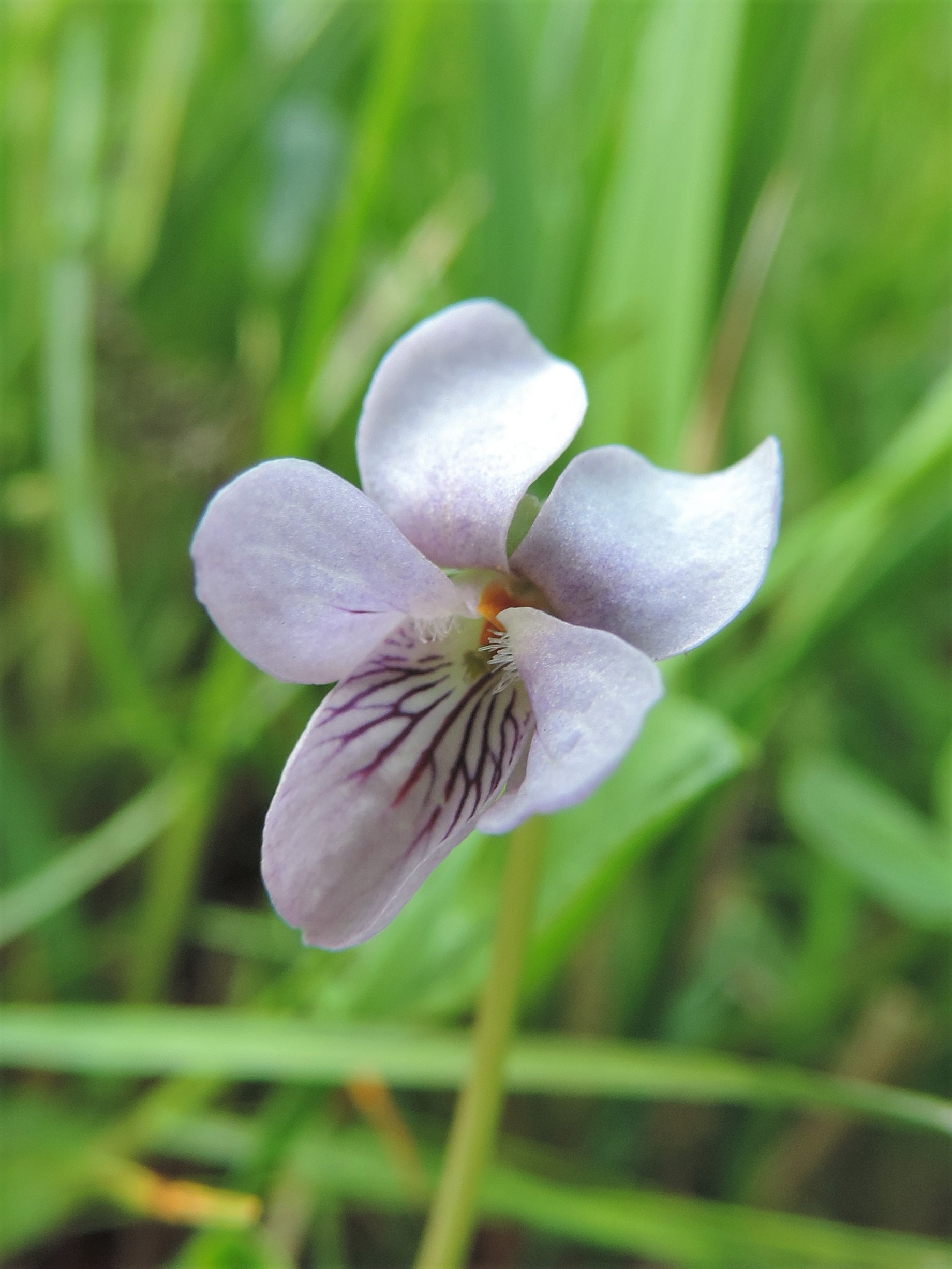
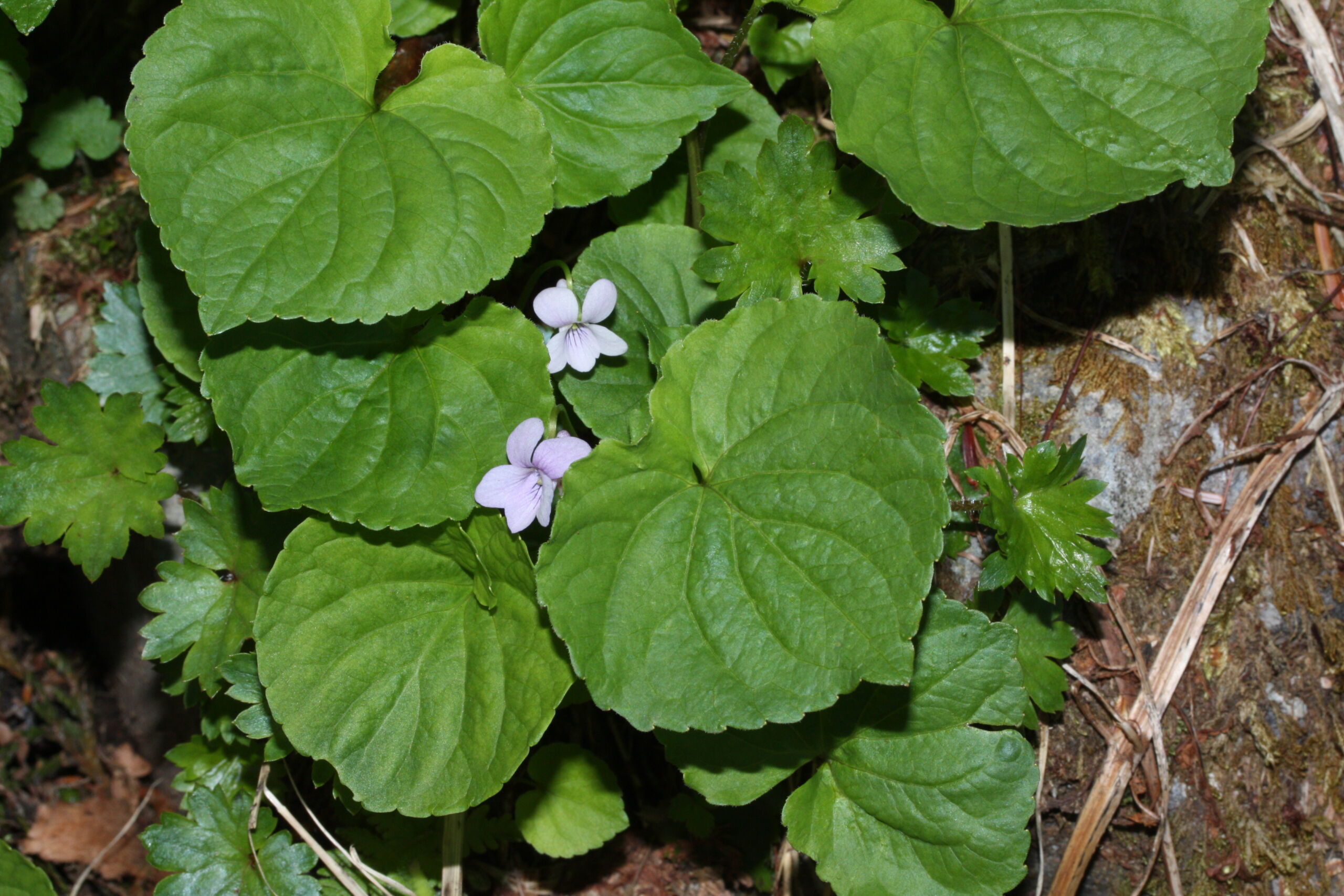
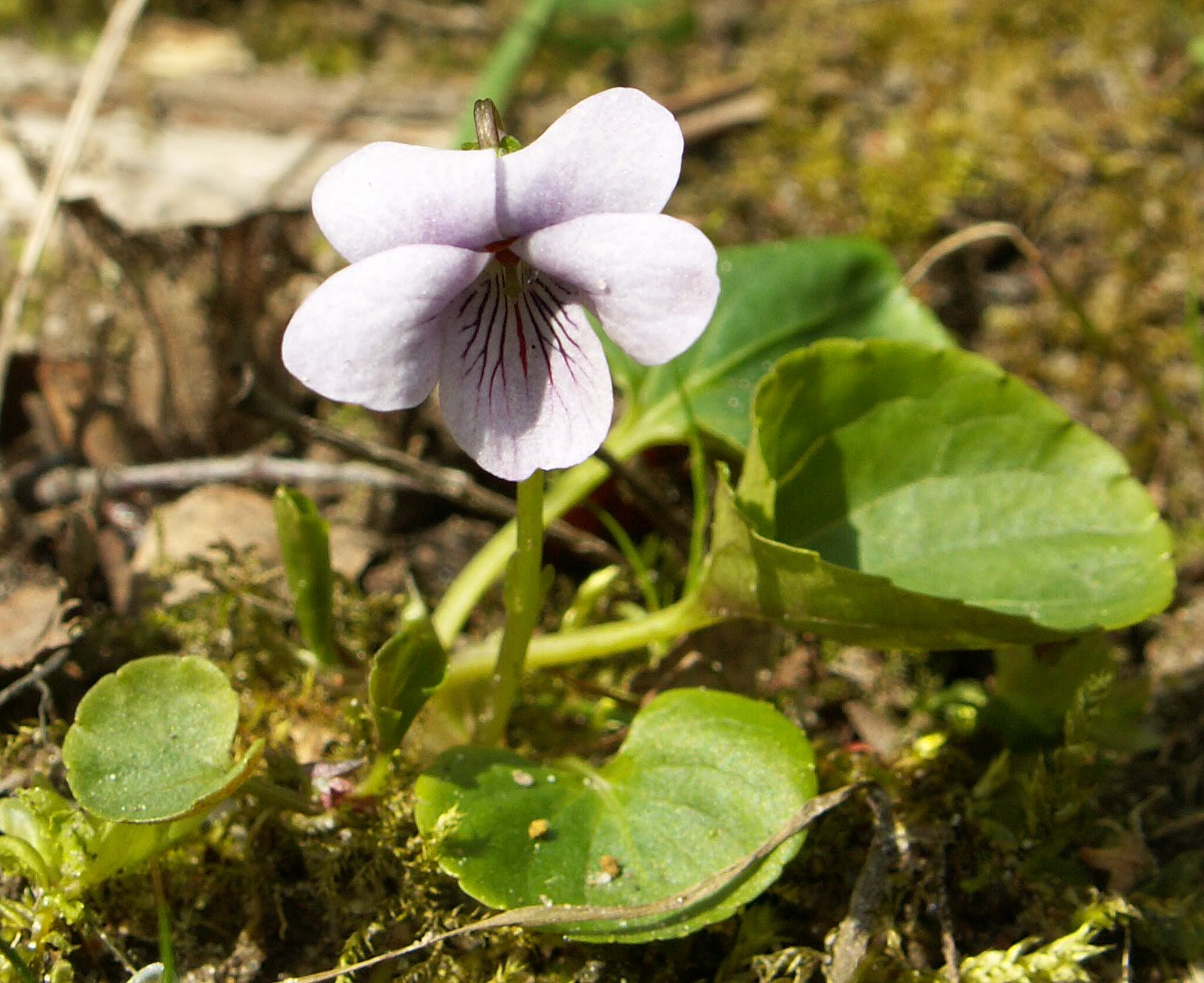
Marsh violet is a low-growing, spreading perennial of the violet family, Violaceae, forming a basal rosette of kidney-shaped, finely toothed, shiny light-green leaves about an inch wide. In mid to late spring it carries charming, pale lavender flowers about half an inch wide, adorned with purple veins, on almost leafless stalks above the foliage. Some of its flowers are showy and insect-pollinated; others, later in the season, never open at all and pollinate themselves — the cleistogamous flowers that violets are famous for, a belt-and-braces approach to reproduction that guarantees seed even when pollinators are scarce.
The species epithet, palustris, means “of the marsh”, and the plant earns it: it inhabits moist meadows, marshes, fens, swamps, wet forests, and stream banks in northern parts of North America and Eurasia. It spreads by slender stolons, rooting as it goes, so a single plant becomes a drift and a drift becomes a carpet — which is exactly what a wet-meadow butterfly needs, since its caterpillars must find violet leaves within crawling distance of where they hatch. It is a small plant with a large ecological footprint, and in its habitat it is often the commonest violet in the wettest ground.
One honest naming note, stated here rather than hidden: in parts of eastern North America, the common name “marsh violet” is also used for Viola cucullata, the blue marsh violet, and the two are easy to confuse in nursery lists. This guide follows the reading supported by the butterfly guide that prompted it, which lists marsh violet alongside common dog violet (Viola riviniana) — the European pairing in which marsh violet is Viola palustris, the foodplant of the small pearl-bordered fritillary. If a plant labelled marsh violet has tall, upright, blue flowers on long stalks and heart-shaped rather than kidney-shaped leaves, check it against Viola cucullata before trusting the label. And one practical warning for this site’s readers: marsh violet is a cool northern plant. It is not suited to Florida heat, and this guide says so plainly — it is written for gardeners in its range, and for Florida gardeners to understand the butterfly, not to plant it in a Keystone Heights border.
How to grow
Start with wet ground. Marsh violet wants moist to wet, humusy soil: a rain garden, a boggy edge, a stream margin, a wet meadow, or a low spot that stays damp after rain. Full sun to light shade both suit it, with light shade kinder where summers are hot. A sunny wet meadow, a pond margin, or a damp woodland edge are all right. A dry border, a hot sunny bed, or a spot that dries out in summer are all wrong, and the plant will tell you by shrinking away.
Soil should be humus-rich and moisture-retentive, acidic to neutral, with organic matter worked in before planting. It does not need rich fertiliser — leaf mould and compost are the food — but it does need the soil to stay damp through the growing season. In a rain garden or a naturally wet spot, that happens on its own; in a drier bed, you will be watering forever, which is the plant’s way of telling you the site was wrong. Mulch with shredded leaves or compost to hold moisture and feed the soil slowly.
Plant in spring or autumn, from nursery plants or divisions, and let it spread: set plants a foot or so apart in a drift and allow the stolons to fill the gaps, rather than planting a formal row. It is a groundcover by nature, not a specimen, and it looks best as a carpet under taller wet-meadow plants — sedges, rushes, and moisture-loving wildflowers that give it company without shading it out completely. Do not mow a marsh violet drift through the growing season; if you must cut the meadow, wait until late autumn, after the plant has set seed and stored energy for next spring.
Propagation is by division of the stoloniferous clumps in spring or autumn, or by seed sown fresh — seed that dries out loses viability, so sow it where it falls or in a damp seed bed and be patient. A happy colony spreads steadily on its own, and after a few years a wet meadow edge in flower is one of the quiet triumphs of a northern garden.
Water & feeding
Water is the whole story. Marsh violet wants consistently moist to wet soil through the growing season; in its natural marsh and fen habitats it never dries out, and in a garden a dry spell in spring or summer is the fastest way to lose it. A rain garden, a pond margin, or a naturally damp spot does most of this work for you. In a drier bed you will be watering constantly, which is a sign to move the plant rather than the hose.
Feeding is leaf litter and compost, not fertiliser. A top-dressing of compost or shredded leaves each autumn is the whole programme, and it mimics what a wet meadow floor provides. Do not feed it with granular fertiliser in a wet site, where nutrients wash straight into the water — that feeds algae, not violets. If the leaves yellow, suspect drying out or heat stress before hunger.
Maintenance is mostly leaving it alone: do not rake away its mulch, do not mow it in season, and do not divide it every year. Thin out competing aggressive plants in spring if they threaten to swamp the drift, and leave the seed heads standing — the self-pollinating late flowers will sow the next generation while you are not looking.
Common problems
- It dries out and vanishes. The commonest failure, and almost always a site problem: too dry, too hot, or too sunny. Move it to wetter ground rather than watering a dry bed forever.
- It sulks in Florida heat. It is a cool northern plant, and this guide does not recommend it for Florida gardens. Admire it, understand its butterfly, and plant a warm-climate violet instead.
- Slugs and snails. Soft violet leaves in wet ground are slug food, especially in spring. Encourage ground beetles and frogs, and accept some nibbling as the price of a wet garden.
- Swamped by competitors. Vigorous sedges and rushes can overrun a violet drift. Thin them in spring and give the violets light and air.
- Wrong violet, wrong label. If your “marsh violet” has tall blue flowers and heart-shaped leaves, compare it with Viola cucullata before trusting the label — the common name is shared, and this guide is for Viola palustris.
Harvest & wildlife
There is no food harvest worth chasing here. Violet flowers are edible in general, and marsh violet flowers can be used as a garnish like other violets, but the plant is small, the flowers are small, and the butterflies need them more than you do. The harvest is ecological: the flowers feed bees and other pollinators in spring, the leaves feed fritillary caterpillars through the summer, and the carpet of leaves shelters small invertebrates in wet ground.
The butterfly connection is the reason this guide exists. The Silver-bordered Fritillary’s caterpillars feed exclusively on violets (Viola species), including marsh violet, common dog violet, and related damp-ground violets, and the butterfly guide adds that a wet meadow with abundant violets is silver-bordered nursery habitat, and the butterfly’s presence is a good indicator that the meadow’s violet community is intact. That is a demanding host relationship — not “violets in general, somewhere in the county”, but abundant violets in a wet meadow, undisturbed enough for caterpillars to complete their growth. Protecting wet meadows, and not draining, ploughing, or mowing them through the flight season, matters more than planting a single violet in a pot. For gardeners in its range, a drift of marsh violet in a rain garden or wet meadow edge is a small, pale-lavender argument for keeping the wet ground wet.
Browse all plant & pest guides
Saving seeds
Marsh violet saves its seed the way violets do: with a small explosion. The seed ripens in capsules that split open and fling the seed a surprising distance, which is charming in a wet meadow and frustrating in a seed-saving project. Check the plant daily once capsules start to color, and bag a few ripening capsules with a paper bag tied loosely around the stem, or cut whole stems as the capsules turn tan and finish them drying in a bag. A capsule checked a day too late is a capsule that has already sown itself.
There is no scarification and no fuss, but there is a cold period. Sow the seed outdoors in fall and let winter do the stratifying for you, or mix it with damp sand in a sealed bag and refrigerate it for a couple of months before sowing in spring. Surface sow, barely covered, in moist, humus-rich soil in part shade. Germination is uneven and slow, sometimes taking a full season, so sow generously and be patient.
Division is the reliable route to more plants that are exactly like the parent. Marsh violet spreads by runners, and a clump lifted in spring divides easily into sections, each with roots and growing points. Replant immediately in moist soil and keep it damp until it settles. Seed is the route to new genetics and to sharing plants with friends, and it is the route that costs nothing.
Crossing happens within the genus, so if you grow more than one violet species and save seed, expect hybrids. Grow one species if you want seed that stays itself. And remember what the plant is: a native of wet meadows and marsh edges, and a fritillary host. The seed you save is not just next year’s violet. It is next year’s butterfly, and that is the point of growing it.
Varieties & relatives
No named garden varieties of marsh violet are in general cultivation; gardeners grow the species, and a good drift of the species is the whole point. Related violets with their own guides, listed here in plain text only and not claimed as this plant, include common dog violet (Viola riviniana), the unscented violet of woodland edges; wild violet (Viola spp.), this site’s genus guide for violets as a clan; and blue marsh violet (Viola cucullata), the eastern North American plant that shares the common name “marsh violet” in some sources and must not be confused with this species. If a violet labelled marsh violet does not match the kidney leaves and pale lavender flowers described here, check it against cucullata before planting it as palustris.