
🧅 McCullar White Egyptian Onion
What it looks like
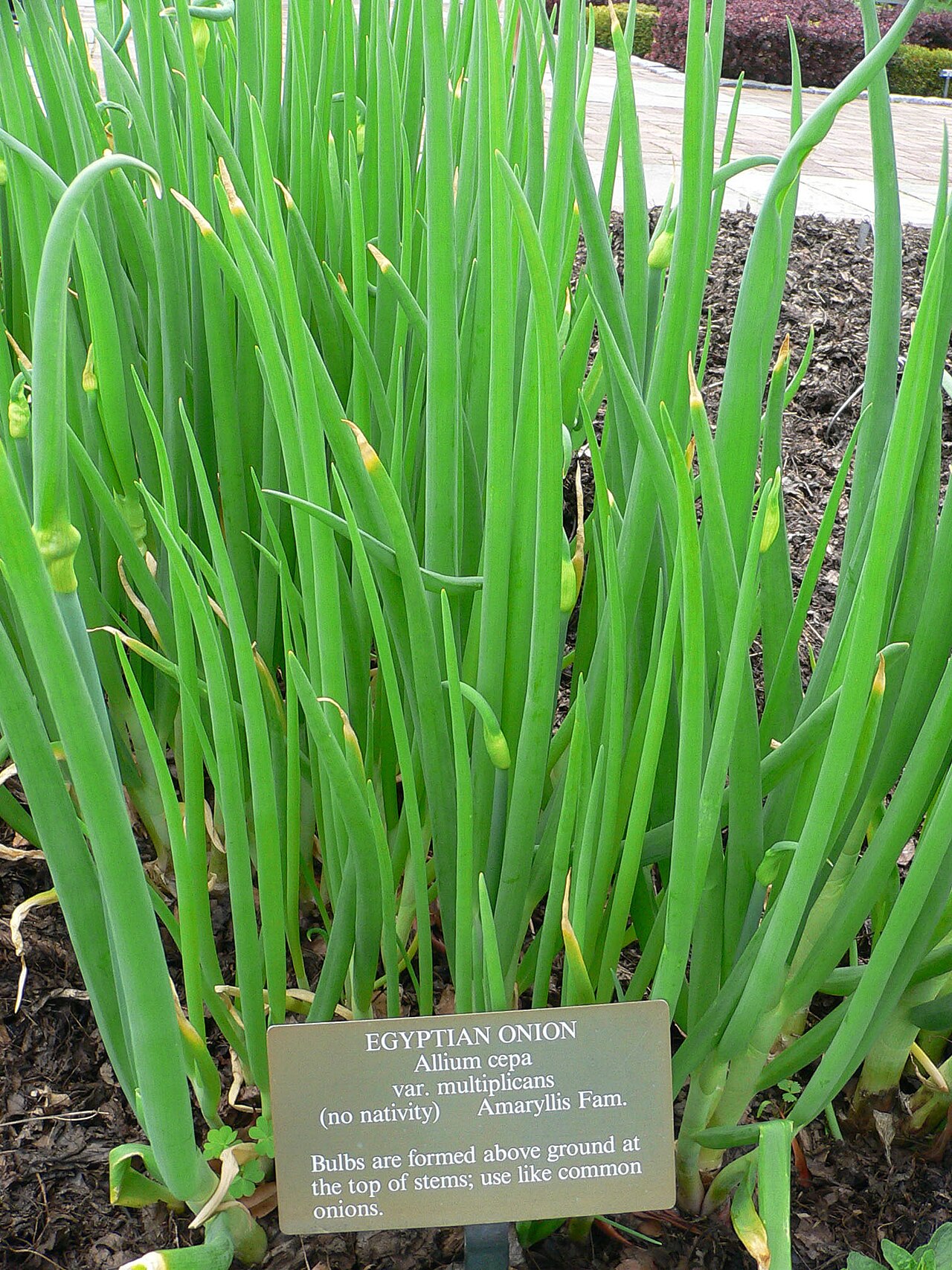
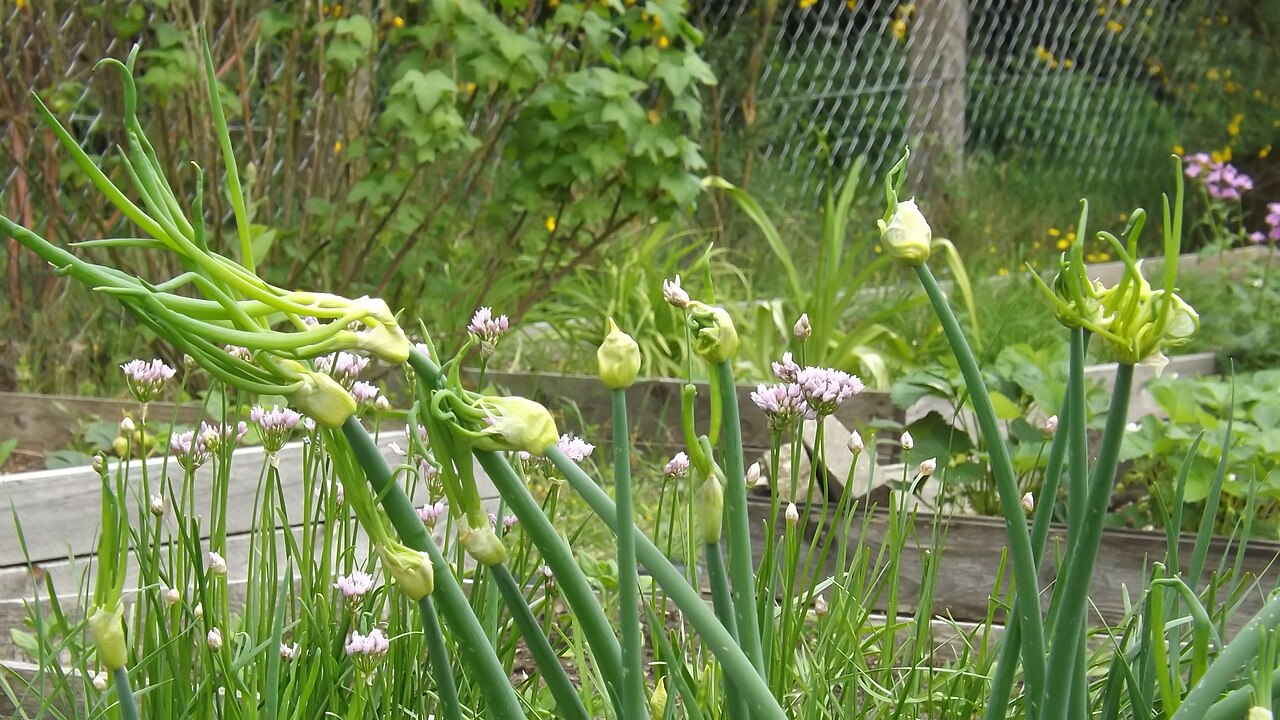
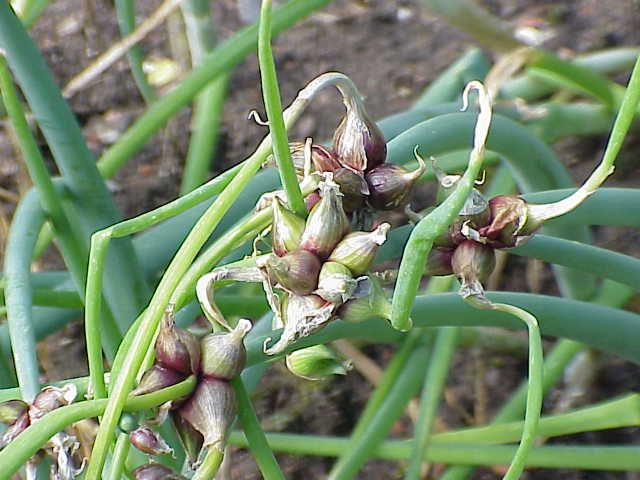
Photos show the species; no verified photo of ‘McCullar White Egyptian Onion’ itself was found, so these species photos are used with attribution rather than a padded substitute.
Why this variety
Walking onions are the perennial allium that plants itself, and McCullar White is the pale, mild-mannered member of the family. Where the familiar red walking onions make reddish-purple topsets, this strain makes consistently pale green-to-white topsets, and growers describe its flavor as notably milder — the greens are tender and aromatic, good raw, and the topsets cook up with clean onion flavor without the sharp bite that makes some walking onions a cooked-only proposition.
The “McCullar” name comes through garden networks rather than a seed catalog pedigree: walking onions are propagated vegetatively, passed gardener to gardener as topsets, and white forms in circulation today very likely descend from this original strain. That is part of the charm — you are growing a plant whose distribution system is friendship. Give it its own bed, because a walking onion does exactly what the name promises, and a bed that walks is a feature, not a bug, as long as you planned for it.
For the general picture, start with the Egyptian Onion growing guide — this guide covers what makes McCullar White Egyptian Onion different.
How to grow
Plant topsets one to two inches deep in fall or spring, four to six inches apart, or twelve inches apart if you plan to leave the patch undisturbed for years. In the first year plants make green tops; in the second year they send up tall stalks topped with clusters of small bulbs — topsets — which bend over, touch the ground, and root, walking the patch a foot or two each year. Harvest topsets to replant where you want them, or let them fall and root where they land; either way, you will never buy this onion twice.
In Florida, plant in fall for the cool season and let the patch establish through winter and spring; walking onions are hardy and persistent, and they tolerate the state’s sandy soils as long as drainage is decent — they rot in standing water, like all alliums. Work compost or worm castings into the bed, mulch to hold moisture, and do not fuss over fertilizer: a perennial onion patch wants steady, modest fertility, not a feast. Pull topsets for cooking in summer, snip greens all through the cool months, and dig a few underground bulbs from year two onward when you want a small, sharp onion for the pot.
Water & feeding
Water steadily while plants establish and through the cool growing season, keeping soil moist but never waterlogged — alliums rot in standing water. Mulch to hold moisture and suppress weeds, and ease off once topsets form in summer; a perennial onion patch wants steady, modest water, not a swamp. Feed lightly with compost or worm castings at planting and in early spring; over-feeding grows lush tops at the expense of bulbs and topsets.
Common problems
- Rot in wet soil — the main killer of perennial alliums. Plant in well-drained soil and never let the patch sit in water.
- Onion maggots and thrips — minor in most perennial patches; rotate new plantings and keep the bed weed-free.
- A patch that walks too far — harvest topsets to control spread, or let it walk where you have room; a bed with a border keeps it polite.
- Bulbs dug too greedily — a dug bulb does not come back. Harvest greens and topsets freely, bulbs sparingly.
Harvest
Snip greens from the first spring onward, whenever you want a green-onion substitute — they are the earliest allium harvest of the year in many gardens. Pick topsets in late summer, when the clusters are plump: use them fresh like pearl onions, pickle them, or replant them to extend the patch. From year two, dig underground bulbs as needed, but remember that a dug bulb does not come back, while a topset left to walk does — harvest greens and topsets freely, and bulbs sparingly.
A walking onion patch is a permanent pantry: greens in spring, topsets in summer, bulbs from year two, year after year, with almost no replanting.
Browse all plant & pest guides
Saving seeds
Walking onions are the perennial allium that plants itself, and McCullar White is the pale, mild-mannered member of the family: consistently pale green-to-white topsets, with a notably milder flavor than the familiar red walking onions — the greens are tender and aromatic, good raw, and the topsets cook up with clean onion flavor without the sharp bite. Walking onions are propagated vegetatively, passed gardener to gardener as topsets, and the “McCullar” name comes through garden networks rather than a seed catalog pedigree. Plant topsets one to two inches deep in fall or spring, four to six inches apart, and harvest topsets to replant where you want them — you will never buy this onion twice. The full method is in the Propagation section of the Egyptian Onion guide.