
🌿 Mexican Alvaradoa
What it looks like
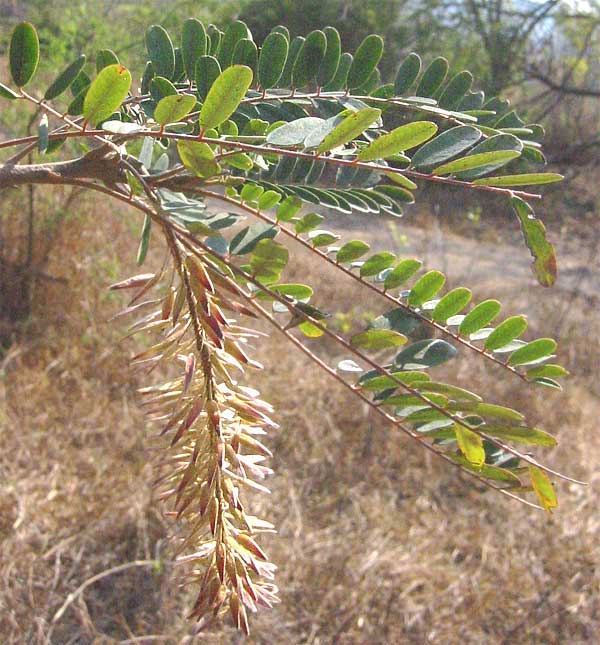
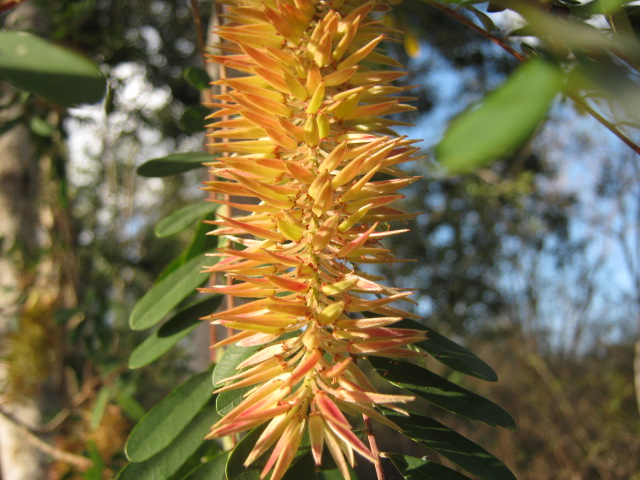
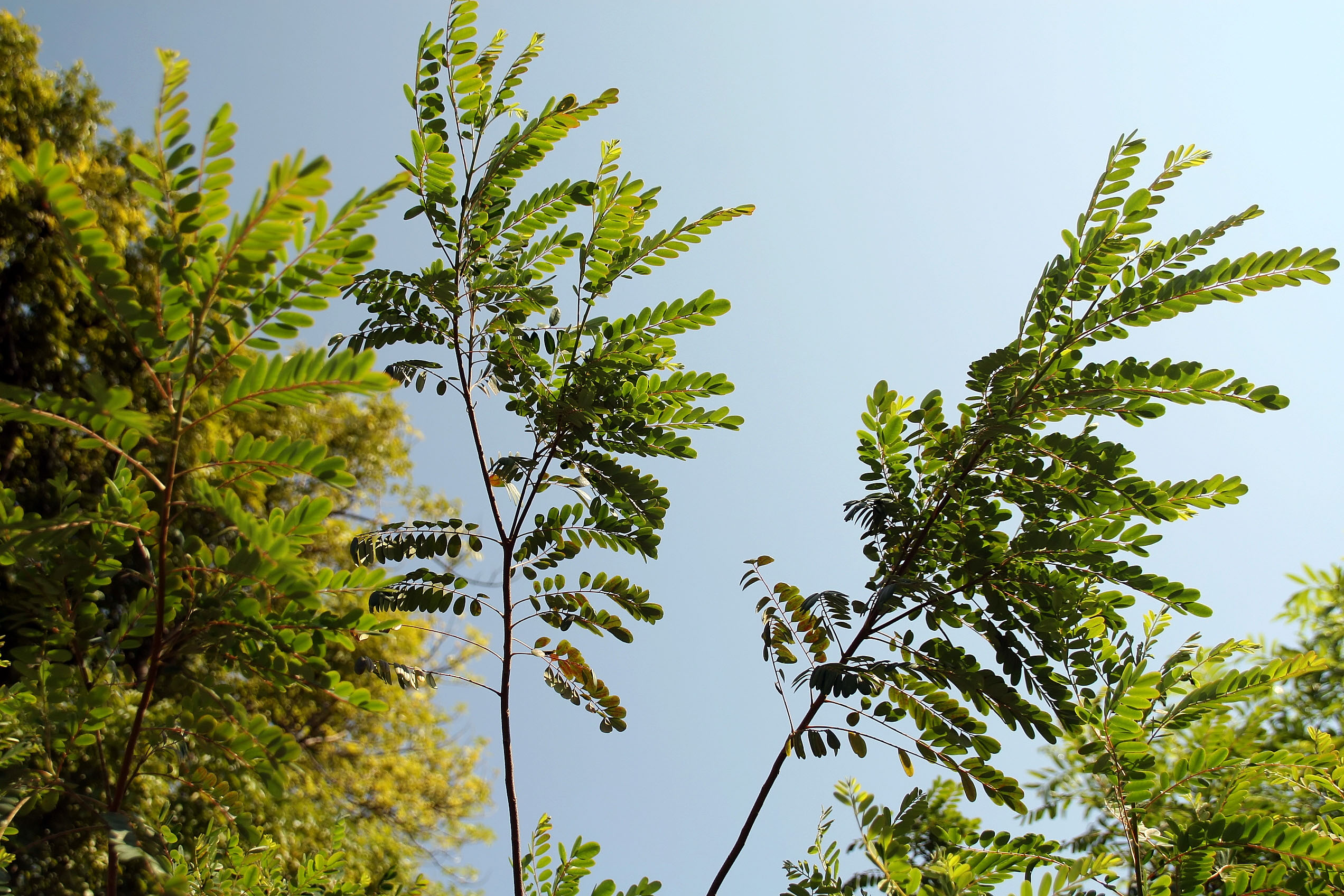
Mexican alvaradoa is a tall shrub or small tree of the family Picramniaceae, native to Mexico, Central America, the Caribbean, and — at the northern edge of its range — southern Florida, where it grows in the Miami Rock Ridge from Long Pine Key to west of Goulds. It is a long-lived perennial, usually 10 to 20 feet tall and sometimes taller, usually taller than broad, with a trunk a couple of inches across, occasionally up to eight inches on an old tree. The compound leaves, with many small leaflets, give the plant a feathery appearance that breaks the monotony of the oval leaves around it in a hammock planting — a fine-textured tree in a landscape of broad leaves.
The flowers are a lesson in plant plumbing: Mexican alvaradoa is dioecious, with male and female flowers on separate plants, carried in narrow, three-inch-long catkins. Only the female plants mature fruit — half-inch winged seeds, samaras, that spin away on the wind. The flowers themselves are small, white to yellow-green, and easy to overlook; the tree’s beauty is in its foliage and form, not in a floral display. It is evergreen, drought-tolerant once established, and notably not tolerant of salt air or salt water, which is a useful warning for a South Florida tree: plant it inland on the rock ridge, not on a beachfront lot.
And here is the conservation fact that governs everything else about this plant: in Florida, Mexican alvaradoa is listed as endangered by the state. It is a rare and local tree even where it is native, confined to rockland hammock edges on limestone, and its Florida populations are small and fragmented. That means two things for gardeners: buy only nursery-grown plants from reputable native nurseries, never wild-collected material, and understand that planting one in a suitable South Florida garden is a small act of conservation, not just landscaping. Do not expect to find it in a big-box garden centre, and do not expect it to thrive outside its range — the butterfly guide says it plainly about the Dina Yellow: do not expect any if you live outside the plant’s natural range.
How to grow
Start with limestone and sun. Mexican alvaradoa wants full sun to part shade — best in full sun, tolerating partial shade — on well-drained, limestone hammock soil. A spot along the southern edge of a hammock, or mixed into a pineland planting, is the classic siting, and in a garden that translates to a sunny, well-drained border on alkaline, rocky soil, sheltered from salt wind. It is a South Florida tree, frost-tender, and it will not survive a hard freeze; gardeners outside frost-free South Florida should admire it in a botanical garden rather than gamble with it outdoors.
Soil should be well-drained and limestone-based; the Florida subspecies is obligate on limestone formations, growing in hammocks and pine woodlands on limestone at low elevations. In ordinary garden soil, add limestone chips or crushed shell to the planting hole and ensure drainage — the plant does not want wet feet, and it does not want acidic, peaty soil either. This is a rock-ridge plant, and its roots expect rock. Space it as a small tree: allow 10 to 15 feet from buildings and other trees, and do not plant it under power lines or in a narrow side yard where a 20-foot tree will become a problem.
Plant in spring or early summer, from a nursery-grown plant, at the same depth it grew in its pot, and water well at planting. Because the species is dioecious, a single tree will flower but only female trees fruit — and since nursery plants are rarely sexed, fruit is a bonus, not a guarantee, unless you plant several and get lucky with the sexes. That hardly matters for most gardeners: the tree is grown for its foliage, its form, and its butterfly, not for its fruit. Stake a young tree only if it needs it, and remove the stake after the first year; a tree that leans on a stake forever never learns to stand on its own roots.
Water & feeding
Water to establish, then stand back: Mexican alvaradoa is very drought-tolerant once its roots are down, which suits its rock-ridge home, where rain drains fast through limestone. Water regularly through the first growing season, then water only in extended drought. Over-watering in heavy soil is a greater risk than drought in well-drained soil — wet feet on limestone is one thing, wet feet in clay is another, and this tree wants the first, not the second.
Feeding is light. A mulch of compost or leaf litter each spring is the whole programme in a suitable site; do not feed it heavily with nitrogen, which pushes soft growth that a rock-ridge tree does not need. Do not acidify the soil for it — this is a limestone plant, and the alkaline soil other plants complain about is exactly what it wants. If the leaves yellow, suspect drainage or salt exposure before hunger, and check the site before reaching for a fertiliser bag.
Maintenance is minimal: prune lightly to shape after flowering, remove dead or crossing wood, and leave the tree’s natural, taller-than-broad form alone. It is not a hedge plant and should not be sheared. The main seasonal job is watching for cold: in a marginal South Florida winter, cover a young tree with frost cloth on cold nights, and accept that a mature tree in a sheltered hammock-edge spot will handle a light frost better than a young tree in an open lot.
Common problems
- Frost damage. The big one outside frost-free South Florida. Blackened leaves after a cold night mean frost, not disease. Prune out dead wood in spring once new growth shows, and protect earlier next time — or do not plant it outside its range.
- Salt damage. It is not tolerant of salt air or salt water. Browning leaf margins on a coastal lot usually mean salt, not hunger. Move it inland or behind a windbreak.
- Wet feet. Waterlogged soil, especially heavy clay, rots the roots. Plant on limestone-based, well-drained ground, or on a mound, and never in a low spot that ponds after rain.
- No fruit. Normal on a single tree: the species is dioecious, and only female trees fruit, and only if a male tree is nearby. Plant several trees if fruit matters to you, and accept that nursery plants are rarely sexed.
- Wild-collected plants. Not a plant problem, a people problem: this species is endangered in Florida, so buy only nursery-grown plants from reputable native nurseries, and never dig or buy wild material.
Harvest & wildlife
There is no food or timber harvest here, and this guide does not invent one. The winged seeds are not a crop, the wood is not a timber tree, and the tree’s value is ecological and ornamental: fine-textured evergreen foliage, a small-tree form for a hammock-edge garden, and a host relationship with a butterfly that is itself rare and local.
That relationship is the reason this guide exists. The Dina Yellow’s Host plants section reads, in full, that its host is Mexican alvaradoa (Alvaradoa amorphoides) in Florida — a butterfly tied to a single host plant, in a state where that host is endangered and confined to the Miami Rock Ridge. The butterfly is year-round in southern Florida, a stray in southern Texas and southern Arizona, and rare and local even at home. Planting a nursery-grown Mexican alvaradoa in a suitable South Florida garden will not conjure a Dina Yellow into a yard outside its range, and this guide says so plainly — but inside its range, in a rockland hammock edge, it is the plant the butterfly needs, and every nursery-grown tree in the ground is a small vote for keeping both the tree and the butterfly in Florida.
Browse all plant & pest guides
Saving seeds
Mexican alvaradoa is a tree worth saving seed from, and a tree that asks you to think like a conservationist while you do it. It is endangered in Florida, rare in cultivation, and dioecious — male flowers on one tree, female flowers on another — so a lone tree will never set seed at all. If you want seed, you need a female tree with a male tree somewhere nearby, which is the first thing to check before you start watching for fruit.
The fruit is a small winged samara, and it ripens in fall. Collect the seed when the capsules turn brown and begin to split open, and sow it fresh — this is not a seed that improves with storage. Remove the wings, soak the seed in warm water for 24 hours, and sow it barely covered in a well-draining mix, kept warm and constantly moist but never wet. Warmth matters: germination wants roughly 25 to 28°C, which in South Florida is just a sunny windowsill or a warm greenhouse bench.
How long it takes is a point where the sources disagree, and the honest answer is the range. Some growers report sprouts in one to two weeks; a seed supplier lists four to six weeks; and one propagation guide warns it can take anywhere from a few weeks to several months. Keep the tray moist and warm and be patient — seed that looks dead at six weeks may still be working. Not every seed will be viable, which the Florida Native Plant Society notes plainly, so sow more than you need and thin to the strongest.
Seedlings grow slowly at first and want shade until they establish, then full sun. Because this is a rare native, the seed you save is more than next year’s tree: it is a small act of keeping a rockland-hammock species in the world. Share the extra seedlings with a native-plant nursery or a neighbor with the right soil rather than letting them crowd each other out. And keep the seed dry once it is stored — Florida humidity is the enemy of stored seed, so dry it thoroughly, jar it with a silica gel packet, and keep it cool and dark.
Varieties & relatives
Florida form — Alvaradoa amorphoides subsp. psilophylla — The subspecies found in Miami-Dade County, on limestone hammocks and pine woodlands at low elevations, obligate on limestone formations; the form Florida gardeners are actually growing.
Mexican and Central American form — Alvaradoa amorphoides subsp. amorphoides — The wider-ranging subspecies, generally more robust, with longer, narrower fruits, occurring in a wider variety of habitats and not obligate on limestone.
Other Alvaradoa species — The genus contains several Caribbean and Central American species (including A. arborescens, A. jamaicensis, and A. haitiensis), listed here in plain text only; none is this plant, and none is the Dina Yellow’s Florida host. If a plant labelled Mexican alvaradoa does not match the feathery leaves and rock-ridge provenance described here, check the species before trusting the label.