
🌳 Mexican Blue Oak
What it looks like
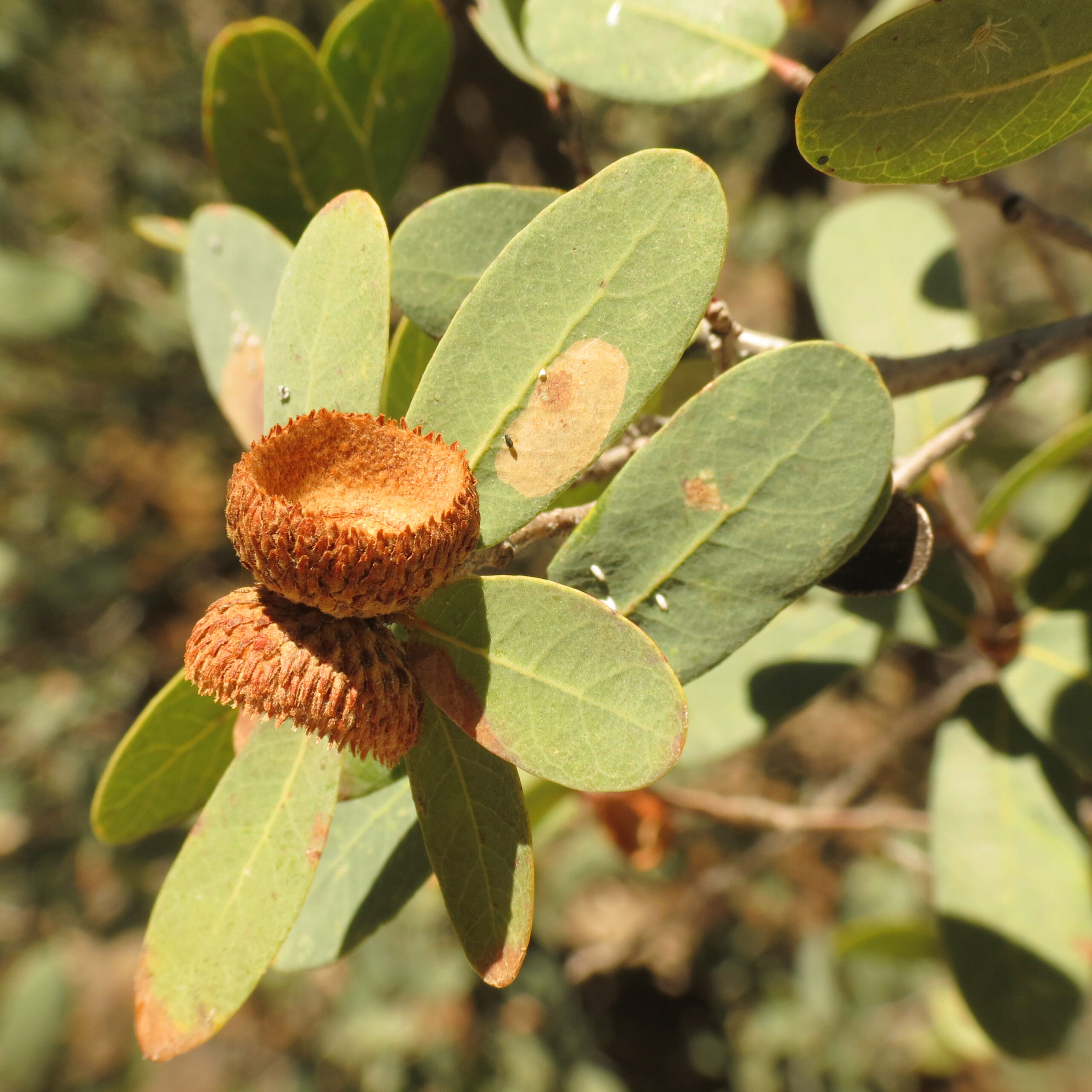
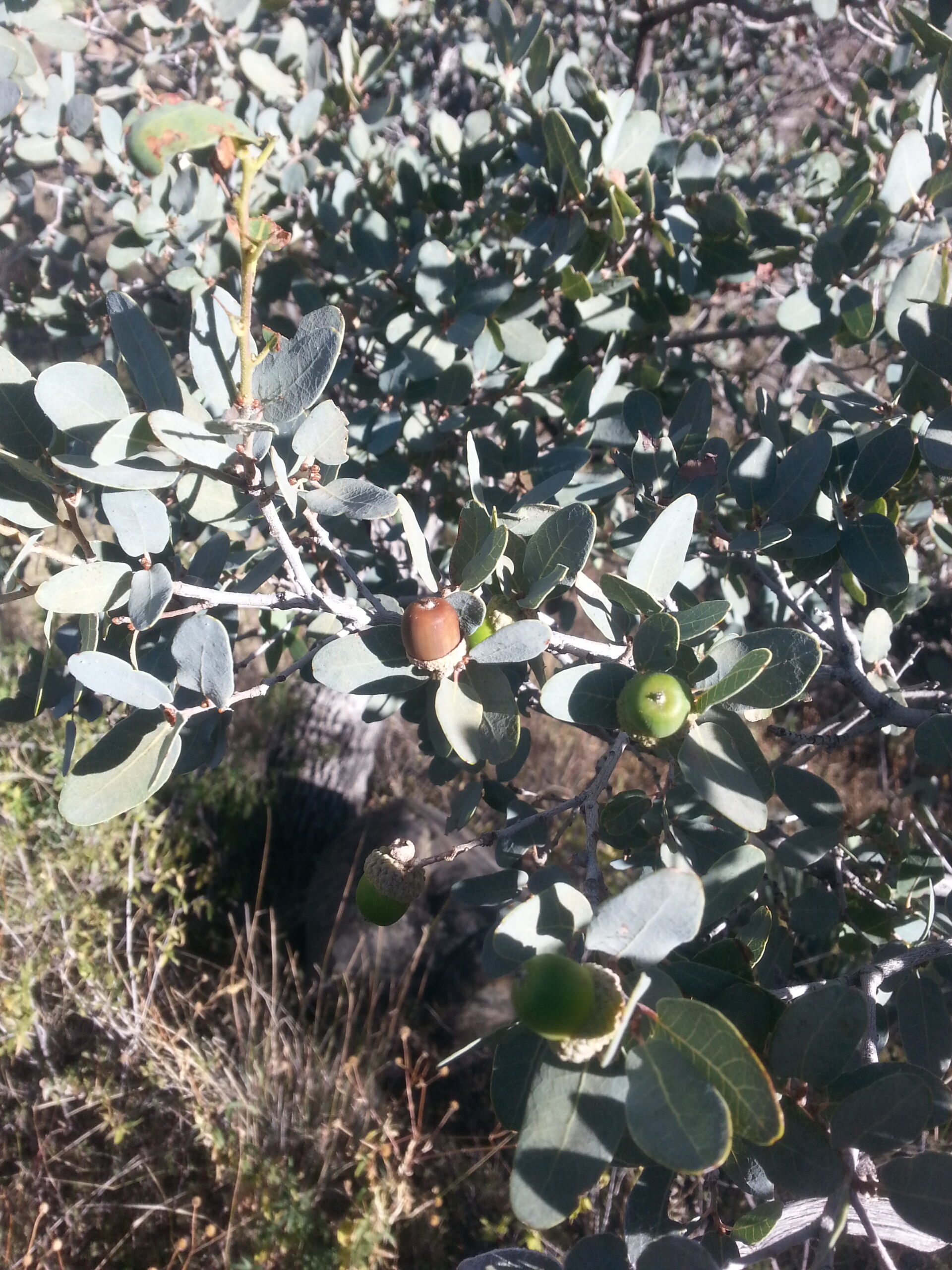
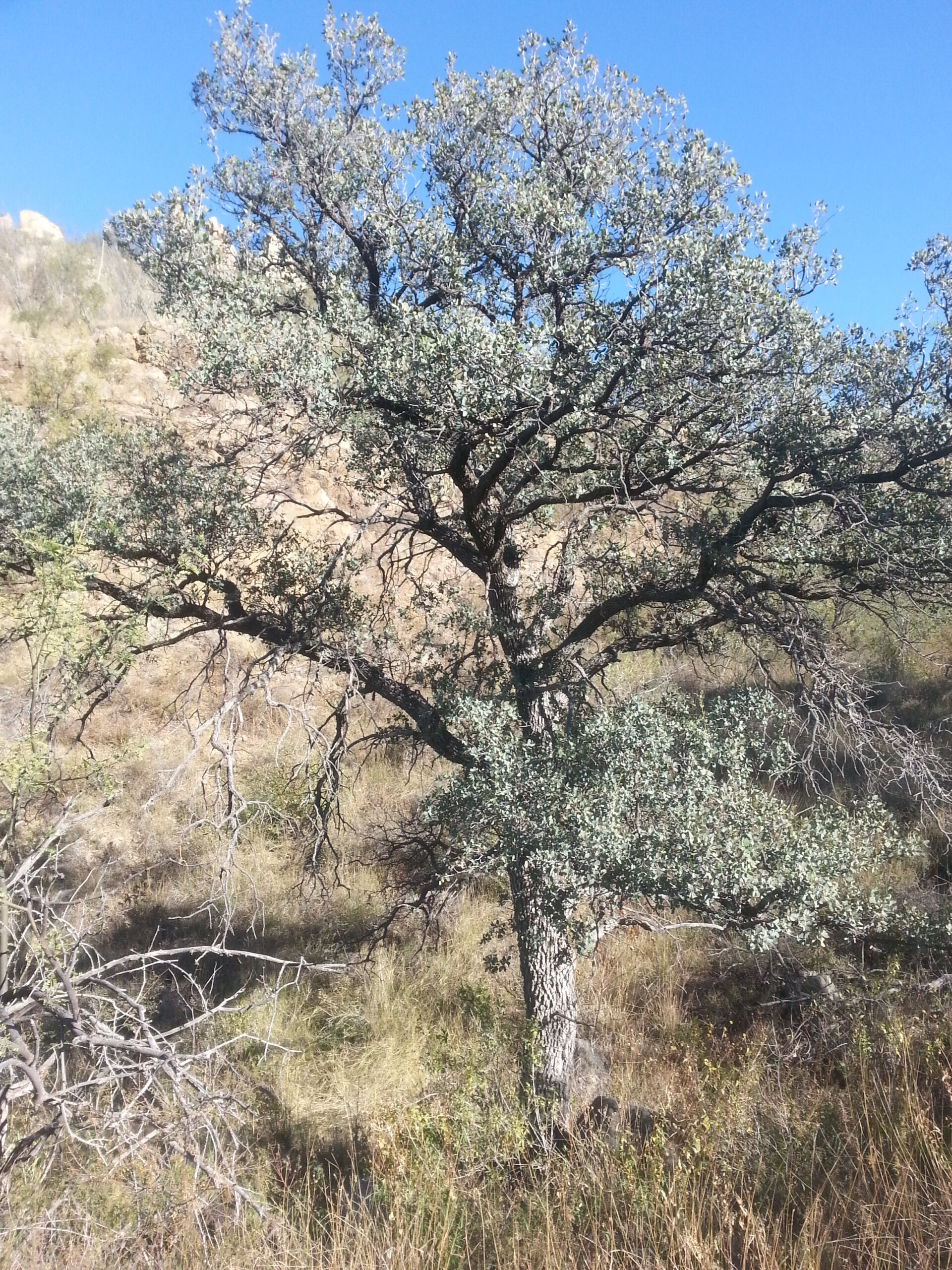
Mexican blue oak is a small to medium evergreen oak of the oak family, Fagaceae, native to the mountains of southeastern Arizona and southwestern New Mexico and south into Mexico. It is a tree of the sky islands — isolated mountain ranges rising out of desert, where oak woodland forms a cool, green archipelago above the hot lowlands — and it grows on foothills, slopes, and canyon sides, usually as a spreading, round-crowned tree with a short trunk and stout branches. It is also called Arizona blue oak, which is the same tree under a different state-line name, and the two common names are used interchangeably in nursery and field lists.
The leaves are the giveaway, and the reason for the name: oblong, evergreen, blue-green to grey-green above, paler below, with smooth or shallowly toothed margins — oblongifolia means oblong-leaved, and the blue cast comes from a waxy bloom on the leaf surface that cuts water loss in dry mountain air. The acorns are small, oblong, and sweet enough that wildlife seeks them out, maturing in a single season, which puts this oak in the white oak group — the group whose acorns are less bitter and quicker to mature than the red oaks’, and the group the butterfly guides keep returning to. The bark is grey and furrowed with age, and an old tree on a rocky slope has the gnarled, wind-shaped character that makes sky-island oaks so photogenic.
It is a drought-wise tree by necessity: sky-island woodlands get their rain in summer monsoon bursts and winter storms, with long dry stretches between, and Mexican blue oak handles that rhythm with deep roots, waxy leaves, and a willingness to grow slowly. It is not a fast shade tree for a lawn, and it is not a Florida tree — this guide says so plainly, as it does for other western oaks: the climate, the soils, and the monsoon rhythm it expects do not exist in peninsular Florida, and a gardener there who wants an evergreen oak already has the live oak. For gardeners in its range, though, it is one of the finest native small trees available: evergreen, tough, wildlife-rich, and beautiful in a way that a fast-growing exotic never quite manages.
How to grow
Start with sun and drainage. Mexican blue oak wants full sun and well-drained, rocky foothill soil — a slope, a raised bed, or a site where water never ponds. It tolerates a range of soils provided drainage is good, including rocky and gravelly ground, but it does not tolerate waterlogged roots or heavy, wet clay. A sunny slope, a xeric border, or a naturalised oak-woodland edge in its range are all right. A low, wet lawn or a shady corner are wrong.
Plant in spring or autumn, from a nursery-grown tree, at the same depth it grew in its pot, and give it a small tree’s room — allow for a spreading crown and do not plant it under power lines or hard against a building. Water well at planting and through the first growing season while the roots go down; after that, in a suitable site, it needs water only in extended drought, and it resents the frequent, shallow watering a lawn demands. If you must have a lawn under it, keep the grass back from the trunk and water the tree deeply and rarely, not the lawn shallowly and often.
Prune lightly, and only to shape: remove dead, crossing, or damaged wood in late winter, and leave the tree’s natural spreading form alone. Oaks do not need, and do not appreciate, heavy heading cuts, and a Mexican blue oak pruned into a ball is a tree that has been misunderstood. It grows slowly — that is the price of toughness — so buy the largest nursery tree you can afford if instant shade matters, and be patient: a slow oak that lives a century is a better investment than a fast tree that dies in twenty years. Propagation is by acorns sown fresh in autumn, which lose viability if they dry out; seedlings vary, and named forms are not generally available, so gardeners grow the species.
Water & feeding
Water to establish, then water like a monsoon: deep, infrequent soakings, with dry spells between, mimicking the summer storms and winter rains of its home. New trees need steady moisture through their first year; established trees are drought-tolerant and need supplemental water only in extended drought. A deep soak once every few weeks in a severe dry spell is plenty; daily sprinkling keeps the roots shallow and the tree dependent, and in a wet winter it invites root rot.
Feeding is minimal. A mulch of compost or leaf litter under the canopy each spring feeds the soil slowly and conserves moisture, which is the whole programme in a suitable site. Do not fertilise an oak heavily with nitrogen — it pushes soft growth that insects love and that drought punishes. If the leaves yellow, suspect drainage or over-watering before hunger, and check the site before reaching for a fertiliser bag.
Maintenance is mostly patience and restraint: leave the leaf litter under the canopy where it falls, since it feeds the soil fungi oaks depend on; do not pile mulch against the trunk, which invites rot; and do not prune in spring and summer when oak wilt vectors are active in regions where that disease occurs — late winter is the safe pruning season for oaks generally, and this one is no exception.
Common problems
- Root rot. Waterlogged soil, especially heavy clay or a low spot that ponds. Plant on a slope or mound, improve drainage, and water deeply but rarely.
- It grows slowly. Normal. Sky-island oaks grow slowly and live long. Do not try to force speed with fertiliser and water; you will get soft growth and a weaker tree.
- Oak galls. Small, round growths on leaves and twigs, made by gall wasps. Usually cosmetic on a healthy tree; remove badly affected twigs if they bother you, and do not spray — the wasps are part of the oak’s ecosystem, not an emergency.
- Leaf scorch in a wet winter. Counterintuitive, but oaks on poorly drained soil scorch when roots suffocate. Drainage, not water, is the fix.
- Wrong oak, wrong climate. It is not a Florida tree and not a wet-climate tree. Gardeners outside its range should choose a local oak — live oak in Florida, white oak further north — rather than forcing a sky-island tree into unsuitable ground.
Harvest & wildlife
The harvest is the acorn, and it is a wildlife harvest first. Mexican blue oak acorns feed deer, jays, squirrels, and a host of smaller creatures through autumn and winter, and the evergreen canopy shelters birds year-round. People have eaten white-group acorns after leaching — they are sweeter than red-oak acorns — but this guide does not recommend foraging acorns from a slow-growing wild tree, and garden trees are better left to the wildlife that depends on them.
The butterfly connection is a metalmark story. The Ares Metalmark’s Host plants section names Mexican blue oak (Quercus oblongifolia) alongside Emory oak (Quercus emoryi) and perhaps other oaks, in the Peloncillo and Animas Mountains and nearby ranges of southeastern Arizona and southwestern New Mexico, with a single summer-monsoon brood. That is a sky-island butterfly on sky-island oaks, and the guide’s “perhaps other oaks” is an honest admission that the full host list is not yet documented. Planting a Mexican blue oak in its range will not conjure an Ares Metalmark into a suburban yard — the butterfly is local, monsoon-timed, and tied to mountain woodland — but protecting oak woodland in its range, and planting native oaks where they belong, is the only strategy that ever works for oak-feeding butterflies. An oak is not a flower bed; it is a whole ecosystem with a trunk.
Browse all plant & pest guides
Saving seeds
Mexican blue oak saves by acorn, and the acorn has one firm rule: sow it fresh. Acorns are recalcitrant seed, which means they cannot dry out and wait for spring the way a bean can. An acorn that dries is a dead acorn. Collect in autumn, when the caps slip off easily and the nuts are plump and brown, and get them into soil within days.
Do the float test first. Drop the acorns in a bucket of water and keep the sinkers; the floaters are usually hollow, weevil-eaten, or dried out, and they will not sprout. Sow the keepers about an inch deep in deep pots — a taproot is the first thing an oak grows, and a shallow pot corkscrews it — in a loose, well-draining mix. Keep them moist through winter and wait. Germination usually comes in spring, though some acorns take their time and sprout the following year, so do not throw the pot out in March.
Seedlings vary, which is the nature of oaks. An acorn from a fine tree may grow into a fine tree or a perfectly ordinary one, and named forms are grafted, not grown from seed. If you want a particular cultivar, buy a grafted tree; if you want an oak, the seed is honest work. Grow the seedling in its pot for a full season before planting out, and protect it from squirrels, which consider your nursery a buffet.
One honest note: this is a Southwest oak, not a Florida native, and it wants the dry air and cold winters of its home range. The seed-saving method is the same anywhere, but a Florida garden is a hard place to grow it to maturity. Save the seed if you have the tree and the curiosity; just know the tree is the experiment, not the seed. Stored dry, acorns do not keep — sow fresh, or do not bother.
Varieties & relatives
No named garden varieties of Mexican blue oak are in general cultivation; gardeners grow the species, and a good species tree is the whole point. Related oaks with their own guides, listed here in plain text only and not claimed as this plant, include Emory oak (Quercus emoryi), the Ares Metalmark’s other named host and a fellow sky-island evergreen; Arizona white oak (Quercus arizonica), a close relative that is a different species despite the overlapping common names; and the site’s Oak genus guide, which covers oaks as a clan. If a tree labelled Mexican blue oak has deciduous, deeply lobed leaves, it is not this species — check the evergreen, oblong, blue-green leaves before trusting the label.